Why darker skin changes the plan
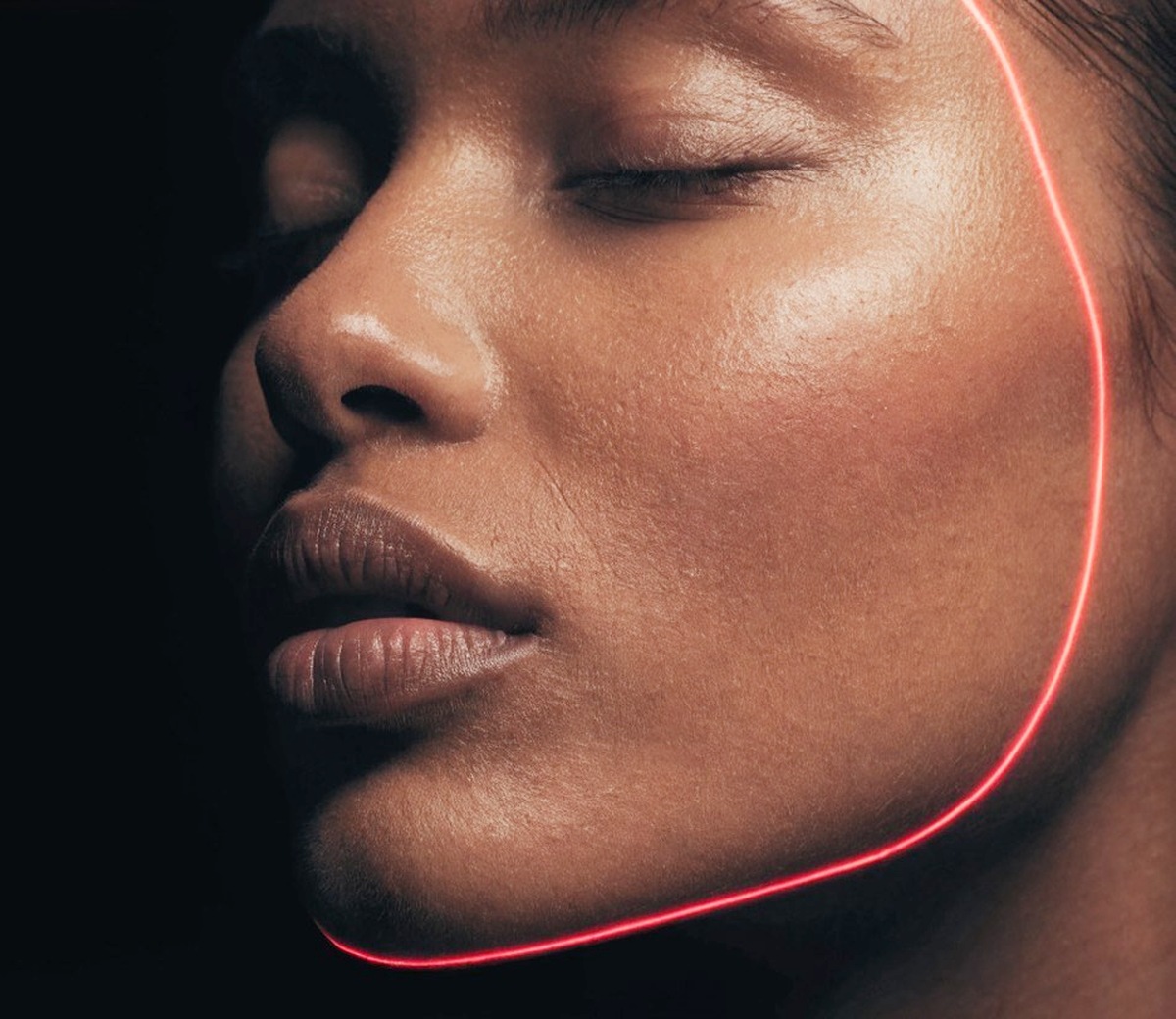
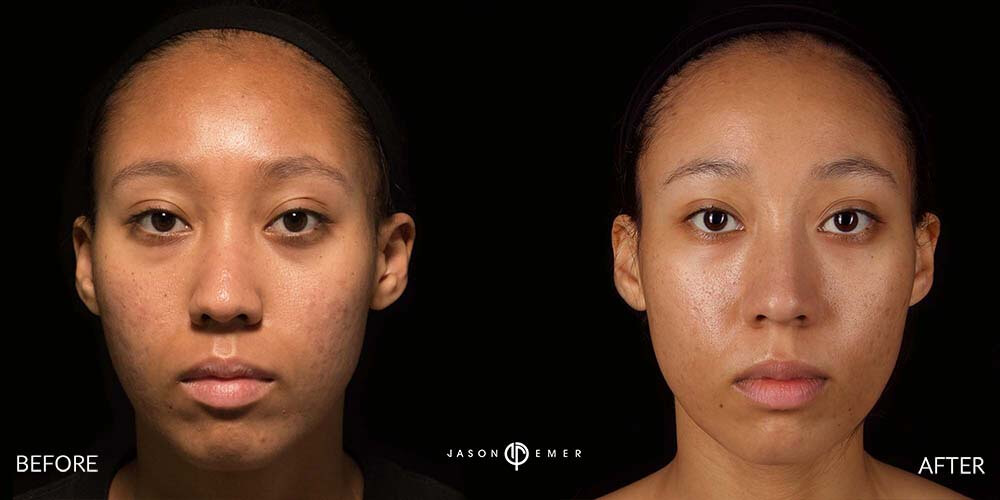
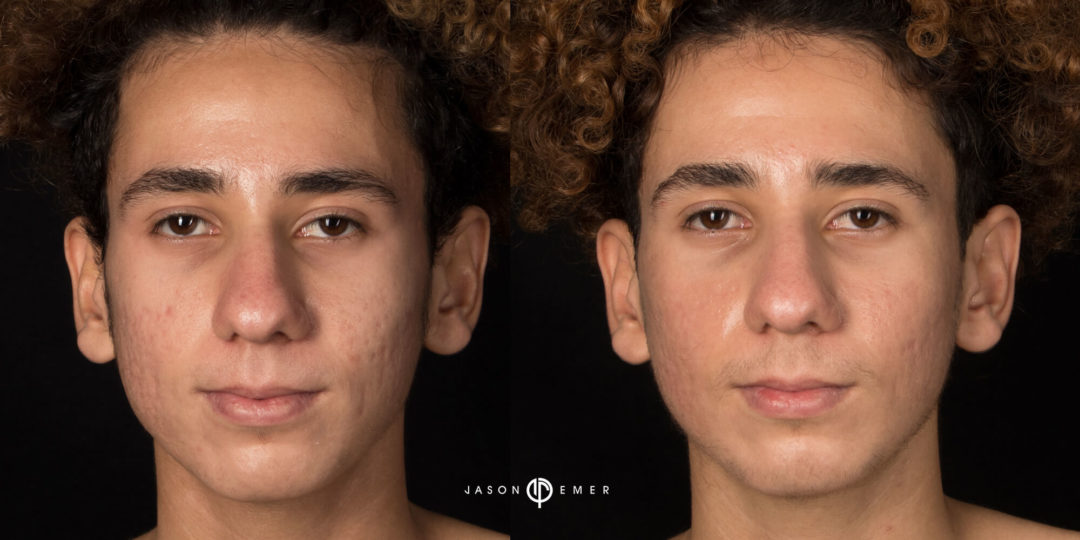
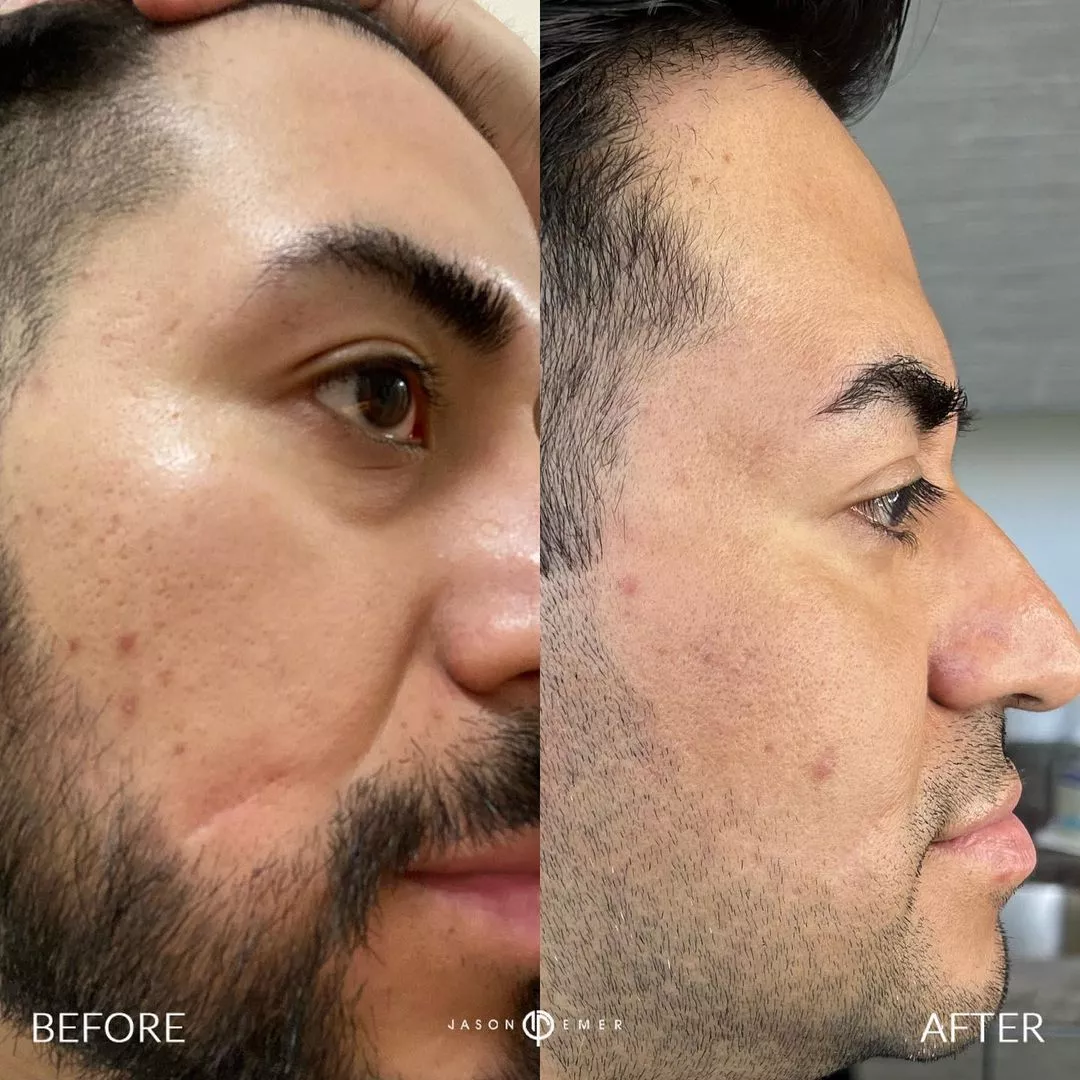
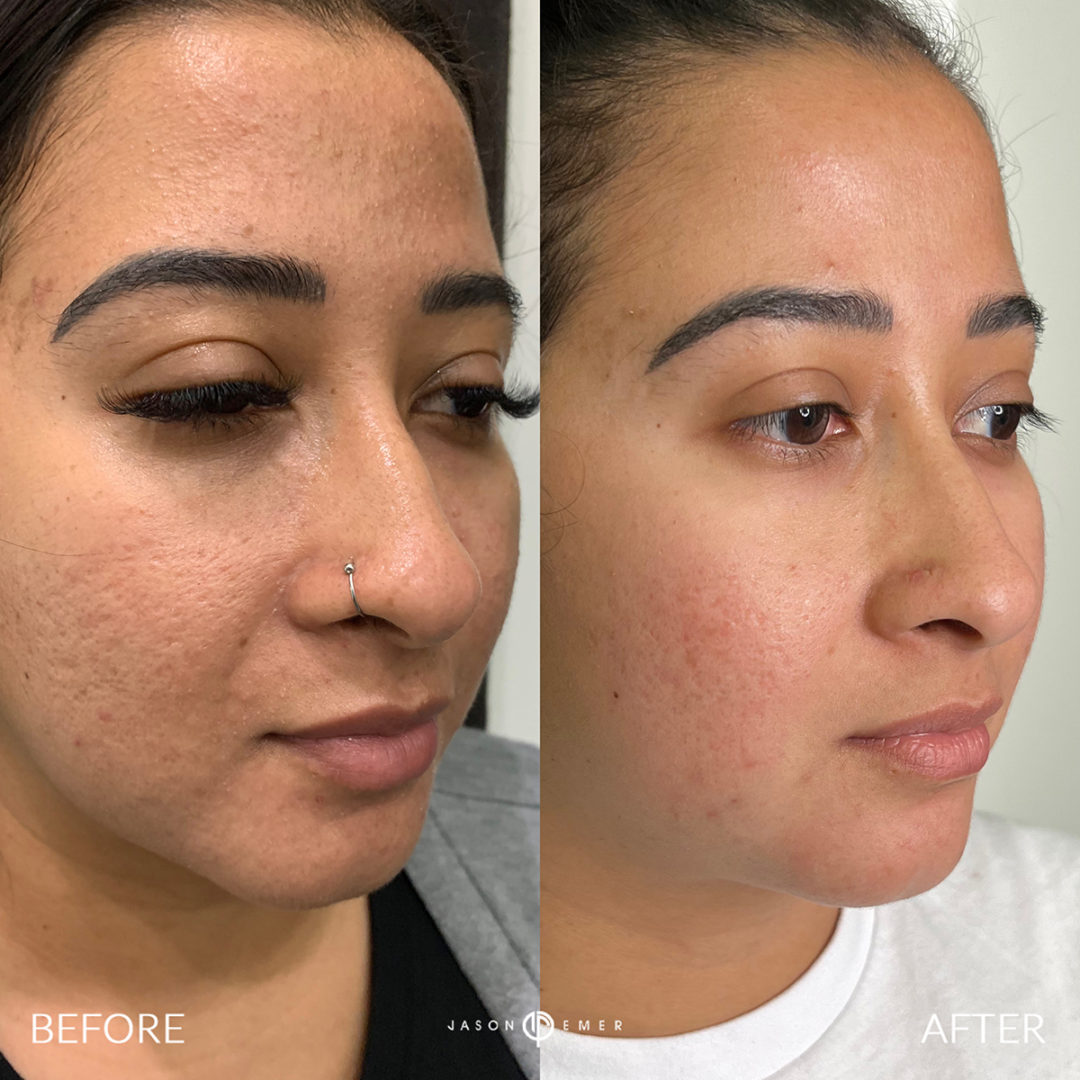
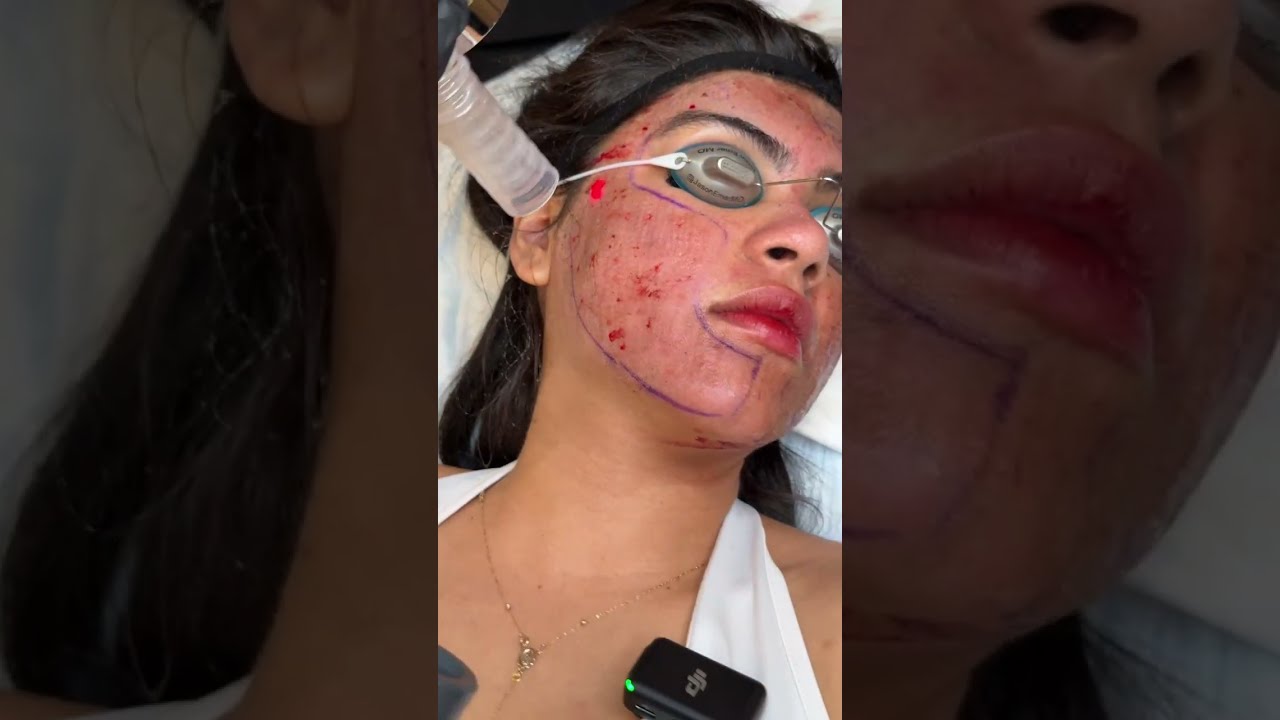
The patient in this video has darker skin and visible texture: acne scars, uneven tone, and surface irregularities that lighter settings cannot reach. Dr. Emer is using a fully ablative CO2 laser, which means the entire surface layer of skin is vaporized and replaced as it heals.
That level of depth carries pigment risk on darker skin tones, which is exactly why most physicians avoid it. Dr. Emer does not avoid it. He manages it by varying the laser strength across different areas of the face, blending the treatment so any temporary color change reads as random texture rather than a hard line, and building a skincare plan that starts the day of the procedure.
How the treatment is layered
The session starts with the deepest setting on the areas with the most scarring. You can see the glossy sheen on the skin in the video: that is the visual marker that the laser has reached the correct depth. Dr. Emer then moves to a lighter setting on areas with less damage, blending the whole face so the transition between treated zones is invisible.
The forehead was added during the session even though it was not part of the original plan, because blending it into the rest of the face will produce a better overall outcome. Ice pick scars, which are deep and narrow, receive focused passes. The temples are blended last so the entire face finishes as one smooth plane.
What happens after
This patient will be followed daily by Dr. Emer's team for two weeks with photos and video check ins. Skincare starts immediately to brighten the skin tone and prevent hyperpigmentation from forming. Even if temporary darkening or lightening occurs, it resolves with the right protocol and always looks better than the texture that was there before.
Dr. Emer references a patient posted the day before this session who had hyperpigmentation after a stronger treatment and came back with beautiful skin after following the skincare plan. That is the standard: manage the risk, follow the patient, and get the skin clear.
Why most doctors do not do this
Dr. Emer states plainly in the video that most physicians do not perform this level of resurfacing on darker skin because they lack the education, the experience, or the confidence to manage the outcome if pigment issues arise. They would not know how to use the laser with the necessary care, and they would not know how to correct problems if they occurred.
This is not a procedure to shop for by price or convenience. It is a procedure that requires a physician who has done it hundreds of times and knows exactly how to layer depth, blend transitions, and guide healing on skin that does not forgive mistakes.