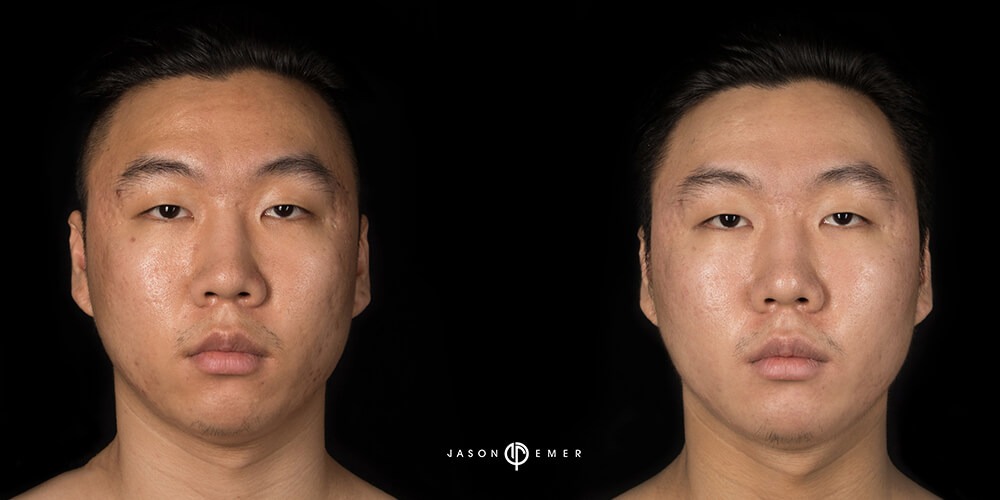
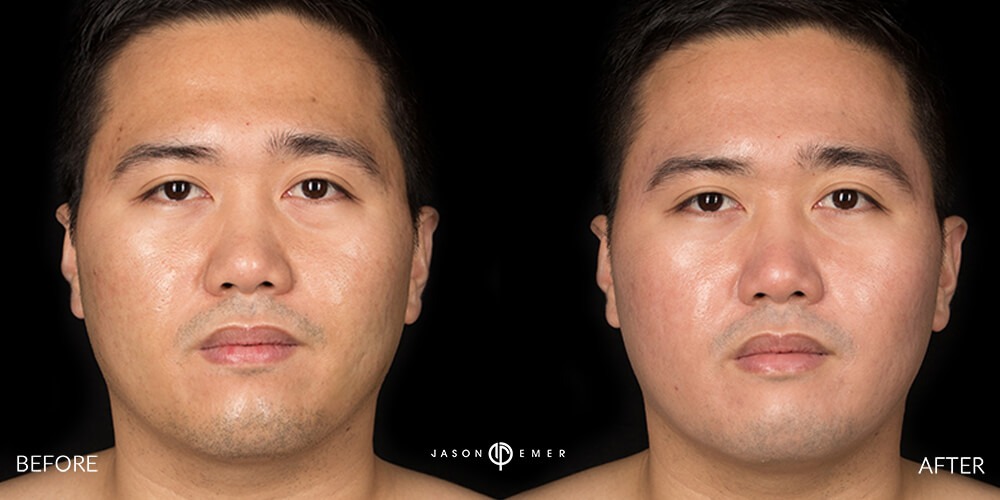
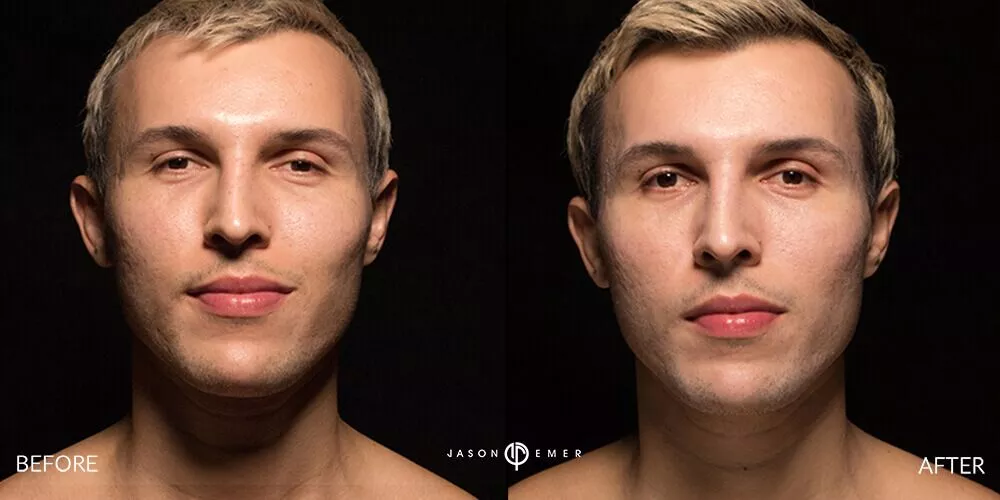
The scar came from cystic acne, not trauma
The patient in this video has a hypertrophic scar on his face, raised and thickened from cystic acne. There was no injury or trauma. The acne itself became the scar.
Dr. Emer numbed the area completely so the patient could sit awake and relaxed during the procedure. The goal was to remove the scar tissue and close the wound in a way that would not create tension on the edges, which is what causes a scar to thicken or widen as it heals.
Excision, then an advancement flap
Once the scar tissue was removed, Dr. Emer raised a flap of surrounding skin to advance it over the wound. The depth and thickness of that flap matter: too deep and the tissue will not survive, too shallow and the blood supply is compromised.
He used the hair follicles as a guide, because they sit in the dermal and subdermal layers where the small blood vessels travel. That is where the flap needs to be cut to stay alive and heal cleanly.
Closing in layers, with no tension
The dermis is the strength layer of the skin. The epidermis is stretchable but not strong, so it cannot hold tension. Dr. Emer placed dissolvable sutures deep in the dermis first, then closed the surface with finer sutures.
The deep sutures are slow to dissolve, taking about six months. That gives the dermis time to heal and form a stable scar before the sutures are gone. The result is a finer, flatter line where the raised scar used to be.
Healing and what to expect
Visible inflammation and bruising last about one week. The incision is strong enough to return to daily activity after about six weeks, once the deeper layers have healed.
The goal is not to erase the scar entirely. It is to replace a thick, raised scar with a thinner, softer line that sits flat and may become nearly invisible over time.