A Practical Guide to Non Invasive Vaginal Rejuvenation
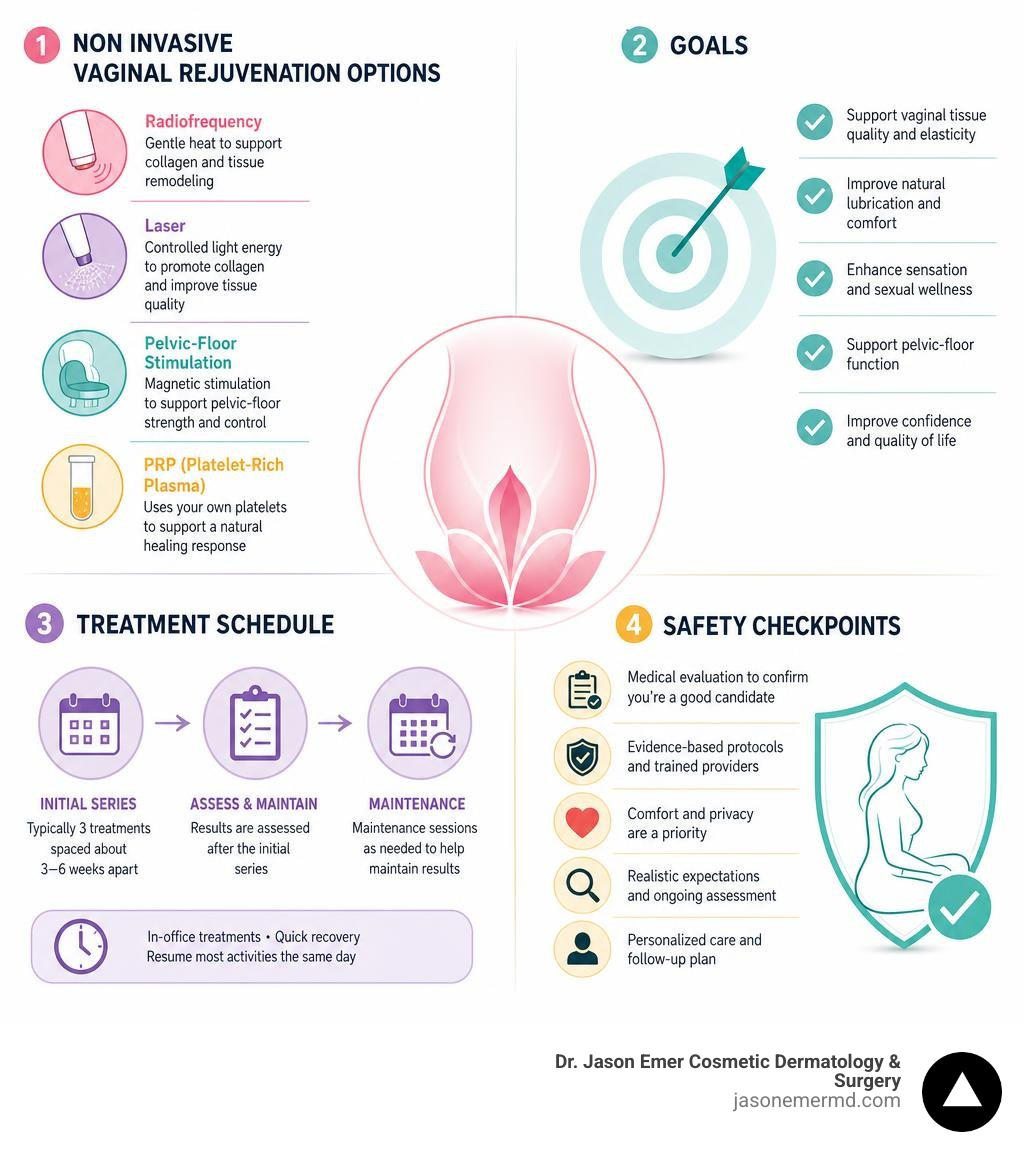
Non invasive vaginal rejuvenation refers to in-office treatments that use controlled energy or biologic injections to support vaginal tissue quality without surgical incisions. Radiofrequency, laser, pelvic-floor stimulation, and platelet-rich plasma (PRP) may be considered for concerns such as dryness, mild laxity, discomfort with sex, reduced sensation, or mild urinary leakage.
The important first step is an evaluation, not a device. These treatments may help with mild tissue changes, but they do not repair significant prolapse, deep pelvic-floor weakness, or excess skin. Depending on the cause, pelvic-floor physical therapy, vaginal moisturizers, prescription vaginal estrogen, or surgery may be a better fit.
Pregnancy, childbirth, menopause, aging, and some cancer treatments can change collagen, lubrication, and pelvic support. Energy-based options aim to trigger collagen remodeling in superficial tissue, while PRP uses components from your own blood to support a healing response. Results vary, typically require a series of appointments, and may need maintenance over time.
I am Jason Emer, MD FAAD, a board-certified dermatologist with more than 19 years of experience using lasers, PRP, fillers, and other non-surgical technologies for tissue rejuvenation. In this guide to non invasive vaginal rejuvenation, I will help you understand the options, evidence, safety questions, and realistic expectations before deciding whether treatment is right for you.
Understanding Non Invasive Vaginal Rejuvenation: Mechanisms and Modalities
Over 20 million women worldwide experience symptoms related to pelvic relaxation, childbirth-related stretching, and urinary leakage. Despite these high numbers, intimate wellness has historically been an under-discussed topic. Studies reveal that 84% of physicians believe vaginal laxity is underreported by patients, and 95% recognize that laxity directly impacts sexual satisfaction and quality of life. Furthermore, while around 40% of women report psychological distress linked to female sexual dysfunction, only 14% ever consult a medical professional about their sexual health.
Non-surgical modalities have evolved significantly over the past decade to bridge this care gap. Rather than physically cutting or suturing tissue, non-invasive systems use controlled thermal or mechanical energy to stimulate a natural wound-healing response within the vaginal mucosa and lamina propria.
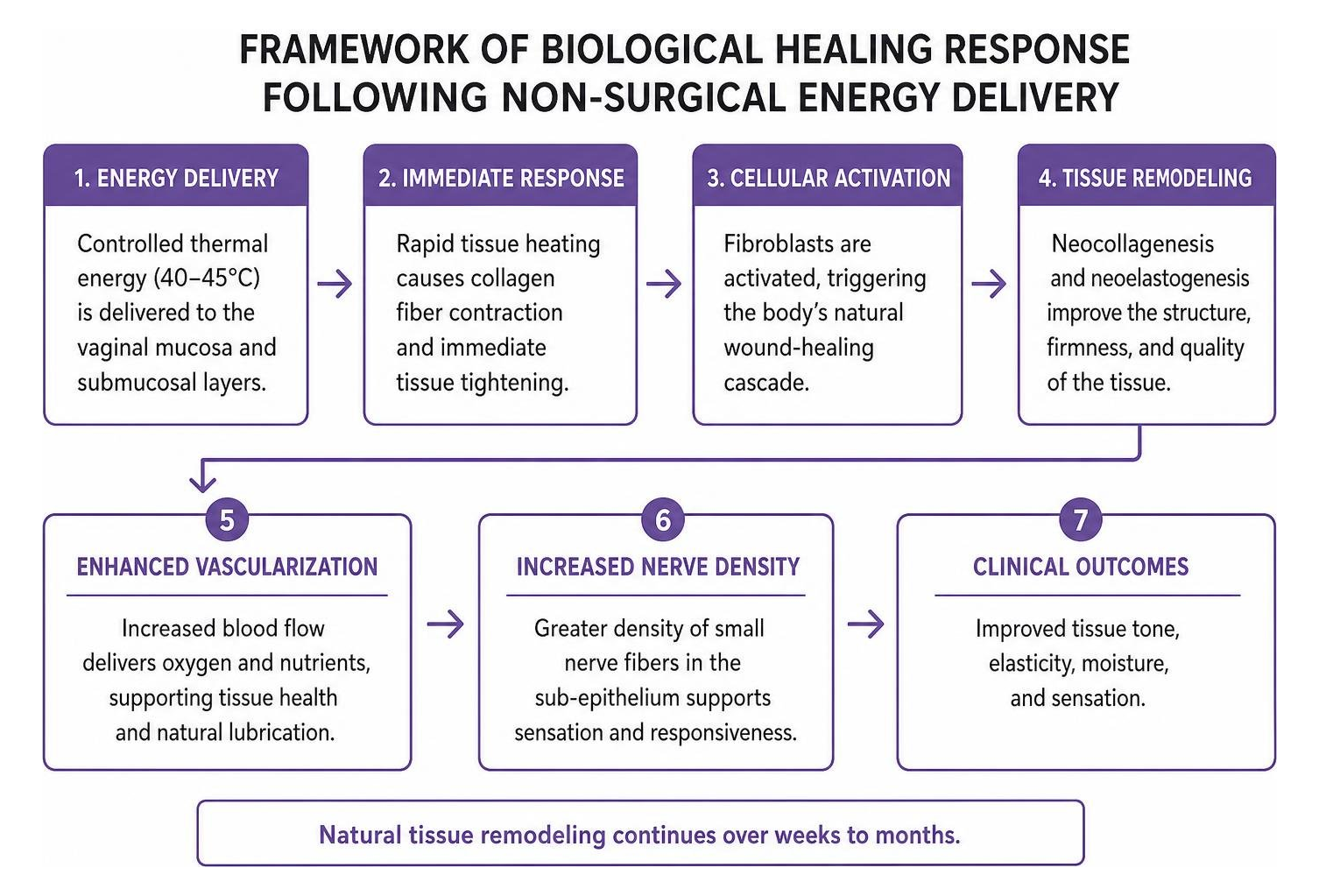
When thermal energy heats the submucosal layers to a therapeutic window (typically between 40°C and 45°C), it causes an immediate structural contraction of existing collagen triples. Over the following weeks and months, activated fibroblasts initiate neocollagenesis (new collagen synthesis) and neoelastogenesis (new elastin production). According to comprehensive review and clinical experience exploring evidence, clinical efficacy, and safety regarding nonsurgical treatment of feminine rejuvenation, these thermal cascades also enhance vascularization and increase the density of small nerve fibers in the sub-epithelium, which helps restore natural moisture and sensation.
Radiofrequency Energy and Neuromuscular Stimulation
Radiofrequency (RF) delivers uniform, volumetric thermal energy deep into soft tissue. Unlike light-based lasers that depend on chromophores (such as water or pigment), RF relies on electrical resistance within the tissue to generate heat. Monopolar and bipolar radiofrequency platforms can safely penetrate up to 4.0 millimeters into the submucosa.
At our practice, we utilize advanced RF systems such as Votiva Forma V. Forma V utilizes temperature-monitored, uniform radiofrequency to gently heat both the internal vaginal canal and external labial tissues. This controlled heating tightens mucosal walls, stimulates blood circulation, and enhances natural moisture production with no sharp pain or social downtime.
For patients whose laxity involves pelvic floor weakness, RF energy is often paired with targeted electrical muscle stimulation (EMS). EMS devices deliver focused electromagnetic or electrical pulses that trigger involuntary supramaximal contractions of the pubococcygeus and surrounding pelvic floor muscles. A single 20-minute EMS session can deliver the muscular equivalent of thousands of manual Kegel exercises, helping re-educate neuromuscular tone and improving bladder support.
Fractional Laser Platforms: CO2 and Erbium Technologies
Laser systems take a different, highly precise approach to mucosal restoration by utilizing specific light wavelengths absorbed by tissue water:
- Fractional Carbon Dioxide (CO2) Lasers (10,600 nm): Micro-ablative CO2 lasers create microscopic columns of thermal injury across the mucosal lining while leaving surrounding tissue intact. This pattern stimulates rapid cellular turnover. A landmark study on the efficacy of fractional CO2 laser treatment for vaginal relaxation syndrome combined with recurrent bacterial vaginitis published in Scientific Reports showed that CO2 laser therapy thickens the stratified squamous epithelium and increases intracellular glycogen stores. This glycogen serves as vital nourishment for protective Lactobacillus species, significantly improving vaginal pH and reducing 3-month bacterial vaginitis recurrence from 36.67% to just 8.33%.
- Erbium:YAG Lasers (2940 nm): Er:YAG lasers, such as those utilizing RenovaLase® photothermal technology, feature an extremely high water-absorption coefficient. This allows for non-ablative, controlled heating of the lamina propria without stripping the surface epithelium. It is especially useful for patients with severe mucosal thinning or cancer survivors who cannot use estrogen therapies.
- 1470 nm Diode Lasers: Operating in the near-infrared spectrum, 1470 nm diode lasers deliver uniform thermal energy to deeper mucosal layers. Groundbreaking research published in a multi-omics observational study on 1470nm laser therapy demonstrated that this wavelength upregulates key signaling pathways (such as TGF-β) and increases type I and type III collagen gene expression (COL1A1 and COL3A1) by over 2.8-fold, increasing vaginal wall thickness by 35% and mucosal collagen density by 42%.
Biologic Enhancements and Dermal Biostimulators
In addition to energy-based devices, regenerative biologics and soft-tissue injectables play a major role in non-surgical intimate rejuvenation:
- Platelet-Rich Plasma (PRP): Treatments like the O Shot involve harvesting a small sample of the patient's own blood, concentrating the platelets, and injecting the growth-factor-rich plasma into targeted areas like the clitoral complex and anterior vaginal wall (G-spot). The released growth factors (such as VEGF, PDGF, and EGF) stimulate neovascularization, cell proliferation, and nerve sensitivity.
- Hyaluronic Acid and Biostimulatory Fillers: For patients dealing with volume loss in the labia majora due to aging or weight loss, strategic injections of dermal fillers restore structural fullness, symmetry, and protection to the delicate inner structures. You can view real clinical outcomes in our vaginal filler gallery.
Functional and Aesthetic Indications Addressed by Energy Devices
Non-invasive intimate wellness procedures are designed to address interrelated functional, structural, and physiological symptoms:
- Vaginal Relaxation Syndrome (Laxity): Childbirth and natural aging degrade supportive collagen and elastin matrices, leading to a loose feeling and reduced friction during intercourse. Energy-based tightening helps restore mucosal elasticity and canal tone.
- Genitourinary Syndrome of Menopause (GSM) & Vaginal Atrophy: Decreased estrogen levels lead to thinning of the epithelial lining, loss of natural rugae (folds), decreased blood supply, and reduced natural lubrication. Non-invasive thermal therapies help restore mucosal thickness, hydration, and overall tissue health.
- Dyspareunia (Painful Intercourse): Chronic friction, dryness, and post-surgical scarring can make sexual activity painful. Thermal and biologic treatments improve tissue compliance, elasticity, and lubrication to alleviate discomfort.
- Mild Stress Urinary Incontinence (SUI): Involuntary urine leakage during coughing, laughing, or exercising occurs when the urethral support mechanism weakens. Energy devices stimulate collagen remodeling along the anterior vaginal wall to provide better sub-urethral support.
- Microbial Dysbiosis: By restoring the integrity of the vaginal epithelium and boosting glycogen production, energy-based treatments support healthy Lactobacillus colonization, helping normalize acidic pH and reduce chronic infections.
Clinical Candidacy for Non Invasive Vaginal Rejuvenation
Selecting the right procedure starts with understanding who benefits most from non-surgical intervention:
Ideal Candidates:
- Women experiencing mild-to-moderate vaginal laxity following vaginal deliveries.
- Perimenopausal or postmenopausal women suffering from vaginal dryness, burning, or discomfort with intercourse.
- Cancer survivors (such as breast or endometrial cancer patients) who experience severe vaginal atrophy but cannot safely use hormone replacement therapy (HRT).
- Patients with mild stress urinary incontinence seeking an alternative to surgery.
Who Should Avoid or Postpone Treatment:
- Severe Pelvic Organ Prolapse (Stage III or IV): Significant uterine or bladder descent is a structural fascial defect that requires surgical repair or a pessary; energy devices will not correct major anatomical herniations.
- Active Infections: Any active bacterial vaginosis, candidiasis, trichomoniasis, or open herpes lesions must be fully treated prior to procedure scheduling.
- Pregnancy: Energy-based intimate treatments are strictly contraindicated during pregnancy; postpartum patients should wait at least 6 to 8 weeks after delivery and obtain clearance from their obstetrician.
- Implanted Electronic Devices: Patients with pacemakers or internal defibrillators should avoid radiofrequency and EMS devices due to potential electrical interference.
Treatment Protocols, Safety Standards, and Surgical Comparisons
A typical non-invasive treatment plan consists of 2 to 3 sessions spaced 3 to 4 weeks apart.
Individual in-office sessions are straightforward:
- Preparation: An internal and external examination is performed to ensure tissue health. For laser procedures or RF microneedling, a topical numbing cream may be applied to the introitus for 15 to 20 minutes to maximize comfort. Standard radiofrequency treatments require only a water-based coupling gel.
- Procedure: A specialized, sterile probe is inserted into the vaginal canal. Energy is delivered uniformly across all quadrants in a 360-degree rotation as the handpiece is gently moved from the deep apex toward the introitus.
- Post-Treatment: The entire procedure takes 15 to 30 minutes. Patients can immediately return to work, driving, and routine exercise.
As discussed in the medical review Vaginal rejuvenation: From scalpel to wands, non-invasive devices carry a low risk of complications when performed by experienced medical providers using calibrated settings. Expected, temporary side effects include mild warmth, slight swelling, minor spotting, or temporary clear discharge that resolves within 24 to 48 hours.
Regulatory organizations such as the U.S. FDA and the American College of Obstetricians and Gynecologists (ACOG) emphasize that energy-based intimate treatments should be performed with clear clinical indications and realistic goals. They warn against predatory marketing that promises "miraculous" surgical transformations without surgery. Patient safety depends on accurate clinical diagnosis, sterile technique, and proper provider training.
Longevity and Maintenance of Non Invasive Vaginal Rejuvenation
Non-surgical tissue remodeling is an ongoing biological process rather than a permanent structural alteration. Because the body naturally continues to age and break down structural proteins, newly synthesized collagen and elastin fibers will gradually degrade over time.
Clinical studies show that structural gains in tissue thickness, hydration, and elasticity typically last 12 to 18 months following an initial multi-session series. To sustain optimal mucosal health, bladder support, and sexual comfort, we recommend a single maintenance booster session every 12 months.
Comparing Energy Modalities to Surgical Procedures
When evaluating options for intimate wellness, it is essential to understand the distinct roles of non-invasive energy devices versus surgical interventions such as labiaplasty or vaginoplasty:
| Feature | Non-Invasive Energy Treatments (RF / Laser) | Surgical Procedures (Vaginoplasty / Labiaplasty) |
|---|---|---|
| Primary Mechanism | Controlled thermal stimulation of collagen and elastin | Surgical excision of excess skin and muscular suturing |
| Tissue Target | Vaginal mucosa, submucosa, and external skin tone | Deep pelvic fascial defects, muscle separation, enlarged labia |
| Anesthesia | None or topical numbing cream | Local with sedation or general anesthesia |
| Downtime | Zero days; immediate return to daily activities | 1 to 2 weeks off work; 4 to 6 weeks activity restriction |
| Sexual Abstinence | 0 days (RF) to 3 days (Laser) | 4 to 6 weeks |
| Longevity | 12 to 18 months (maintenance sessions recommended) | Long-lasting to permanent (subject to subsequent childbirth/aging) |
| Indications | Dryness, mild laxity, mild SUI, tissue thinning, dyspareunia | Severe laxity, structural prolapse, prominent labial hypertrophy |
In comprehensive treatment planning, non-surgical and surgical modalities can complement one another. For instance, patients undergoing structural labial reduction or mons pubis liposuction to eliminate localized fat pockets often combine these procedures with RF tightening or regenerative anal rejuvenation for complete, harmonious pelvic enhancement.
Frequently Asked Questions About Non-Surgical Intimate Wellness
How do radiofrequency and laser treatments differ in vaginal tissue?
Radiofrequency devices use electrical current to deliver volumetric heat deep into the submucosal tissue (up to 4.0 mm) without damaging the surface epithelium. This makes RF particularly effective for broad tissue tightening, boosting blood flow, and stimulating elastin. Lasers utilize specific light wavelengths to create precise superficial micro-thermal columns (penetrating 0.2 mm to 0.6 mm), making them ideal for resurfacing the epithelial lining, restoring glycogen stores, balancing vaginal pH, and treating mucosal atrophy.
How soon can normal activities and intimacy be resumed?
Non-invasive radiofrequency treatments require zero downtime—patients may resume exercise, work, and sexual intercourse on the very same day. For micro-ablative fractional laser procedures (such as CO2), we advise abstaining from sexual intercourse, tampon use, swimming pools, and hot tubs for approximately 3 to 7 days to allow the mucosal surface to heal.
Is non-invasive intimate rejuvenation covered by medical insurance?
Because energy-based intimate treatments and biologic injections are classified as elective procedures, they are not covered by commercial health insurance or Medicare. The cost generally ranges from $800 to $1,500 per single session, or $2,000 to $4,500 for a comprehensive three-treatment package. Many clinics provide flexible healthcare financing plans to help manage out-of-pocket costs.
Conclusion
Intimate health plays a vital role in physical comfort, confidence, and overall well-being. Non-invasive rejuvenation provides an effective, low-risk way to restore hydration, improve tone, and support bladder control without the downtime of surgery.
Achieving natural, lasting outcomes requires partnering with a skilled, board-certified physician who understands intimate anatomy and modern energy-based devices. If you are ready to address your symptoms in a private, supportive environment, we invite you to explore our advanced approaches to non-surgical vaginal rejuvenation and schedule a personalized consultation with Dr. Jason Emer today.
This resource provides general educational information. Treatment recommendations depend on your health, goals, and consultation with a qualified clinician.