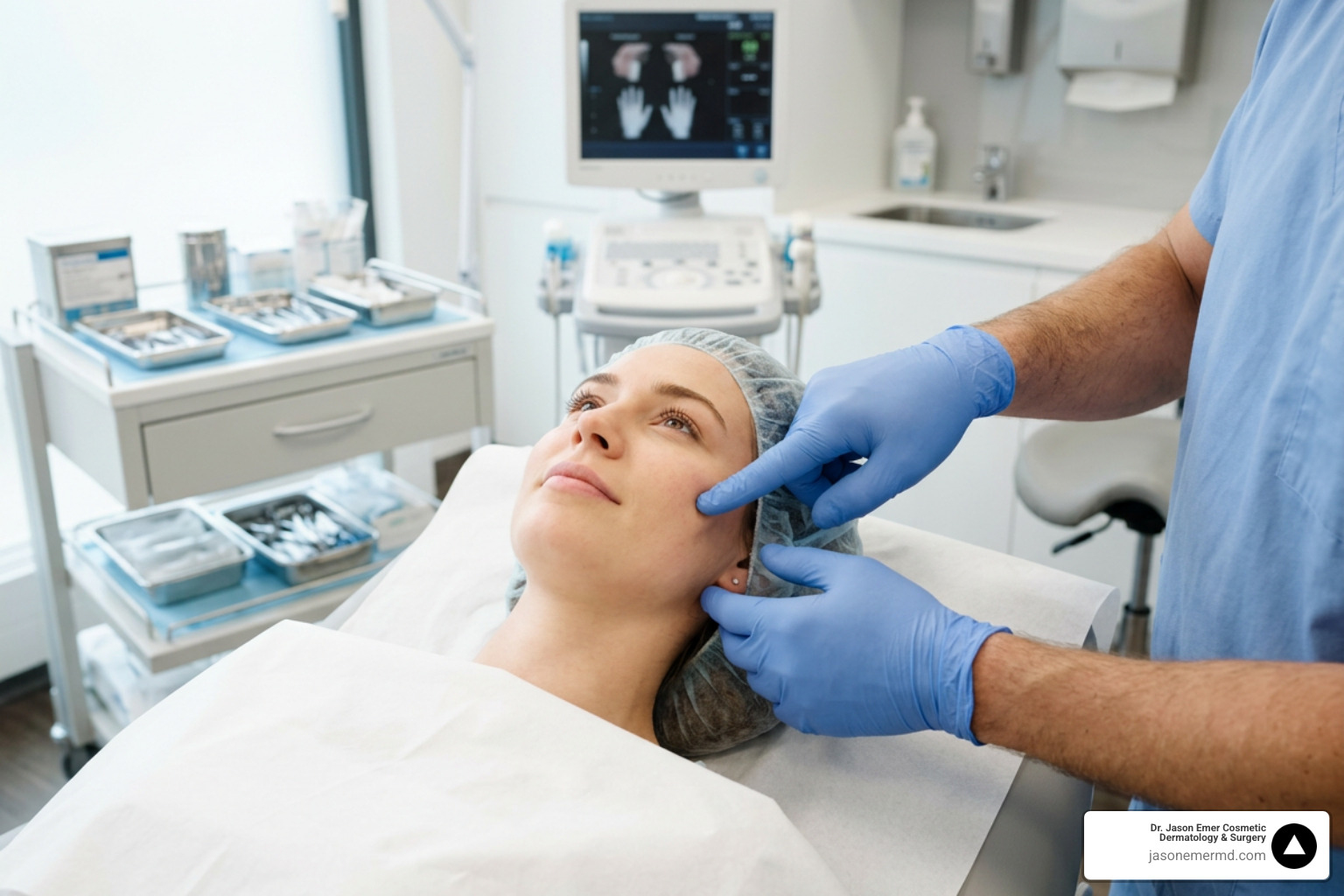
What Determines a Buccal Fat Pad Removal Price?
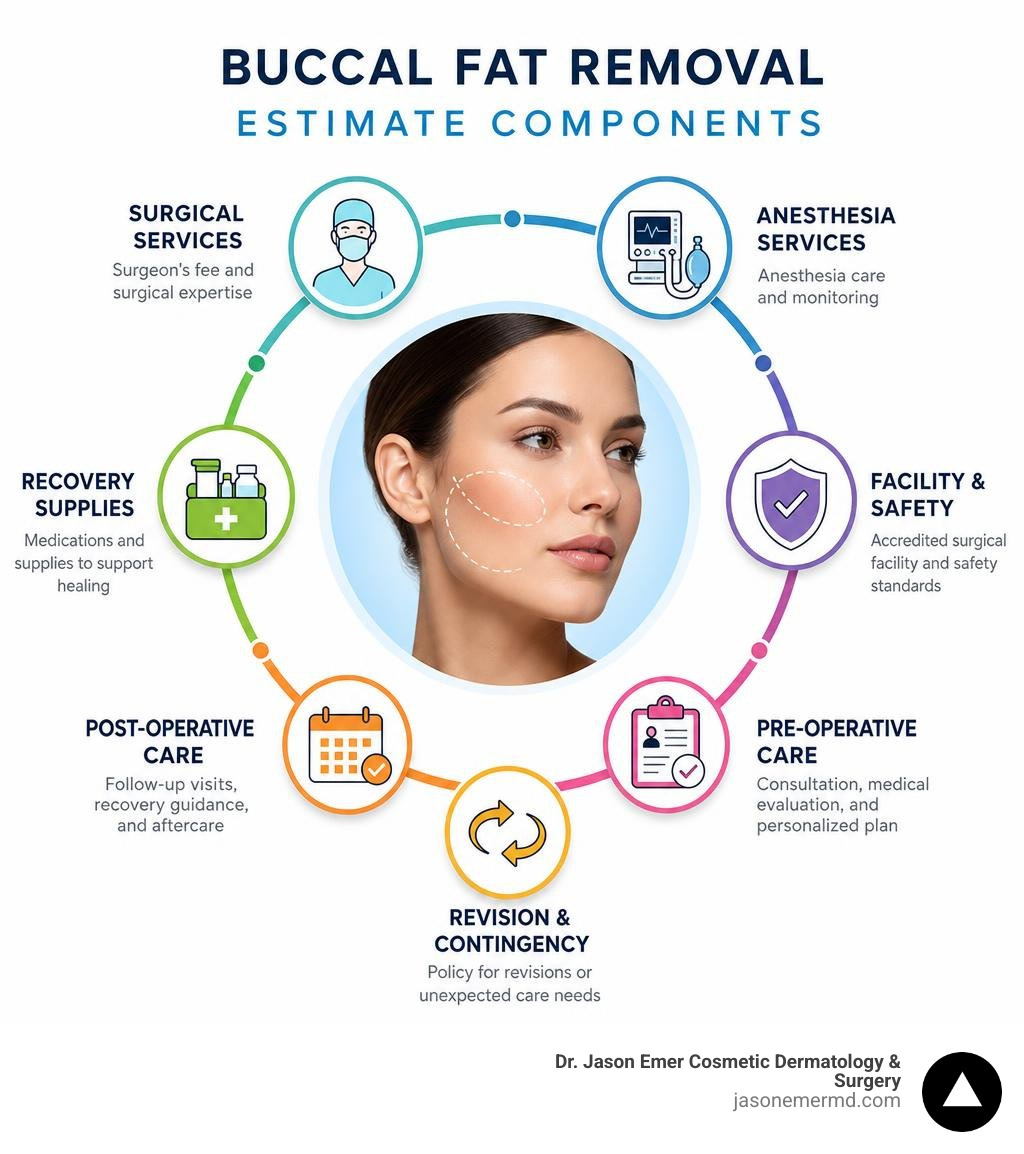
Many people assume cheek reduction has one standard fee. It does not. A buccal fat pad removal price depends on the surgical plan, the provider's experience, the anesthesia approach, the setting, and the care included before and after surgery.
Ask for a written estimate that explains what is and is not included.
Ask whether the total includes surgical and anesthesia services, facility and monitoring standards, pre-operative evaluation, follow-up visits, recovery supplies, and the policy for revisions or unexpected care.
Those details matter because buccal fat removal is not just a cosmetic adjustment. It requires careful facial assessment. Removing too much volume may not suit every face.
Jason Emer, MD FAAD, is a board-certified dermatologist with more than 19 years of experience in aesthetic treatment planning, body contouring, facial rejuvenation, and fat-related procedures.
Buccal fat pad removal price depends on surgical expertise and facility standards
Selecting an operative team involves more than comparing fees. The buccal fat pad sits near facial nerve branches and the parotid duct. Safe excision requires precise dissection, conservative judgment, and a setting prepared for sterile technique and monitoring.
Evaluating surgeon credentials and clinical experience for cheek reduction
Board certification establishes a baseline of training, but facial contouring also depends on experience with soft-tissue volume, skeletal structure, and asymmetry. During evaluation, the provider reviews cheek thickness, jawline shape, bite-related anatomy, skin elasticity, and how the midface may age.
Patients should also understand the revision policy before treatment. Possible tradeoffs include swelling, contour irregularity, asymmetry, infection, salivary duct injury, nerve irritation, and a thinner appearance that may become more noticeable later.
Analyzing anesthesia options and surgical facility protocols
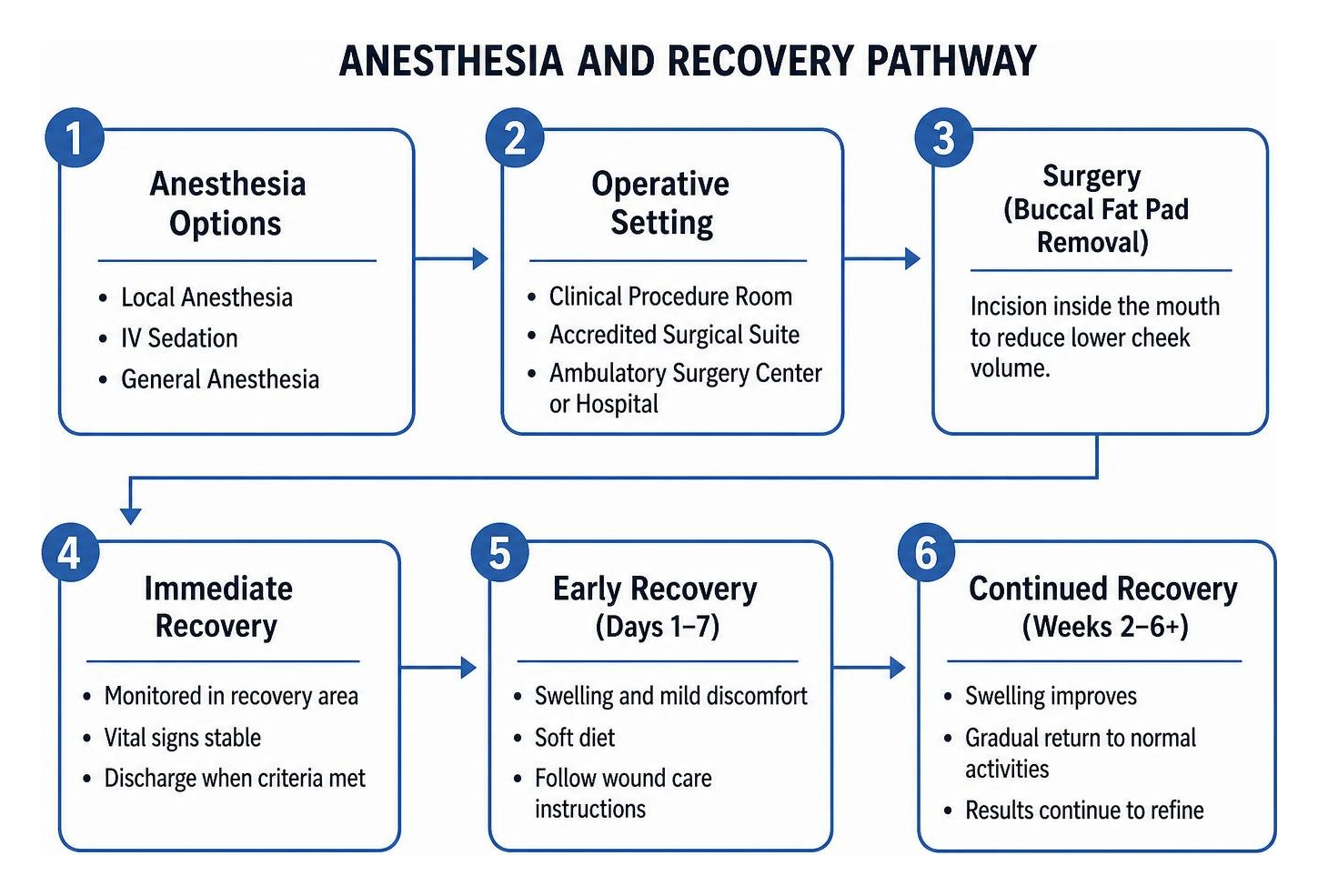
Anesthesia affects the operative setting, staffing, monitoring, and recovery plan. Isolated cheek reduction may be performed with local anesthesia in a clinical procedure room. IV sedation or general anesthesia requires a higher level of facility support.
| Anesthesia Type | Operative Setting | Monitoring Requirements | Recovery Considerations |
|---|---|---|---|
| Local Anesthesia | Clinical Procedure Room | Standard vital signs monitoring | Immediate mobility; minimal post-anesthesia fog |
| IV Sedation | Accredited Surgical Suite | Continuous cardiopulmonary monitoring | Requires brief recovery bay observation |
| General Anesthesia | Ambulatory Surgery Center or Hospital | Advanced airway and vital support | Longer recovery window; dedicated post-op care |
Each setting should include sterile disposable supplies, trained support staff, emergency protocols, and defined discharge criteria.
Cheek reduction works within a broader facial contouring plan

Midface reduction rarely exists in isolation. When planning buccal fat pad removal, the relationship between the cheekbones, chin, jawline, and neck determines whether lower-cheek reduction will look balanced.
Integrating midface reduction with jawline definition and volume balancing
Facial balance relies on harmony across structural compartments. Tailored planning for buccal fat removal for women may focus on softening lower-cheek fullness while preserving midface support. Planning for buccal fat removal for men may place more emphasis on the transition from cheek to jawline.
Alternatives may include doing less, observing facial changes over time, or addressing surrounding structure first.
The main tradeoff is simple. Less removal can preserve support later, while more removal can create a sharper early contour.
Conclusion
Facial contouring requires an understanding of anatomy, aging patterns, and conservative surgical planning. Exploring related options in facial plastic surgery can help place cheek reduction within a wider treatment framework.
A formal consultation is the appropriate setting to evaluate personal anatomy, review alternatives, discuss tradeoffs, and decide whether any procedure should be performed.
What to remember
- Buccal fat reduction changes deep facial anatomy, so conservative planning helps reduce the risk of long-term midface hollowing.
- Anesthesia choices and facility standards affect monitoring, safety protocols, and the recovery pathway.
- Alternatives may include doing less, staging care, restoring volume, or refining the jawline before removing cheek volume.
This content is for general education and does not provide a diagnosis, determine candidacy, or replace a consultation with a licensed clinician.
Recovery planning helps protect long-term cheek contour stability
The midface naturally loses subcutaneous volume with age. Removing excessive deep fat can make the face look hollow later, even if early swelling hides that change. Conservative excision can reduce the chance of an over-thinned lower cheek.
Downtime is part of the treatment plan. Intraoral incisions require soft foods, careful chewing, and antiseptic mouth rinses to protect healing tissues. Swelling often peaks early and settles gradually. Final contour assessment may take time because deep tissues heal more slowly than bruising.
Addressing volume loss and corrective interventions over time
Some individuals seek secondary care after over-resection or normal facial fat atrophy. Facial fat transfer may be considered to restore selected hollow areas with autologous fat.
Energy-based tightening may be discussed when laxity is present, but skin type matters. Darker skin tones have a higher risk of post-inflammatory hyperpigmentation, so device selection and treatment sequencing may need to differ.
Conclusion
Facial contouring requires an understanding of anatomy, aging patterns, and conservative surgical planning. Exploring related options in facial plastic surgery can help place cheek reduction within a wider treatment framework.
A formal consultation is the appropriate setting to evaluate personal anatomy, review alternatives, discuss tradeoffs, and decide whether any procedure should be performed.
What to remember
- Buccal fat reduction changes deep facial anatomy, so conservative planning helps reduce the risk of long-term midface hollowing.
- Anesthesia choices and facility standards affect monitoring, safety protocols, and the recovery pathway.
- Alternatives may include doing less, staging care, restoring volume, or refining the jawline before removing cheek volume.
This content is for general education and does not provide a diagnosis, determine candidacy, or replace a consultation with a licensed clinician.
This resource provides general educational information. Treatment recommendations depend on your health, goals, and consultation with a qualified clinician.