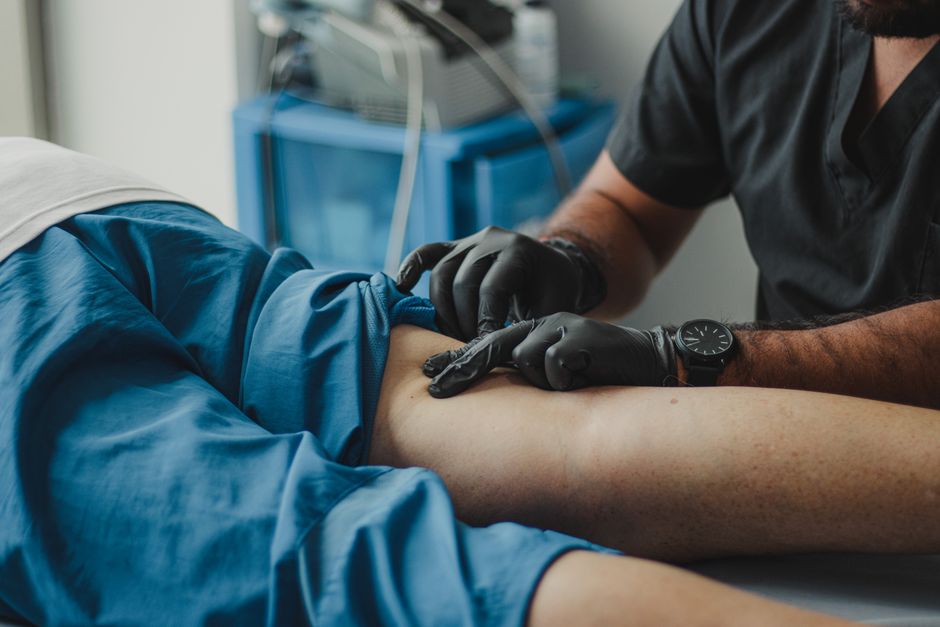
Cellulite treatment in Los Angeles starts beneath the skin
Cellulite may look like a surface problem, but some dimples form when fibrous bands pull the skin down over the tissue beneath it. For cellulite treatment in Los Angeles, start with an assessment of the cause. Targeted subcision, including Avéli, is designed to release selected bands. Skin laxity and other contour concerns may need a different plan.
Jason Emer, MD, FAAD, is a Beverly Hills dermatologist with over 19 years of experience in body contouring and cellulite reduction. When discussing cellulite treatment Los Angeles residents may consider, Dr. Emer focuses first on the anatomy behind the dimpling.
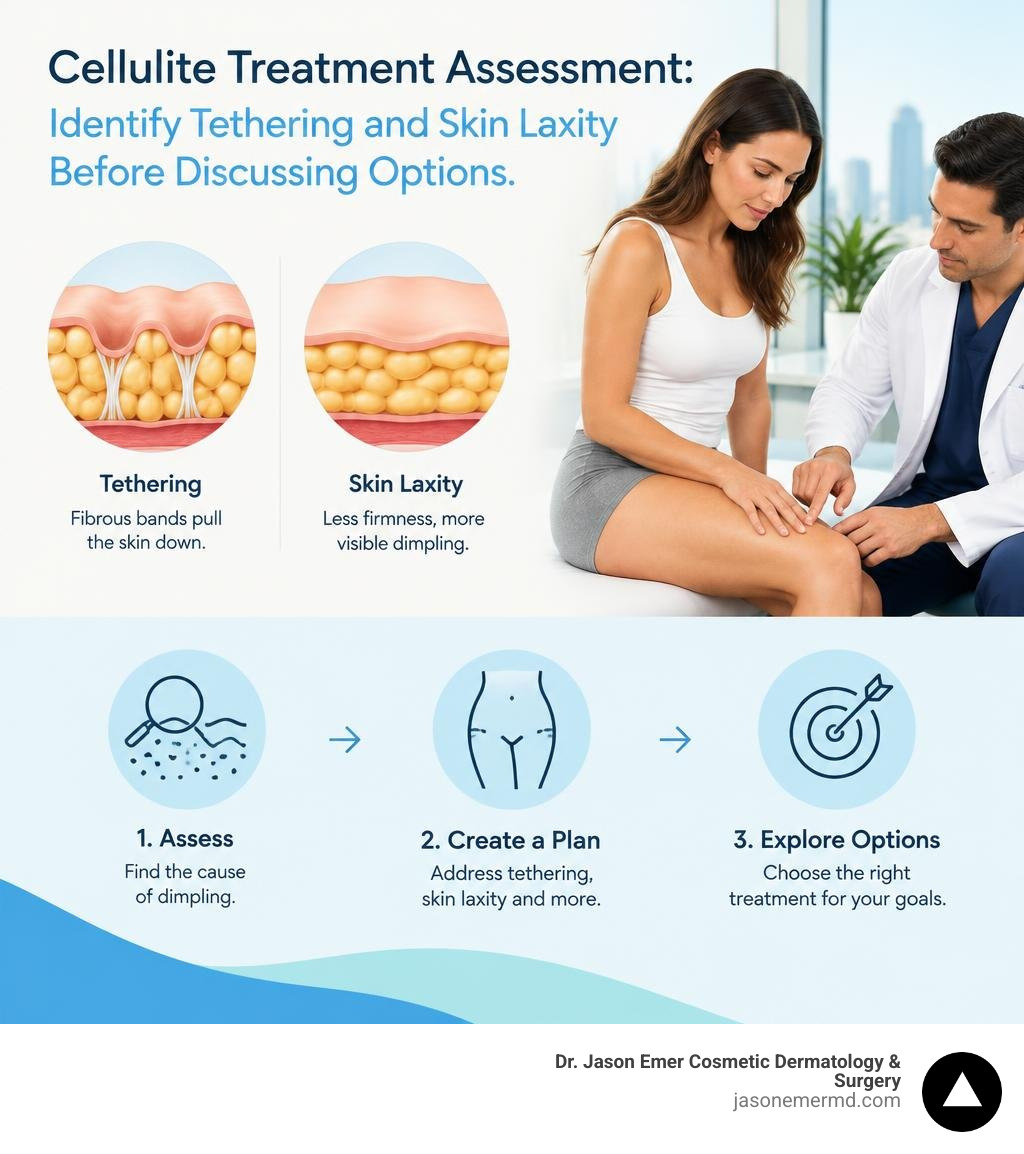
Similar topics to cellulite treatment Los Angeles:
Structural subcision is one approach to cellulite treatment in Los Angeles.
Most topical regimens treat dimpling as a surface flaw, but true dimples originate deep within subcutaneous tissue. For cellulite treatment in Los Angeles, clinical evaluation begins by identifying the underlying structural cause rather than applying topical products. Fibrous septae run vertically through the hypodermis, connecting the reticular dermis to underlying fascia. When these collagenous bands shorten or stiffen, they anchor the skin downward. Surrounding adipose tissue pushes upward between these tethers, creating visible depressions across the buttocks and thighs.
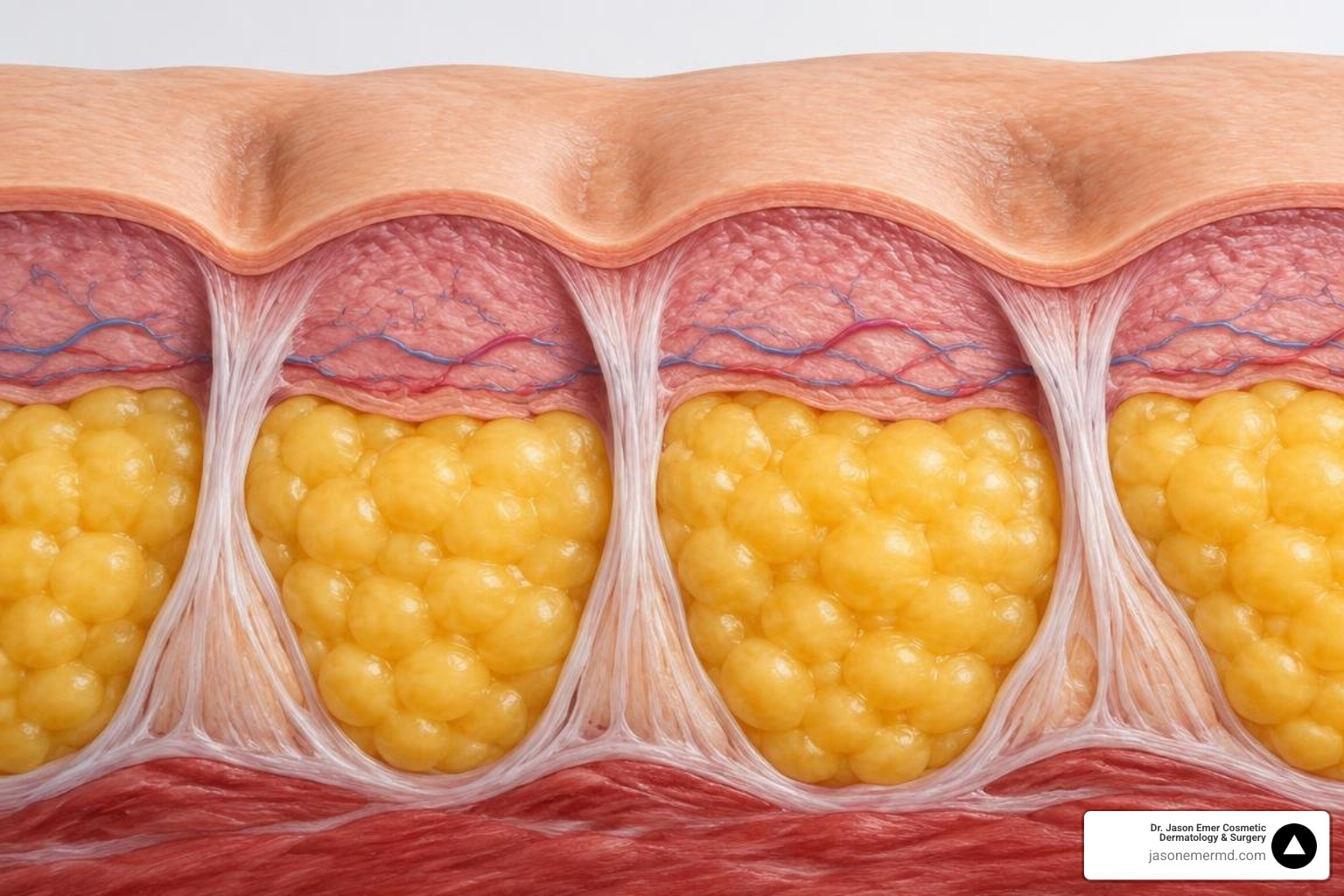
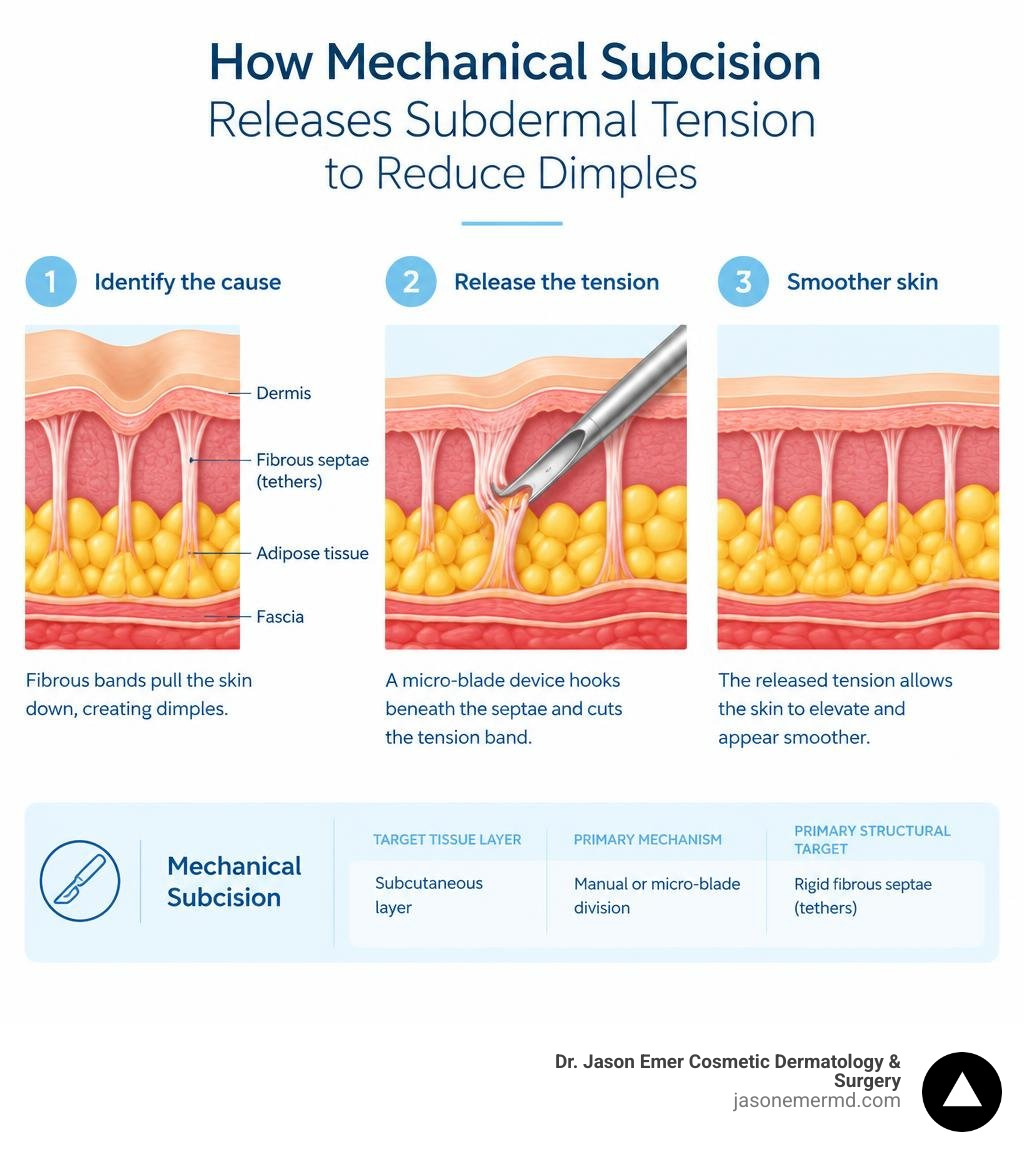
Surface-level therapies cannot alter deep fibrous bands. Mechanical subcision operates beneath the dermis to sever these structural tethers. A specialized micro-blade device hooks beneath individual septae, cutting the tension band to allow the skin surface to elevate.
| Treatment Modality | Target Tissue Layer | Primary Mechanism | Primary Structural Target |
|---|---|---|---|
| Mechanical Subcision | Subcutaneous layer | Manual or micro-blade division | Rigid fibrous septae (tethers) |
| Radiofrequency / Lasers | Epidermis and dermis | Thermal heating and remodeling | Dermal collagen and mild laxity |
| Acoustic Wave Therapy | Superficial fascia | Mechanical vibration | Microcirculation and tissue elasticity |
Avéli uses targeted subcision technology to release selected septae
Devices like Avéli allow the practitioner to manually hook, verify, and cut specific fibrous bands under direct tactile feedback. Releasing these tethers reduces the downward pull on the skin.
Clinical follow-up helps describe structural changes and treatment limitations
Clinical follow-up helps evaluate structural changes and long-term tissue responses. Because subcision physically divides tissue, it alters the structural architecture of the hypodermis. Dr. Emer often assesses whether patients benefit from long-term structural cellulite approaches or non-interventional observation.
Targeted mechanical release addresses tethering through a mapped, in-office procedure.
Subdermal contouring occurs in an outpatient setting using local tumescent anesthesia to numb the targeted area and minimize procedural discomfort.
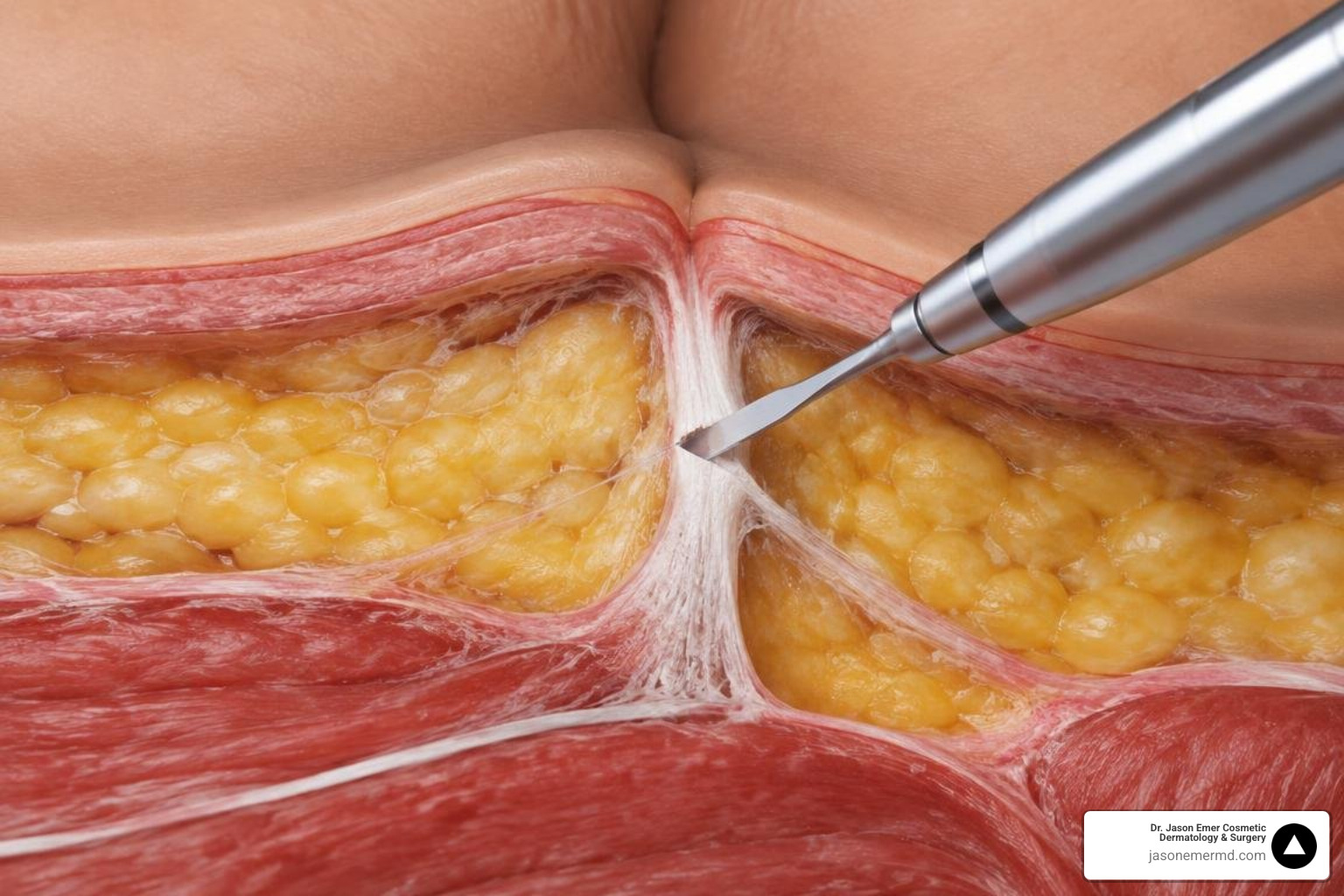
A mapped, single-session procedure guides targeted release
The practitioner marks dimples while the individual stands under direct lighting. Tumescent fluid is introduced through tiny entry points. The subcision device is then inserted to identify and release the tension bands. Reviewing cellulite reduction photo examples illustrates how dimple elevation appears following structural release.
Recovery can include temporary tenderness and bruising
Healing involves expected post-procedure side effects. Mild pain commonly presents within the first 24 hours. Bruising, swelling, and tenderness to the touch typically resolve within 30 days. Some individuals return to routine activities within a single day, while others require up to a week. Supportive compression garments help minimize fluid accumulation.
Comprehensive contouring plans account for skin laxity and anatomical differences.
Not all contour irregularities stem from tethered septae. Generalized skin laxity, volume loss, and dermal thinning can create superficial rippling that mimics dimples. Subcision alone cannot resolve laxity. Other modalities, including biostimulatory injectables, address structural volume and collagen density.
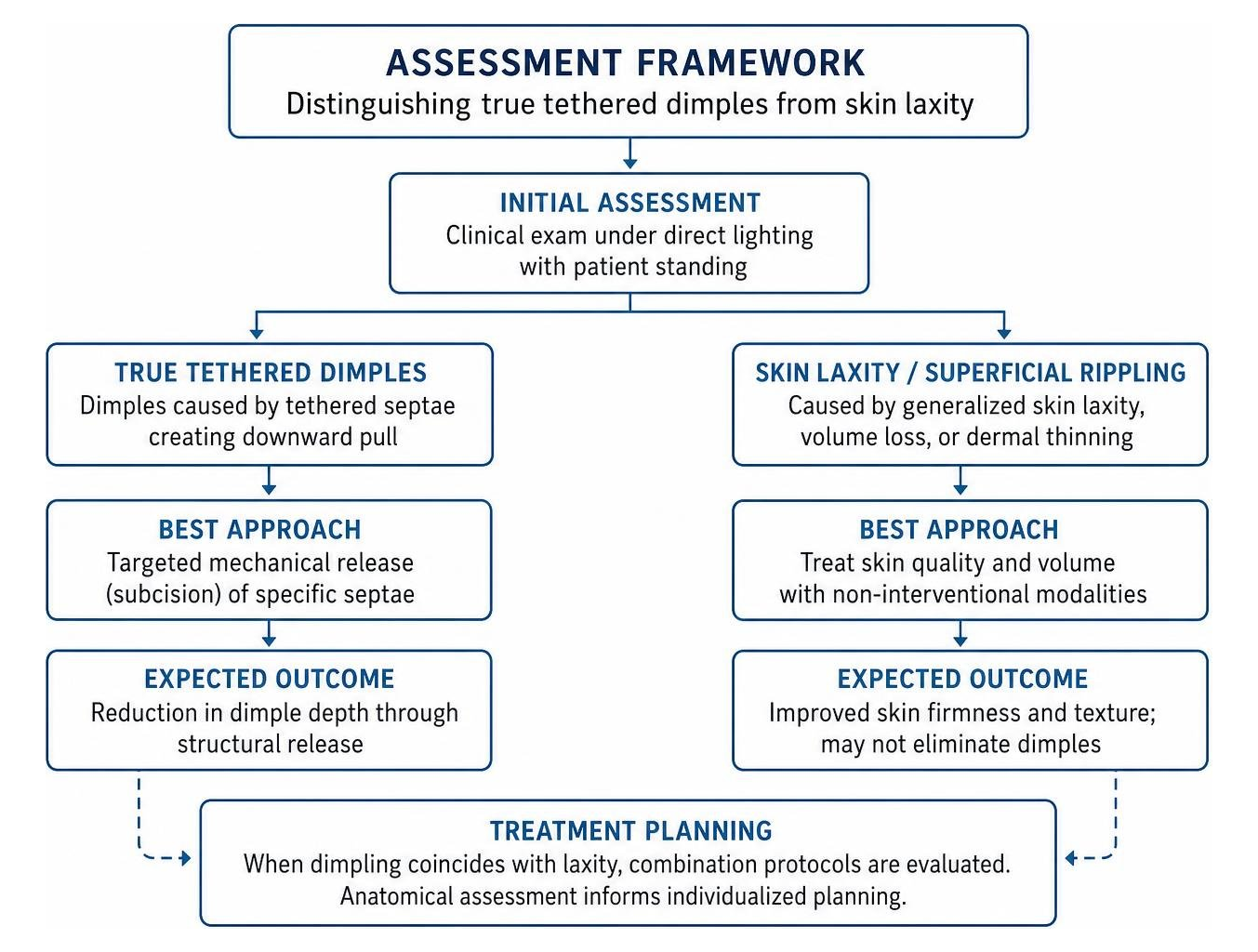
Treatment planning considers laxity and textural irregularities
When dimpling coincides with tissue laxity, combination protocols are evaluated. Radiofrequency, ultrasound, and biostimulatory agents encourage neocollagenesis to firm the dermis, while mechanical release targets discrete depressions.
Anatomical assessment informs individualized planning
Anatomical evaluation considers skin thickness, tissue distribution, and Fitzpatrick phototypes. Energy-based devices carry a risk of post-inflammatory hyperpigmentation (PIH) in darker skin tones, requiring cautious parameter adjustments or alternative sequences. True fibrous dimples require mechanical release; generalized waviness may require skin tightening or non-treatment.
Common questions address treatment mechanisms and recovery
- Topical therapies versus targeted subcision: Topical creams cannot penetrate deeply enough to divide rigid collagen bands; they temporarily hydrate the epidermis rather than altering structural tethers.
- Recovery expectations: Downtime varies. Tenderness and localized bruising are expected, and strenuous physical exercise is temporarily paused during early tissue healing.
- Long-term structural changes: Severed fibrous bands do not reform in the same configuration, though baseline skin aging, laxity, and weight fluctuations continue over time.
What to remember
- Mechanical subcision targets discrete fibrous bands beneath the skin to release surface dimples.
- Bruising, mild soreness, and swelling are standard recovery responses that resolve over several weeks.
- Dermal laxity and volume loss require distinct treatment modalities rather than subcision alone.
A comprehensive evaluation at Dr. Jason Emer Cosmetic Dermatology & Surgery allows for detailed anatomical assessment and the development of an individualized contouring plan.
This content is for general education and does not provide a diagnosis, determine candidacy, or replace a consultation with a licensed clinician.
This resource provides general educational information. Treatment recommendations depend on your health, goals, and consultation with a qualified clinician.