
Chin Lipo and Jaw Contouring: Start With the Cause, Not the Double Chin
A sharper jawline does not always require the same treatment. Chin lipo and jaw contouring begin with an assessment of what changes the profile: excess fat beneath the chin, loose skin, a recessed chin, or jaw muscle width.
A practical clinical approach follows clear steps:
- Remove localized submental fat with liposuction when fat is the primary concern.
- Consider skin tightening when tissue laxity limits definition.
- Add structural support when mandibular balance needs enhancement.
Chin liposuction uses micro-incisions and a cannula to aspirate fat under the chin. Jaw contouring is broader, incorporating fat removal, skin tightening, injectables, or surgery. The goal is a lower-face contour tailored to individual features.
Jason Emer, MD FAAD, is a board-certified dermatologist with experience in facial sculpting and body contouring. Dr. Emer evaluates fat distribution, skin quality, and bone structure before tailoring a plan.
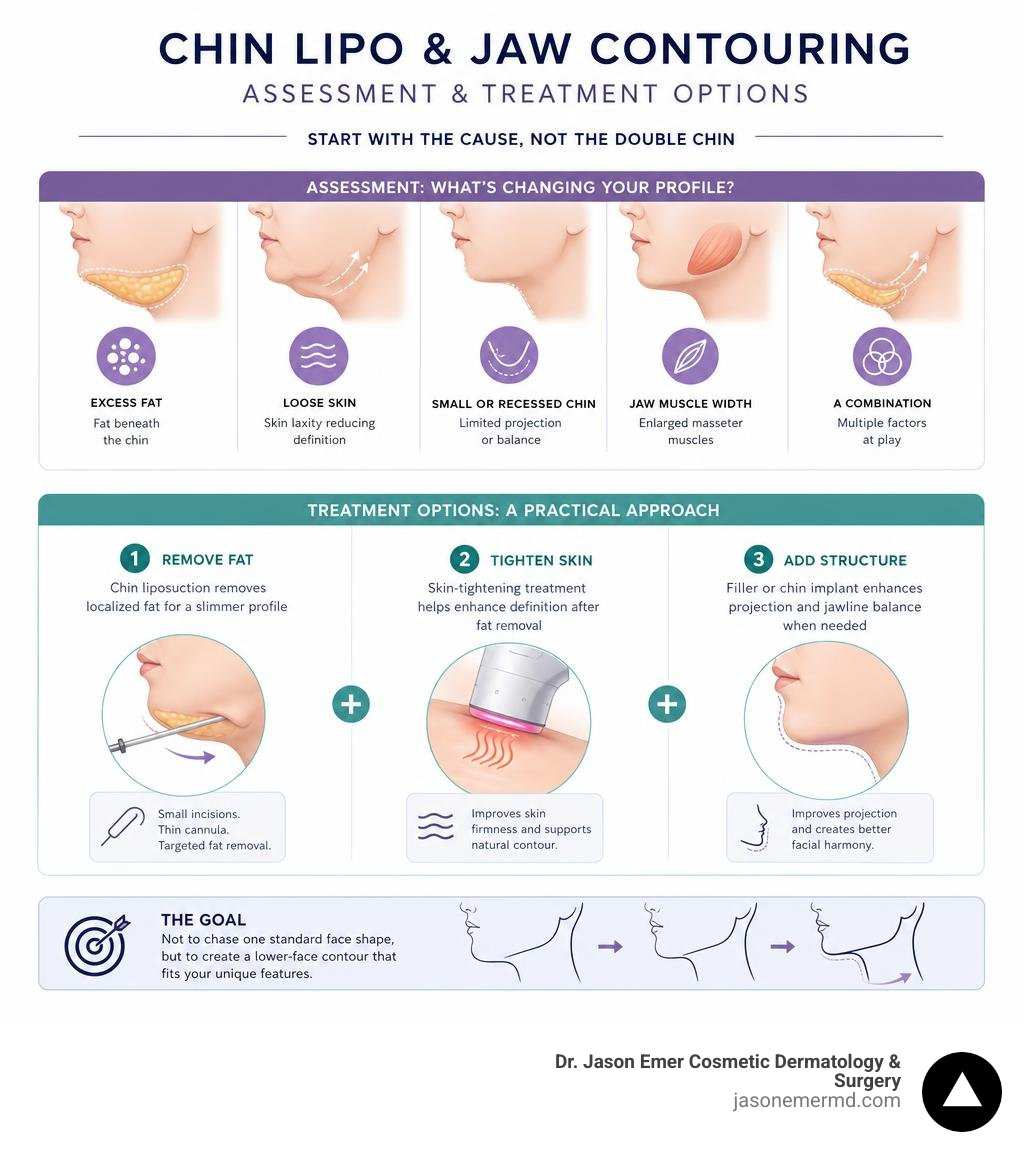
Modern chin lipo and jaw contouring techniques target stubborn submental fullness to define the profile
Targeted fat removal can create a cleaner transition between the jawline and neck when superficial fat is the main issue. Specialized face and neck liposuction relies on tumescent local anesthesia and small cannulas to extract localized fat deposits while protecting surrounding structures, as detailed by the American Society of Plastic Surgeons.
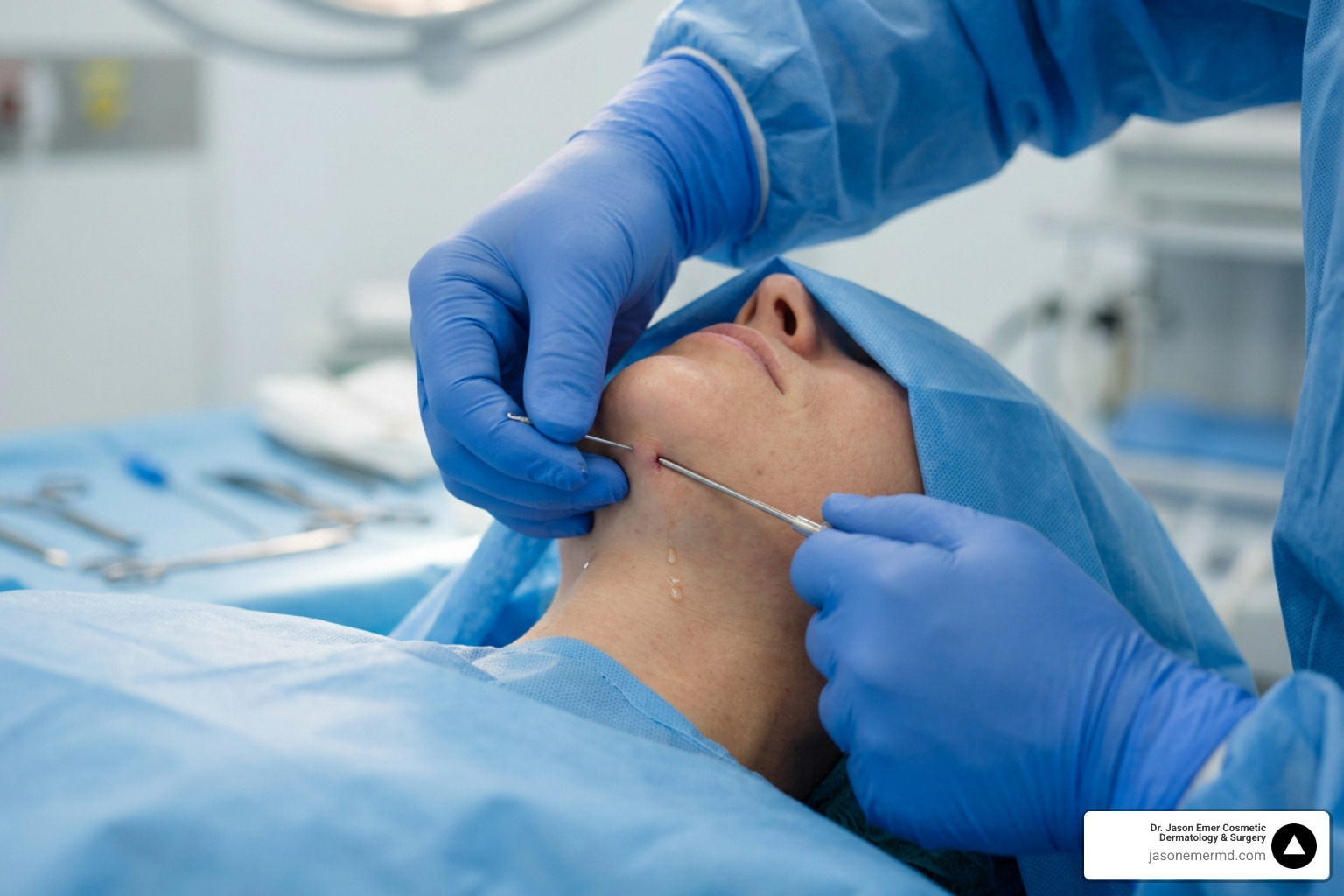
Assessing candidacy for chin lipo and jaw contouring
Not all submental fullness comes from superficial fat. Candidacy depends on tissue elasticity, platysma tone, fat depth, and chin position.
- Firm skin may retract more predictably after fat evacuation.
- Tailored techniques for face and neck lipo for men often emphasize an angular mandibular frame.
- Refined protocols for face and neck lipo for women often focus on a tapered cervicomental contour.
When platysmal banding, deep subplatysmal fat, or significant skin laxity dominates, standard liposuction has limits. Doing less may mean accepting a smaller change, choosing staged treatment, or deferring surgery until a consultation clarifies the tradeoffs.
Comparing surgical sculpting to non-surgical alternatives
For patients seeking a non-surgical option, deoxycholic acid offers an alternative for selected submental fullness.
| Feature | Surgical liposuction | Kybella submental fat reduction |
|---|---|---|
| Approach | Small-cannula fat extraction | Chemical lipolysis injections |
| Sessions | Single procedure | 2 to 4 sessions |
| Swelling | Resolves over weeks | Significant swelling for 7-14 days |
| Precision | Direct mechanical sculpting | Diffuse chemical dissolution |
Injections cannot match cannula precision and require repeated recovery periods, but they may suit someone who wants to avoid an operative procedure.
Comprehensive lower facial sculpting combines fat removal with structural enhancement and tissue tightening
Profile refinement often requires more than fat reduction. When soft tissue laxity or skeletal deficiency is present, Dr. Emer may combine modalities through chin and jawline surgery to address skin, fat, and bone together.
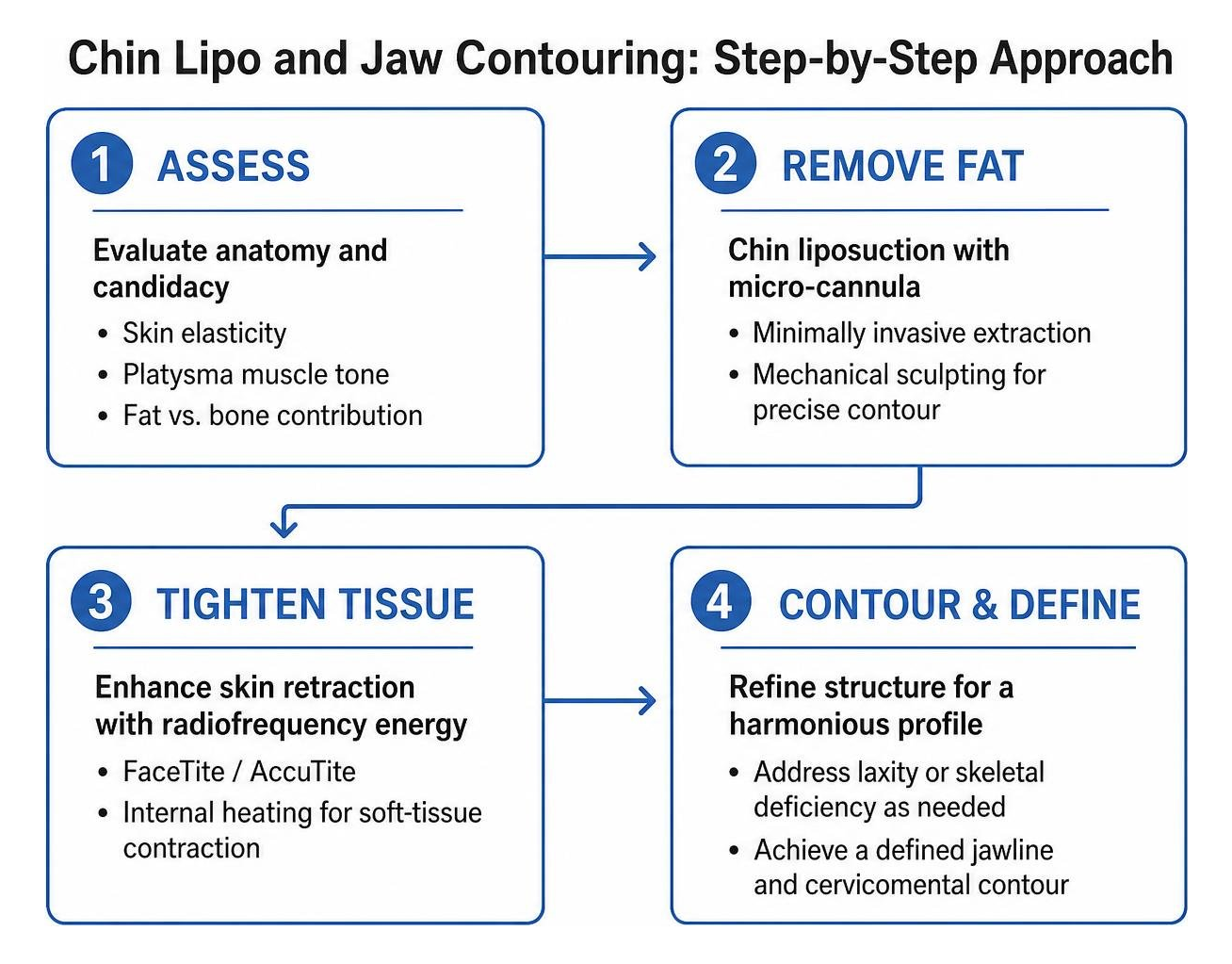
Integrating chin lipo and jaw contouring with radiofrequency energy
Removing fat leaves empty space beneath the skin. When tissue lacks elasticity, pairing fat removal with internal heating technologies like FaceTite and AccuTite can encourage soft-tissue contraction and collagen remodeling.
Energy-based treatments require strict parameters based on skin type. In darker skin tones, including Fitzpatrick IV-VI, excessive epidermal heat increases the risk of post-inflammatory hyperpigmentation. Dr. Emer adjusts temperature limits, delivers energy at appropriate tissue depths, and may modify sequencing to protect pigment cells. Non-surgical plans for jawline contouring also use pigment-aware protocols.
Augmenting structural projection with implants and dermal fillers
A recessed chin can obscure the mandibular line. Without enough projection, submental fat removal alone may not create a defined angle.
- Implants: Customized chin implants can provide structural projection and support slack soft tissue.
- Injectables: Strategic filler placement through facial sculpting can build mandibular definition along the jaw angle without surgery.
The tradeoff is planning complexity. Combining treatments may improve balance, but it can also change recovery, swelling patterns, and procedural sequencing.
Structured preparation and postoperative care protect tissue healing and preserve surgical results
A predictable recovery depends on preparation and aftercare compliance. Patients undergoing neck lipo treatment receive guidelines that address medication use, compression, activity, and follow-up timing.

Preparing for the surgical contouring procedure
Preparation focuses on minimizing bleeding risk and supporting circulation.
- Discontinue blood-thinning medications, NSAIDs, and supplements two weeks prior under medical direction.
- Stop nicotine completely, as it impairs tissue perfusion and can compromise wound healing.
- Arrange transportation and prepare soft foods for the initial recovery days.
Medical history matters. Prior procedures, scar tendencies, and pigment history can affect the plan, especially when liposuction is paired with energy-based tightening.
Managing recovery timelines, swelling, and physical activity
Healing is part of the treatment plan. Risks include bruising, temporary numbness, contour asymmetry, infection, and seroma formation. Compression garments control edema and help tissue adhere to the underlying framework. Strenuous exercise is usually restricted for several weeks because increased circulation can prolong swelling.
An in-person consultation at Dr. Jason Emer Cosmetic Dermatology & Surgery is the venue to evaluate anatomy, discuss surgical chin and jawline contouring, and decide whether treatment should be surgical, non-surgical, staged, or deferred.
What to remember
- Lower facial definition depends on the relationship between submental fat, skin elasticity, muscle tone, and chin projection.
- Radiofrequency tightening combined with liposuction requires careful temperature monitoring, especially in darker skin tones with a higher risk of post-inflammatory hyperpigmentation.
- Compression, activity modification, and follow-up care support healing and help reduce preventable recovery problems.
This content is for general education and does not provide a diagnosis, determine candidacy, or replace a consultation with a licensed clinician.
This resource provides general educational information. Treatment recommendations depend on your health, goals, and consultation with a qualified clinician.