What Does Non-Surgical Vaginal Rejuvenation Cost?
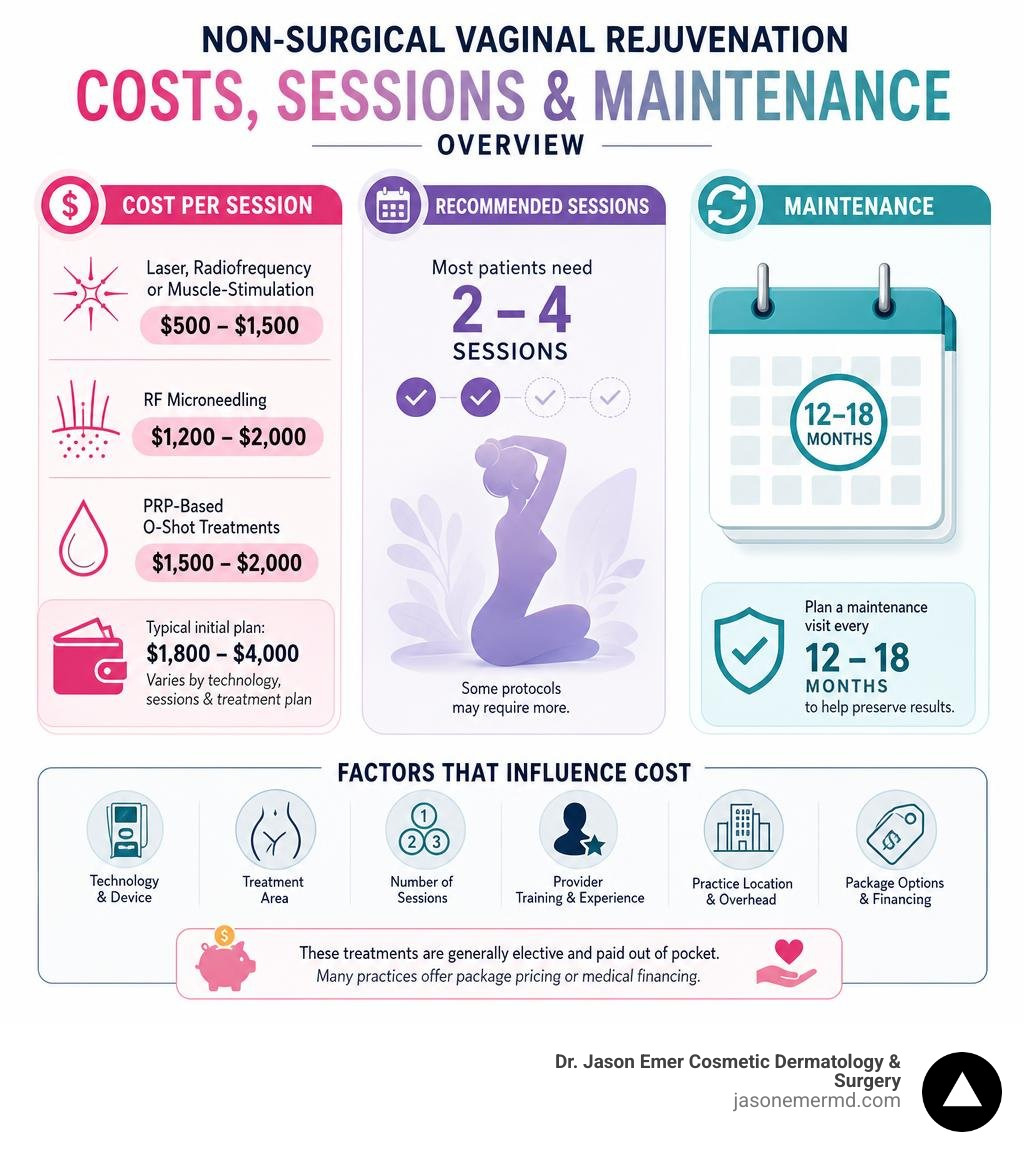
The non surgical vaginal rejuvenation cost is usually $500 to $1,500 per session for many laser, radiofrequency, or muscle-stimulation treatments. More intensive treatments, such as RF microneedling, may cost $1,200 to $2,000 per session, while PRP-based O-Shot treatments often range from $1,500 to $2,000.
Most patients need a series of 2 to 4 sessions, though some protocols require more. A typical initial treatment plan is often $1,800 to $4,000, with higher totals for combination plans or premium technologies. Plan for a maintenance visit about every 12 to 18 months if you want to preserve results.
Price matters, but the lowest quote is not always the best value. The final investment can change based on the technology, treatment area, number of sessions, the provider's training, and Beverly Hills-level practice costs. These treatments are generally elective and paid out of pocket, but many practices offer package pricing or medical financing.
I am Jason Emer, MD FAAD, a board-certified dermatologist with more than 19 years of experience in advanced lasers, PRP, skin tightening, and non-surgical rejuvenation. In this guide, I will help you compare non surgical vaginal rejuvenation cost options with a focus on technology, safety, and realistic long-term value.
Non-Surgical Vaginal Rejuvenation Cost Breakdown by Treatment Type
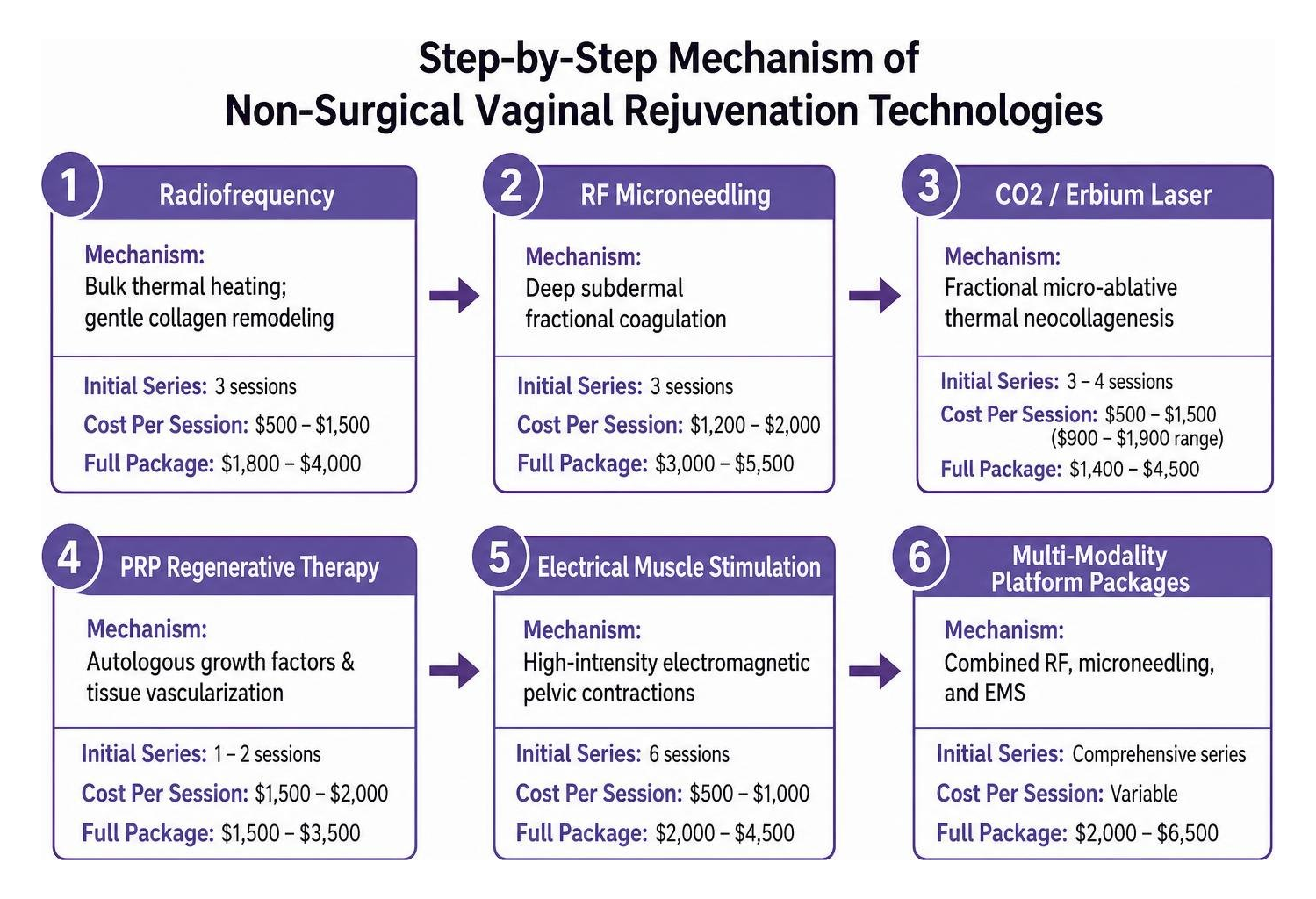
When navigating intimate wellness options, pricing can seem variable because "vaginal rejuvenation" encompasses a broad spectrum of non-invasive energy devices and regenerative injectables. Each modality uses a unique mechanism to stimulate collagen, rebuild elastin, restore mucosal vascularity, or tone pelvic floor musculature.
| Modality / Treatment | Primary Mechanism | Typical Cost Per Session | Recommended Initial Series | Average Full Package Investment |
|---|---|---|---|---|
| Radiofrequency (e.g., Forma V, Votiva) | Bulk thermal heating; gentle collagen remodeling | $500 – $1,500 ($800 – $3,000 range) | 3 sessions | $1,800 – $4,000 |
| RF Microneedling (Morpheus8 V) | Deep subdermal fractional coagulation | $1,200 – $2,000 | 3 sessions | $3,000 – $5,500 |
| CO2 / Erbium Laser (e.g., FemTouch, MonaLisa Touch) | Fractional micro-ablative thermal neocollagenesis | $500 – $1,500 ($900 – $1,900 range) | 3 – 4 sessions | $1,400 – $4,500 |
| PRP Regenerative Therapy (O-Shot) | Autologous growth factors & tissue vascularization | $1,500 – $2,000 | 1 – 2 sessions | $1,500 – $3,500 |
| Electrical Muscle Stimulation (V-Tone) | High-intensity electromagnetic pelvic contractions | $500 – $1,000 | 6 sessions | $2,000 – $4,500 |
| Multi-Modality Platform Packages | Combined RF, microneedling, and EMS | Variable | Comprehensive series | $2,000 – $6,500 |
Radiofrequency Technologies and Forma V Protocols
Radiofrequency energy delivers controlled, uniform thermal heat into the sub-mucosal tissue layers of the vaginal canal and the external vulvar tissues. Technologies like votiva forma v use real-time temperature monitoring to safely heat tissue to therapeutic levels (around 40°C to 43°C), triggering structural collagen contraction and promoting natural lubrication without epidermal burns or peeling.
A single Forma V or basic RF session typically ranges from $500 to $1,500, though specialized clinics may charge up to $3,000 per session depending on protocol complexity. For more pronounced laxity or external labial remodeling, Morpheus8 V combines bipolar radiofrequency with silicone-coated microneedles to deliver energy deeper into the subdermal tissue matrix. Due to its advanced disposable microneedling cartridges and depth of tissue impact, Morpheus8 V sessions average $1,200 to $2,000 each. Packages combining surface RF with deep RF microneedling provide comprehensive internal and external structural renewal.
Fractional CO2 and Erbium Laser Therapy
Laser vaginal rejuvenation utilizes precise wavelengths of light (most commonly fractional carbon dioxide or Erbium:YAG lasers, such as FemTouch or MonaLisa Touch) to create microscopic columns of thermal micro-ablation within the vaginal mucous membrane. This micro-injury response triggers a rapid cascade of neocollagenesis, revascularization, and glycogen restoration in the vaginal epithelium.
Laser therapy is popular among women navigating genitourinary syndrome of menopause (GSM), painful intercourse (dyspareunia), and mild stress urinary incontinence caused by tissue thinning. Standalone laser treatments generally cost between $500 and $1,500 per session, with specific CO2 systems averaging $900 to $1,900 per treatment. A standard initial series of 3 to 4 treatments spaced roughly 4 to 6 weeks apart typically ranges from $1,400 to $4,500.
PRP Injections and Sexual Wellness Treatments
Platelet-rich plasma (PRP) therapies utilize the body's own concentrated growth factors to revitalize intimate tissue. An autologous blood draw is spun in a specialized centrifuge to isolate platelet-rich fibrin matrix, which is then injected directly into the upper anterior vaginal wall (the O-spot) and near the clitoral complex.
Known clinically as the o shot, this therapy stimulates cellular repair, angiogenesis, and nerve sensitivity, directly targeting vaginal lubrication, sexual arousal, and urinary continence. The O-Shot generally costs between $1,500 and $2,000 per session. Because PRP focuses on cellular regeneration and vascularization rather than bulk structural tissue shrinkage, we frequently combine it with energy-based devices like RF or lasers to deliver comprehensive internal support and heightened sexual responsiveness. For male partners seeking similar regenerative wellness, parallel autologous treatments like the p shot offer targeted vascular and sensitivity enhancement.
Primary Price Determinants for Feminine Wellness
The cost of non-surgical intimate rejuvenation varies significantly between practices. Because these treatments involve specialized anatomy, price reflects device technology, provider credentials, facility overhead, and individualized treatment planning.

Key Factors Influencing Non-Surgical Vaginal Rejuvenation Cost
- Provider Credentials and Specialization: Non-surgical feminine procedures require a precise understanding of pelvic anatomy, nerve pathways, and tissue planes. Board-certified dermatologists, plastic surgeons, and specialized gynecologists often command higher procedural fees than generic medical spas, reflecting their surgical training, safety oversight, and ability to handle anatomical variations.
- Device Technology and Consumable Costs: High-end, multi-modality platforms like Empower RF utilize single-use, sterile disposable treatment tips (such as Morpheus8 V microneedling arrays or V-Tone probes) that incur direct laboratory costs per session.
- Severity of Anatomical Laxity: Mild tissue dryness or minimal laxity may only require a 2-session protocol. Moderate to severe laxity, marked pelvic floor weakness, or complex post-childbirth trauma often demands a 4-to-6-session combination protocol involving radiofrequency, muscle stimulation, and PRP.
- Geographic Location: Practices operating in major metropolitan aesthetic centers like Beverly Hills, New York, or Miami carry higher clinical operating overhead, advanced equipment leases, and specialized nursing support, reflected in total treatment costs.
Understanding the Total Non-Surgical Vaginal Rejuvenation Cost vs. Single Sessions
A common oversight is budgeting for only a single in-office session rather than an entire treatment course. Single standalone treatments rarely produce durable, long-term tissue transformation.
Achieving meaningful collagen contraction, mucosal thickening, and pelvic floor toning requires an initial series of 2 to 4 sessions (or up to 6 for muscle-stimulating therapies like V-Tone), typically spaced 3 to 6 weeks apart. Patients should plan for an initial investment between $1,800 and $4,000.
Because the natural aging process, hormonal fluctuations, and gravitational pull continue over time, non-surgical results are not permanent. Preserving structural firmness and mucosal hydration requires budgeting for a single annual maintenance touch-up (typically $500 to $1,500 every 12 to 18 months). For an in-depth breakdown of legal protections, device clearances, and financial expectations across both surgical and non-surgical categories, reviewing an analysis of procedure pricing and regulatory considerations can help you plan your long-term wellness budget.
Non-Surgical vs. Surgical Procedures: Financial and Clinical Comparison
When evaluating intimate restoration, it is helpful to contrast non-surgical thermal modalities with traditional surgical approaches such as surgical labiaplasty or vaginoplasty.
Surgical labiaplasty—the surgical reduction or reshaping of the labia minora or majora—typically costs $4,000 to $6,000 when performed in-office under local anesthesia. Full surgical vaginoplasty (tightening the underlying vaginal canal and pelvic muscle fascia) frequently ranges from $9,000 to $13,000 when factoring in operating room facilities, anesthesiologist fees, and post-operative surgical garments.
For patients dealing with localized fatty prominence rather than tissue laxity alone, pairing surgical contouring with mons pubis liposuction provides flat, defined anatomical proportions that non-invasive energy devices cannot achieve alone.
Non-surgical energy treatments avoid surgical facility costs, general anesthesia risks, and prolonged recovery periods. While surgery permanently excises redundant tissue, non-surgical options offer an effective alternative for patients seeking natural collagen restoration, improved mild incontinence, and heightened sexual satisfaction without surgical downtime.
Insurance, Financing, and Payment Options for Intimate Wellness
Because energy-based vaginal restoration, RF microneedling, and PRP injections are classified by commercial insurance carriers as elective cosmetic or wellness procedures, standard health insurance almost universally excludes them from coverage. This remains true even when treatments alleviate symptoms like mild stress urinary incontinence or postpartum discomfort.
To manage out-of-pocket costs, patients can utilize several structured payment and financing options:
- Healthcare Financing Credit Cards: Specialized medical financing platforms (such as CareCredit or ALPHAEON Credit) allow patients to divide treatment costs into manageable monthly installments. Many platforms provide promotional 6- to 24-month zero-interest financing plans if the balance is paid within the promotional window.
- Point-of-Sale Payment Plans: Modern aesthetic practices frequently partner with consumer lending services like Cherry or PatientFi, offering instant digital approvals for customized multi-month repayment plans without hard credit checks.
- FSA / HSA Allocation: In select instances, Flexible Spending Accounts (FSA) or Health Savings Accounts (HSA) may be applied toward non-surgical vaginal rejuvenation if a physician provides a formal Letter of Medical Necessity (LMN) documenting diagnosed conditions like severe dyspareunia, Genitourinary Syndrome of Menopause (GSM), or symptomatic pelvic floor dysfunction. Always verify eligibility with your plan administrator prior to treatment.
Frequently Asked Questions About Non-Surgical Vaginal Rejuvenation
How long do non-surgical vaginal rejuvenation results last?
Results from radiofrequency, fractional laser, and PRP protocols typically last between 12 and 18 months. Energy-based devices induce natural neocollagenesis and tissue remodeling that produce long-lasting structural changes. However, ongoing biological aging, hormonal shifts, and gravity continue over time. Scheduling a single maintenance session every 12 months helps preserve tissue firmness, lubrication, and pelvic floor tone.
Is non-surgical vaginal tightening painful?
No. Non-surgical vaginal rejuvenation involves minimal discomfort. Internal vaginal canal treatments (such as Forma V or fractional laser therapy) utilize probes inserted into tissue with minimal sensory pain receptors; most patients feel only a gentle, warming sensation. For deeper RF microneedling treatments like Morpheus8 V on external vulvar tissue, a high-potency topical numbing cream is applied for 10 to 15 minutes prior to treatment to ensure a comfortable experience.
How many sessions are typically needed for optimal results?
Most non-surgical protocols require an initial series of 2 to 4 sessions spaced 3 to 6 weeks apart to achieve comprehensive collagen remodeling and tissue tightening. Specialized electromagnetic muscle-stimulation protocols (such as V-Tone) may require a series of 6 sessions. Mild concerns may respond well to just 2 sessions, whereas advanced postpartum laxity or severe menopausal dryness benefits from a multi-modality series combining RF, lasers, and PRP.
Conclusion
Non-surgical feminine rejuvenation provides a modern, clinically proven approach to restoring intimate comfort, structural firmness, and sexual wellness without incisions or downtime. Navigating the total investment involves looking beyond a single-session price tag to budget for a customized multi-session protocol and periodic annual maintenance.
At Dr. Jason Emer Cosmetic Dermatology & Surgery in Beverly Hills, we specialize in high-definition aesthetic sculpting and personalized feminine restoration. Combining advanced energy platforms like Forma V and Morpheus8 V with regenerative PRP and expert aesthetic contouring, we design comprehensive protocols tailored to your unique anatomy. Explore our full approach to vaginal beautification to see how multi-modality care transforms tissue health.
Schedule a private, comprehensive consultation with our team to explore tailored treatment plans for vaginal rejuvenation and discover the ideal non-surgical investment for your lifestyle.
This resource provides general educational information. Treatment recommendations depend on your health, goals, and consultation with a qualified clinician.