Ab Etching Recovery Time: What to Plan For
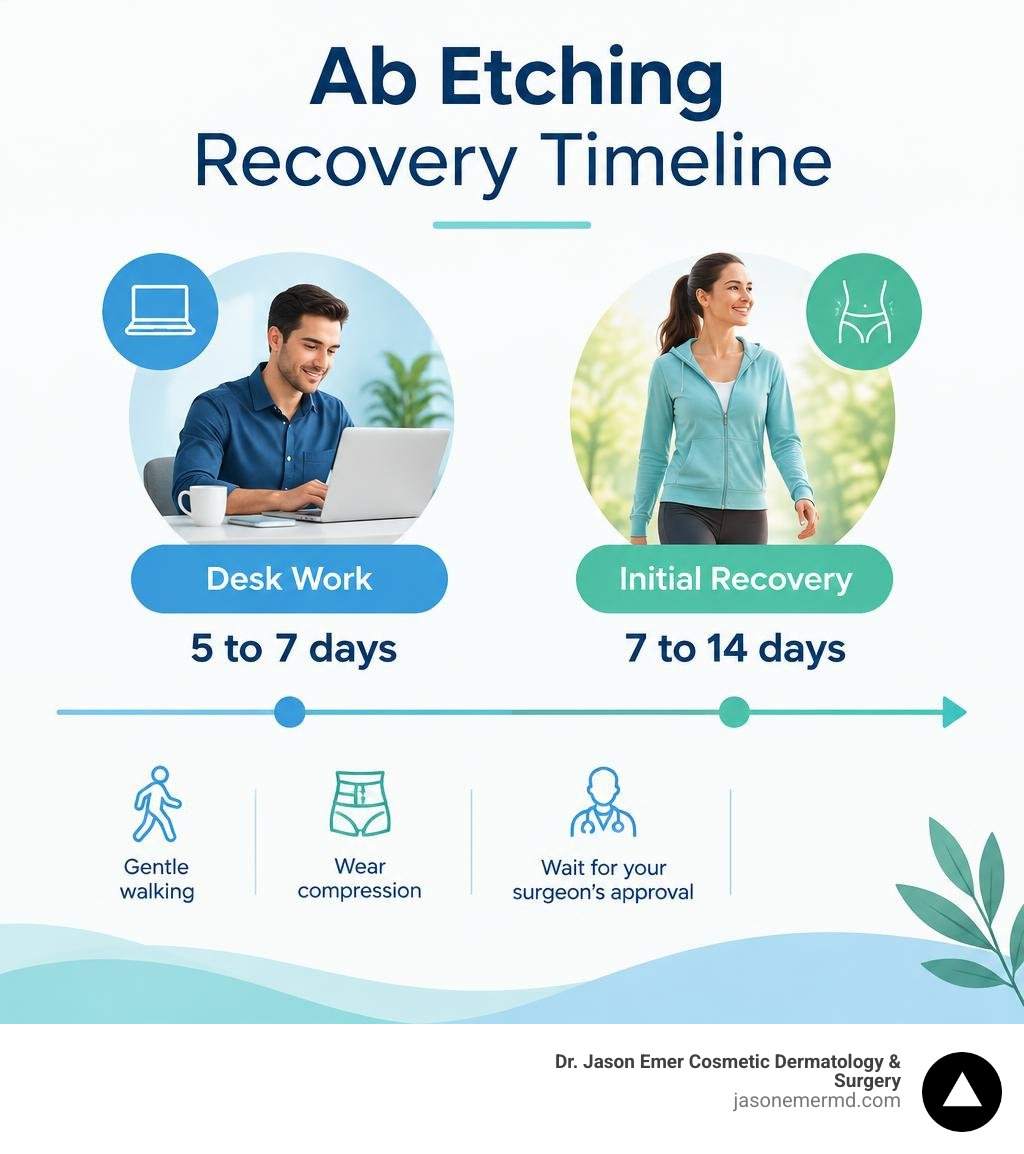
Most people assume recovery ends when soreness fades. In Dr. Emer's practice, recovery is understood as a staged process continuing long after initial discomfort resolves. Initial ab etching recovery time is usually 7 to 14 days. Many return to desk work in 5 to 7 days, but swelling takes weeks to ease and contours settle over months. Plan for gentle walking, wear compression as directed, and await surgical clearance before intense exercise.
Dr. Jason Emer, MD, FAAD, is a board-certified dermatologist with experience in liposculpture and body contouring. His high-definition techniques inform this guide to ab etching recovery time and post-operative milestones.
Ab etching recovery time helpful reading:
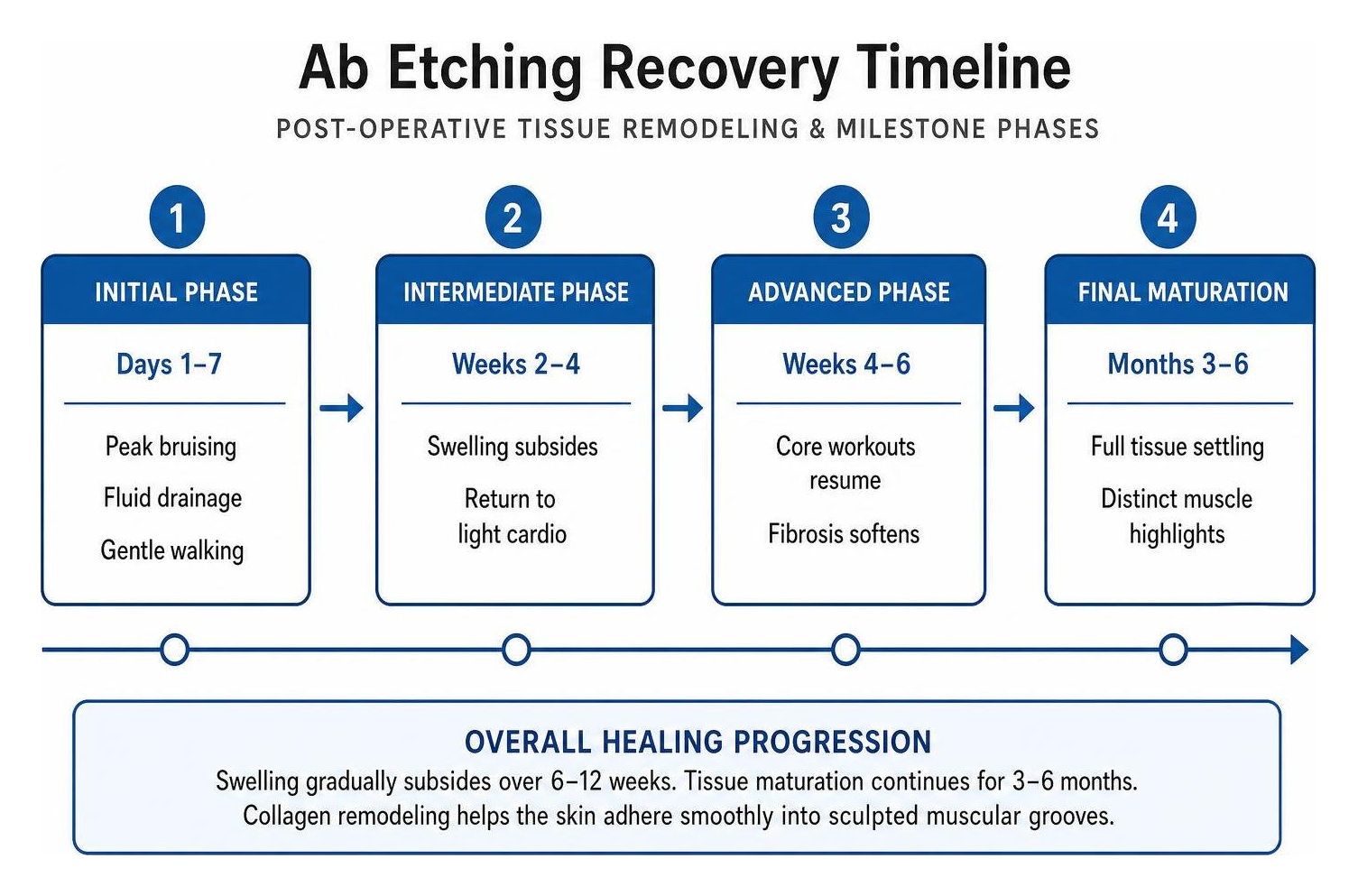
Healing progresses through distinct stages during the overall ab etching recovery time.
Post-operative healing requires patience. Tissue repair begins immediately, but visible refinement takes time. Recovery is a biological sequence shaping the final contour, and understanding each phase helps patients set realistic expectations rather than judging progress by how they feel on any single day.
Managing the initial ab etching recovery time during week one
The initial week involves acute swelling, bruising, and soreness. Tissue trauma from targeted cannulas triggers inflammation. Discomfort resembles an intense core workout. Oral analgesics manage symptoms during the first few days, and most patients find the sensation more manageable than they anticipated.
Early ambulation is encouraged immediately after surgery. Light walking stimulates circulation and prevents deep vein thrombosis, a known risk after any procedure involving extended time under anesthesia. The American Society of Plastic Surgeons notes that early walking after surgery supports circulation during recovery from body-contouring procedures. Fluid drainage from small incision sites is normal for 48 to 72 hours. Structured surgery aftercare keeps incisions clean and monitors healing progression.
Navigating long-term milestones in ab etching recovery time
Swelling gradually subsides over six to twelve weeks. Subcutaneous fluid reabsorption allows the skin to retract against the rectus abdominis. Etched lines may look uneven during this settling phase, and it is common for one side of the abdomen to appear more defined than the other for several weeks. This asymmetry typically resolves as swelling continues to recede.
| Recovery Stage | Timeframe | Clinical Milestones |
|---|---|---|
| Initial Phase | Days 1–7 | Peak bruising, fluid drainage, gentle walking |
| Intermediate Phase | Weeks 2–4 | Swelling subsides, return to light cardio |
| Advanced Phase | Weeks 4–6 | Core workouts resume, fibrosis softens |
| Final Maturation | Months 3–6 | Full tissue settling, distinct muscle highlights |
Evaluating the evolution of 4D abdominal etching results requires understanding that tissue maturation continues for three to six months as collagen remodeling anchors the skin. Patients who expect a finished look at the two-week mark are often judging their body at the wrong stage of this process.
Tailored post-operative protocols support tissue healing and contour definition.
Strict adherence to aftercare guidelines prevents complications and preserves surgical precision. Core principles remain consistent: control swelling, support treated tissue, and resume activity gradually. None of these steps are optional extras; they are part of the plan itself, decided in consultation rather than improvised afterward.
Compression garments and post-surgical support
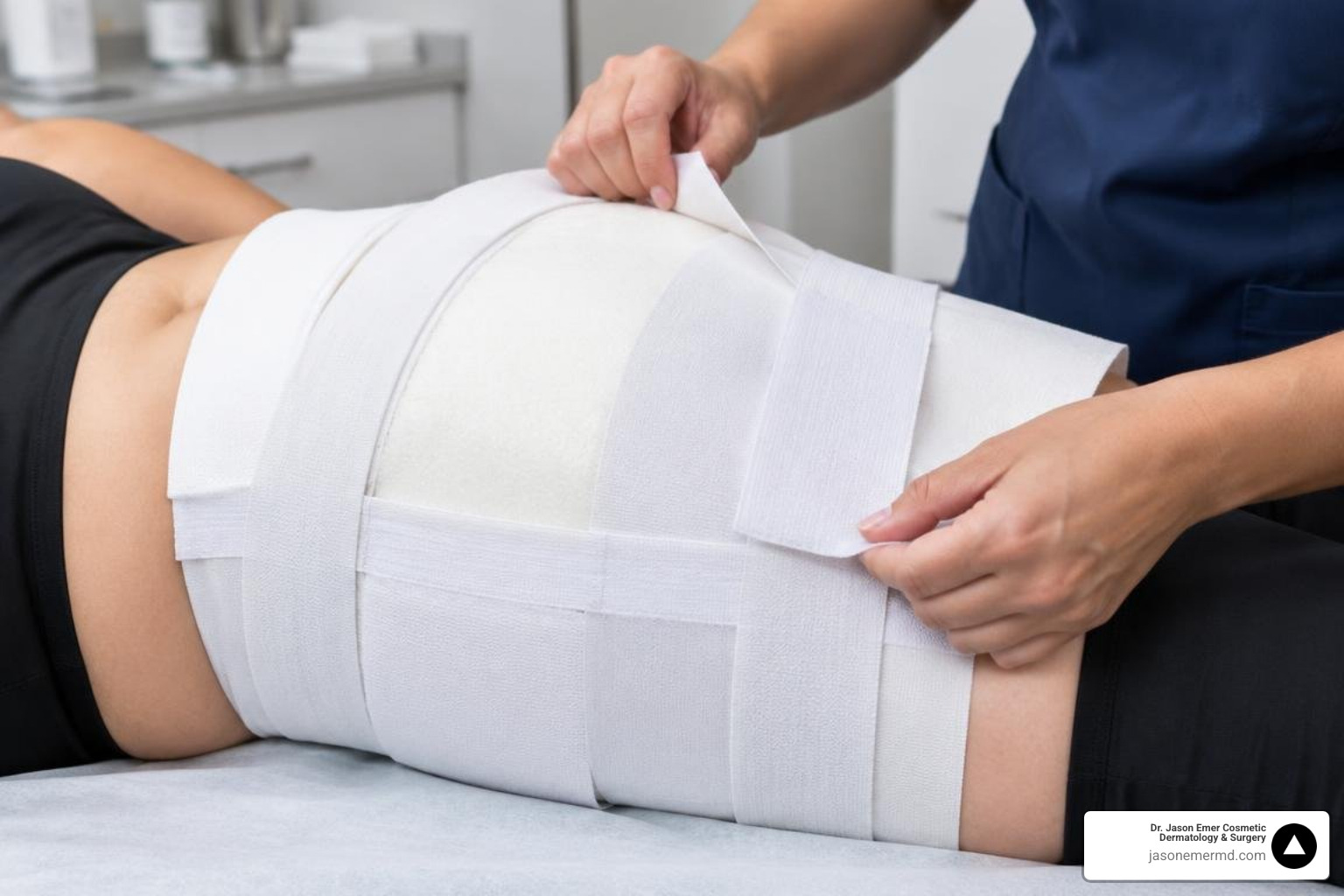
Medical-grade compression garments and anatomical foam padding are essential. Compression closes dead space between skin and muscle, preventing fluid collection and reducing seroma risk. Comprehensive HD lipo recovery and aftercare requires wearing garments continuously for two to four weeks. Skipping this step, even for comfort, raises the likelihood of fluid pooling that can distort the final contour.
Lymphatic therapy and gradual activity resumption
Fluid mobilization prevents localized hardness and contour irregularities. Manual lymphatic massage after liposuction surgery assists in clearing stagnant lymphatic fluid, reducing post-surgical fibrosis.
Activity increases gradually:
- Desk-based work: Patients generally return within 5 to 7 days with posture support.
- Strenuous exercise: Light cardio resumes around weeks two to three; direct core training waits four to six weeks.
- Potential complications: Patients monitor for asymmetry, hematoma, sudden swelling, or infection, and report any of these promptly rather than waiting for a scheduled visit.
When energy-based skin tightening devices are used alongside etching, skin phototype matters. Darker skin tones carry higher risk of post-inflammatory hyperpigmentation (PIH), and the risk is not uniform across all patients. Dr. Emer adjusts energy delivery, treatment sequencing, and topical protocols to protect melanin-rich skin, sometimes delaying energy-based work until the surgical site has settled. This is a tradeoff worth discussing directly, since rushing skin tightening can create pigment changes that take longer to resolve than the swelling itself.
Procedure combinations and individual physiology influence the healing process.
Surgical scope and individual biology dictate recovery speed. No two patients heal identically, and recovery timelines described here are general guidance rather than a promise of any particular outcome.
Impact of concurrent body contouring procedures
Combining ab etching with hi-def 4D liposculpture across additional body areas can extend recovery. Treating multiple zones increases overall inflammation and may require more rest and a more conservative return to exercise.
Physiological factors and lifestyle habits
Healing capacity depends on biological factors:
- Tissue elasticity: Elastic skin contracts faster into etched grooves than lax tissue.
- Baseline muscular development: Pre-existing tone provides definition for overlying skin.
- Nutritional support: High-protein intake and hydration accelerate repair.
- Nicotine avoidance: Smoking impairs microvascular blood flow, increasing risk of delayed healing and skin necrosis.
Surgery is not the only path toward a more defined midsection. Diet, exercise, or choosing non-surgical management represent alternatives to surgical etching. These approaches involve no surgical downtime, though they do not selectively remove subcutaneous fat along muscle lines the way etching does. There is also a real limitation worth naming plainly: etching cannot guarantee a specific degree of visible definition, since outcomes depend on skin quality, fat distribution, and how closely aftercare instructions are followed. Deciding between surgery, non-invasive measures, or doing less is evaluated during consultation.
Conclusion
Patience remains central to recovery. Rushing activity compromises definition and increases risks. For individuals considering abdominal etching, a consultation with Dr. Jason Emer Cosmetic Dermatology & Surgery is the setting where candidacy, staging, and a personalized recovery roadmap are discussed in detail.
What to remember
- Initial recovery lasts 7 to 14 days, with most patients returning to desk-based work within 5 to 7 days.
- Swelling resolution and muscular definition develop gradually over 3 to 6 months through consistent compression and lymphatic therapy.
- Strenuous exercise and core workouts must be avoided for 4 to 6 weeks to protect healing tissues and prevent seroma formation.
This content is for general education and does not provide a diagnosis, determine candidacy, or replace a consultation with a licensed clinician.
This resource provides general educational information. Treatment recommendations depend on your health, goals, and consultation with a qualified clinician.