GHK-Cu Peptide Injection Before and After: Look for Gradual, Not Dramatic, Change
Most people start with the photos. In Dr. Emer's clinic, the clinical model starts with the baseline: skin quality, medical history, and consistent photographic evaluation.
For ghk-cu peptide injection before and after expectations, realistic changes develop gradually. Some individuals observe shifts in hydration or skin texture over several weeks, while collagen remodeling takes months. Injectable GHK-Cu is not FDA-approved for cosmetic use, and human injection data remain limited.
GHK-Cu is a copper-binding tripeptide studied for wound repair and extracellular matrix signaling. While topical copper peptides have cosmetic data, subcutaneous delivery introduces distinct considerations regarding sterile preparation, dosing, and local tissue tolerance.
Jason Emer, MD FAAD, evaluates peptide therapies within comprehensive aesthetic plans, prioritizing clinical safety, measured progress, and patient screening.
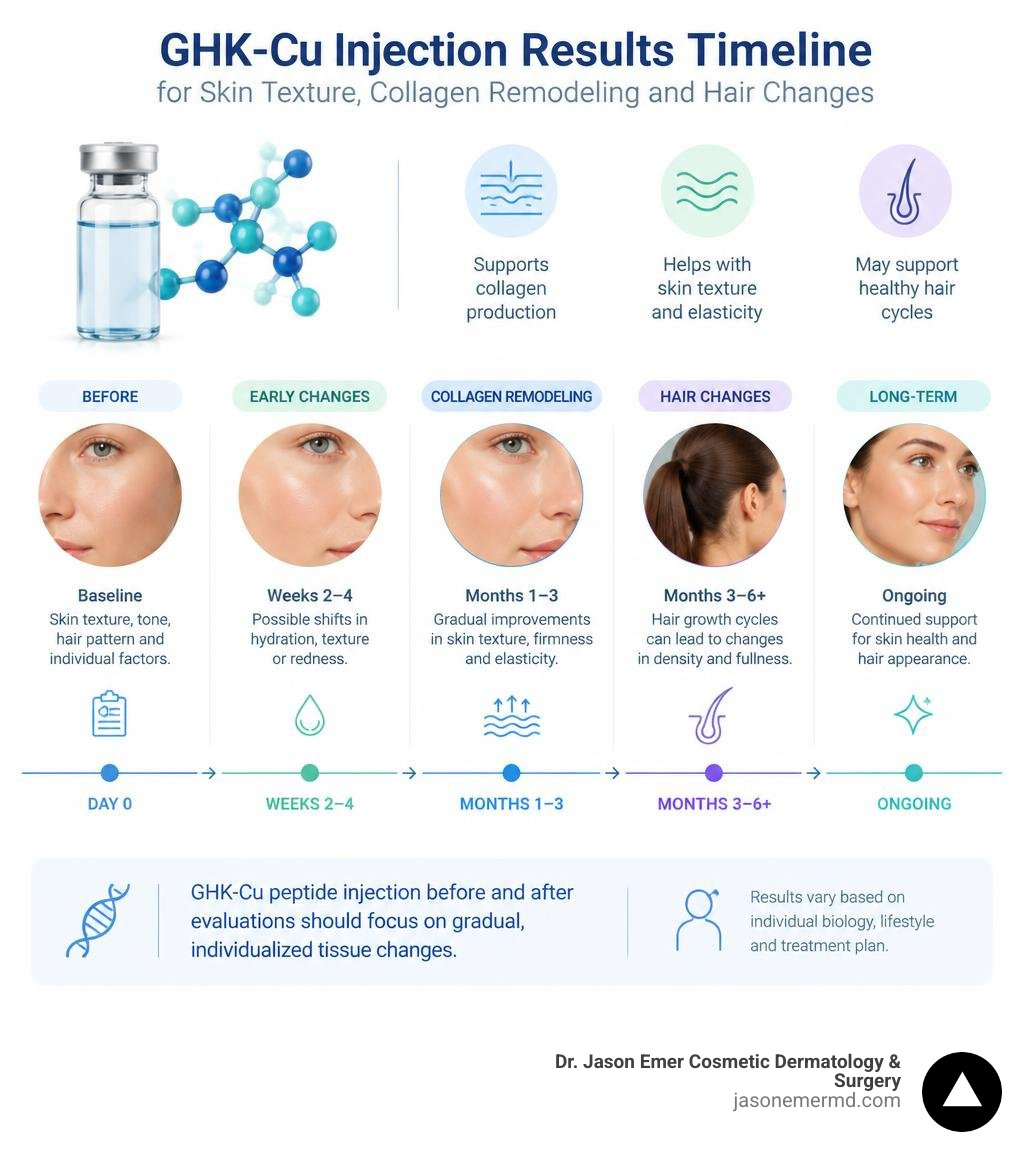
GHK-Cu peptide injection before and after evaluations should focus on gradual, individualized tissue changes
Evaluating skin or hair changes requires understanding underlying cellular biology. Plasma levels of GHK-Cu decline naturally from approximately 200 ng/mL at age 20 to roughly 80 ng/mL by age 60 (Pickart & Margolina, 2018). Restoring peptide signaling influences gene expression across thousands of human genes, though physical responses remain individualized (Pickart & Margolina, 2018).
Baseline biological changes and early cellular responses may develop gradually
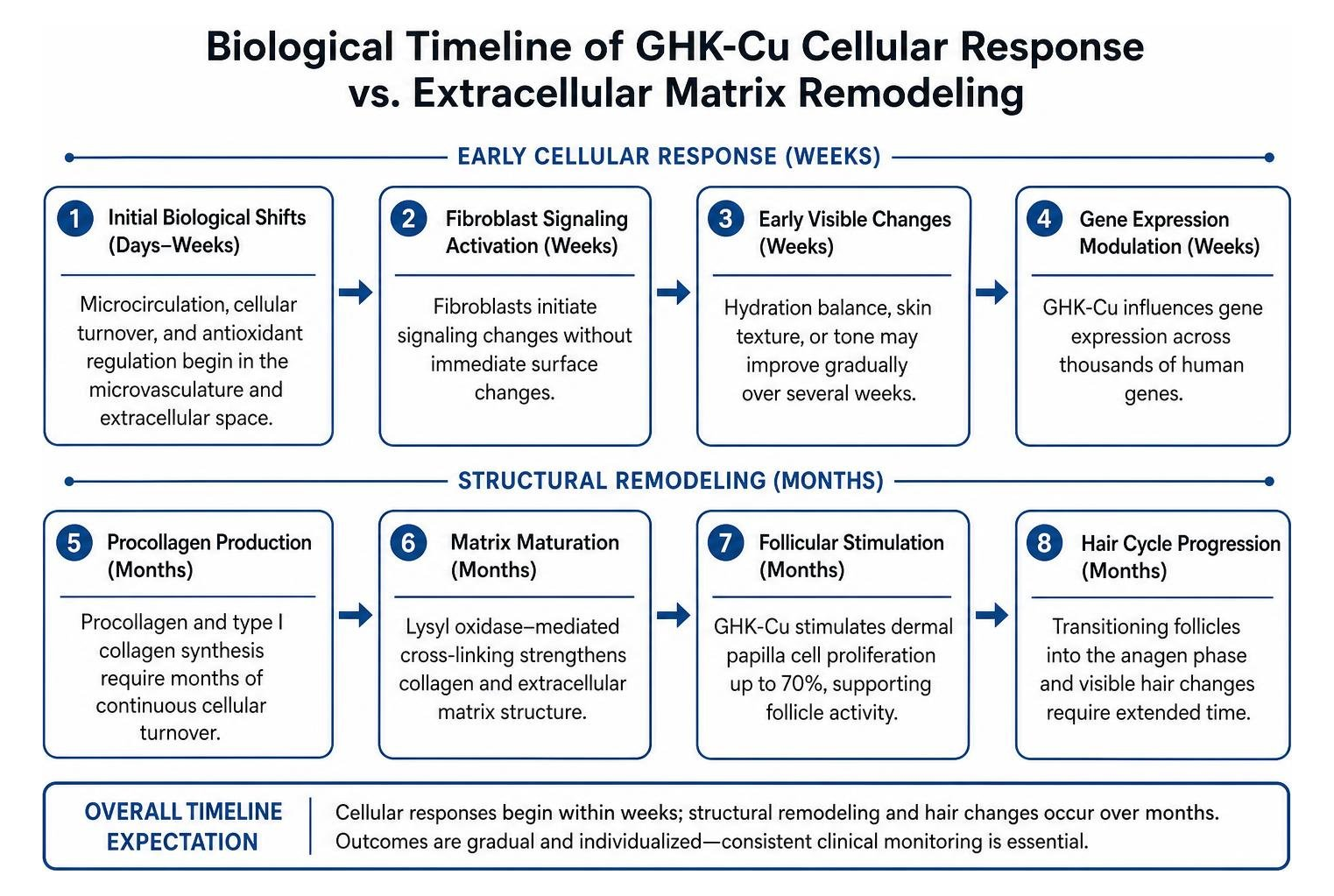
Early cellular responses occur within microvasculature and extracellular spaces. Initial shifts involve localized microcirculation, cellular turnover, and antioxidant regulation. Fibroblasts begin signaling alterations without immediate surface changes. Visual shifts often involve hydration balance or subtle tone modifications over several weeks.
Structural collagen remodeling and follicular changes require time and clinical monitoring
Deeper structural modifications operate on biological timelines. Procollagen production, type I collagen synthesis, and lysyl oxidase-mediated cross-linking require months of continuous cellular turnover. In laboratory models, GHK-Cu stimulates dermal papilla cell proliferation up to 70%, supporting follicle activity (Pickart & Margolina, 2018). Dr. Emer evaluates tissue density and follicular health through standardized clinical documentation rather than rapid visual assumptions.
Subcutaneous and topical copper peptide delivery differ in exposure, penetration, and clinical oversight
The route of administration dictates tissue bioavailability. Topical copper peptides interact with the stratum corneum to support the superficial barrier. Subcutaneous delivery bypasses the epidermal barrier entirely, introducing the peptide directly to vascularized tissue.
| Feature | Topical Copper Peptides | Subcutaneous GHK-Cu Injections |
|---|---|---|
| Primary Target | Stratum corneum and epidermis | Dermal-subcutaneous junction and systemic circulation |
| Delivery Barrier | Must traverse lipid layers | Bypasses the epidermal barrier completely |
| Clinical Supervision | Over-the-counter application | Requires medical prescription and compounding oversight |
| Systemic Exposure | Minimal to none | Detectable systemic bioavailability |
| Primary Risks | Contact dermatitis, superficial irritation | Injection-site ache, bruising, infection, copper elevation |
Dermal bioavailability and systemic exposure depend on the administration protocol
Injectable administration creates systemic exposure that topical serums cannot replicate. Circulating levels interact with systemic metalloproteinases and connective tissue beds. However, systemic access carries clinical tradeoffs. Dosing errors or unmonitored compounding sources introduce unnecessary patient risk. Injectable delivery is not a universal substitute for proven topical regimens.
GHK-Cu treatment should be coordinated with the patient’s broader cosmetic plan
Peptide protocols cannot replace structural interventions. Dr. Emer evaluates how GHK-Cu peptide therapy aligns with clinical modalities, such as laser resurfacing, neuromodulators, or BPC-157 peptide protocols. When energy-based devices or lasers are incorporated, melanin density dictates specific precautions. Darker skin tones (Fitzpatrick III–VI) carry an elevated risk of post-inflammatory hyperpigmentation (PIH), requiring conservative energy settings, test spots, and specialized pre-treatment regimens before adding adjunctive therapies. For scientific context, the GHK-Cu entry on Wikipedia provides a general overview.
Clinical oversight and administration protocols can help address temporary tissue reactions
Administering systemic peptides introduces specific physiological demands. Unsupervised use increases the risk of contamination, uncalibrated dosing, and adverse tissue reactions.
Injection-site tolerance and temporary reactions should be assessed individually
Subcutaneous administration can cause local injection-site discomfort, transient erythema, swelling, or localized bruising. Some individuals describe an informal "copper uglies" phase—a temporary period of skin dryness, irritation, or minor breakouts. It reflects cutaneous irritation, rapid turnover, or localized metalloproteinase imbalances. Rotating injection sites and adjusting dosing schedules under direct clinical guidance resolves most mild site reactions.

Regulatory and pharmaceutical compounding standards support safer treatment planning
Safety relies on pharmaceutical origin. Injectable GHK-Cu requires preparation via regulated 503A compounding pharmacies to verify sterility and precise concentration. Medical monitoring includes periodic evaluation of liver enzymes, serum copper, and ceruloplasmin levels when clinically indicated. Individuals with preexisting copper metabolism disorders, such as Wilson's disease, must avoid copper peptide therapies entirely.
Common questions about timelines and treatment expectations
How long does it take to see visible changes from subcutaneous copper peptide therapy?
Subtle shifts in hydration may occur over 4 to 8 weeks. Noticeable collagen remodeling and follicular shifts typically require 12 to 24 weeks of consistent management.
What is the "copper uglies" phase, and how is it managed?
The term describes temporary skin irritation or transient texture changes. It is managed by pausing active exfoliants, adjusting injection frequency, and consulting the prescribing clinician.
How do injectable copper peptides compare with topical formulations?
Topical copper peptides provide targeted epidermal barrier support with minimal systemic absorption. Injectable protocols deliver systemic bioavailability to deeper tissues but carry administrative complexity and require prescription oversight.
What to remember
- GHK-Cu signaling supports collagen remodeling and cellular repair over a gradual, multi-month timeline rather than providing rapid transformation.
- Injectable copper peptides require strict 503A compounding quality, clinical candidate screening, and routine laboratory monitoring to minimize systemic risk.
- Conservative skincare adjustments, device-based procedures, or topical alternatives may serve as suitable options depending on individual skin needs and pigmentary risk.
A comprehensive consultation provides the appropriate setting to evaluate medical history, assess aesthetic goals, and determine if regenerative medicine fits within a personalized aesthetic plan.
This content is for general education and does not provide a diagnosis, determine candidacy, or replace a consultation with a licensed clinician.
References
Pickart L, Margolina A. "Regenerative and Protective Actions of the GHK-Cu Peptide in the Light of the New Gene Data.." International journal of molecular sciences, 2018. PMCID PMC6073405.
This resource provides general educational information. Treatment recommendations depend on your health, goals, and consultation with a qualified clinician.