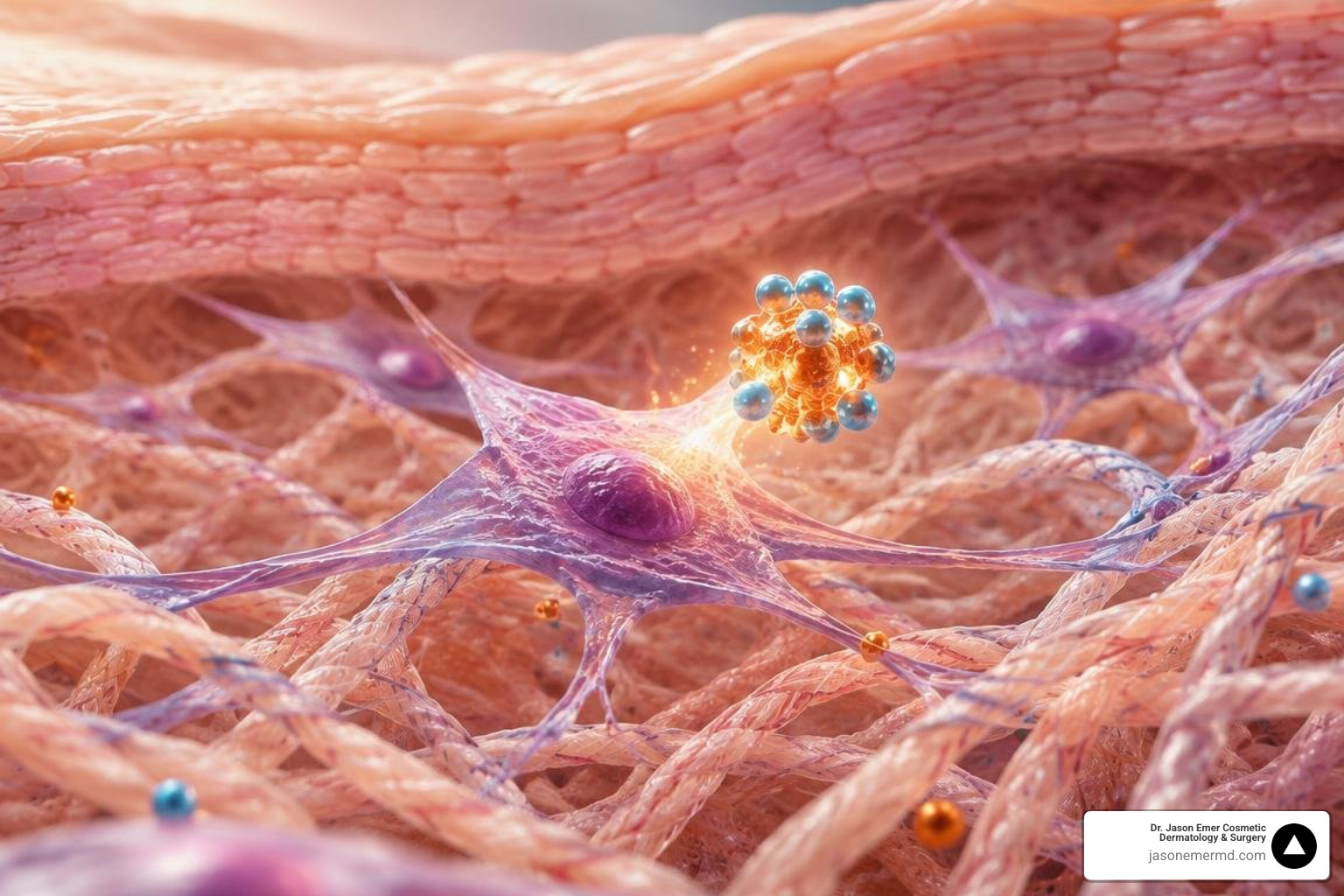
Understanding the biological mechanisms can explain how a GHK-Cu anti-aging serum supports skin rejuvenation
Many people assume an anti-aging serum must feel active—stinging, peeling, or visibly resurfacing the skin—to change it. In Dr. Emer's clinical model, the more useful starting point is a signal that supports the skin's own repair machinery. A GHK-Cu anti-aging serum works through that signaling model rather than through irritation.
Endogenous GHK is a human plasma tripeptide with a high binding affinity for copper(II) ions. Plasma concentrations decline significantly over time, averaging roughly 200 ng/mL at age 20 and dropping to approximately 80 ng/mL by age 60 (Dou et al., 2020). In cutaneous biology, the resulting GHK-Cu complex functions as a bioregulatory signal for cellular repair and extracellular matrix remodeling.
Cellular signaling pathways activated by a GHK-Cu anti-aging serum
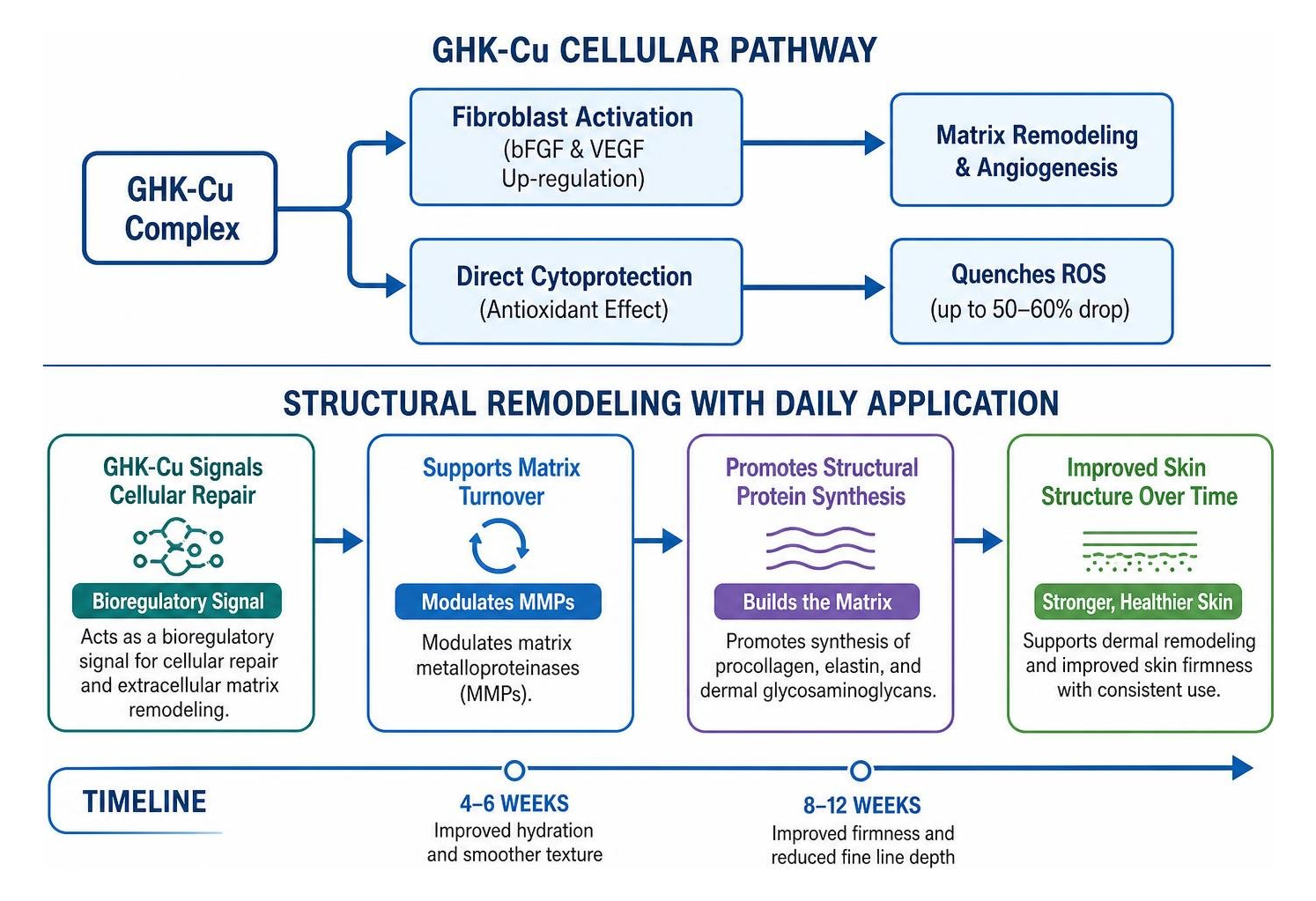
At the cellular level, GHK-Cu modulates gene expression involved in tissue regeneration and physiological defense. In irradiated dermal fibroblasts, GHK-Cu at low concentrations increases the expression of basic fibroblast growth factor (bFGF) and vascular endothelial growth factor (VEGF). This signaling cascade stimulates cell proliferation and microvascular recruitment.
The complex also provides direct cytoprotection against oxidative stress. Laboratory models demonstrate that GHK-Cu reduces reactive oxygen species (ROS) levels by almost 50% in Caco-2 cells treated with tert-butyl hydroperoxide, while WI-38 lung fibroblasts pretreated with GHK-Cu show ROS reductions of nearly 60% following hydrogen peroxide exposure. By mitigating oxidative damage, GHK-Cu supports cellular integrity within broader regenerative medicine frameworks.
Collagen and elastin synthesis during daily application
Dermal structural integrity depends on the balanced turnover of structural proteins. Topical copper peptides modulate matrix metalloproteinases (MMPs) while promoting the synthesis of procollagen, elastin, and dermal glycosaminoglycans.
Unlike aggressive structural interventions, topical peptides support existing cellular functions gradually. They stimulate dermal remodeling without provoking acute inflammatory states, making them practical adjuncts alongside in-office collagen stimulators.
Research helps explain how skin texture and firmness may change over time with consistent use
Topical peptides operate through biological signaling rather than rapid exfoliation. Measurable improvements in surface hydration and epidermal smoothness typically require several weeks of daily use, with structural changes such as improved firmness and softened fine lines developing over a longer, more gradual timeframe.

Structural remodeling and barrier defense against environmental damage
Dermal aging involves collagen breakdown, microcirculatory decline, and barrier compromise. GHK-Cu acts as a chemoattractant for capillary endothelial cells and macrophages during tissue remodeling. These actions support nutrient delivery and waste clearance across the dermal-epidermal junction.
GHK-Cu also supports stratum corneum lipid organization, reinforcing defenses against environmental stressors including UV-related cellular stress.
Comparing active ingredients within a GHK-Cu anti-aging serum regimen
Topical formulations often incorporate complementary peptides. Argireline (Acetyl Hexapeptide-8) modulates neuromuscular signaling to soften expression lines, while Syn-Ake is a synthetic peptide that inhibits muscle contractions. Ectoin and hyaluronic acid act as extremolytes and humectants that stabilize peptide structures and maintain hydration.
While complementary, topical serums cannot replace the structural correction achieved with in-office peptide therapy, neurotoxins, or resurfacing lasers.
Energy-based modalities require careful parameter selection based on Fitzpatrick skin type. Darker skin tones face an increased risk of post-inflammatory hyperpigmentation (PIH), necessitating adjusted device settings, pre-treatment skin conditioning, or alternative non-thermal therapies, with sequencing decided in consultation.
Proper formulation integration and application protocols support peptide stability and consistent use
The efficacy of a GHK-Cu serum depends on biochemical stability and proper product placement within a skincare routine.

Layering considerations with other active cosmetic ingredients
Copper tripeptides are vulnerable to chelation disruption under extreme pH conditions. Apply the serum to clean, dry skin, and avoid layering it directly with high-strength alpha-hydroxy or beta-hydroxy acids, which lower local skin pH and disrupt copper chelation. Strong, low-pH direct vitamin C formulas can also alter copper oxidation states, so many clinicians recommend applying direct vitamin C in the morning and copper peptides in the evening, or using non-acidic vitamin C derivatives. Follow peptide application with humectants, niacinamide, or ceramide creams to support the lipid barrier, finishing morning routines with broad-spectrum sunscreen.
For advanced regimens, professional guidance in aesthetics & skin care ensures active ingredients complement rather than destabilize each other.
Expected progression and maintenance for long-term skin health
Topical GHK-Cu is generally well tolerated. However, potential trade-offs exist: concentrated formulations may cause mild contact redness in reactive skin, and individuals with rare copper metabolic disorders, such as Wilson's disease, should avoid copper-supplemented topicals.
For mild laxity, consistent daily application offers low-risk dermal support. A less intensive alternative is focusing solely on barrier repair and sun protection, which suits patients preferring minimal routines.
Frequently asked questions about copper peptides
What timeline may be discussed for visible changes with topical copper peptides?
Surface hydration and texture improvements commonly develop over several weeks, while structural remodeling, including refinement of fine lines and firmness, generally requires a longer period of daily application.
Can copper peptides be combined with retinoids or vitamin C?
Yes, provided they are separated appropriately. Clinicians recommend alternating application times, such as copper peptides in the morning and retinoids in the evening, or using buffered derivatives to prevent formulation destabilization.
What should someone discuss with a clinician before using topical GHK-Cu?
Patients should review existing active topicals, skin barrier sensitivity, prior contact dermatitis, and aesthetic goals to determine whether topical peptides or in-office interventions more appropriately address their needs.
What to remember
- GHK-Cu is an endogenous copper-binding tripeptide that supports collagen synthesis, antioxidant defense, and tissue remodeling.
- Observable textural and firmness improvements require steady daily application over a period of weeks to months.
- Copper peptides must be layered carefully to avoid degradation from low-pH exfoliating acids and direct L-ascorbic acid.
To determine the most appropriate skin-remodeling strategies and topical formulations for individual anatomical goals, a formal consultation with Dr. Emer allows these decisions to be made on a case-by-case basis.
This content is for general education and does not provide a diagnosis, determine candidacy, or replace a consultation with a licensed clinician.
This resource provides general educational information. Treatment recommendations depend on your health, goals, and consultation with a qualified clinician.