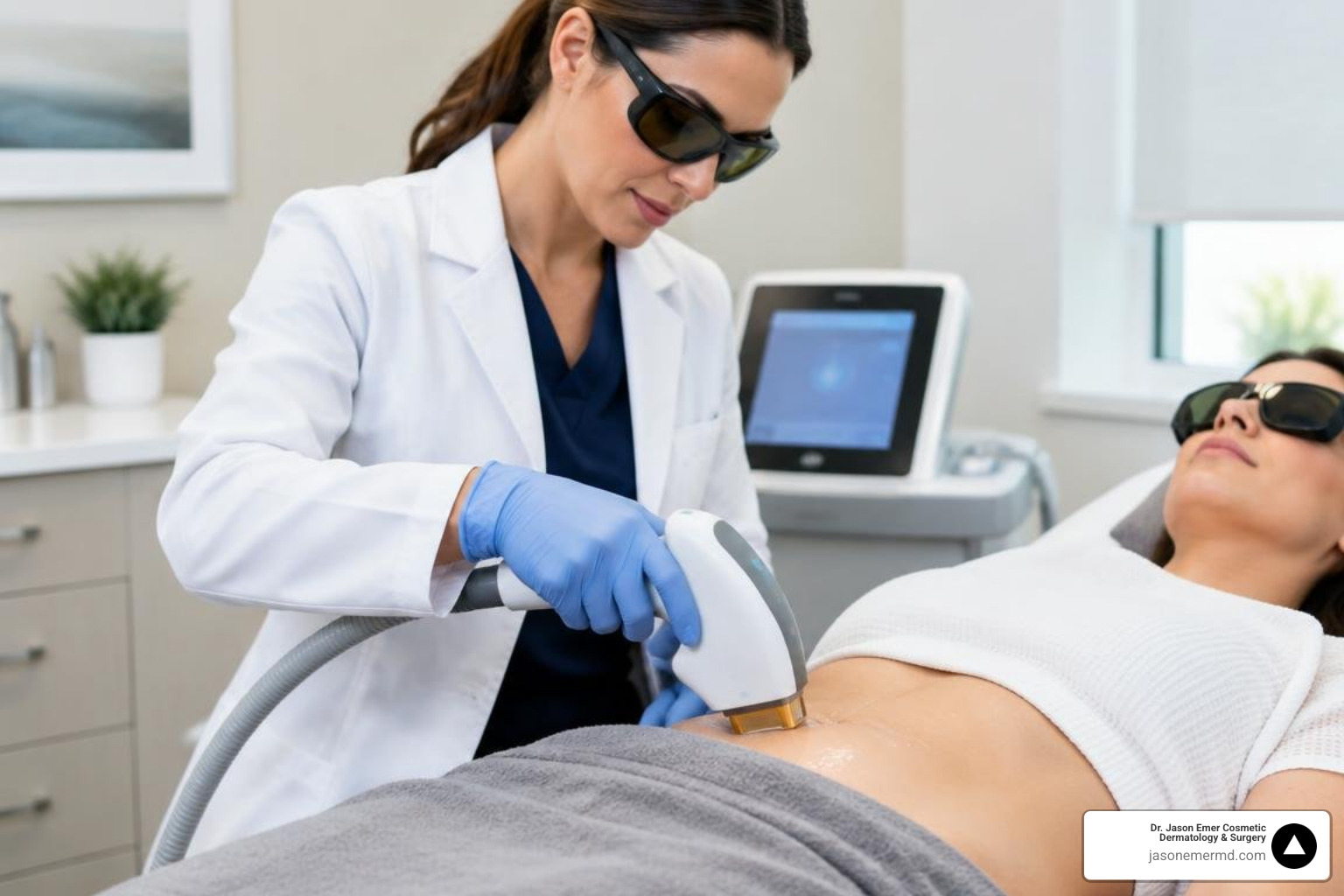
Laser Treatment to Remove Stretch Marks Starts With Skin Mapping
Most offices start with a device. Dr. Emer starts with a map of the skin.
Laser treatment to remove stretch marks can soften texture and reduce color contrast, but it does not make stretch marks disappear completely. A focused clinical evaluation determines whether marks are vascular striae rubra or older striae alba, alongside individual healing history. That assessment directs wavelength selection, treatment depth, session pacing, and recovery planning. Skin tone, prior scarring, and the location of the marks on the body all factor into how a plan is built, since abdominal skin, thigh skin, and arm skin respond differently to thermal energy.
Lasers create controlled micro-thermal zones in the dermis to stimulate remodeling where collagen and elastin fibers have ruptured. Textural improvement develops gradually across staged sessions. A series of treatments gives the skin time to rebuild, which is why a single pass rarely produces meaningful change. Patients who expect a one-time fix are often better served by resetting expectations before treatment begins, not after.
Dr. Jason Emer uses advanced energy-based modalities to treat textural concerns. His approach to laser treatment to remove stretch marks emphasizes tailored settings, pigment-risk mitigation, and realistic expectations for smoother skin. The goal is measured improvement in texture and tone, not erasure of the underlying scar tissue.
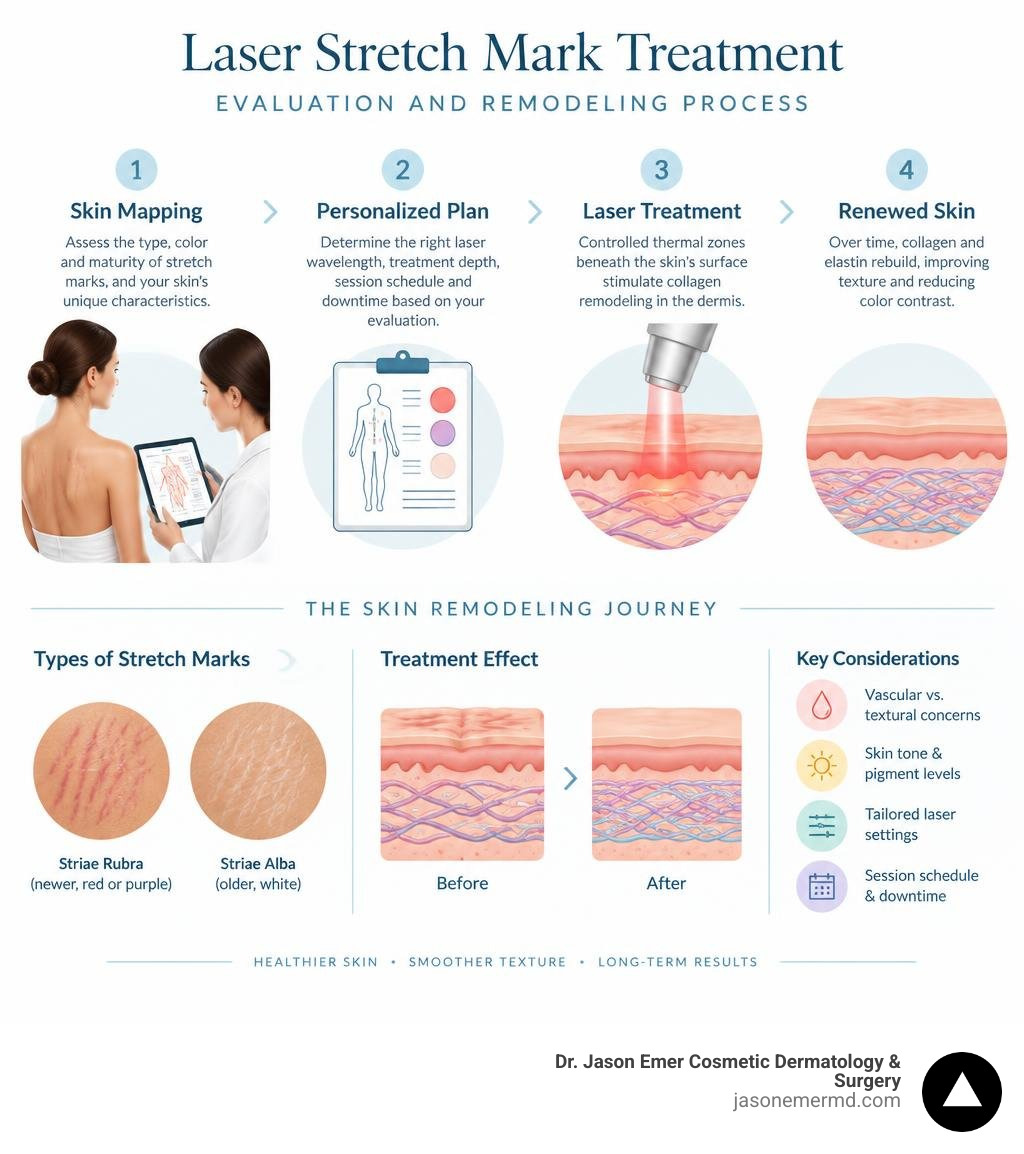
Laser treatment to remove stretch marks is designed to stimulate controlled dermal remodeling.
Stretch marks, or striae distensae, form when rapid tissue expansion disrupts the dermal matrix, fracturing collagen and elastin fibers. Early marks present as erythematous striae rubra with vascular dilation, eventually maturing into hypopigmented, atrophic striae alba. The extracellular matrix loses its organized structure, leaving visible lines that vary in depth, width, and color. Some marks sit shallow in the dermis; others extend deeper, and this depth difference changes how much a laser can realistically accomplish.
Clinical evaluation identifies scar depth and vascularity before any device is chosen. Dr. Emer uses tailored laser dermatology protocols for stretch marks to address redness and textural indentations. Energy delivery accounts for baseline melanin across Fitzpatrick phototypes to prevent unwanted thermal spread, since darker skin tones carry a higher likelihood of post-inflammatory hyperpigmentation. In these cases, sequencing may shift toward lower fluences, longer intervals between sessions, or non-ablative options altogether. Sequencing and intensity are decided case by case, in consultation.
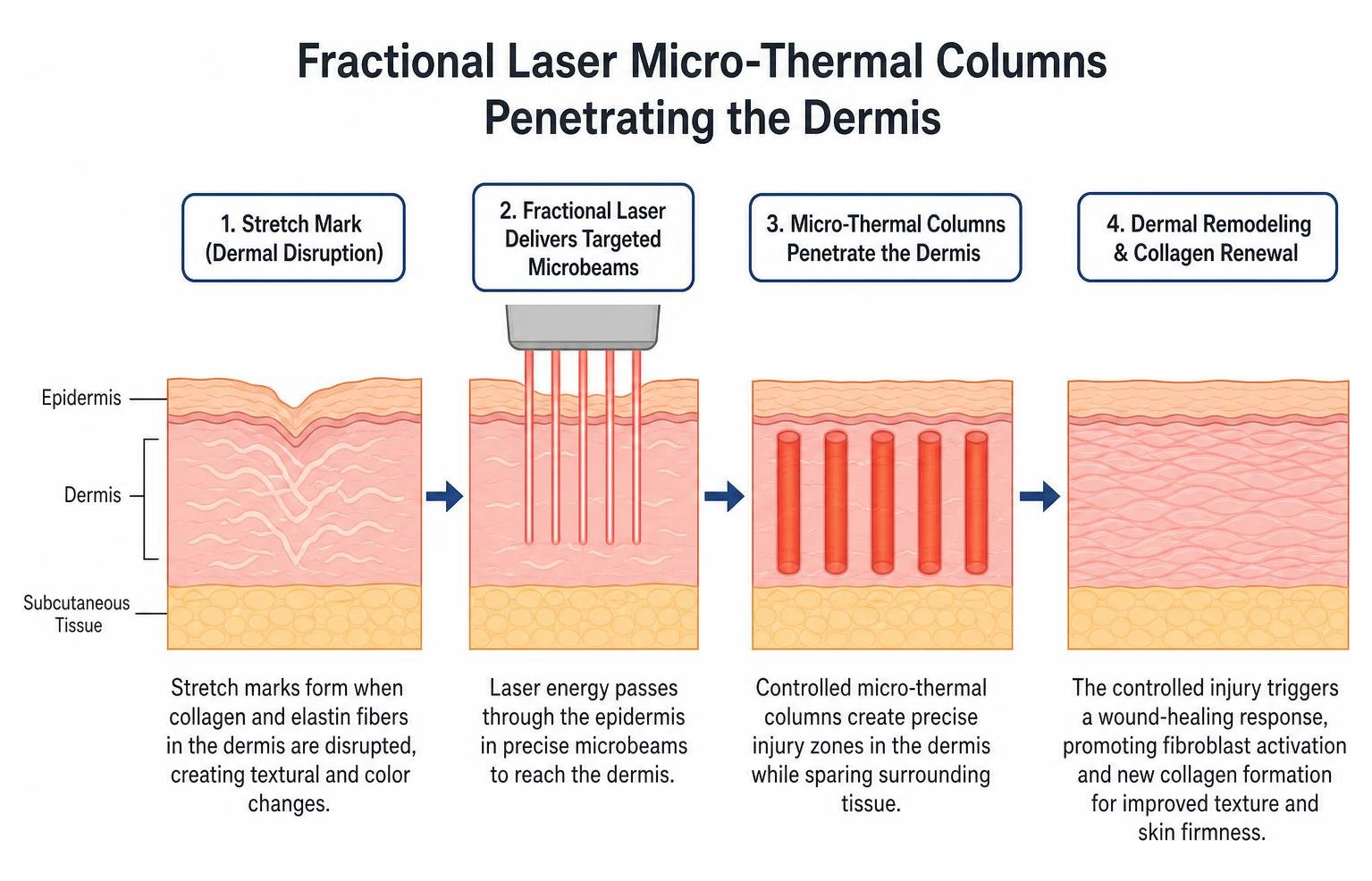
Laser systems deliver targeted microbeams to deposit thermal energy in the dermis while sparing surrounding tissue. This controlled response triggers neocollagenesis and fibroblast activation, prompting the skin to slowly rebuild structural scaffolding. Dermal architecture reorganizes over time, improving firmness. This process is gradual; skin remodels over months rather than overnight, and visible change often lags behind the actual biological activity happening underneath the surface.
No energy-based treatment reverses the original tissue injury entirely. The fibers that tore during rapid stretching do not return to their original arrangement; treatment instead encourages new collagen to fill in and soften the appearance of what is already there. That distinction matters when setting expectations for outcome and timeline.
Different laser wavelengths can address redness and textural changes in stretch marks.
Non-ablative fractional devices target dermal water while leaving the stratum corneum intact. Wavelengths like 1470 nm and 1540 nm create micro-thermal columns to stimulate collagen with minimal visible recovery. Dr. Emer integrates fractional laser skin resurfacing when patients require progressive textural refinement with brief healing periods, and this approach tends to suit patients who cannot tolerate extended downtime, including those balancing work schedules or upcoming events.
For deeper striae alba, ablative modalities provide substantial remodeling. Systems like fractional CO2 laser resurfacing vaporize microscopic columns to induce dermal contraction. Ablative methods involve real tradeoffs, including longer downtime and more reactive redness. In darker Fitzpatrick skin types (IV–VI), ablative heat increases post-inflammatory hyperpigmentation (PIH) risks, and this risk is a central factor in device selection rather than an afterthought. Dr. Emer adjusts sequencing accordingly, using conservative passes or alternatives like microneedling, peels, or, in some cases, choosing not to intervene at all if the risk profile outweighs the expected benefit. That decision, like every other step in the plan, is made in consultation rather than assumed in advance.
Device choice is never made in isolation from lifestyle. A patient with limited time for recovery may be steered toward non-ablative passes spaced further apart, accepting slower progress in exchange for less disruption. A patient with more flexibility, and skin that tolerates deeper heat well, may move through ablative sessions with a shorter overall timeline. Neither path is inherently superior; the tradeoff is between speed of visible change and the burden of downtime.
Combination approaches are sometimes considered, pairing laser sessions with topical retinoids or other adjuncts to support collagen turnover between visits. These additions are discussed individually, since not every skin type or treatment history tolerates added actives well.
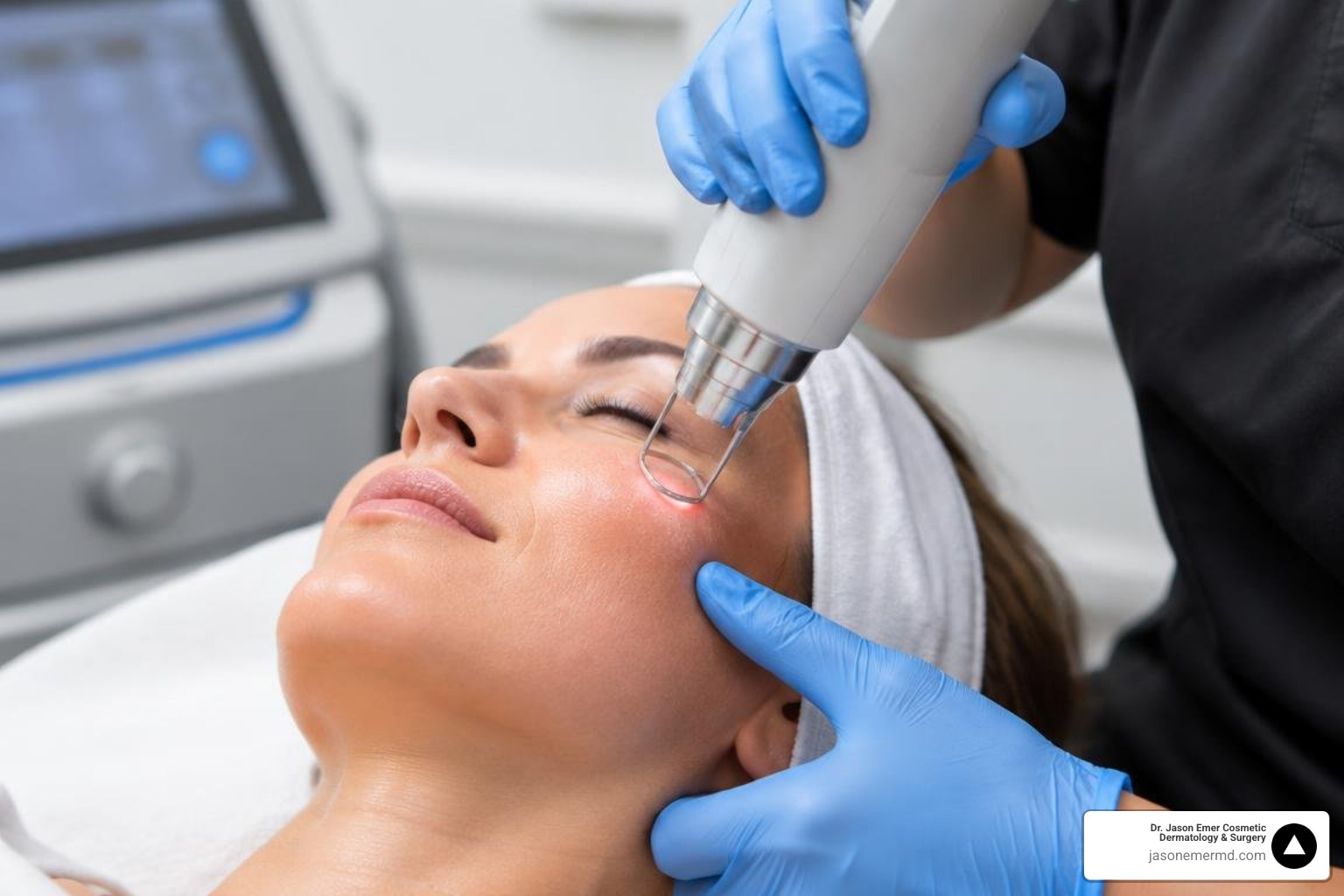
Gradual treatment schedules and aftercare can support controlled skin remodeling.
Tissue remodeling occurs incrementally across multiple visits. Generally, three to five sessions spaced three to five weeks apart allow collagen synthesis to mature between treatments. While complete resolution is not possible, serial sessions soften borders and blend textural irregularities. Dr. Emer designs treatment plans using laser skin resurfacing tailored to scar maturity and skin depth, adjusting session pacing based on individual tissue responses. Progress is tracked visit to visit, and the plan can shift if the skin heals faster or slower than anticipated.
Recovery protocols mitigate complications and assist barrier repair. Typical responses include transient erythema and localized edema resolving in 24 to 72 hours following non-ablative passes; ablative work requires longer downtime. Strict sun protection and gentle emollients support hydration and pigment stability. Skipping aftercare steps, particularly sun avoidance, raises the chance of uneven pigment settling into the treated area, which can undo some of the benefit of the session itself.
For patients unable to commit to a staged schedule, less aggressive options, or simply monitoring the skin without treatment, remain reasonable alternatives discussed during consultation. Doing less is not a failure of the plan; for some patients, a slower pace or a decision to wait is the more appropriate choice given their skin history, schedule, or tolerance for downtime.
Frequently Asked Questions
How many laser sessions are typically needed to see visible improvement in stretch marks? Most protocols involve three to five sessions spaced monthly. Collagen remodeling develops over several months following the final treatment, so results continue to shift after the last visit.
How are energy-based treatments adapted for different Fitzpatrick skin types? Darker tones contain higher epidermal melanin, increasing PIH risks. Providers adapt settings by selecting longer wavelengths, lower fluences, surface cooling, or non-ablative devices, sequencing treatments more conservatively.
What happens if a patient does not follow aftercare instructions closely? Skipping sun protection or barrier support after a session can prolong redness, disrupt healing, and increase the likelihood of pigment irregularities in the treated skin.
What to remember
- Laser treatments stimulate dermal collagen synthesis to soften stretch-mark depth and texture rather than erasing scars entirely.
- Darker skin types face an increased risk of post-inflammatory hyperpigmentation, requiring conservative energy settings and tailored device selection.
- Meaningful textural improvement requires a series of three to five staged sessions combined with consistent barrier-repair aftercare.
Candidacy, laser selection, and session staging are determined through a comprehensive clinical evaluation; explore individualized options through laser dermatology consultations with Dr. Emer.
This content is for general education and does not provide a diagnosis, determine candidacy, or replace a consultation with a licensed clinician.
This resource provides general educational information. Treatment recommendations depend on your health, goals, and consultation with a qualified clinician.