How non-surgical facial rejuvenation treats more than surface wrinkles
Most people assume facial rejuvenation starts with a laser or an injectable. A better clinical model starts with a map of why the face has changed: skin texture, lost or shifted volume, active facial muscles, and deeper tissue laxity.
Non-surgical facial rejuvenation combines treatments at the right depth. Surface options such as laser resurfacing, chemical peels, and medical-grade skincare improve texture, pigment, and fine lines. Neuromodulators soften expression lines, while fillers, biostimulators, threads, and energy-based treatments may support contour and address selected areas of volume loss or laxity.
The goal is not to use every treatment. It is to match the approach to the facial layer and area being addressed, from the forehead and eyes to the cheeks, jawline, and skin itself.
Jason Emer, MD FAAD, is a board-certified dermatologist with more than 19 years of experience in non-surgical facial rejuvenation, including fillers, lasers, PRP, skin tightening, and facial contouring. The sections ahead explain how surface resurfacing and deeper structural support can work together in a personalized treatment plan.
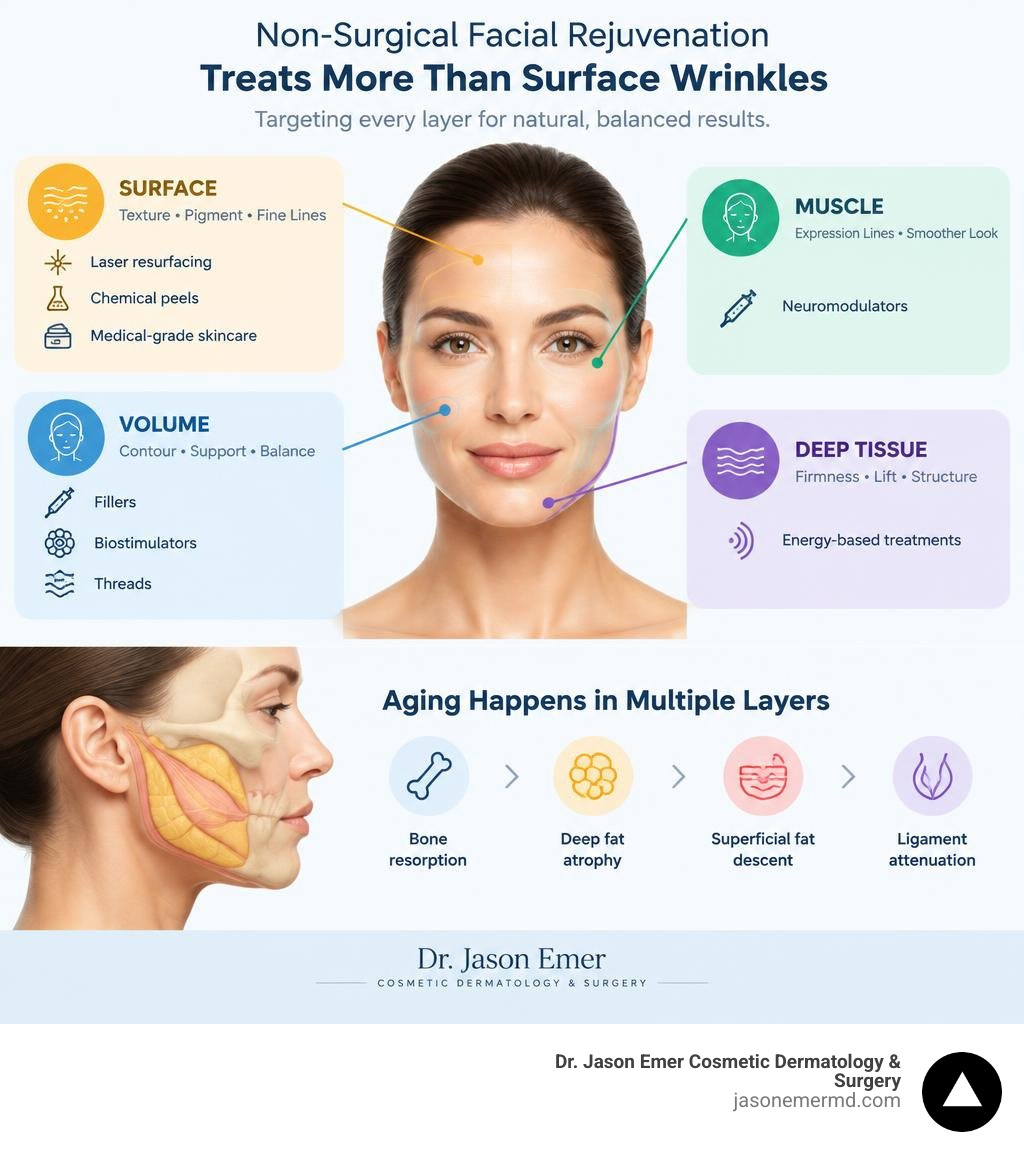
Non-surgical facial rejuvenation addresses aging across multiple facial layers.
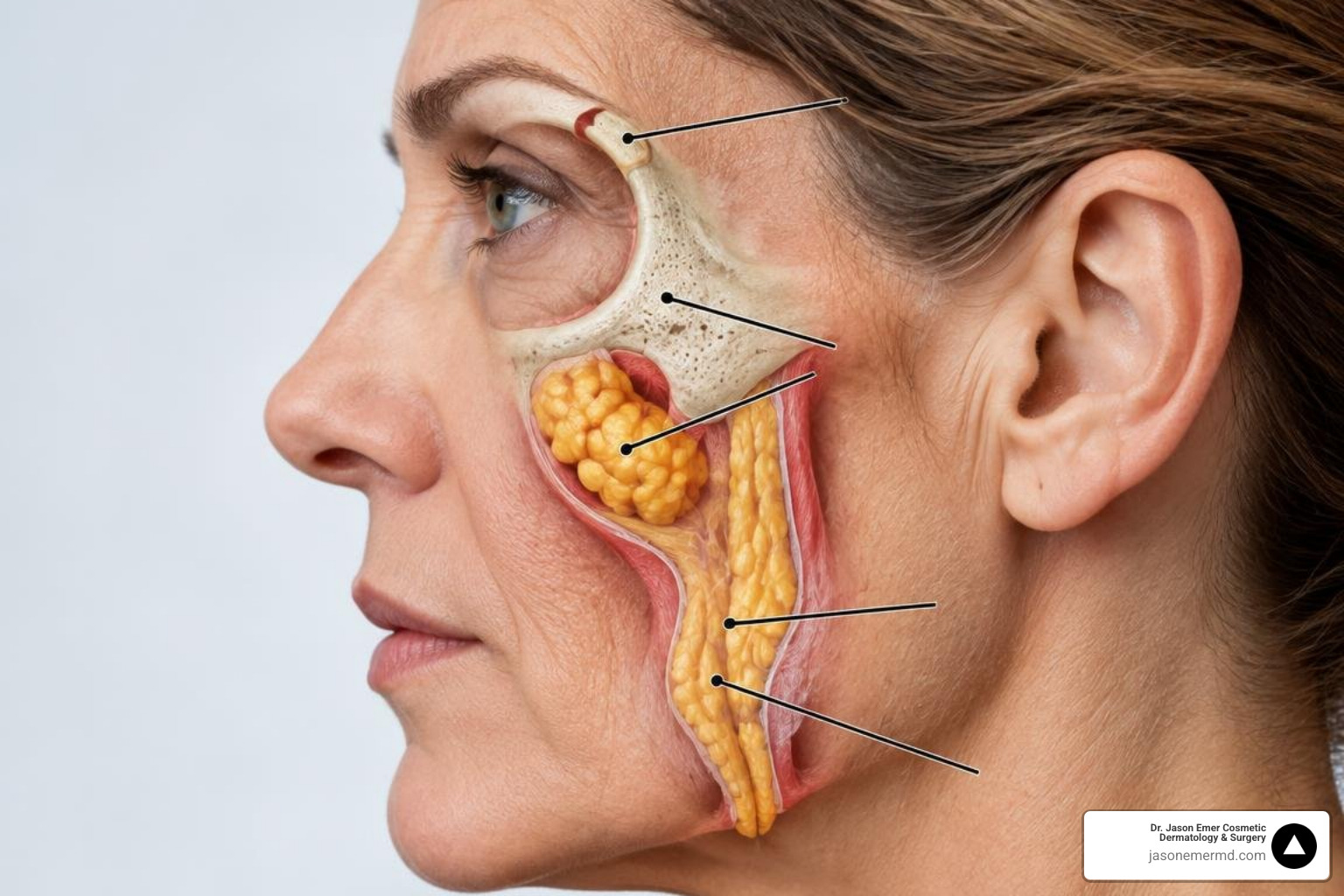
Facial aging does not occur only at the skin surface. Bone gradually resorbs, reducing projection at the orbital rims and midface. Deep fat compartments atrophy, while superficial fat pads descend as ligaments loosen.
Deep volume loss and fat redistribution influence facial contour.
Structural deflation changes how light reflects across the face. Placing high-G-prime hyaluronic acid along the supraperiosteal plane helps recreate skeletal support. Biostimulatory agents like poly-L-lactic acid (PLLA) or calcium hydroxyapatite stimulate native collagen over months as PLLA degrades.
Understanding the benefits of facial sculpting with dermal fillers illustrates how targeted placement of dermal fillers restores midface volume without overfilling superficial planes.
| Filler Type | Primary Mechanism | Target Layer | General Longevity |
|---|---|---|---|
| Hyaluronic Acid (HA) | Water binding and volumization | Superficial dermis to supraperiosteum | 6 to 18 months |
| Calcium Hydroxyapatite (CaHA) | Immediate projection and collagen stimulation | Deep dermis to supraperiosteum | 12 to 18 months |
| Poly-L-Lactic Acid (PLLA) | Subclinical collagen stimulation | Deep dermis or subcutaneous tissue | Up to 24 months |
Dynamic muscle contraction and structural laxity affect facial tiers.
Repetitive contraction of facial muscles creates creases. In the upper face, overactivity of the corrugator, procerus, and frontalis muscles leads to glabellar lines and forehead furrows. Botulinum toxin temporarily blocks acetylcholine release at the neuromuscular junction, softening overlying skin tension.
Dr. Emer integrates targeted Botox injections into plans such as non-surgical eyelid and brow rejuvenation to balance brow position before addressing structural volume.
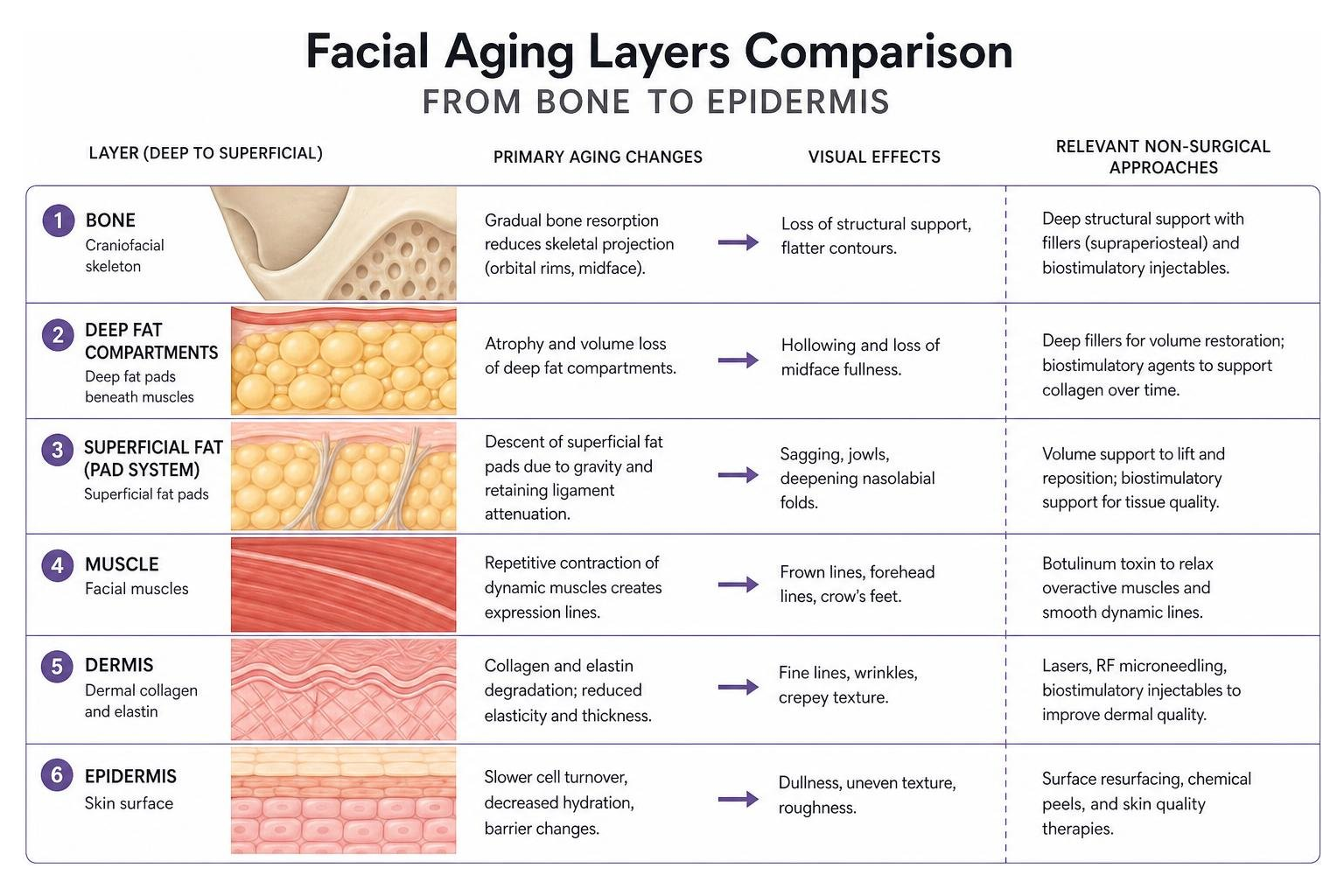
Deep tissue structural support helps refine facial contour without surgery.
When laxity occurs within the superficial musculoaponeurotic system (SMAS) or subcutaneous tissue, surface treatments alone cannot reposition tissue. Structural lifting requires mechanical or thermal tension within deeper planes.
Vector-based tissue elevation and biostimulatory support address laxity.
Absorbable suspension sutures offer mechanical repositioning for descended soft tissue. Polydioxanone (PDO) threads or poly-L-lactic acid sutures with bidirectional cones, such as Silhouette InstaLift, elevate the malar fat pad and lower facial tissues along precise vectors.
As the cones absorb, they trigger localized collagen synthesis that reinforces tissue positioning. Thread placement requires anatomical precision; potential risks include transient puckering, asymmetry, extrusion, or tenderness. Dr. Emer evaluates tissue mobility during facial sculpting consultations to determine whether suspension sutures or injectable support are appropriate, with recovery expectations discussed as part of that plan.
Energy-based coagulation and focused ultrasound tightening target deep planes.
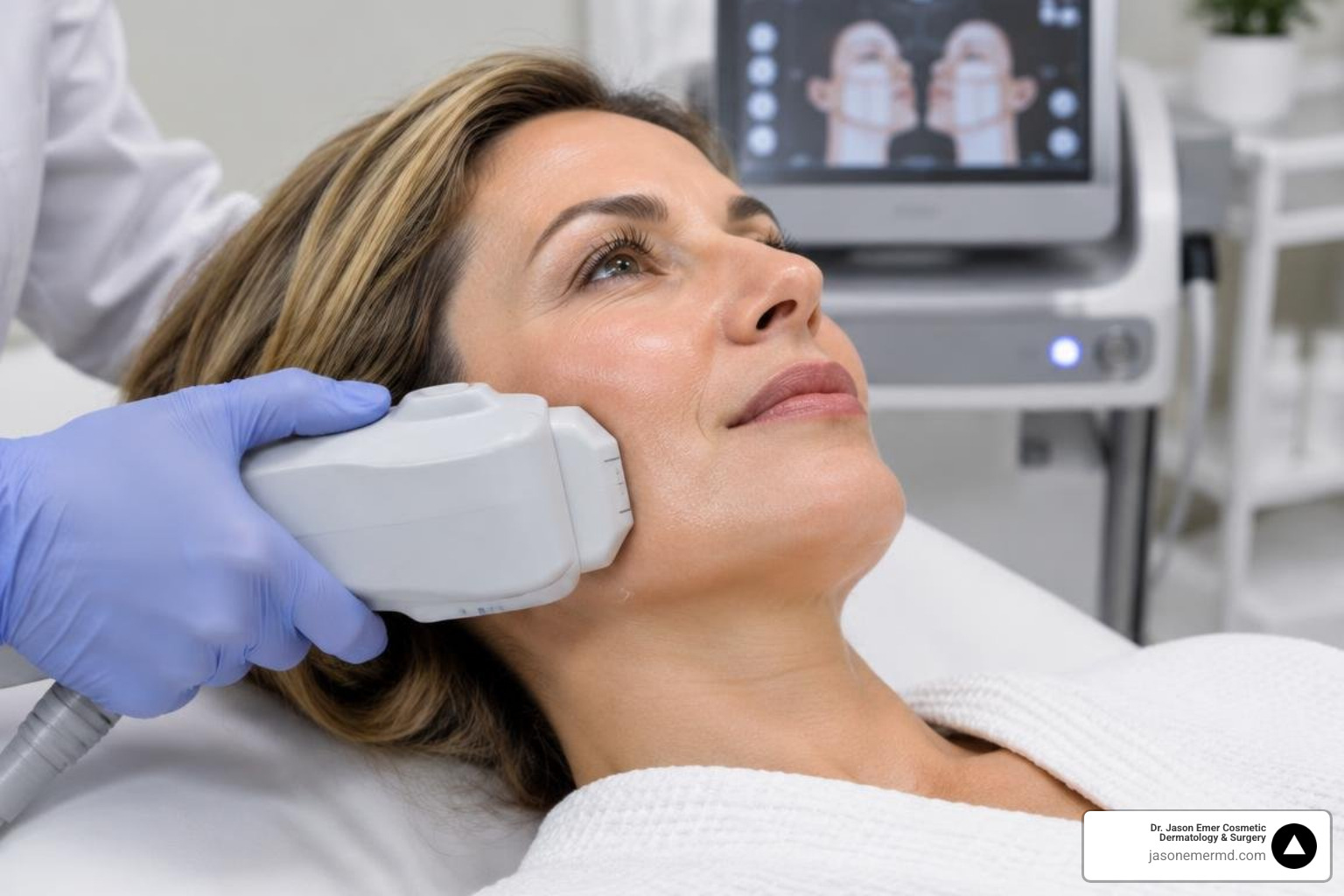
Microfocused ultrasound delivers thermal coagulation points deep within the reticular dermis and SMAS without disrupting the epidermis, denaturing existing collagen to trigger contraction and remodeling.
Ultherapy skin tightening provides targeted coagulation beneath the surface. These treatments carry tradeoffs, including temporary redness, swelling, or tenderness. Darker skin tones may require adjusted settings or different sequencing to reduce the risk of post-inflammatory hyperpigmentation.
Surface resurfacing and cellular therapies complement deeper facial rejuvenation strategies.
Deeper lifting does not correct sun damage, dyschromia, or superficial rhytids. Epidermal quality affects how light reflects across facial contours, making surface therapies part of a layered plan.
Epidermal texture and pigment refinement support skin quality.
Fractional ablative lasers vaporize microscopic columns of skin, stimulating re-epithelialization. For lighter textural refinement, chemical peels accelerate epidermal turnover.
These treatments carry tradeoffs. Downtime ranges from mild redness to significant peeling. Darker skin tones (Fitzpatrick types IV to VI) face a higher risk of post-inflammatory hyperpigmentation (PIH), so Dr. Emer may adjust sequencing by pretreating with tyrosinase inhibitors or selecting non-ablative devices to protect the epidermal barrier. Daily topical retinol, antioxidants, and broad-spectrum sun protection support results.
Regenerative autologous treatments and muscle stimulation support skin tone.
Autologous platelet-rich plasma delivers concentrated growth factors into the dermis, as outlined in this platelet-rich plasma therapy guide. Combining radiofrequency with targeted facial muscle stimulation supports resting muscle tone and dermal density.
Patients always have the option of choosing simpler topical regimens or doing less. Staging, device selection, and recovery requirements remain individual clinical decisions made in consultation.
What to remember
- Facial aging involves structural changes across bone, deep fat compartments, retaining ligaments, muscle, and skin.
- Combining surface resurfacing with deep tissue lifting targets distinct anatomical layers for balanced, natural support.
- Procedural sequencing, downtime, and modality selection must be customized to individual anatomy and skin type.
This content is for general education and does not provide a diagnosis, determine candidacy, or replace a consultation with a licensed clinician.
To explore personalized treatment planning and multi-layered skin care options, a consultation with Dr. Jason Emer is where facial anatomy and aesthetic goals can be evaluated and treatment decisions made.
References
Li K, Meng F, Li YR, Tian Y, Chen H, Jia Q, Cai H, Jiang HB. "Application of Nonsurgical Modalities in Improving Facial Aging.." International journal of dentistry, 2022. PMCID PMC8894069.
This resource provides general educational information. Treatment recommendations depend on your health, goals, and consultation with a qualified clinician.