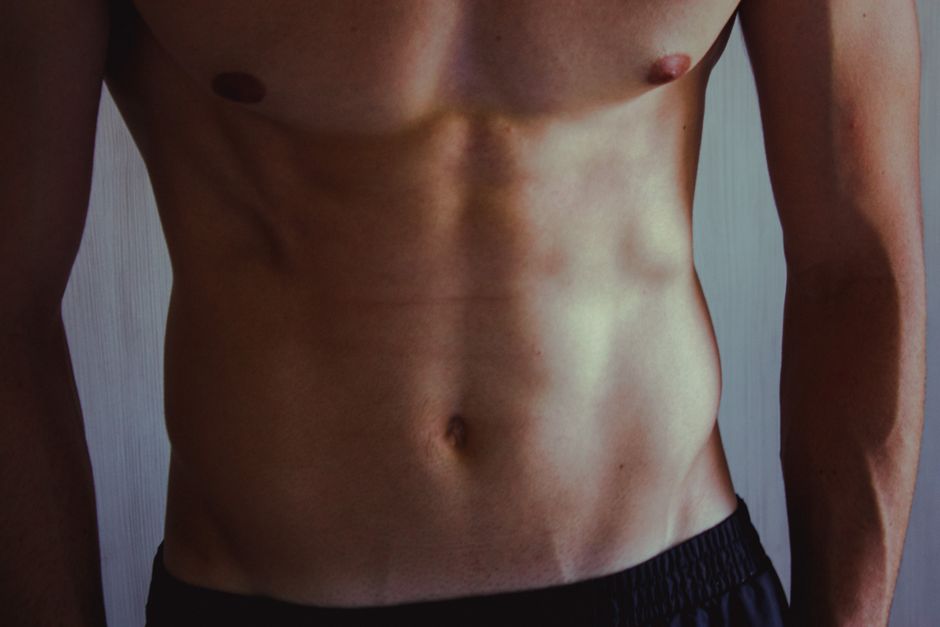
How to Find Qualified 4D Ab Etching Near Me
Most offices start with a device. A safer clinical search starts with a surgeon's training, anatomical judgment, and accredited setting.
When looking for 4d ab etching near me, focus on providers with board certification in an appropriate specialty, verified experience in high-definition liposculpture, and surgical facility privileges. Essential steps include an in-person assessment, a clear contouring plan, established anesthesia protocols, and an honest review of skin quality and realistic limits. These conversations take time, and a rushed consultation is often a warning sign rather than a shortcut.
Four-dimensional abdominal etching is not standard liposuction. It selectively sculpts superficial fat to define natural muscle lines while accounting for dynamic movement, meaning the contours should look believable whether a patient is standing still or twisting at the waist. The American Board of Cosmetic Surgery notes that training credentials vary widely, highlighting the need to verify specific high-definition contouring experience rather than assuming all liposuction training is equivalent. Learn more about abdominal etching consultations and the factors shaping treatment plans.
Jason Emer, MD FAAD, is a board-certified dermatologist with experience in liposculpture, including 360 HD liposuction. For patients researching 4d ab etching near me, Dr. Emer uses anatomical mapping during a personalized evaluation, so the plan reflects an individual's muscle structure rather than a generic template.
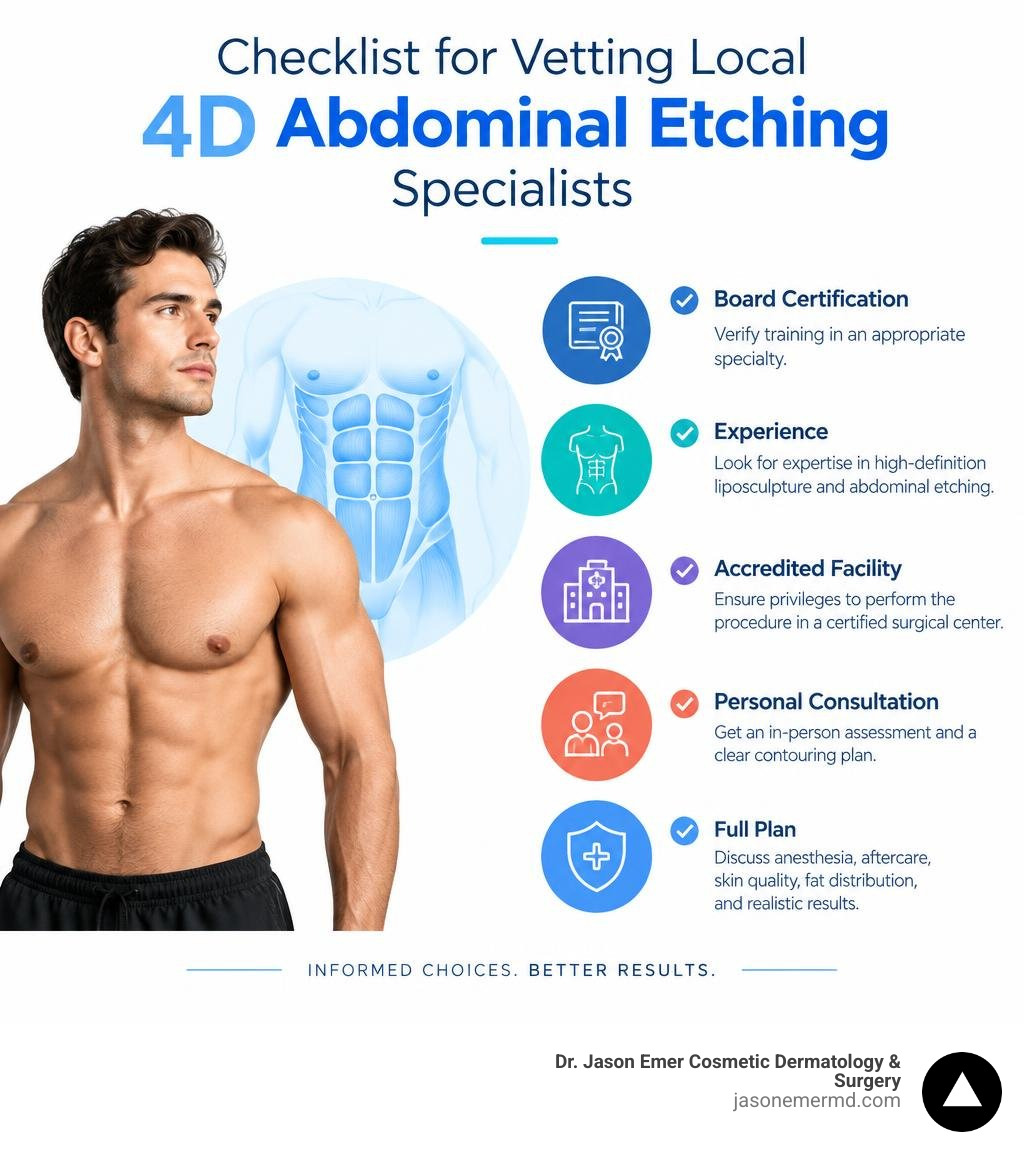
Understanding anatomical dynamics and surgeon qualifications helps guide research into 4D ab etching near you
Advanced abdominal sculpting demands a precise grasp of muscular architecture. Traditional liposuction debulks deep adipose layers across broad zones. In contrast, four-dimensional contouring accounts for dynamic movement, respiration, and muscle flexion, which is why the planning stage matters as much as the technique itself.
The procedure highlights the rectus abdominis, the linea alba, and the paired linea semilunaris lines. Sculpting requires superficial fat harvesting alongside selective preservation of fatty cushions over muscular bellies to create natural shadows. Removing too much fat in the wrong plane can flatten these shadows rather than sharpen them, which is one reason experience matters more than the equipment used.
Key qualification checkpoints include:
- Board certification and dedicated fellowship training in high-definition contouring.
- Accreditation of the surgical facility with established transfer agreements.
- Documented portfolios displaying dynamic outcomes across diverse body types.
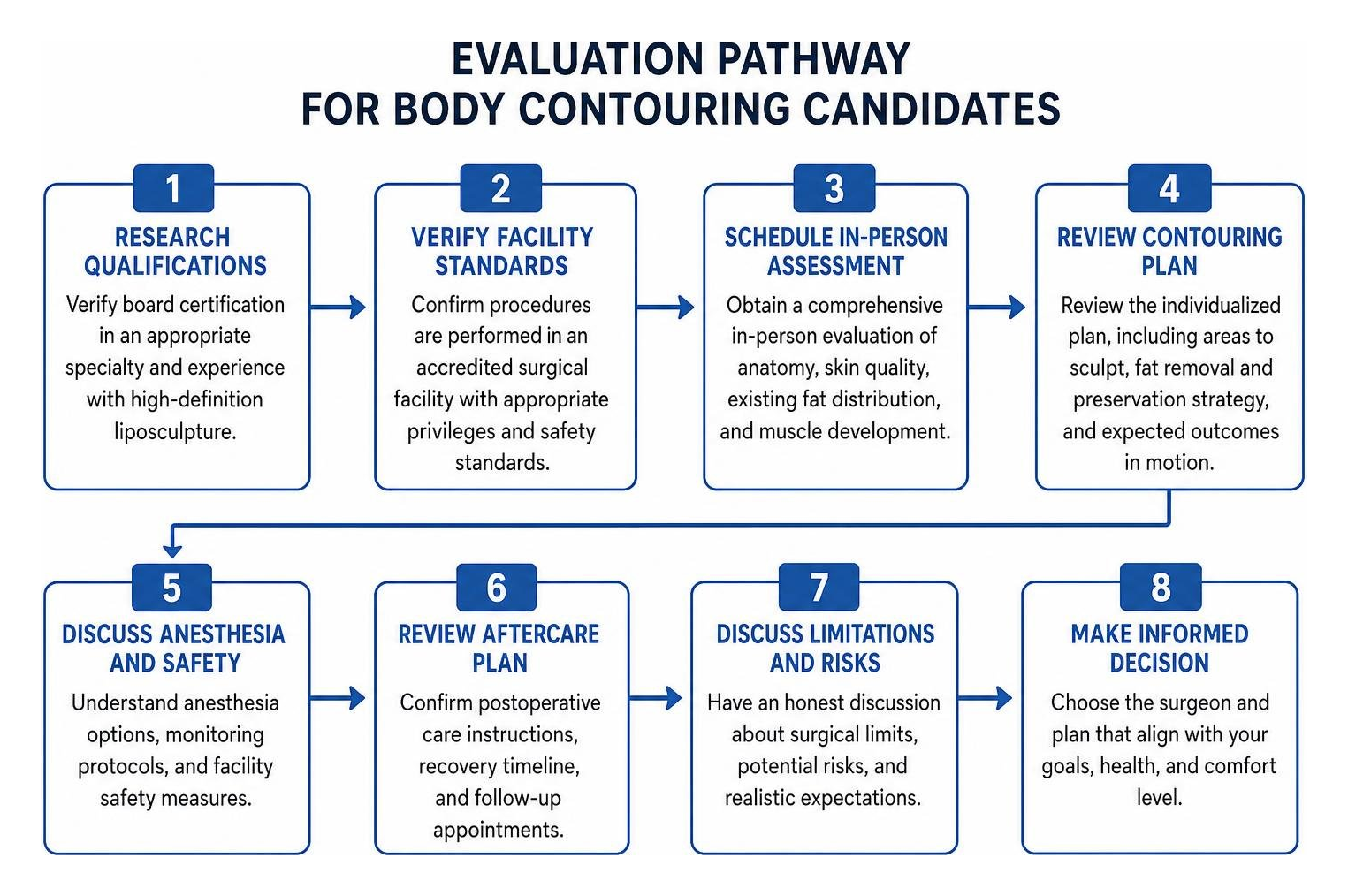
Surgeons evaluate tissue elasticity and baseline muscular development before recommending surgery. Individuals with significant visceral fat or limited skin elasticity may see reduced definition, and an ethical clinician will discuss conservative options or alternative approaches during consultation. In some cases, that alternative is simply continuing a strength and conditioning program before revisiting surgical options, since etching accentuates existing muscle tone rather than creating it from nothing.
Finding a qualified surgeon for 4D ab etching near me requires evaluating anatomical expertise and advanced technology
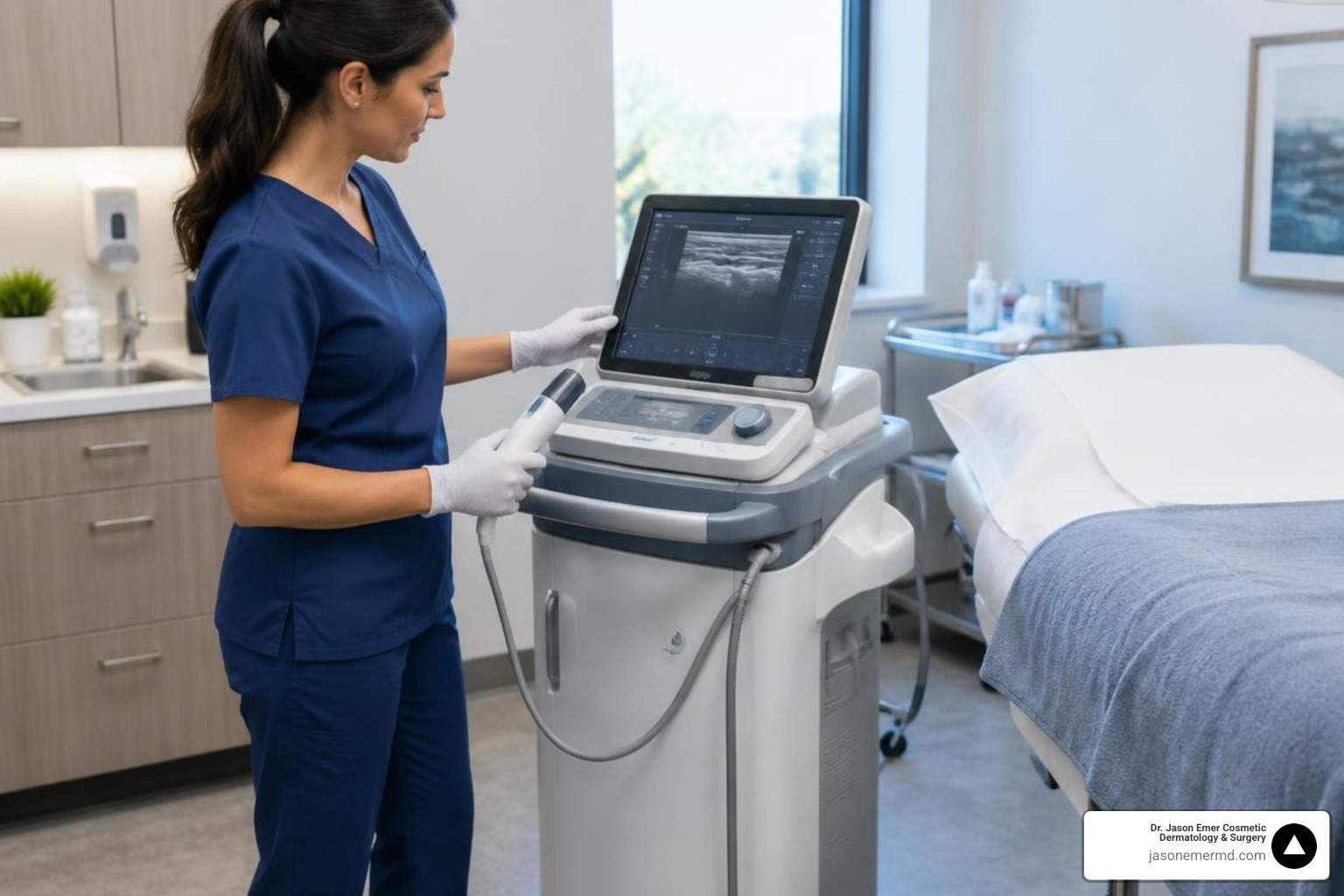
Precision sculpting relies on advanced platforms to mobilize fat without traumatizing superficial dermal layers. Ultrasound-assisted liposuction emulsifies fat while preserving connective structures and vascular networks. Power-assisted cannulas then aspirate tissue along anatomical landmarks with deliberate control, which is part of why the technique is described as four-dimensional rather than a single static pass.
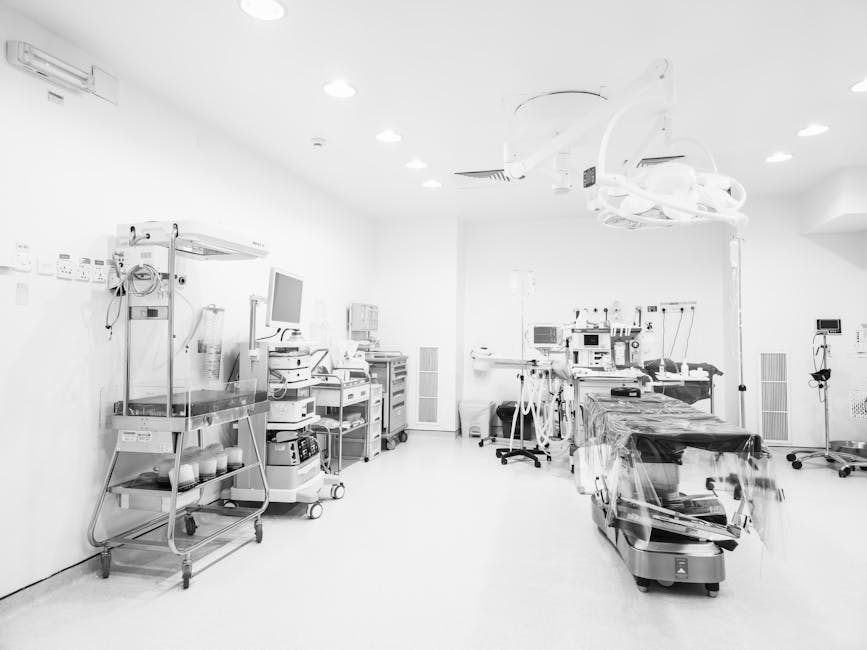
Skin retraction systems often complement aspiration. Subcutaneous heating modalities, including radiofrequency energy and helium plasma, stimulate soft tissue contraction to address mild laxity, but these energy-based tools are not appropriate for every patient in the same way.
When introducing energy-based devices, skin type requires careful evaluation. Darker skin tones carry an elevated risk of post-inflammatory hyperpigmentation (PIH) at incision sites or treatment zones. Conservative energy settings, adjusted treatment sequencing, and targeted pre-treatment regimens protect melanin-rich skin, and a qualified surgeon will discuss this risk openly rather than glossing over it.
The surgical consultation serves as the foundation for treatment planning. Discussions must cover trade-offs, limitations, and alternatives. Patients with prominent visceral fat or loose skin may require traditional debulking, surgical excision (abdominoplasty), or non-surgical lifestyle modifications instead, and sometimes the honest recommendation is to wait or to pursue a less invasive path first. The American Society of Plastic Surgeons emphasizes that liposuction is not a weight-loss method, and that tissue quality directly influences surgical contours.
Structured aftercare protocols and realistic expectations support long-term tissue healing
Recovery is an active clinical phase that dictates final visual contours. Post-operative inflammation, fluid accumulation, and structural remodeling evolve over several months.
Managing edema requires strict adherence to specialized compression garments and foam padding. These garments hold skin against sculpted muscular grooves to minimize dead space. Serial manual lymphatic drainage therapy assists in clearing fluid, reducing firmness, and decreasing seroma risk.
Dynamic healing progresses across predictable stages:
- Initial fluid management and continuous garment wear dominate early recovery.
- Residual swelling resolves gradually over three to six months as tissues soften.
- Full tissue maturation and dynamic muscular definition stabilize over time.
Frequently Asked Questions about abdominal etching procedures
How should one prepare for an abdominal etching consultation?
Arrive with complete medical history records, exercise routine details, and stable weight history. The surgeon evaluates skin laxity, subcutaneous versus visceral fat, and muscular symmetry.
How does 4D abdominal sculpting differ from standard liposuction?
Standard liposuction reduces deep fat volume. Four-dimensional etching sculpts superficial fat layers to accentuate muscle borders and accommodate dynamic motion.
What does the recovery timeline involve?
Patients wear compression garments continuously for several weeks, complete scheduled lymphatic drainage, and avoid strenuous core exertion until cleared.
An in-person consultation with Dr. Emer provides an individualized assessment of anatomical structure, skin tone, and aesthetic goals to determine an appropriate body contouring plan.
What to remember
- Four-dimensional abdominal etching selectively sculpts superficial fat to highlight natural muscle contours during active movement.
- Energy-assisted devices require tailored settings to mitigate risks of tissue burns, contour irregularities, and post-inflammatory hyperpigmentation in darker skin.
- Comprehensive aftercare combining medical compression and lymphatic drainage is essential for proper fluid clearance and skin retraction.
This content is for general education and does not provide a diagnosis, determine candidacy, or replace a consultation with a licensed clinician.
This resource provides general educational information. Treatment recommendations depend on your health, goals, and consultation with a qualified clinician.