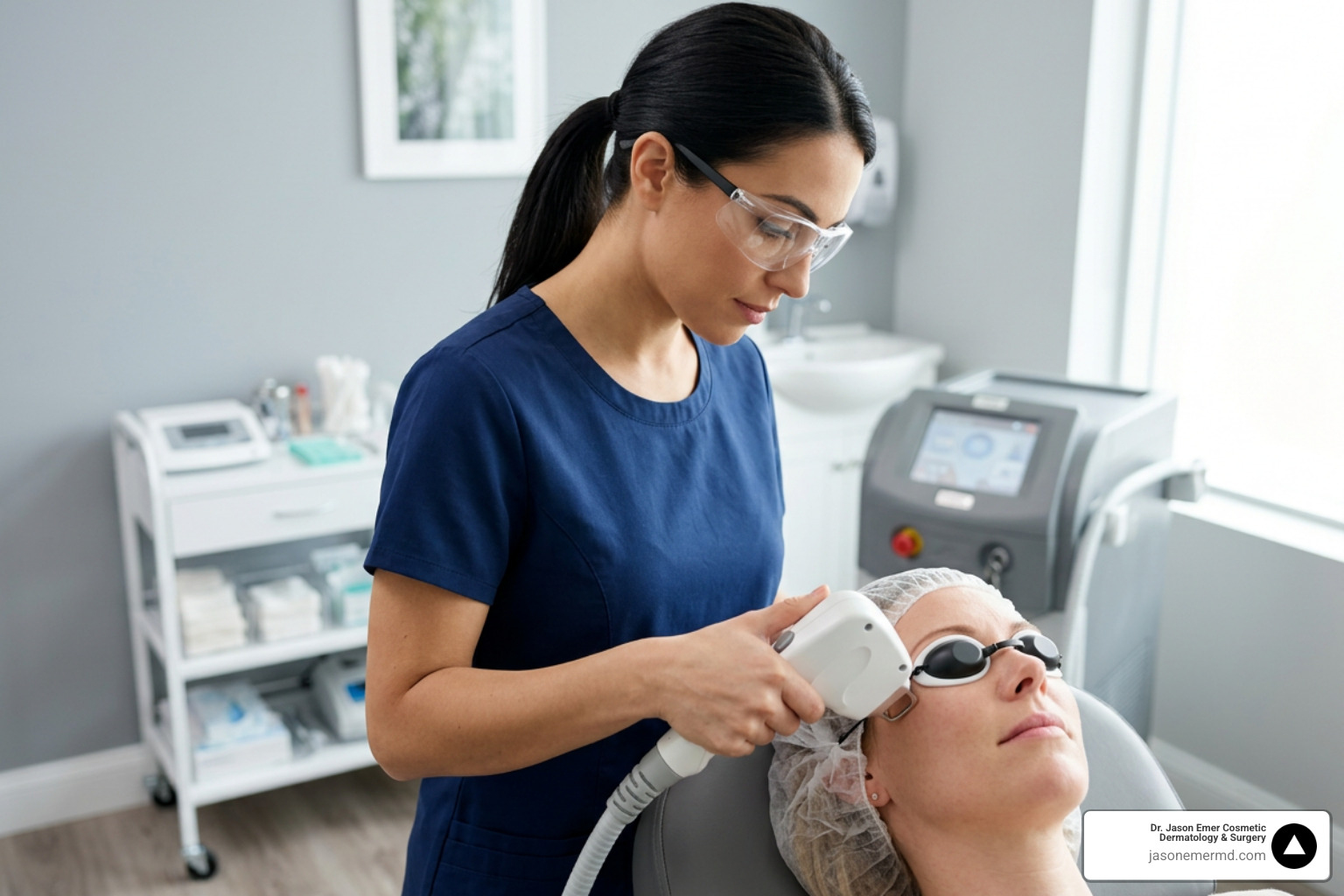
Finding a Moxi Laser Provider Near You Takes More Than a Map Search
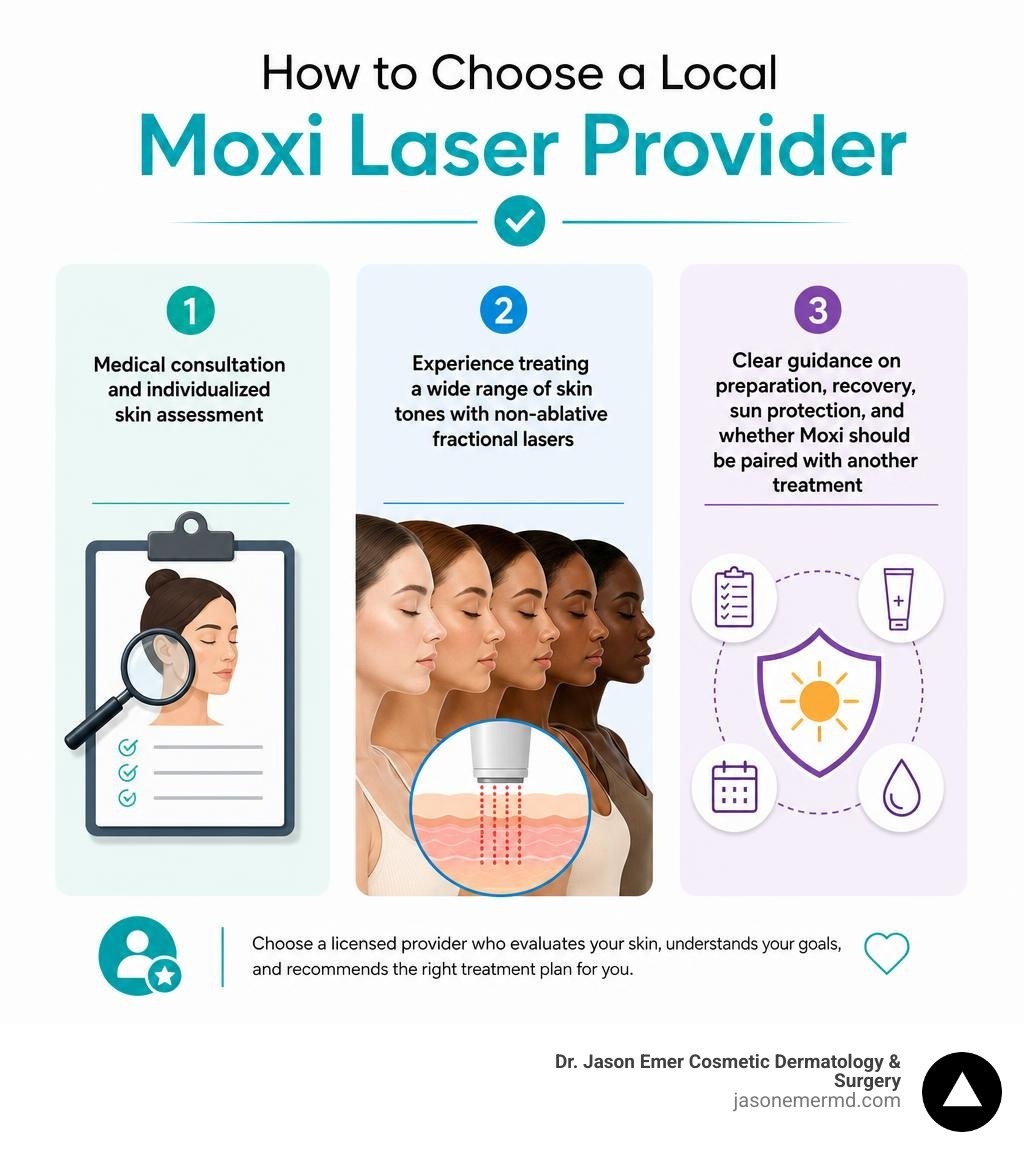
Most people assume the closest clinic to home or work is the right place to start. That assumption is backwards. The closest clinic is rarely the optimal choice, and proximity has nothing to do with clinical judgment. When searching for moxi laser near me, look for a licensed clinician who evaluates skin tone, pigment risk, sun exposure, and goals before selecting laser settings. A device does not make treatment decisions; a clinician does, and that distinction matters more than drive time.
Moxi is a 1927 nm non-ablative fractional laser creating controlled micro-thermal zones in the skin. This stimulates collagen remodeling and cellular turnover while preserving the skin barrier, addressing early sun damage, uneven tone, dullness, and fine lines with minimal downtime. Laser settings, spacing, and adjunctive care must shift based on skin phototype and pigment reactivity. Two people with the same complaint can require entirely different protocols once their skin history is reviewed.
Jason Emer, MD FAAD, is a board-certified dermatologist with experience in laser facial rejuvenation. For individuals seeking a moxi laser near me, Dr. Emer determines whether Moxi, alternative resurfacing, or a combined approach aligns with the skin concern and recovery timeline. Some patients benefit more from topical therapy, strict photoprotection, or a staged plan that begins with conservative measures before any laser is used. The right starting point is rarely obvious from a search results page, which is why a consultation, not a map pin, should guide the decision.
Non-ablative fractional energy supports cellular renewal with limited recovery time
Non-ablative fractionated lasers target water in tissue without vaporizing the epidermal layer. By generating microscopic columns of thermal coagulation, this technology stimulates tissue turnover and collagen synthesis. Patients seeking targeted laser skin resurfacing may consider non-ablative modalities for superficial concerns when extended downtime is impractical. The tradeoff is depth: non-ablative devices remodel more superficially than fully ablative systems, so they are not suited for advanced laxity or deep scarring. That tradeoff is a real limitation, not a marketing footnote, and it should be discussed openly before any device is chosen.

Targeting early sun damage and pigmentation
The 1927 nm wavelength has high water absorption, prompting the shedding of damaged cells to address sunspots, dullness, and mild dyschromia. However, in pigment-prone conditions like melasma, heat sensitivity is a key risk. Excess thermal energy can trigger rebound darkening, making conservative settings, topical prep, or non-laser care preferable. Pausing energy-based treatment and relying on medical skincare and strict photoprotection may be the safer initial approach for some patients, and that alternative deserves equal consideration alongside laser treatment.
Fractionated laser technology stimulates natural collagen remodeling
Controlled thermal injury stimulates dermal fibroblasts over several weeks. Because intact tissue surrounds each micro-channel, healing is rapid, though rapid does not mean instant. Mild redness and a sandpaper texture are expected signs of cellular turnover, and patients should plan around several days of visible change rather than expecting an immediate, seamless result. Lighter options, including Clear + Brilliant, may be considered for subtle photodamage repair or prejuvenation rather than deeper structural remodeling. Choosing a lighter approach is not a lesser choice; it is simply a different point on the treatment spectrum, appropriate for different goals and different amounts of tolerable downtime.

A moxi laser near me search should prioritize clinical expertise over proximity
A local search should focus on diagnostic capability rather than address. Device operation requires understanding skin phototypes, tissue response, settings, and recovery. Experienced practitioners in laser dermatology assess whether standalone resurfacing, combination protocols, or non-energy options are indicated for a given presentation.
| Modality approach | Target chromophore or layer | Primary clinical indications | Typical recovery profile |
|---|---|---|---|
| Standalone non-ablative 1927 nm | Water; upper dermis and epidermis | Early photoaging, mild dyschromia, fine lines | 1-2 days mild erythema, sandpaper texture |
| Combination light and fractionated laser | Melanin, hemoglobin, and water; multi-depth | Diffuse redness, prominent sunspots, structural lines | 3-5 days redness, micro-crusting, slight edema |
| Ablative or hybrid resurfacing | Deeper dermal water; epidermal ablation | Advanced wrinkles, laxity, scars | 5-10+ days re-epithelialization, swelling |
Pairing gentle resurfacing with targeted light therapies
Patients often present with overlapping concerns such as dyschromia and fine lines. Layering non-ablative passes with targeted light devices broadens correction, though it increases post-treatment erythema and swelling. That increase in downtime is a genuine tradeoff patients should weigh against the added correction. For deeper remodeling, options such as Halo laser skin resurfacing or re-Skin protocols can be evaluated during consultation, alongside the option of staying with a single, more conservative modality.
Selecting an experienced provider across diverse skin tones
Darker tones, including Fitzpatrick IV-VI, have higher epidermal melanin, increasing the risk of post-inflammatory hyperpigmentation from excess thermal energy. This risk is not theoretical; it is one of the main reasons settings and sequencing differ from patient to patient. Dr. Emer evaluates baseline pigment and may recommend topical suppressors, lower fluence, or longer intervals between sessions. Superficial chemical peels, medical skincare, or pausing active laser care provide a safer initial path for reactive skin, and sequencing decisions may involve treating pigment concerns first before introducing any energy-based device at all.
Structured treatment plans make recovery and long-term skin health part of the result
Single sessions offer subtle renewal, but comprehensive dermal refinement requires staged care. Collagen remodeling and epidermal turnover progress over weeks. Spacing, aftercare, and sun defense are fundamental components of the treatment plan.
Establishing a multi-session protocol for gradual skin brightening
A standard regimen consists of 3 to 4 sessions spaced 4 to 6 weeks apart, tailored to skin type and pigment reactivity. Following treatment, microscopic epidermal necrotic debris creates a temporary sandpaper texture that sloughs within days. Stacking aggressive passes is avoided in reactive skin to prevent irritation.
Post-procedure care supports epidermal healing and results
Following a session, patients typically experience mild redness and dryness. Barrier creams, gentle cleansers, and broad-spectrum mineral sunscreens are essential. Retinoids, acids, direct heat, and unprotected sun exposure should be avoided until the barrier is restored. Skipping sun protection after resurfacing can undo the benefit of the treatment and trigger new pigmentation.
A consultation at Dr. Jason Emer Cosmetic Dermatology & Surgery determines whether Moxi, alternative resurfacing, skincare alone, or pausing active treatment most appropriately addresses individual skin goals and risk profiles.
What to remember
- Non-ablative 1927 nm fractionated resurfacing addresses early photodamage and texture with limited downtime.
- Darker skin types require conservative energy delivery, pre-treatment planning, and adjusted intervals to minimize post-inflammatory hyperpigmentation risks.
- This content is for general education and does not provide a diagnosis, determine candidacy, or replace a consultation with a licensed clinician.
This resource provides general educational information. Treatment recommendations depend on your health, goals, and consultation with a qualified clinician.