
A Clear Guide to Non-Surgical Jawline Reduction
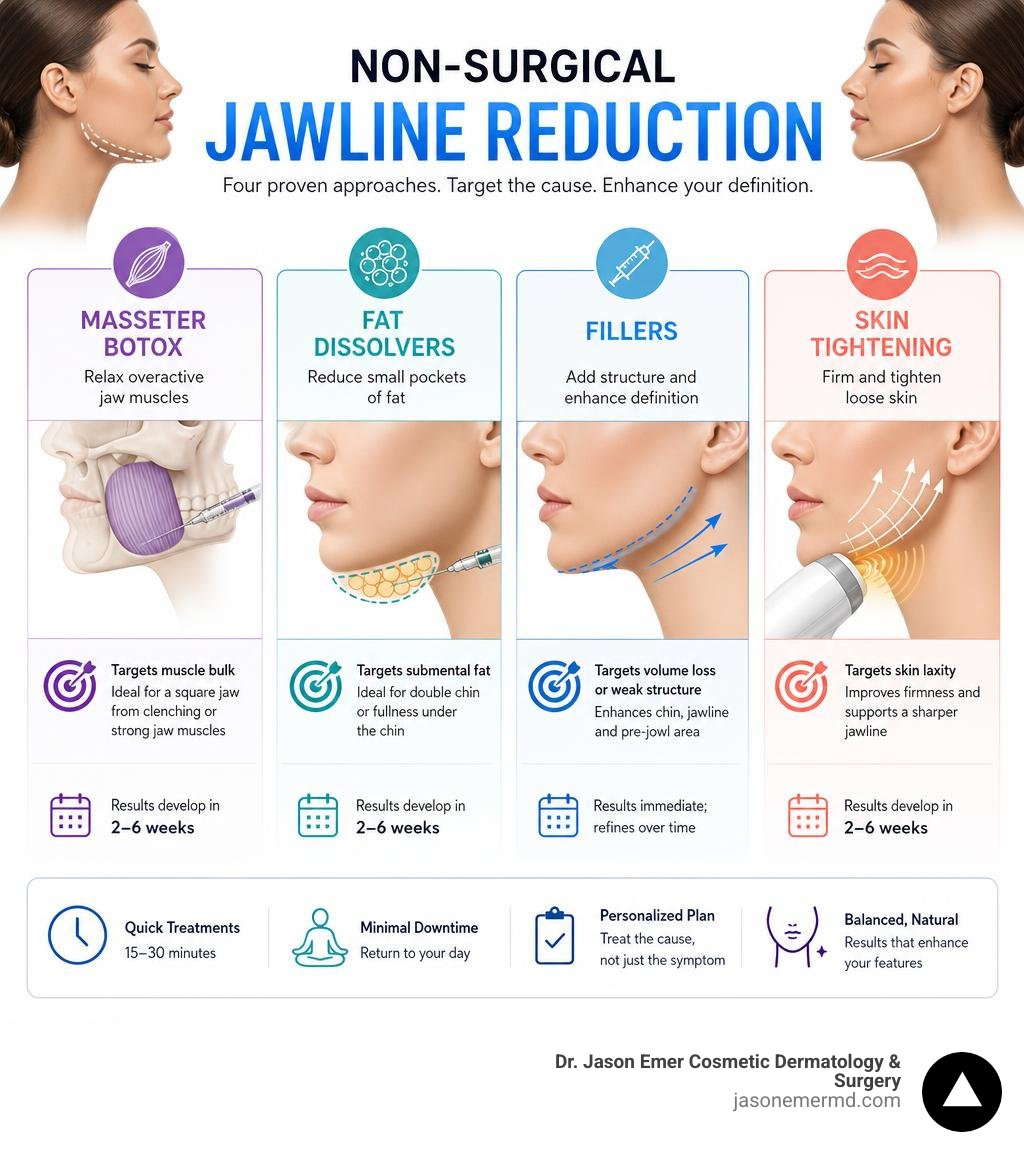
Jawline reduction non surgical uses targeted treatments to reduce the cause of lower-face fullness without bone surgery. Botox or Dysport can relax enlarged masseter muscles for a narrower jaw, fat-dissolving injections can reduce a double chin, and fillers or skin-tightening devices can improve definition and balance.
The right approach depends on what is making the jawline look wide, heavy, or less defined:
- Muscle bulk: Masseter neuromodulators gradually slim a square jaw caused by clenching or naturally strong chewing muscles.
- Submental fat: Deoxycholic acid injections can target small pockets of fat beneath the chin.
- Volume loss or weak structure: Fillers can sharpen the chin, jawline, and pre-jowl area, while energy treatments may support firmer skin.
Most injectable jawline treatments take about 15 to 30 minutes and involve little to no social downtime. Masseter treatment can ease clenching within days, while visible jaw slimming usually develops over 2 to 6 weeks. It cannot shrink a jaw that is wide primarily because of bone structure, which requires a different conversation about surgical options.
I am Jason Emer, MD FAAD, a board-certified dermatologist with more than 19 years of experience in advanced facial rejuvenation, injectable treatments, skin tightening, and high-definition contouring. In jawline reduction non surgical planning, I focus on identifying whether muscle, fat, skin laxity, or facial structure is the real issue before building a tailored treatment plan.
The Comprehensive Guide to Jawline Reduction Non Surgical Methods
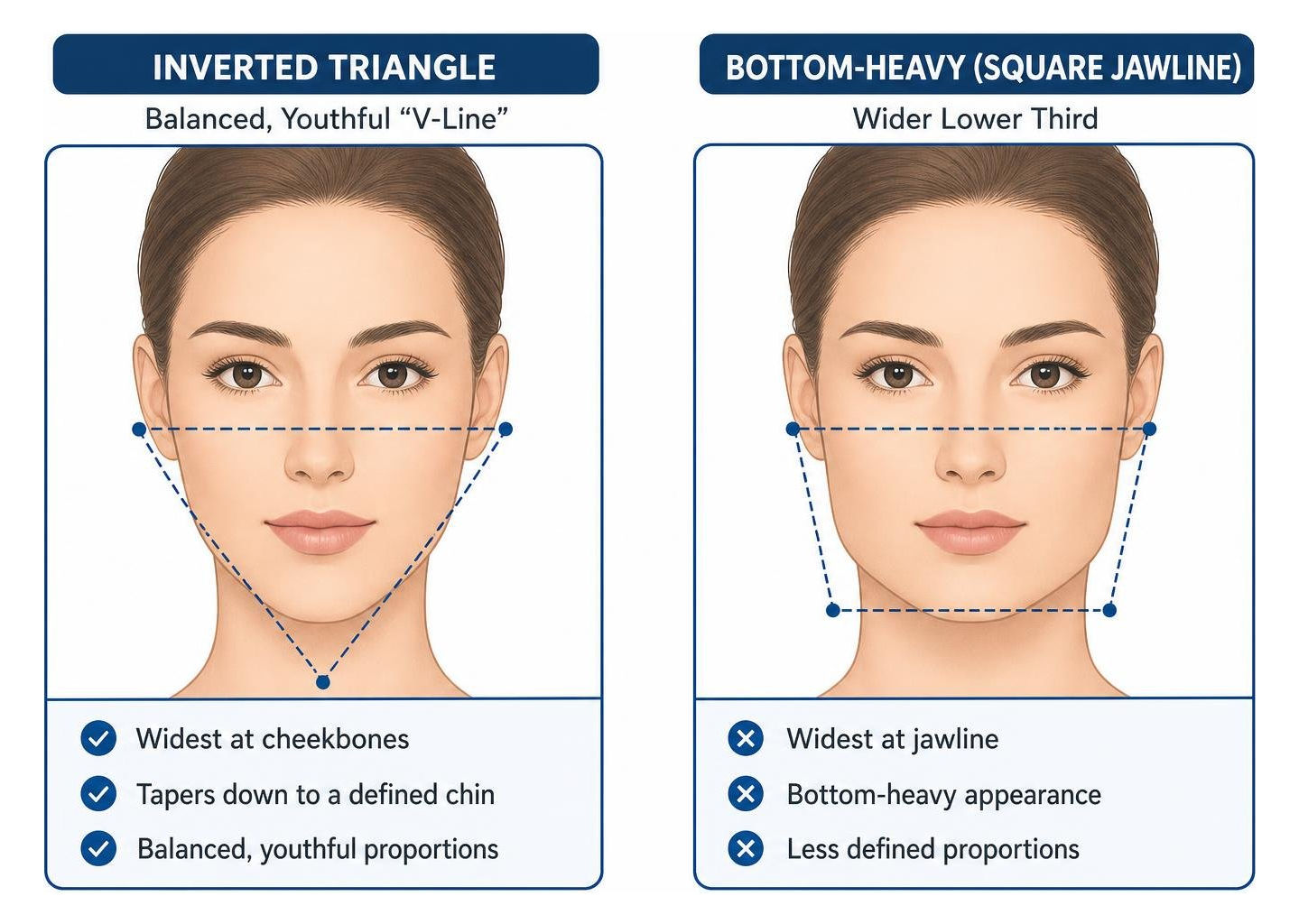
When evaluating facial geometry, the lower third of the face sets the visual tone for balance, youth, and symmetry. A youthful aesthetic is historically described as an inverted triangle or heart-shaped "V-line," where the widest point of the face rests across the cheekbones, gently tapering down toward an elegant, defined chin.
As time passes—or due to genetic factors and lifestyle habits—this geometry often inverts. Cheeks can lose volume, tissues descend, and habitual teeth grinding can cause the jawline to become the widest point of the lower face. When the lower third appears square, heavy, or bottom-heavy, our goal is to narrow this width and redefine the silhouette using advanced Non-Surgical Jawline Contouring.
Achieving non-surgical lower face narrowing relies on a biological process called disuse atrophy. When an overactive or enlarged muscle is safely relaxed, it decreases in physical mass over time, leading to a softer, tapered contour. Rather than cutting through tissue or shaving bone, we use minimally invasive techniques that target the specific anatomical layer causing width or heaviness.
Neuromodulator Injections for Masseter Hypertrophy
The masseter is one of the strongest chewing muscles in the human body relative to its size. When it becomes enlarged—a condition known as masseter hypertrophy—it expands laterally, creating an overly boxy, masculine, or wide lower face. This enlargement is frequently triggered by chronic nocturnal bruxism (teeth grinding), unconscious daytime jaw clenching, high-stress levels, or habitual gum chewing.
To address this muscular bulk, we utilize targeted Neuromodulators such as Botox or Dysport. These botulinum toxin type A injectables induce temporary chemo-denervation by blocking acetylcholine release at the neuromuscular junction.
- Dual-Action Relief: Masseter injections deliver both cosmetic narrowing and functional therapeutic relief. Patients struggling with TMJ tension, jaw tightness, and morning tension headaches often feel substantial relief within just a few days to one week.
- The Slimming Mechanism: Because the muscle is gently relaxed, it works less vigorously during everyday chewing. Over the next 2 to 6 weeks, the muscle undergoes disuse atrophy, physically shrinking in volume and narrowing the lower facial third.
- Quick, In-Office Protocol: The injection process takes only 15 to 30 minutes, requires no anesthesia beyond an optional topical numbing cream or ice, and allows patients to resume normal daily activities immediately.
- Clinical Nuance: Clinical research published by the National Center for Biotechnology Information highlights the importance of precise muscle mapping during masseter injections to ensure chewing strength remains balanced while delivering dual aesthetic and TMJ relief.
Deoxycholic Acid and Submental Fat Dissolvers
A heavy or wide jawline is not always purely muscular. For many patients, localized submental fullness—commonly referred to as a double chin—blurs the mandibular border and creates an undefined, rounded lower face.
When diet-resistant submental fat obscures the jawline, we turn to targeted adipocyte lysis using Kybella (synthetic deoxycholic acid).
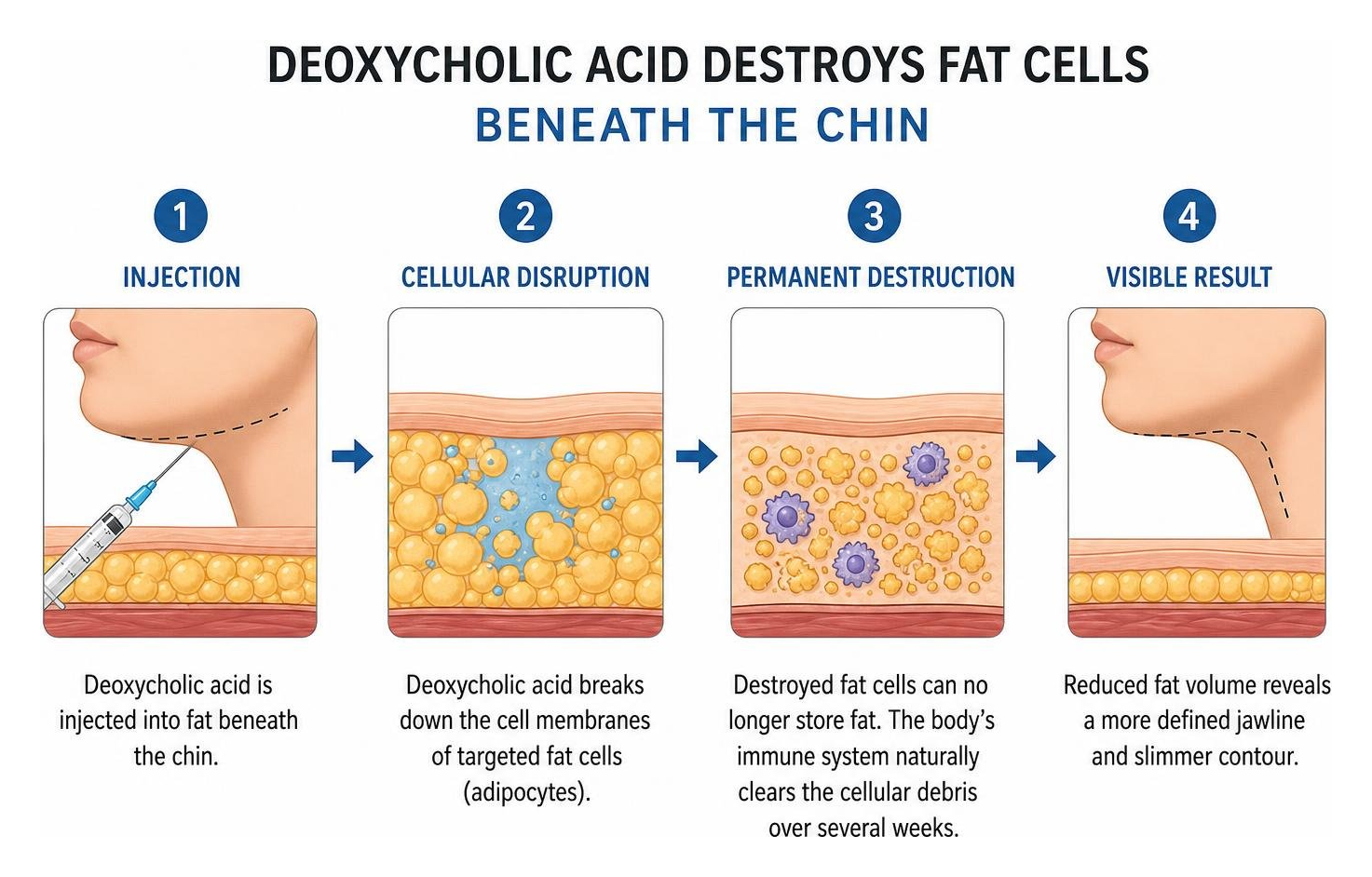
- Cellular Disruption: Deoxycholic acid is a naturally occurring molecule in the body that aids in the breakdown and absorption of dietary fat. When injected beneath the chin, it physically breaks down the cell membranes of targeted adipocytes.
- Permanent Destruction: Once destroyed via adipocytolysis, those specific fat cells can no longer store or accumulate fat. The body's immune system naturally metabolizes and clears the cellular debris over several weeks.
- The Inflammatory Response: Mild swelling, firmness, and redness occur directly after treatment. This localized inflammatory reaction helps trigger collagen remodeling, ensuring the tissue retracts smoothly as fat volume diminishes.
Structural Balancing with Fillers and Energy Devices
True facial harmony requires looking at the face three-dimensionally. In some cases, a jawline looks wide or poorly defined not because of muscle bulk alone, but because of a recessed chin, deep pre-jowl sulci, or skin laxity along the jaw border.
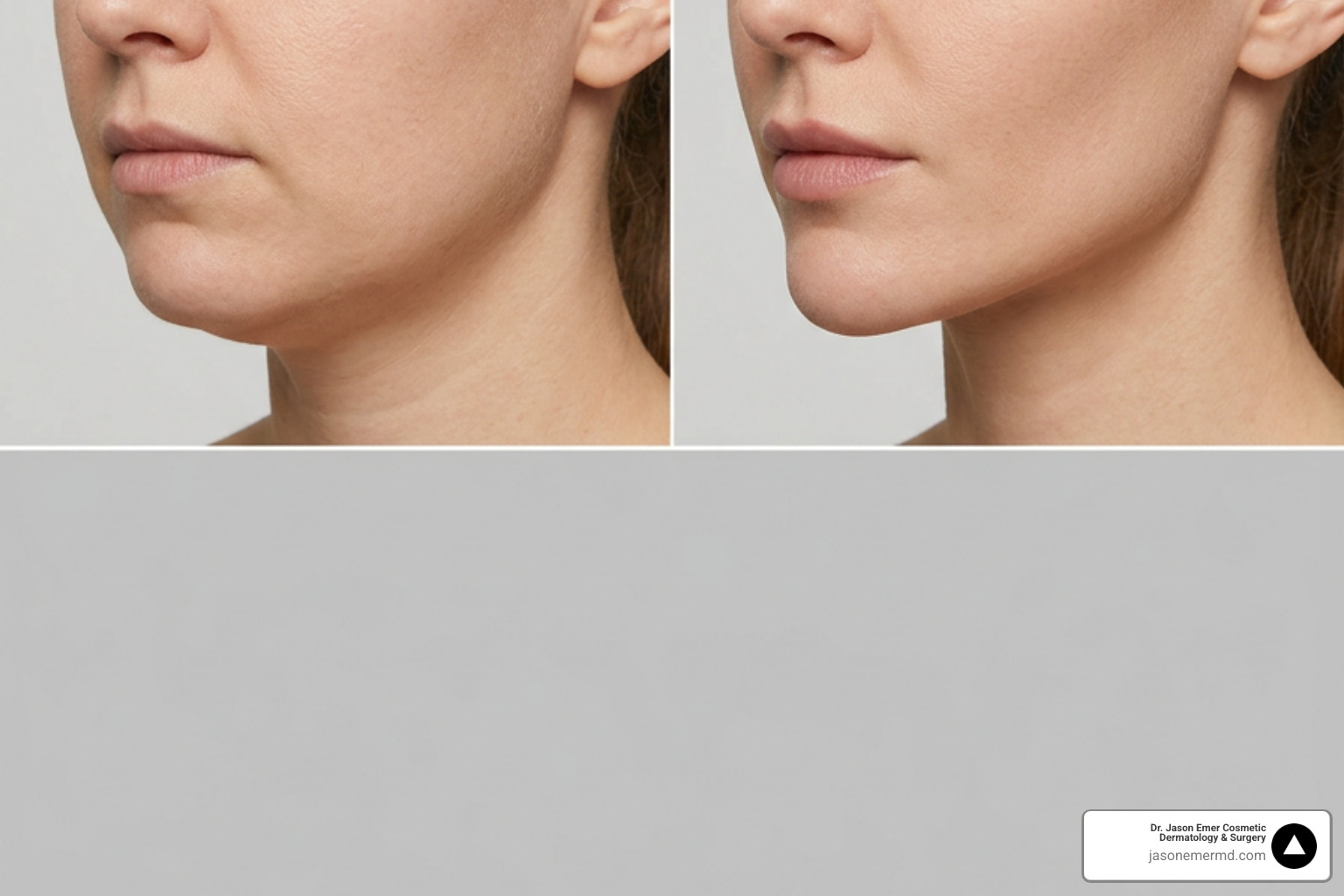
Through bespoke Facial Sculpting, we balance the lower face by pairing reduction techniques with structural enhancement:
- Hyaluronic Acid Dermal Fillers: Products like Juvéderm and Restylane provide precise, immediate structural support. Placing micro-droplets of dense filler along the mandibular angle or chin apex sharpens the border and draws visual focus inward and downward, creating an illusion of a slimmer, elongated lower face.
- Biostimulatory Fillers: Calcium hydroxylapatite-based fillers, such as Radiesse, act as structural scaffolds while stimulating the body's natural neocollagenesis (collagen production). These biostimulators strengthen the jawline border and can last up to 2 years.
- Energy-Based Skin Tightening: If muscle reduction or aging leaves minor skin laxity behind, combining injectables with radiofrequency microneedling or ultrasound-based energy tightening firms the tissue against the bone, preventing premature jowling.
Candidacy, Benefits, and Safety Profile
Selecting the right treatment begins with accurate anatomical diagnosis. Because bone, fat, muscle, and skin all occupy the lower third of the face, understanding what contributes to your facial width is the primary step toward achieving an ideal outcome.
Ideal Candidates for Jawline Reduction Non Surgical Treatments
Good candidates for non-surgical jawline slimming typically present with one or more of the following:
- Masseter Muscle Hypertrophy: A wide, square, or asymmetrical jaw caused by bulky chewing muscles. We confirm this in-office via a simple muscle palpation test: when you bite down hard, we feel whether the masseter flexes outward significantly.
- Bruxism and Jaw Clenching: Patients experiencing jaw fatigue, soreness, worn teeth, or tension headaches alongside lower face fullness.
- Submental Fullness: Localized, pinchable fat beneath the chin that masks the jawline without excessive loose skin.
- Adequate Skin Elasticity: Patients whose lower face tissues have good recoil, ensuring the skin retracts smoothly as underlying volume decreases.
Contraindications: Non-surgical methods are not suitable for individuals with severe skeletal asymmetry, extensive lower face skin redundancy requiring surgical excision, active skin infections, pregnancy or breastfeeding, or underlying neuromuscular disorders such as myasthenia gravis.
Expected Results and Benefits of Jawline Reduction Non Surgical Procedures
Non-surgical jawline reduction offers distinct clinical and lifestyle advantages over traditional open surgeries:
- Zero Surgical Downtime: Most patients return to work and light routines immediately following masseter injections or filler work.
- Gradual, Natural Transformation: The visual change develops progressively over 2 to 6 weeks. Friends and colleagues notice a refreshed, slimmer look without suspecting a clinical procedure.
- Long-Lasting Results: Masseter Botox typically maintains slimming for 3 to 6 months, while dermal fillers like Juvéderm, Restylane, or Radiesse provide structural definition for 12 to 24 months. Over multiple sessions, muscle atrophy can compound, allowing many patients to space out their neurotoxin maintenance.
- Dual Aesthetic and Functional Relief: Patients achieve facial slimming while enjoying deep relief from TMJ pain, clenching, and tension headaches.
Clinical protocols in lower facial balance emphasize that combining muscle reduction with profile balancing creates a softer, more oval facial profile without invasive bone surgery.
Side Effects, Risks, and Safety Considerations
When performed by an expert injector with deep knowledge of facial anatomy, non-surgical jawline treatments have a strong safety profile. However, potential side effects and considerations include:
- Mild, Temporary Soreness and Chewing Fatigue: You may experience slight jaw tiredness when eating chewy foods (like steak or tough bread) during the first 1 to 2 weeks as your masseter adjusts.
- Bruising and Swelling: Localized pinpoint bruising or minor swelling can occur at injection sites, resolving in a few days.
- Risorius Avoidance: An unpracticed injector injecting too far anteriorly (forward on the cheek) can inadvertently affect the risorius muscle, resulting in a temporary asymmetric smile. Precise anatomical mapping prevents this issue.
- Paradoxical Jowling: If a patient has significant pre-existing skin laxity, reducing muscle bulk beneath the skin can sometimes unmask subtle jowls. We prevent this by combining masseter reduction with energy tightening or dermal fillers.
- Bone Density Awareness: Extremely frequent, high-dose neurotoxin use over many years without evaluation can theoretically affect local mandibular bone remodeling, which is why treatments should always be customized and monitored by a board-certified physician.
Non-Surgical Approaches vs. Surgical Jaw Contouring
Understanding the differences between non-surgical interventions and surgical alternatives helps clarify the best pathway for your specific aesthetic goals. When volume originates from tissue or muscle, Dr. Jason Emer Slims, Contours, and Chisels the Jawline Without a Surgical Facelift or Neck Lift Procedure by layering non-surgical injectables, energy devices, and localized sculpting.
| Feature / Metric | Masseter Neuromodulators | Submental Fat Dissolvers (Kybella) | Surgical Jaw Reduction (Mandibuloplasty) |
|---|---|---|---|
| Primary Target | Muscle hypertrophy (Masseter) | Localized submental fat | Skeletal bone width & mandibular angle |
| Invasiveness | Minimally invasive injection | Minimally invasive injection | Invasive surgical bone shaving / resection |
| Anesthesia | None / Topical numbing | Local lidocaine / Ice | General anesthesia |
| Procedure Time | 15–30 minutes | 20–30 minutes | 2–4 hours |
| Downtime | None (return to work same day) | 3–7 days of moderate swelling | 2–6 weeks of significant downtime |
| Onset of Results | 2–6 weeks for peak slimming | 4–8 weeks per session (2–4 sessions) | 3–6 months for post-surgical swelling to clear |
| Longevity | 3–6 months (compounds over time) | Permanent (for destroyed fat cells) | Permanent |
| Primary Risk | Temporary chewing fatigue | Swelling, temporary numbness | Nerve injury, infection, bone asymmetry |
As detailed by clinics such as Facial Sculpting, non-surgical muscle slimming provides an adaptable, low-risk alternative for individuals whose lower-face width stems from muscular hypertrophy rather than excessive mandibular bone structure.
Frequently Asked Questions About Non-Surgical Jawline Reduction
How soon will I see results from non-surgical jawline reduction, and how long do they last?
Results operate on a two-phase timeline:
- Phase 1 (Days 3–7): Functional muscle relaxation begins. Jaw clenching diminishes, and TMJ-related tension decreases noticeably.
- Phase 2 (Weeks 2–6): Visible cosmetic jawline slimming peaks as the masseter muscle undergoes disuse atrophy and decreases in physical size.
Masseter neurotoxin results typically last 3 to 6 months. For most patients, scheduling maintenance sessions every 4 to 6 months maintains optimal muscle atrophy, often allowing for lower required doses over time. Dermal fillers along the jawline typically last 12 to 24 months, while submental fat reduction from deoxycholic acid is permanent once target adipocytes are eliminated.
Does masseter Botox affect chewing or speaking?
Normal speaking, smiling, and everyday chewing functions remain intact. Masseter injections weaken the muscle's excess bulk without completely paralyzing it, and secondary chewing muscles (like the temporalis and pterygoids) help support normal mastication. You may notice brief jaw fatigue when chewing dense foods (like tough meats or hard caramels) during the first two weeks, but this sensation is temporary.
How much does non-surgical jawline slimming cost compared to surgery?
The cost of non-surgical jawline reduction depends on the units of neuromodulator required, the number of Kybella vials used, and whether structural fillers are added. Masseter neurotoxin treatments generally range based on the units administered (typically 20 to 35+ units per side depending on muscle mass). Dermal fillers and fat dissolvers vary per syringe or vial.
In comparison, surgical mandibuloplasty (jaw shaving surgery) requires operating room fees, general anesthesia, and surgical fees, making non-surgical treatments a significantly more accessible and adaptable option.
Conclusion
Achieving a sculpted, balanced lower face does not require invasive bone surgery. Non-surgical jawline reduction provides a customizable approach to lower-face narrowing, relieving chronic jaw tension while creating a softer, more refined profile.
At Dr. Jason Emer Cosmetic Dermatology & Surgery, we combine high-definition injectable protocols, biostimulatory contouring, and advanced tissue tightening to deliver harmonious, model-like results tailored to your unique anatomy. If you are also exploring definitive surgical corrections, you can evaluate our advanced options for Surgical Chin & Jawline Contouring to determine the best path for your aesthetic vision.
Ready to sculpt your jawline and balance your profile? Schedule your personalized consultation with Dr. Jason Emer today to design your customized non-surgical facial sculpting plan.
This resource provides general educational information. Treatment recommendations depend on your health, goals, and consultation with a qualified clinician.