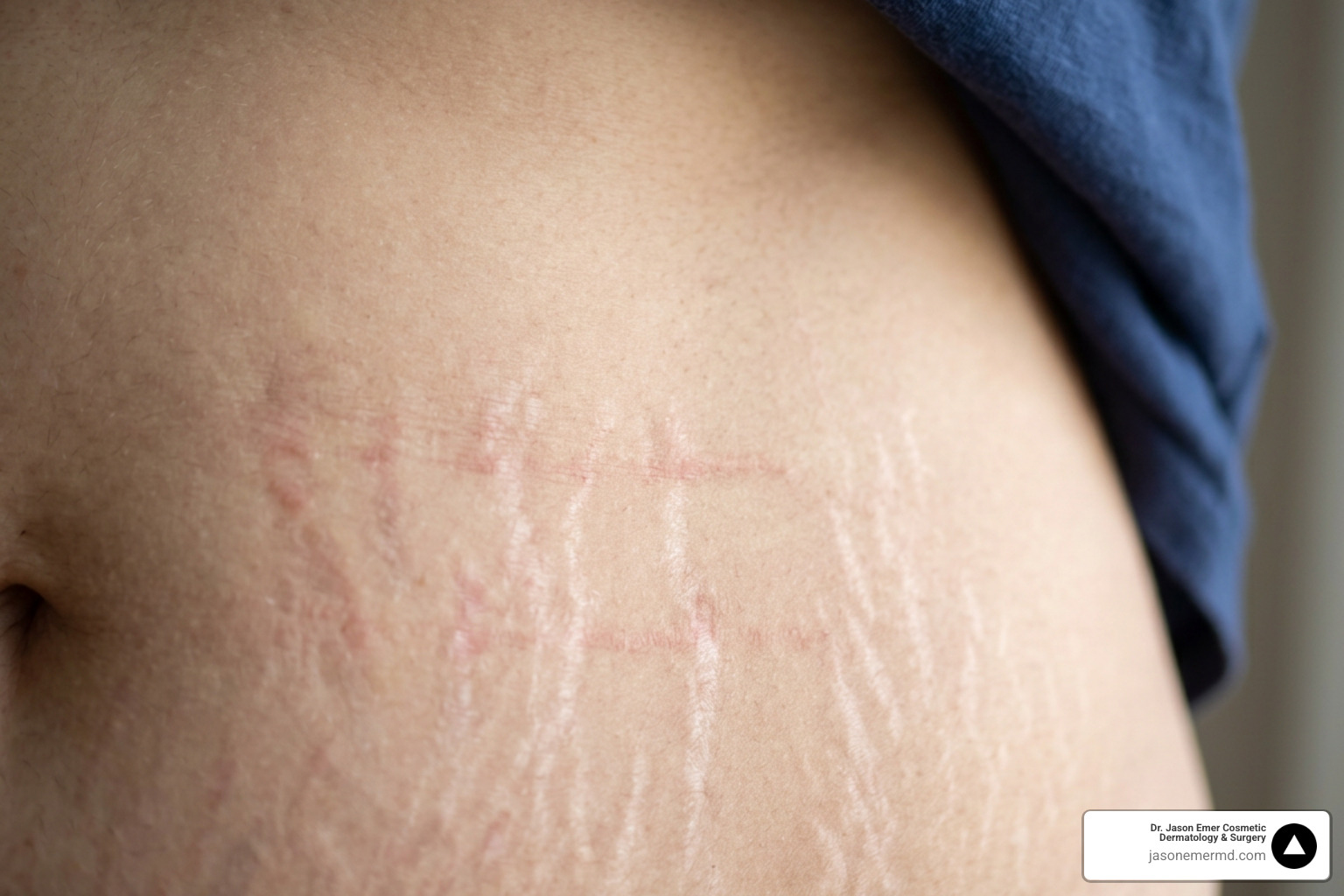
Stretch marks treatment starts with the stage, not the device
Most offices start with a device. In Dr. Emer's room, it starts with a map: color, age, depth, and skin phototype determine the plan before any handpiece is chosen.
Effective stretch marks treatment combines realistic expectations with targeted collagen remodeling. Recent red marks respond well to vascular-focused lasers and prescription topicals. Mature white marks require modalities that trigger deeper structural repair, including microneedling, radiofrequency, and fractional resurfacing. No procedure removes stretch marks entirely, but a tailored plan decided during consultation can improve skin texture, tone, and contrast over time.
Stretch marks, or striae distensae, develop when tissue expands faster than collagen and elastin can adapt. Mechanical stress ruptures the structural framework of the dermis, prompting an inflammatory response that produces disorganized scar tissue. In early striae, microvascular dilation dominates. Over time, inflammation subsides and fibroblasts deposit fragmented collagen, resulting in epidermal thinning and dermal depressions.
Jason Emer, MD FAAD, is a board-certified dermatologist specializing in advanced laser procedures and body contouring. Dr. Emer evaluates tension lines, laxity, and microvascular changes to match collagen-stimulating technologies to individual downtime preferences and skin concerns.
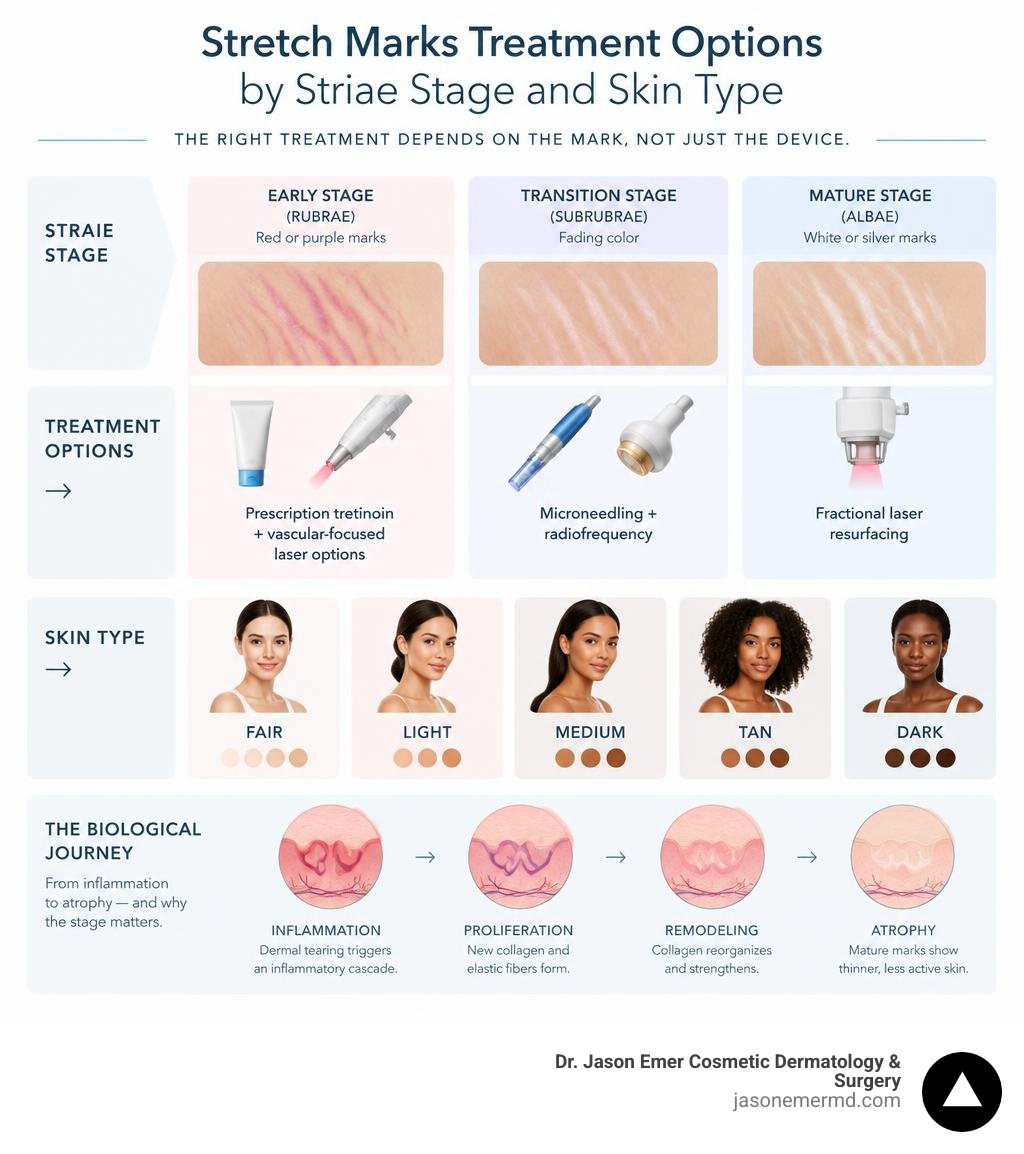
Biological stages dictate the clinical pathway for tissue repair
Stretch marks evolve through distinct biological phases. Dermal tearing triggers an acute inflammatory cascade that eventually transitions to structural atrophy. Determining whether a mark is new or mature dictates which modalities provoke a cellular response.
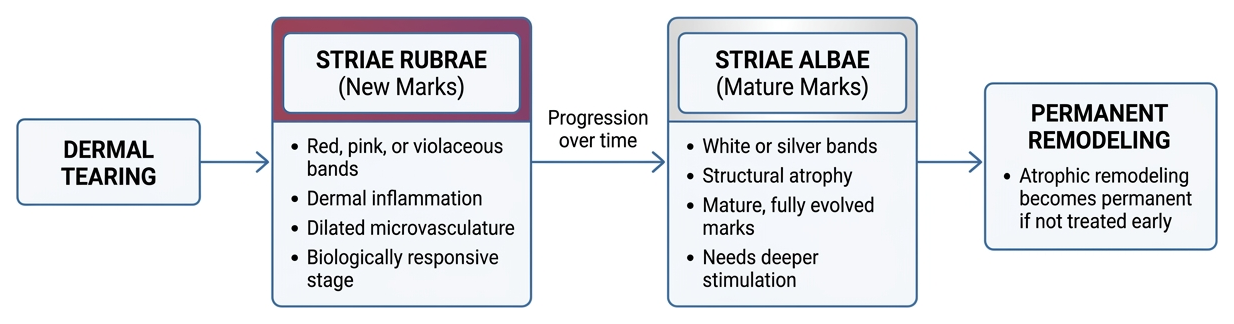
| Feature | Striae rubrae | Striae albae |
|---|---|---|
| Color | Red, pink, or purple | White or silver |
| Vascularity | Actively inflamed, dilated capillaries | Minimal blood flow |
| Tissue state | Early dermal tearing | Established scarring, elastolysis |
| Responsive tools | Vascular lasers, topicals | Microneedling, radiofrequency, resurfacing |
Evaluating striae rubrae
Early marks appear red, pink, or purple as striae rubrae, reflecting dermal inflammation and dilated capillaries. Vascular lasers calm hyperactive vessels to reduce redness, while topical retinoids help organize collagen before atrophy sets in. Early care aims to slow progression and soften contrast.
Managing striae albae
Over time, marks lose vascularity and become striae albae—mature white or silver lines representing established scarring and elastolysis. Because these marks lack active blood flow, treatment shifts toward mechanical and thermal remodeling to soften fibrotic margins. Understanding how laser treatment targets skin texture helps clinicians address dermal depression while leaving surrounding tissue intact.
In-office energy devices stimulate deep dermal collagen remodeling
Advanced aesthetic dermatology uses thermal and mechanical energy to trigger new collagen production. Clinical research suggests combination protocols often outperform monotherapies.
Energy-based lasers and radiofrequency technologies
Fractional non-ablative lasers and fractional CO2 devices create micro-thermal zones in the dermis to stimulate fibroblast activity. Device selection depends heavily on skin phototype. Ablative lasers carry a higher risk of post-inflammatory hyperpigmentation (PIH) in darker skin tones (Fitzpatrick IV to VI), so sequencing often differs for these complexions. For deeper skin tones, Dr. Emer favors non-ablative fractional lasers or insulated microneedling radiofrequency to protect epidermal melanocytes while heating the deep dermis, an approach supported in research on modalities across skin types.
In fair skin types (Fitzpatrick I to III), aggressive fractional ablative technologies may be considered when deeper depressions require resurfacing. This involves tradeoffs: prolonged erythema, pinpoint bleeding, and extended downtime.
Mechanical collagen induction and biological adjuncts
Mechanical microneedling creates micro-injuries without heat, offering a lower-risk option across all skin tones. Adding platelet-rich plasma (PRP) delivers autologous growth factors into micro-channels to support healing, an approach supported by evidence for striae management.
Every procedure involves tradeoffs, including transient redness, swelling, crusting, or temporary pigment shifts. A completely valid alternative is choosing no treatment, as stretch marks carry no medical risk and observation is a reasonable choice.
Topical agents and supportive habits provide structural skin support
Topical therapies and lifestyle habits support dermal health, though they cannot replace procedural remodeling. According to the Mayo Clinic, topical preparations provide hydration but cannot fully repair established dermal tearing.
Evidence-based topical ingredients
Prescription tretinoin increases cellular turnover and collagen synthesis on early striae rubrae, though retinoids are contraindicated during pregnancy and breastfeeding. Over-the-counter options like hyaluronic acid and Centella asiatica reinforce hydration and barrier function. Centella asiatica contains compounds that support fibroblast activity, while hyaluronic acid improves surface suppleness.
Nutritional support and skin elasticity
Dermal resilience benefits from proper hydration and a diet rich in protein, vitamin C, and zinc to support collagen synthesis. Managing gradual weight changes reduces mechanical tension on connective tissue. While these habits support baseline skin health, established marks still require in-office collagen stimulation for structural improvement.
What to remember
- Stretch mark management depends on the stage, treating vascular redness in striae rubrae and stimulating deep structural remodeling in mature striae albae.
- Darker skin tones require cautious device selection, such as non-ablative lasers or radiofrequency microneedling, to reduce post-inflammatory hyperpigmentation risk.
- Meaningful textural improvement requires progressive collagen remodeling delivered across a series of structured clinical sessions.
Determining the appropriate clinical strategy for your skin begins with an individualized evaluation during a consultation with Dr. Emer.
This content is for general education and does not provide a diagnosis, determine candidacy, or replace a consultation with a licensed clinician.
References
NBK436005. Chaudhury H, Remmert N, Chen H, Tarbox M. "Advancements in treating stretch marks across all skin types: a comprehensive review of therapeutic modalities.." International journal of women's dermatology, 2026. PMCID PMC12799299. Mendes N, Alves PJ, Barros M, Rodrigues JM, Machado J. "A Narrative Review of Current Striae Treatments.." Healthcare (Basel, Switzerland), 2022. PMCID PMC9777947.
This resource provides general educational information. Treatment recommendations depend on your health, goals, and consultation with a qualified clinician.