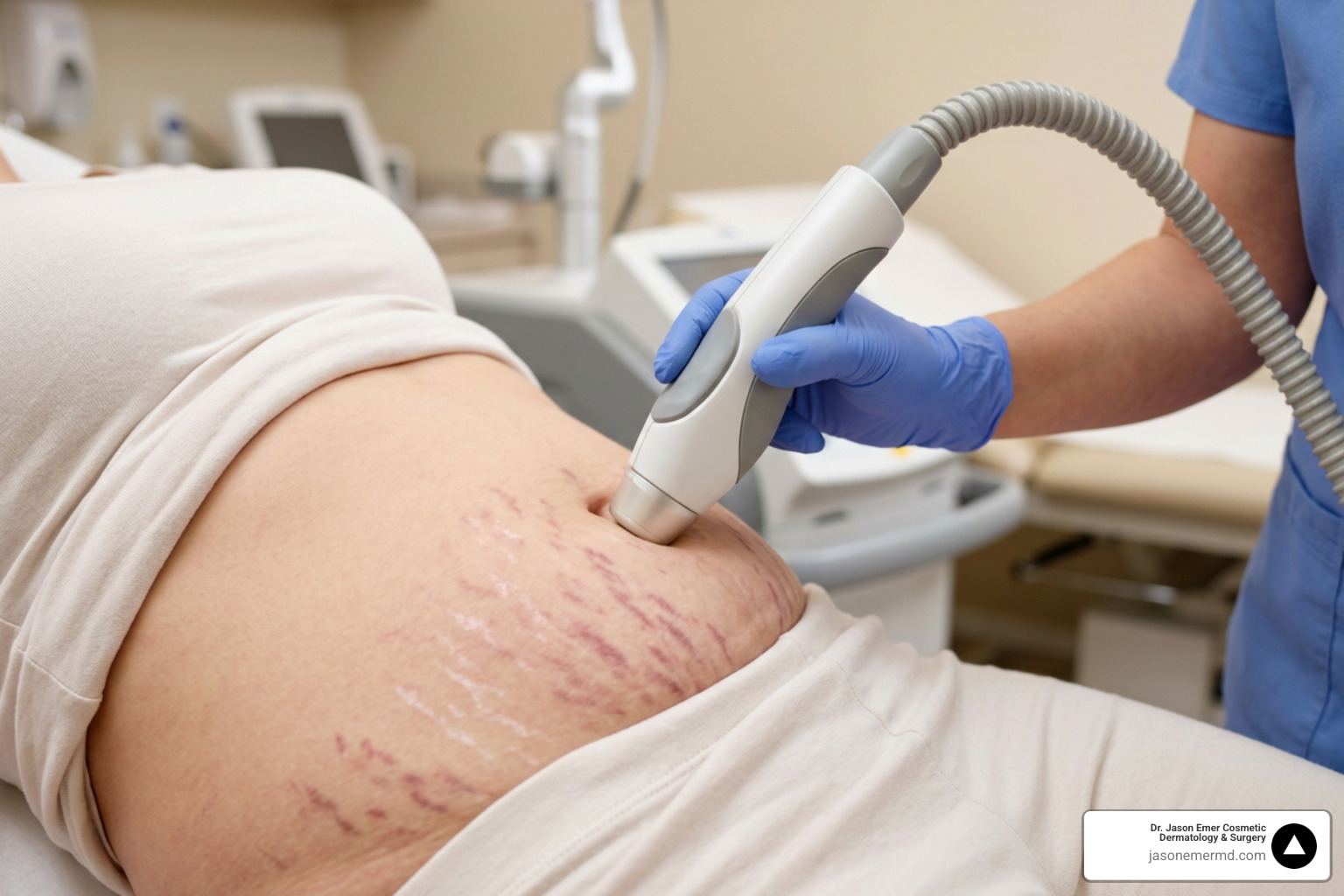
Laser therapy for stretch marks targets distinct vascular and structural tissue changes
Most people assume one laser can clear every stretch mark on contact. In Dr. Emer's practice, laser therapy for stretch marks starts with a staged protocol addressing specific tissue changes over time rather than relying on a single device. Dermal tearing alters tissue architecture in distinct stages, transitioning from an active vascular state to a chronic atrophic state. Because no individual wavelength addresses vascular congestion and structural collagen depletion simultaneously, successful management requires matching energy to biological depth, and that matching happens over a planned series of visits rather than in a single appointment.
Stretch marks, clinically known as striae distensae, develop when rapid tissue expansion shears structural fibers in the dermis. This tearing commonly follows growth spurts, significant weight fluctuations, pregnancy, or rapid muscle hypertrophy. In the early inflammatory phase, known as striae rubrae, dilated microvessels create prominent redness. Vascular lasers target intravascular oxyhemoglobin, coagulating capillaries to reduce erythema while preserving adjacent connective tissue. This phase is often the easiest window for intervention, since the vessels driving the redness sit close to the surface and respond predictably to targeted light.
As marks mature into pale striae albae, vascularity recedes and the dermis becomes thinned, leaving atrophic scar bands. At this stage, treatment shifts to structural remodeling. Fractional platforms, including CO2 laser resurfacing and Fraxel laser, create controlled thermal micro-injuries that stimulate new collagen and reorganize elastin. Non-ablative energy supports this deep remodeling across multiple sessions with shorter recovery periods. Because the two stages involve different tissue targets, a mark that has already faded to white will not respond the same way a fresh red mark does, which is why Dr. Emer reassesses coloration and texture at each visit before choosing a device.
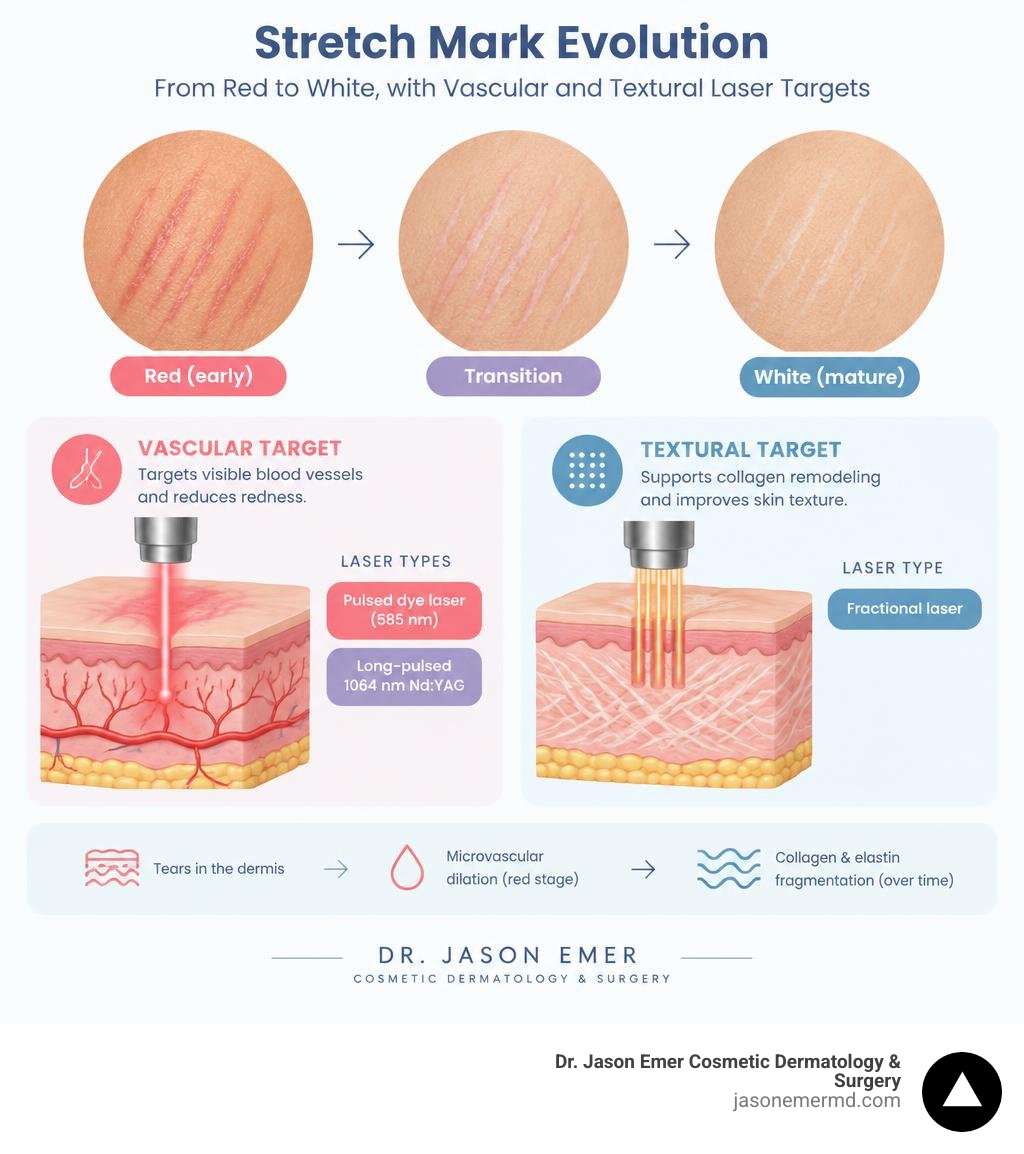
Targeted wavelengths treat early vascular redness and mature structural scarring differently
In the acute phase of striae distensae, localized inflammatory infiltrates and superficial vascular dilation produce erythema. Pulsed dye lasers (585 nm) and long-pulsed 1064 nm Nd:YAG devices deliver targeted light absorbed by hemoglobin, coagulating vessel walls to reduce visible redness without thermal injury to the surrounding skin. These wavelengths are chosen specifically because they pass through the epidermis with minimal absorption, reaching the vessels below without heating the pigment-bearing cells above them.
When marks progress into hypopigmented striae albae, vascularity recedes and dense collagen bundles replace normal dermal architecture. Microthermal columns created by CO2 laser resurfacing and Fraxel laser activate dermal fibroblasts, promoting organized collagen synthesis and epidermal renewal. Non-ablative passes assist ongoing remodeling with minimal superficial disruption over a planned treatment series. Results build gradually across sessions, since collagen reorganization is a slow biological process that cannot be accelerated by higher energy alone.
Ablative resurfacing can involve several days of localized swelling, peeling, and shedding. Non-ablative approaches may cause mild redness for up to two days. Less downtime can mean a longer treatment course. Recovery remains part of the treatment plan.
Non-energy alternatives include medical-grade barrier support, targeted topical hydration, or no procedural intervention. They avoid recovery but do not remodel deeper structural tears. They may be considered when avoiding downtime takes priority. Dr. Emer weighs these tradeoffs during an in-person evaluation.
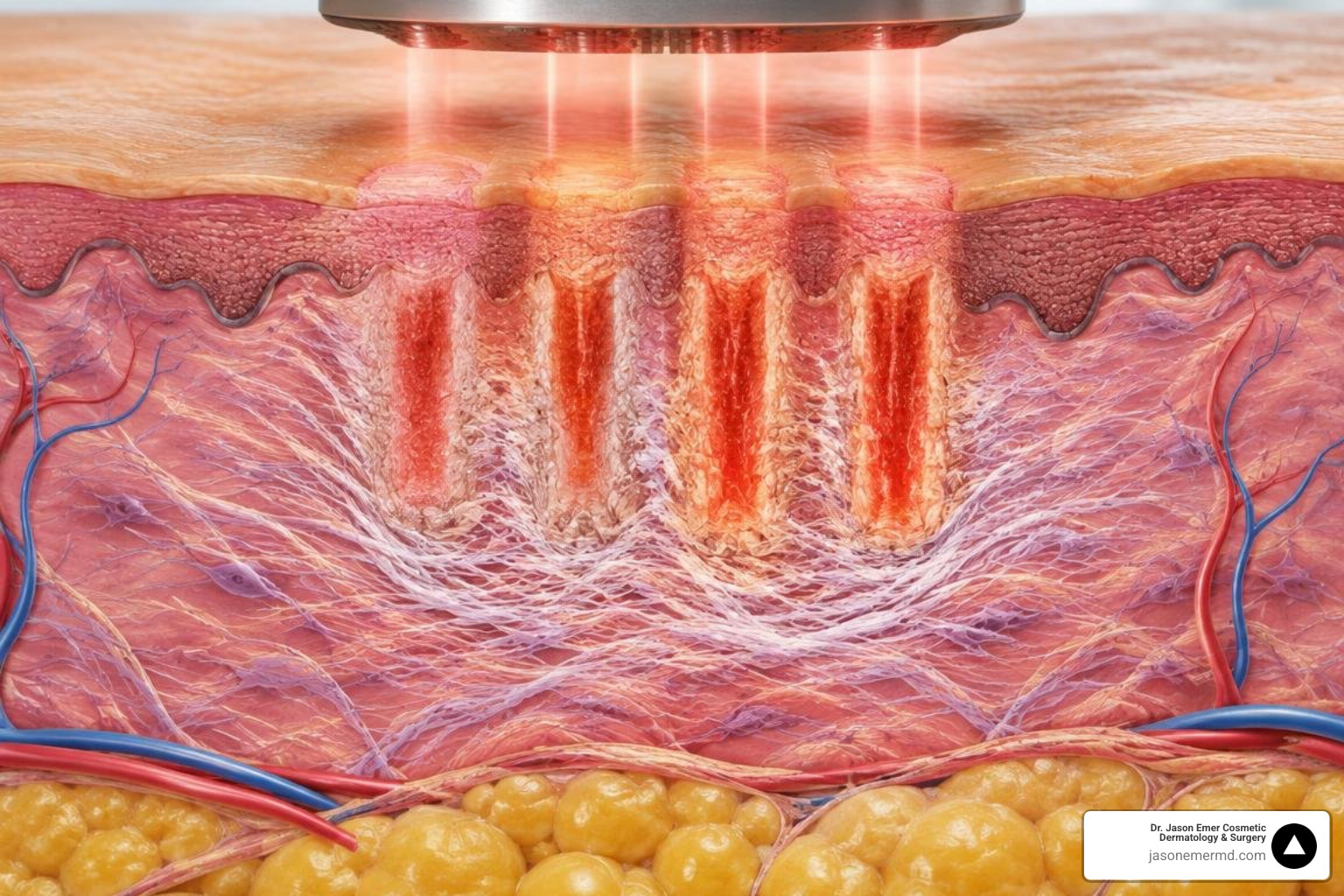
Comprehensive treatment protocols balance deep remodeling with phototype safety and structured recovery
Device selection requires balancing tissue stimulation against safety. While ablative lasers generate significant structural renewal, they present an elevated risk of prolonged erythema and post-inflammatory hyperpigmentation (PIH) in Fitzpatrick skin phototypes IV through VI due to epidermal melanin absorption. Non-ablative wavelengths heat dermal tissue while keeping the stratum corneum intact, significantly lowering pigmentary risk. This distinction matters because the same setting that produces a strong result on fair skin can produce an unwanted pigment change on deeper skin tones, so the parameters are never copied directly from one patient to another.
A specialized 675 nm diode wavelength targets collagen directly with minimal melanin interference. In addition, 1470 nm non-ablative fractional systems create controlled coagulation zones beneath the surface. For darker skin phototypes, treatment often starts with conservative, low-fluence non-ablative passes, skin priming, and strict sun protection. This may require more sessions over a longer timeline, a tradeoff intended to reduce pigmentary risk.
Device Modality, Primary Target, Typical Downtime, PIH Risk by Skin Type:
Pulsed Dye Laser (585 nm) targets hemoglobin, with one to three days of downtime and low to moderate PIH risk in skin types IV through VI.
Long-Pulsed Nd:YAG (1064 nm) targets hemoglobin and the deep dermis, with one to two days of downtime and low PIH risk.
Fractional CO2 (10,600 nm) targets tissue water and collagen, with five to ten days of downtime and moderate to high PIH risk.
Non-Ablative (675 nm / 1470 nm) targets collagen and deep water, with one to three days of downtime and low PIH risk.
Clinical assessment determines modality selection, energy parameters, and staging intervals, and these decisions are made case by case rather than applied uniformly.

A comprehensive in-person consultation allows Dr. Emer to assess tissue depth, review healing history, and tailor an individualized energy strategy; that conversation, not a generic protocol, is where staging and device choice are ultimately decided.
What to remember
- Laser therapy for stretch marks requires a staged approach targeting vascular redness in early marks and promoting collagen remodeling in mature white scars.
- Skin phototype directly influences wavelength selection and energy delivery to help avoid post-inflammatory hyperpigmentation in darker complexions.
- Individual treatment sequencing, downtime expectations, and device choices are determined during an in-person clinical consultation.
This content is for general education and does not provide a diagnosis, determine candidacy, or replace a consultation with a licensed clinician.
References
PMCID PMC5782435. PMCID PMC11189306. PMCID PMC10222465. PMCID PMC8837835.
This resource provides general educational information. Treatment recommendations depend on your health, goals, and consultation with a qualified clinician.