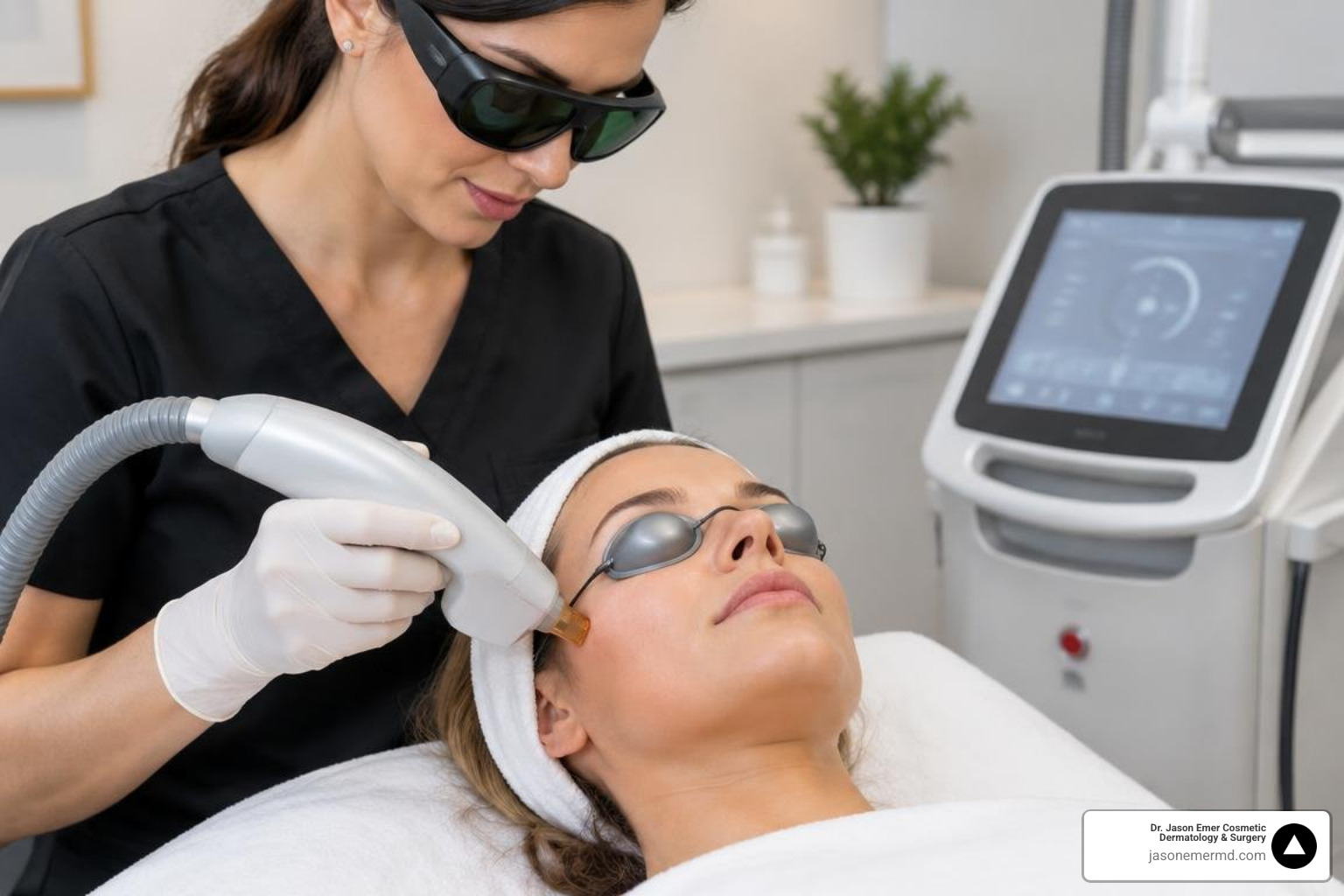
Moxi Laser Treatment: A Careful Plan Behind Gentle Resurfacing
Most offices start with a device. Dr. Emer starts with a skin map: pigment distribution, baseline barrier health, vascular tone, ultraviolet exposure history, active topical regimens, and realistic recovery goals. That clinical sequencing matters because moxi laser treatment is a precision non-ablative resurfacing procedure, not a generic aesthetic facial or rapid fix.
Moxi relies on targeted 1927 nm thulium laser energy to establish fractionated micro-coagulation columns within the superficial epidermis. By leaving the stratum corneum largely intact, it promotes cellular turnover from beneath the surface. It serves as a measured tool for addressing early photodamage, mild textural irregularity, uneven tone, and superficial dyschromia, without the extended healing associated with more aggressive ablative approaches.
Even so, minimal recovery does not mean an absence of downtime. The biological response involves erythema, local warmth, transient edema, and the formation of microscopic epidermal debris that gives the skin a coarse, sandpaper-like texture for several days. Managing these changes requires clinical oversight and diligent barrier support, and candidacy for any given session is decided in consultation rather than assumed in advance.
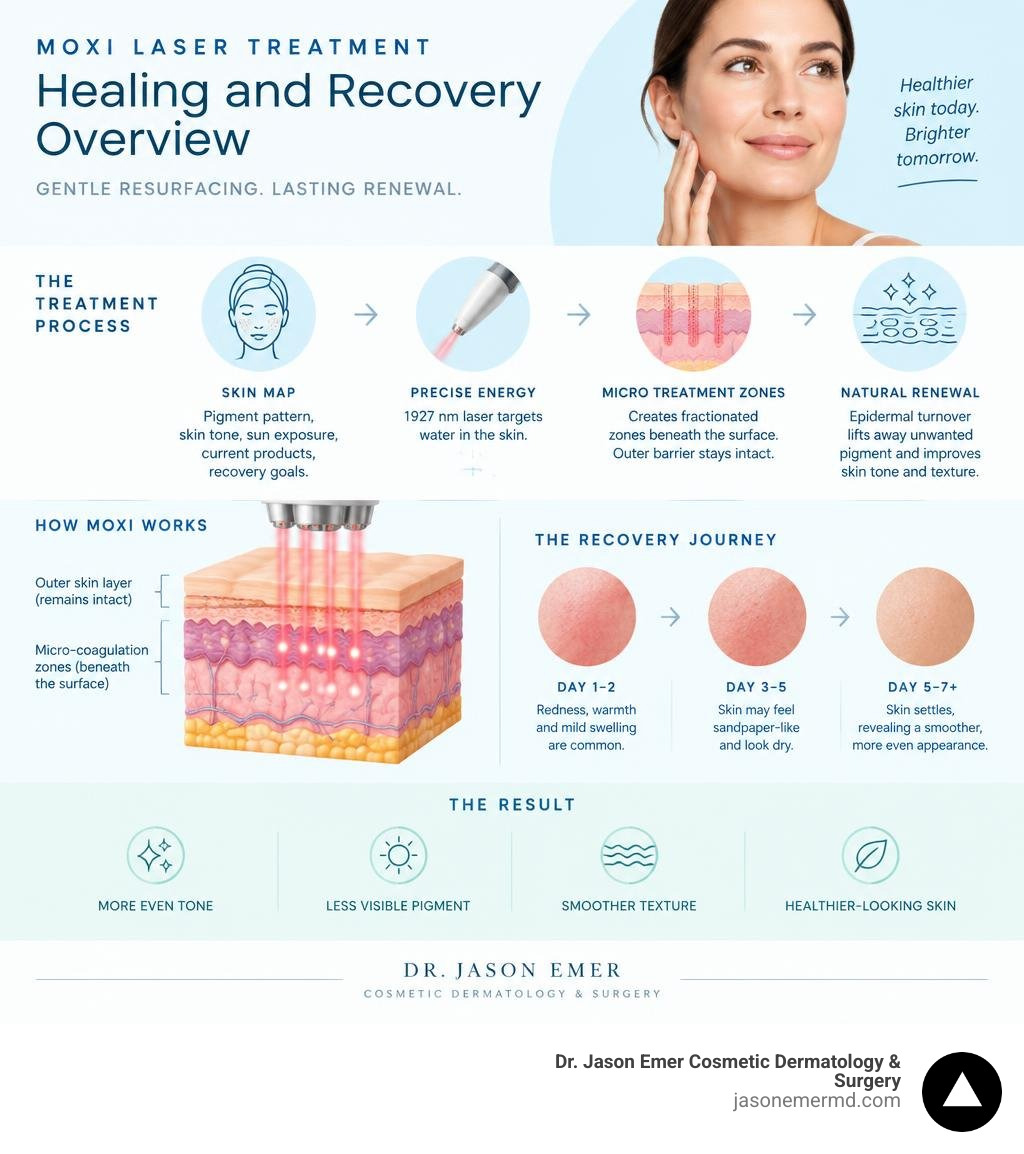
Non-ablative Moxi laser treatment stimulates epidermal renewal without breaking the outer skin barrier
The fundamental mechanism of Moxi relies on a 1927 nm thulium fiber laser wavelength, which has a high affinity for tissue water. As energy penetrates the upper cutaneous layers, it creates dense arrays of micro-fractional coagulation zones without vaporizing superficial skin cells. The outer stratum corneum stays physically intact. Tissue surrounding each microscopic injury initiates a regenerative response, prompting the upward migration and natural shedding of damaged, hyperpigmented keratinocytes.
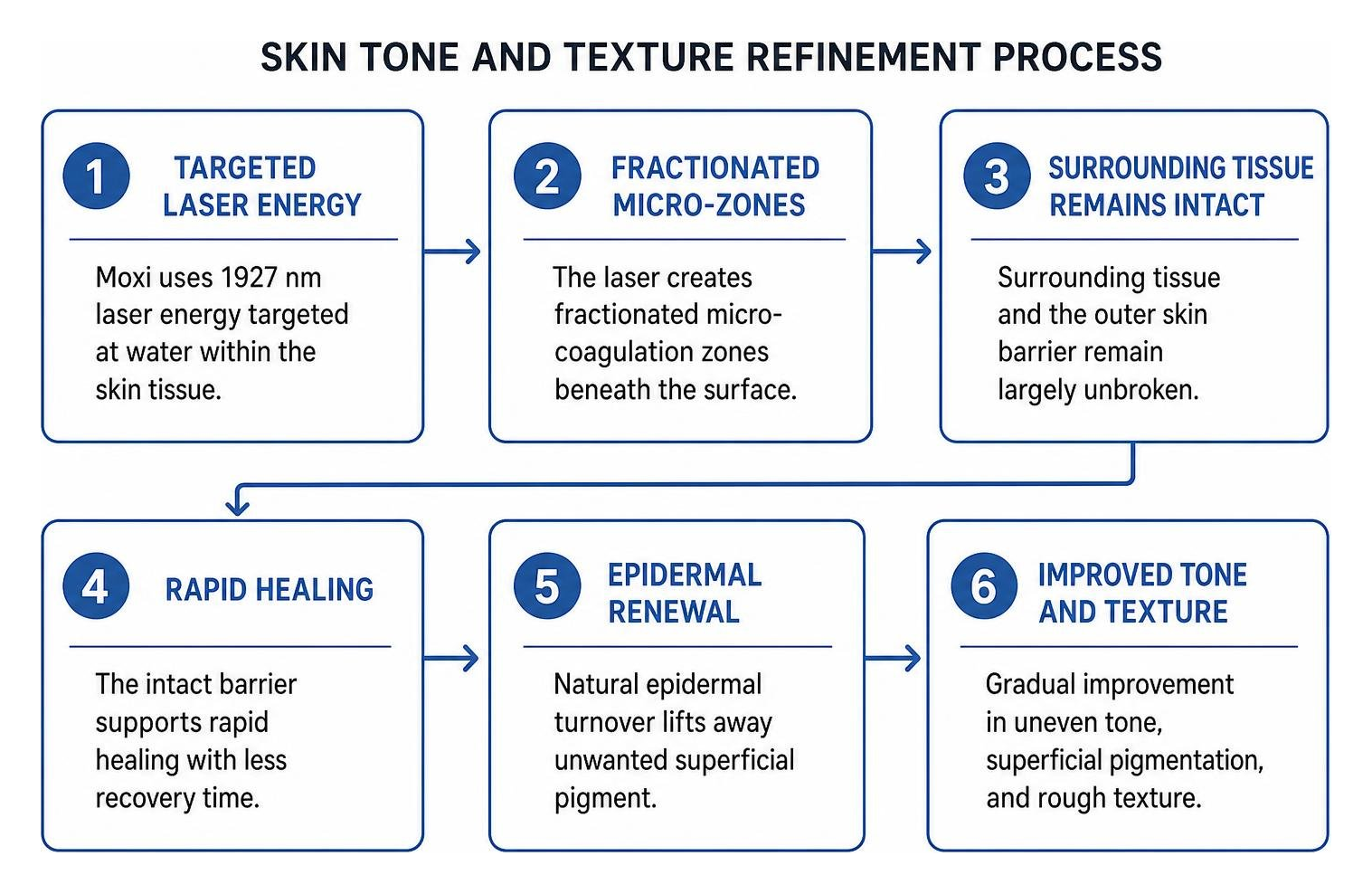
This approach allows treatment of superficial dyschromia, early sun damage, and mild textural dullness across diverse complexions. Because the surface architecture is preserved, barrier function remains functional during healing, which generally shortens recovery compared with deeper ablative resurfacing.
Treatment parameters still must be adjusted for individual tissue characteristics. Darker skin tones classified under the Fitzpatrick scale carry active melanocytes that can respond aggressively to accumulated heat. In Fitzpatrick phototypes IV through VI, excessive thermal energy can stimulate pigment overproduction rather than correction, raising the risk of post-inflammatory hyperpigmentation. For these complexions, Dr. Emer favors conservative density levels, lower energy thresholds, and longer intervals between sessions.
Non-ablative resurfacing has real limitations. It is not designed to resolve deep dynamic lines, significant skin laxity, or deep dermal scarring. Pigment depth and barrier stability are evaluated during consultation before any treatment cadence is established, and in some cases a non-laser approach is the more appropriate recommendation.
Post-procedure healing follows predictable stages of micro-crusting and swelling over several days
Recovery after non-ablative resurfacing follows a predictable sequence. Immediately after treatment, patients experience generalized erythema, mild pinpoint edema, and a warm sensation similar to moderate sunburn. These acute effects typically peak within two hours and ease over the first twelve to twenty-four hours.
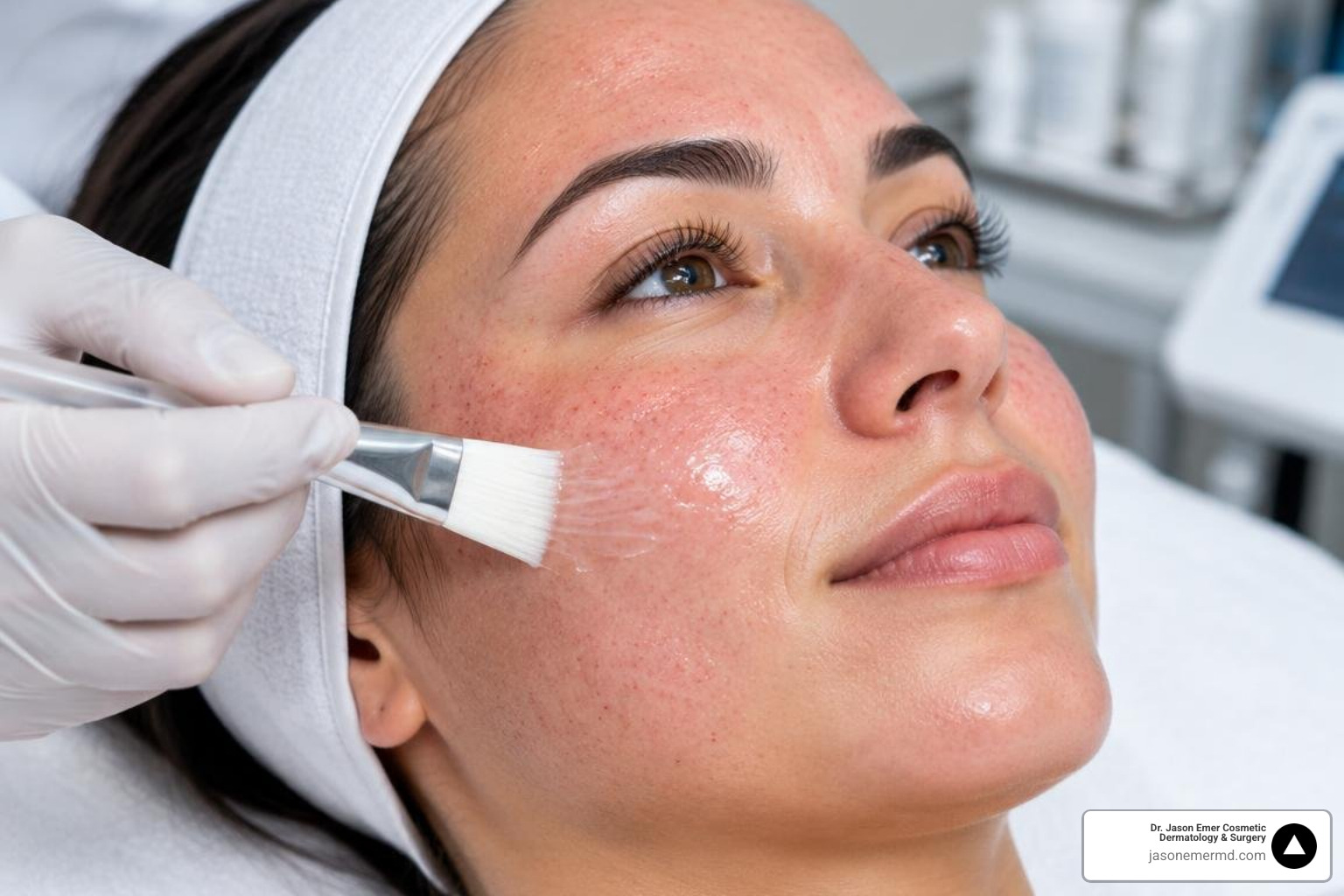
Between twenty-four and seventy-two hours after treatment, microscopic epidermal necrotic debris surfaces. As coagulated tissue is pushed outward by regeneration underneath, the skin develops a dry, sandpaper-like texture and a bronzed appearance. These micro-crusts must be allowed to shed naturally over three to seven days without picking or premature exfoliation.
Structured aftercare supports the healing barrier:
- Cleanse twice daily with lukewarm water and a gentle, non-foaming cleanser.
- Apply moisturizers formulated with ceramides and soothing humectants to support barrier repair.
- Avoid manual scrubs, retinoids, exfoliating acids, and vitamin C serums until the skin has fully re-epithelialized.
- Practice consistent photoprotection with mineral sunscreen containing zinc oxide or titanium dioxide.
- Avoid strenuous exercise, saunas, and hot tubs for forty-eight hours to limit flushing and swelling.
Recovery is treated as an integral part of the treatment plan. Dr. Emer reviews aftercare beforehand so patients understand normal healing dynamics.
Understanding Moxi laser treatment risks supports appropriate treatment planning and monitoring
Non-ablative fractionated resurfacing carries a favorable safety profile relative to fully ablative technologies, but complications can still occur when settings are mismanaged or aftercare is skipped. Expected responses include transient redness, minor swelling, and temporary tightness. Redness lasting beyond five days, blistering, superficial burns, infection, or post-inflammatory hyperpigmentation warrant prompt evaluation.
Patients with darker skin phototypes IV through VI carry elevated risk for hyperpigmentation if thermal energy overstimulates melanocytes. Treatment sequencing for these skin tones is often more conservative. In melasma-prone skin, laser energy delivered without careful planning can trigger rebound pigmentation. Dr. Emer manages this risk with pre-treatment topical regimens, conservative pulse energy, and appropriately spaced sessions.
Some situations call for delaying or avoiding treatment altogether: active cold sores or localized skin infection, pregnancy or lactation, recent use of photosensitizing medication or isotretinoin within six months, recent sun exposure or active tanning within four weeks, and active dermatitis, open wounds, or eczema flares.
Alternatives are always part of the discussion. Some individuals with significant structural laxity may be better served by non-laser modalities or surgical consultation. Others navigating active melasma or barrier impairment may do better with strict photoprotection and topical care rather than energy-based intervention. Choosing to do less is often the soundest clinical decision, and Dr. Emer explores that possibility during initial evaluation.
Frequently Asked Questions
How much downtime is expected following the procedure?
Most individuals experience two to four days of redness, mild swelling, and sandpaper-like micro-crusting.
Is the procedure safe for darker complexions?
The 1927 nm wavelength targets water rather than melanin, making it versatile across phototypes when paired with conservative settings and pigment-suppressive preparation.
Can this resurfacing approach be paired with other modalities?
In appropriate cases, it can be combined with other treatments within a staged protocol, determined during clinical evaluation.
What to remember
- Moxi uses a non-ablative 1927 nm thulium laser to stimulate epidermal renewal while keeping the outer stratum corneum intact.
- Expected recovery includes temporary redness, mild swelling, and sandpaper-like debris that sheds within several days with supportive barrier care.
- Candidacy, energy settings, and treatment sequencing depend on skin phototype, pigment activity, and barrier health, and are determined individually.
This content is for general education and does not provide a diagnosis, determine candidacy, or replace a consultation with a licensed clinician.
Questions about how this approach might apply to a particular skin profile are appropriately addressed in an in-person consultation for Moxi laser treatment with Dr. Emer.
This resource provides general educational information. Treatment recommendations depend on your health, goals, and consultation with a qualified clinician.