
Large volume liposuction in Los Angeles begins with physiologic safety rather than volume goals.
Most patients assume that more fat removed always produces a superior outcome. Dr. Emer operates on the opposite principle: surgical planning starts with human physiology, not a canister target. When planning large volume liposuction in Los Angeles, clinical safety depends on managing fluid shifts, tissue trauma, and recovery. Removing more than 5 liters of total aspirate serves as a safety threshold, not a goal to chase.
Substantial fat removal alters hemodynamics and fluid compartments. When large volumes of adipose tissue leave the body in one session, blood volume, electrolyte balance, and core temperature shift in tandem. A measured approach prioritizes continuous monitoring over arbitrary volume goals. The decision to pursue a single session or stage treatments across separate visits is determined in consultation, based on health history and circulation.
Jason Emer, MD, FAAD, is a board-certified dermatologist in Beverly Hills specializing in liposculpture. Clinical screening determines whether single-session extraction or staged body contouring will better support tissue healing and skin retraction. According to the American Society of Plastic Surgeons, surgical safety depends heavily on patient selection and volume thresholds. Exceeding compensatory thresholds raises complication risks rather than improving the result.
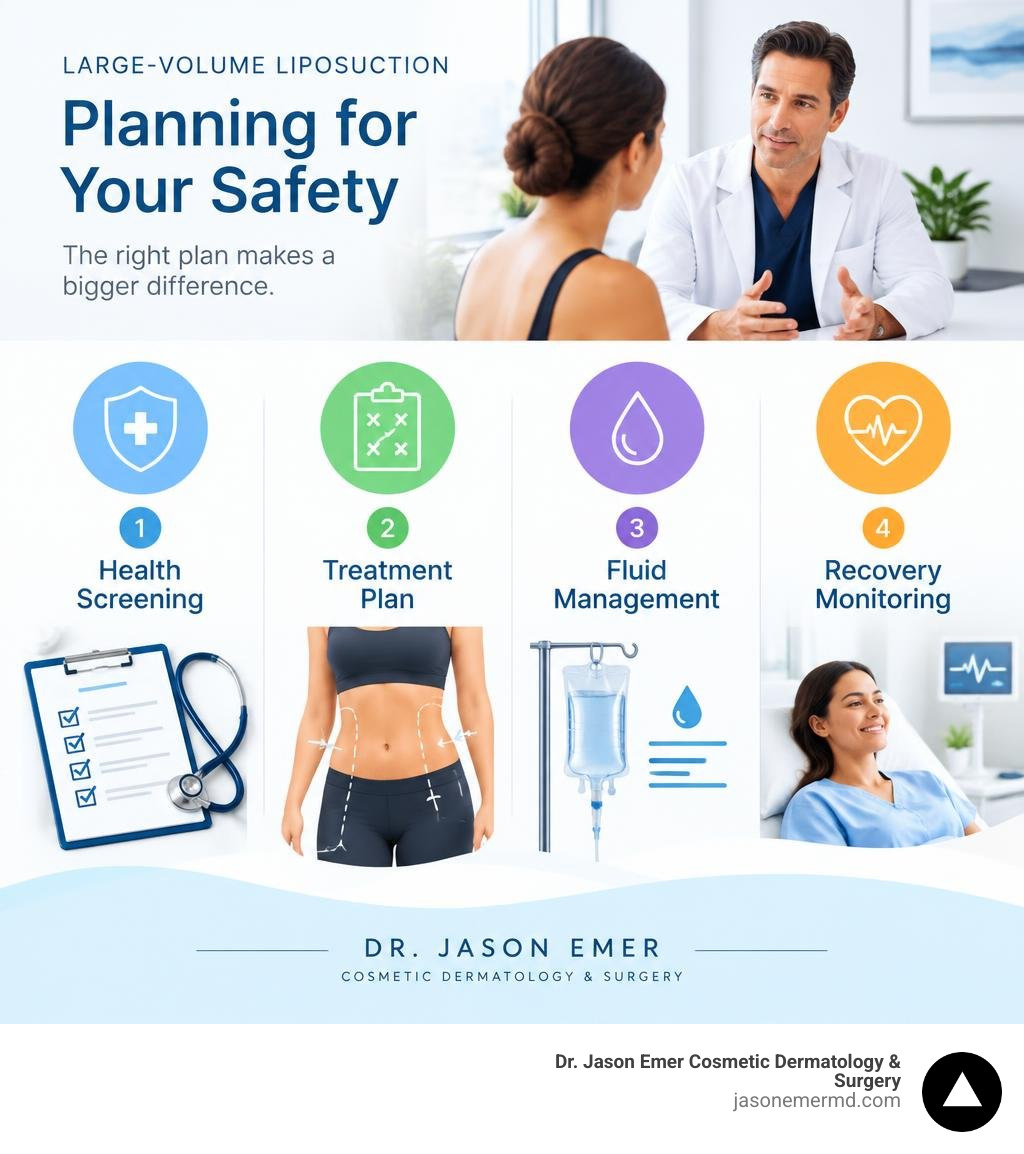
The physiologic load increases nonlinearly as aspirate volume rises. Dr. Emer evaluates baseline cardiovascular reserve and medication history before recommending any plan. Staging treatments can reduce cumulative stress on the circulatory system while achieving meaningful contour changes over time.
Technique and preoperative screening shape how much fat can be safely removed.
Extracting large volumes of adipose tissue alters systemic fluid distribution. Dr. Emer balances tumescent fluid infiltration with intravenous hydration based on weight and blood loss estimates. Ultrasound energy with Vaser Liposuction liquefies dense fat while sparing blood vessels and nerves. Power-assisted cannulas aspirate the emulsion with minimal mechanical trauma, reducing bruising and swelling.
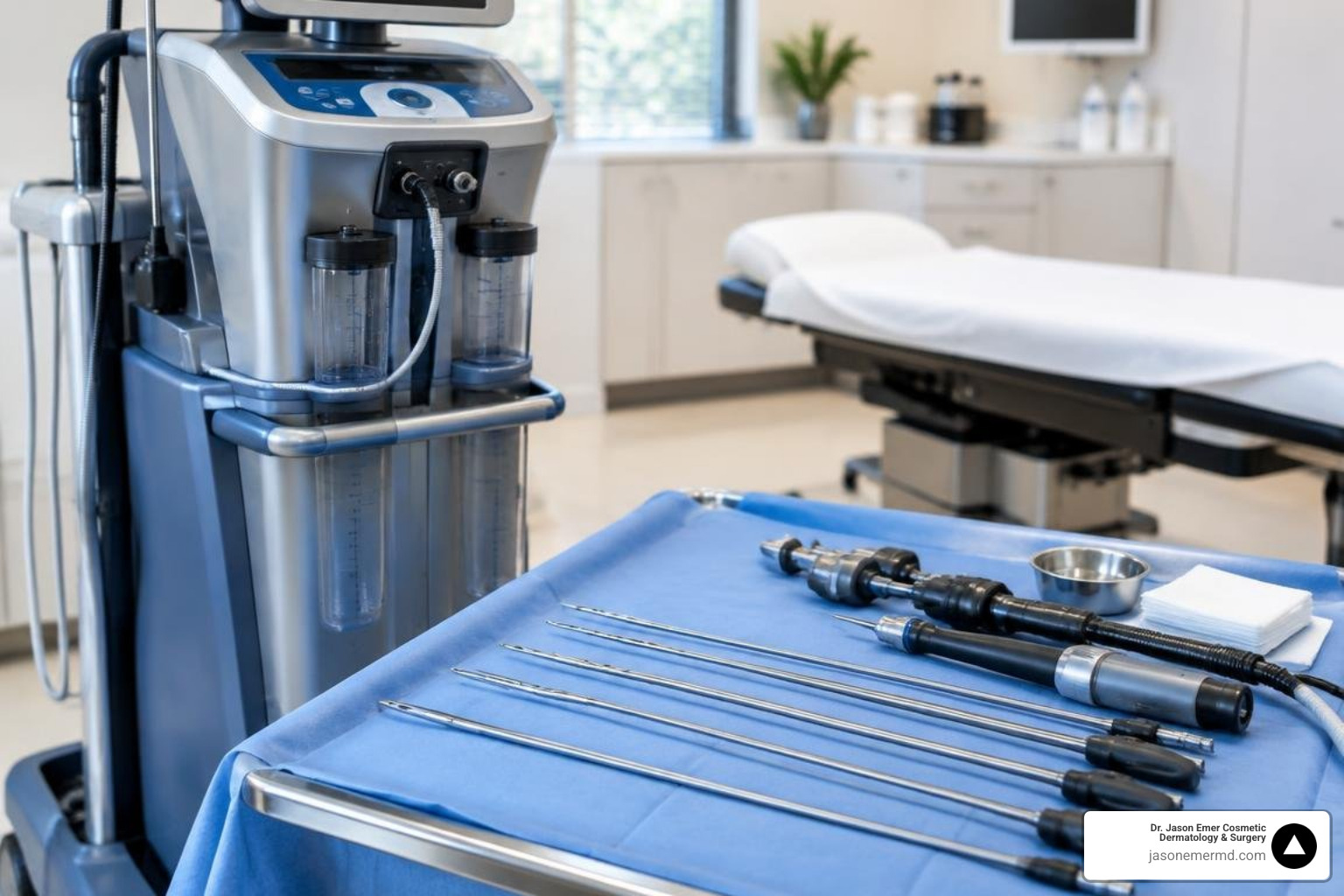
When performing comprehensive sculpting, such as 360 HD Lipo Female, addressing deep and superficial compartments creates smooth transitions. Superficial passes require restraint, as aggressive work near the dermis risks contour irregularities, adhesions, or skin tethering.
Large fluid turnover introduces real risks, including hypovolemia, hypothermia, or fluid overload. Dr. Emer operates in accredited surgical facilities with extended monitoring, temperature regulation, and staged fluid replacement. In darker skin tones, superficial energy application carries a risk of post-inflammatory hyperpigmentation near port sites, requiring individualized adjustments to energy delivery and sequencing so pigment-prone skin is not overtreated. Staging procedures across multiple sessions offers a safer alternative for patients with substantial debulking needs, trading a longer timeline for a lower per-session physiologic burden.
Patient selection remains the foundation of surgical safety. Comprehensive screening evaluates complete blood counts to confirm baseline hemoglobin can tolerate cell loss during debulking, while metabolic panels confirm organ function, since underlying conditions may restrict single-session limits. Skin elasticity also dictates aesthetic outcomes: removing substantial subcutaneous fat reduces structural support beneath the skin, and skin lacking recoil can develop laxity or rippling. Techniques adapt to anatomical landmarks; managing fibrous lumbar tissue with Back Liposuction differs from anterior abdominal contouring, while Abdominal Lipo for Men focuses on masculine muscular anatomy. When significant laxity already exists, liposuction alone cannot substitute for tissue removal, and patients may achieve better outcomes through excisional options such as Surgical Body Contouring. Doing less by staging treatments, or addressing health factors beforehand, often provides a safer path than aggressive single-stage extraction. Every decision about staging and volume limits is made during consultation.
Preoperative screening guides individualized planning for substantial fat removal.
Patient selection is the foundation of surgical safety. Comprehensive screening evaluates complete blood counts to confirm baseline hemoglobin can tolerate cell loss during debulking. Metabolic panels confirm organ function, as underlying conditions may restrict single-session limits.
Skin elasticity also dictates aesthetic outcomes. Removing substantial subcutaneous fat reduces structural support beneath the skin. If skin lacks recoil, debulking can cause laxity or rippling. Techniques adapt to distinct anatomical landmarks; managing fibrous lumbar tissue with Back Liposuction differs from anterior abdominal contouring, while Abdominal Lipo for Men focuses on masculine muscular anatomy.
When significant laxity already exists, liposuction alone cannot substitute for tissue removal. Patients may achieve better outcomes through excisional options, such as Surgical Body Contouring. Doing less by staging treatments or addressing health factors beforehand often provides a safer path than aggressive single-stage extraction. Every decision about staging and volume limits is made during consultation.
Structured recovery and follow-up help patients manage healing after body contouring.
Recovery protocols are vital to long-term outcomes. External compression garments manage postoperative edema, help prevent seromas, and guide tissue adherence against underlying fascia. Downtime is treated as an integral component of the surgical plan, with milestones evaluated at scheduled follow-up visits.
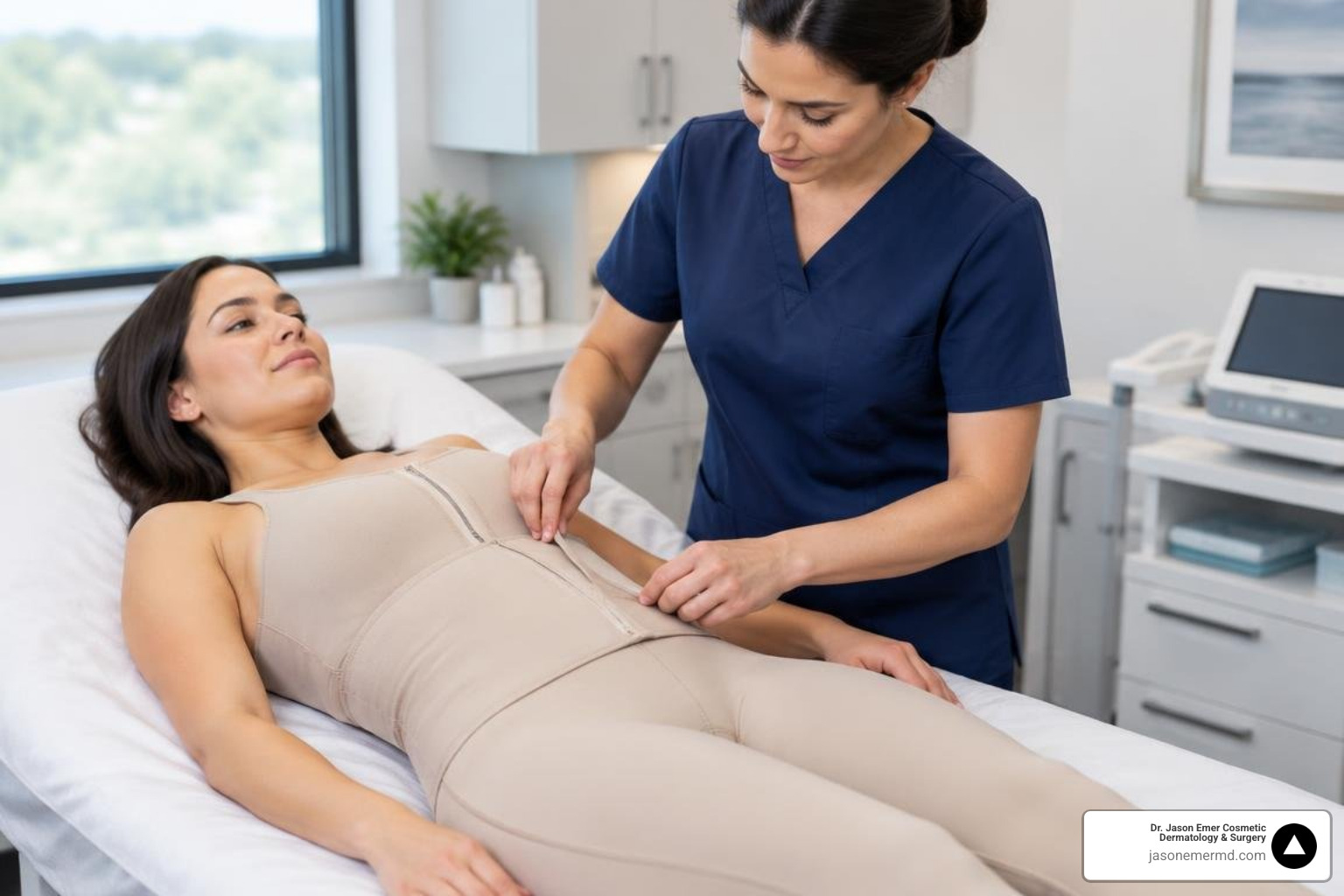
Active aftercare includes manual lymphatic drainage to clear interstitial fluid. Activity restrictions protect healing tissue from hematoma formation. Desk work can often resume within a week, but strenuous activity requires several weeks of restriction as swelling gradually resolves over several months.
Special considerations apply during Body Contouring After Major Weight Loss, where stretched skin may not retract after fat removal alone. Addressing Body Contouring for Loose Skin and Stubborn Fat requires balancing vascularity with contouring goals. Staging fat extraction and surgical excision protects cutaneous blood flow. Dr. Emer evaluates elasticity, prior scarring, and circulatory health to establish an individualized plan.
Patients who follow the recovery plan closely tend to have smoother transitions between treated and untreated areas, but even with careful aftercare, swelling can persist for months. Follow-up visits assess tissue adherence, skin quality, and any areas needing additional attention once initial healing has passed.
What to remember
- Large-volume liposuction involves removing more than 5 liters of total aspirate and requires advanced fluid monitoring.
- Preoperative screening of hemoglobin, cardiac function, and skin elasticity determines the appropriate surgical strategy.
- Structured post-operative care with compression therapy and lymphatic drainage is critical for safe tissue healing.
This content is for general education and does not provide a diagnosis, determine candidacy, or replace a consultation with a licensed clinician.
To explore body contouring options and determine an appropriate surgical approach, schedule an individualized clinical consultation with Dr. Jason Emer.
This resource provides general educational information. Treatment recommendations depend on your health, goals, and consultation with a qualified clinician.