(213) 985-0618Contact UsSchedule Consultation
EMERMED Schedule Consultation

Jason Emer, MD, FAAD, FACS

Some scars sit deeper than surface treatments can reach. This goes there.

Deep CO2 Laser Resurfacing For Acne Scars: How Dr. Emer Uses Heat And Depth To Remodel Thick, Scarred Skin

Dr. Jason Emer demonstrates a multi-pass CO2 laser session designed for deep acne scars in thicker skin, using customized depth and density to deliver heat where traditional resurfacing falls short.

Brand imagery. Not a patient of the practice.
THE DETAIL IS THE DIFFERENCE.See the results ↓

Dr. Jason Emer MD · FAAD · FACS

Deep CO2 resurfacing in continuous mode, layered at two depths to remodel scar tissue in thick, porous skin that has already improved with lighter devices but needs more heat to finish the work.

Your plan starts with Dr. Emer.

Schedule Consultation

Reserve online. West Hollywood and New York.

From the filmed session

Inside the treatment. With Dr. Emer.

Deep CO2 Laser For Acne Scars: Multi-Pass Resurfacing On Thick Skin | Dr. Jason Emer

Open on YouTube

What Dr. Emer did · RE:SKN

Every procedure. In order.

  1. 01

    Deep pass CO2 resurfacing RE:SKN

    Continuous-mode CO2 at high density and extended pulse width to deliver dermal heat, targeting the deeper scar tissue planes beneath the surface. The yellowish color that appears during treatment signals the depth needed to remodel thick, scarred skin.

  2. 02

    Surface pass CO2 resurfacing RE:SKN

    Traditional ablative CO2 pass at the epidermal layer to fill in texture and blend the deeper treatment, creating uniform coverage across both layers.

  3. 03

    Nerve blocks and topical anesthesia

    Numbing cream for up to one hour, followed by nerve blocks to ensure comfort during multi-pass ablative treatment.

Why patients fly in

What Dr. Emer does differently.

Continuous mode for precise depth control

Dr. Emer uses the CO2 laser in continuous firing mode, customizing output and density in real time to deliver controlled heat at multiple depths. This allows him to layer a deep dermal pass with a surface pass, remodeling scar tissue that sits beneath the epidermis in thick, porous skin.

Color as a depth indicator

He teaches providers to watch for the yellowish hue that appears during treatment, a visual signal that the laser has reached the dermal layer where scar tissue sits. White coloring indicates surface treatment, yellow signals the deeper remodeling needed for thick skin.

“If you take a look at the color here, see how it's yellowish in color? That it signifies depth.”

Aggressive treatment in patients who have already improved

This patient had already seen substantial improvement with other lasers, but Dr. Emer recognized that his thick skin required more heat than fractional devices could deliver. He uses CO2 to finish the work after lighter treatments have taken the patient as far as they can go.

Daily photo tracking and committed aftercare

Patients send photos every day so the team can monitor healing, adjust skin care, and catch any issues early. He requires antibiotics, antivirals, peptides, hyaluronic acid, and retinol starting day one to speed healing and prevent complications.

“You need to be able to go to someone that you can send in pictures, ask questions consistently.”

Retinol from day one

Contrary to standard textbook advice, Dr. Emer has patients use retinol immediately after ablative treatment to speed epithelial turnover and accelerate healing.

THE THINKING BEHIND THE TREATMENT

The story.
The decisions.
The details.

Follow Dr. Emer’s approach through the stages described in this case.

Back to the video ↗
  1. 01Before

    The starting point

    He waited years before learning treatment was even possible, then committed to a plan that required multiple sessions and real downtime.

    The patient in this video was plagued by severe acne when he was younger, and the scarring stayed with him into adulthood. He researched acne scar removal, consulted with another provider who was not confident in the outcome, and then found Dr. Emer's work online.

  2. 02The plan

    What Dr. Emer decided to do

    Planned around skin type, scar depth, and how much heat the tissue can handle.

  3. 03The session

    In the room, in order

    This was not his first laser session. He had already seen substantial improvement over the past year with other devices, but his skin is thick and porous, and the deeper scars required more heat than surface treatments could deliver. Dr. Emer used a CO2 laser in continuous mode, layering a deep pass with a surface pass to remodel tissue at multiple depths.

    • Numb thoroughly
    • Layer the passes
    • Watch for dermal heating
    • Track recovery daily
  4. 04The result

    What changed

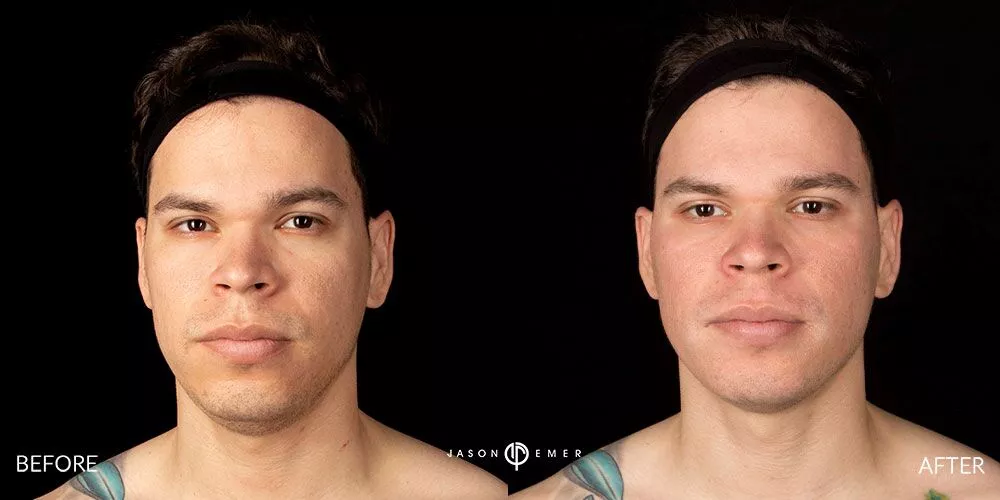
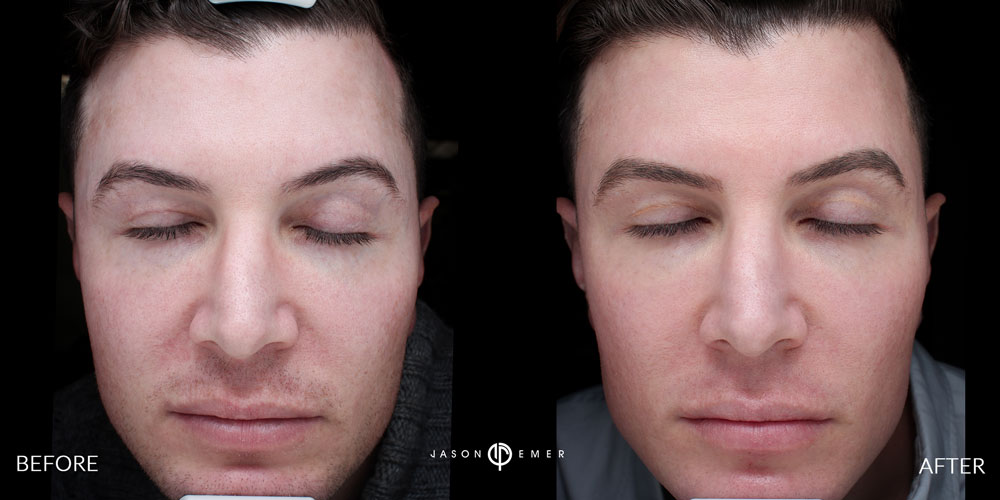
    The yellowish color that appeared during treatment signals dermal heating, the depth needed to stimulate collagen and tighten skin that has been scarred for years. Recovery will include crusting and peeling over five to seven days, daily photo check-ins, and committed aftercare with peptides, hyaluronic acid, and retinol.
  5. 05What comes next

    Recovery and what to expect

    This is an ablative treatment, which means the skin will crust, peel and require committed aftercare. Most patients see visible peeling over five to seven days, though some heal faster with the right protocol.

    Dr. Emer's approach includes antibiotics and antivirals to prevent infection, daily skin care with peptides and hyaluronic acid to support healing, and retinol to speed epithelial turnover. Patients send photos every day so the team can track progress and adjust care if needed.

Explore the full treatment details +

Deep CO2 resurfacing for acne scars in thicker skin / Patient story

Years of scars. Months of improvement.

He waited years before learning treatment was even possible, then committed to a plan that required multiple sessions and real downtime.

The patient in this video was plagued by severe acne when he was younger, and the scarring stayed with him into adulthood. He researched acne scar removal, consulted with another provider who was not confident in the outcome, and then found Dr. Emer's work online.

This was not his first laser session. He had already seen substantial improvement over the past year with other devices, but his skin is thick and porous, and the deeper scars required more heat than surface treatments could deliver. Dr. Emer used a CO2 laser in continuous mode, layering a deep pass with a surface pass to remodel tissue at multiple depths.

The yellowish color that appeared during treatment signals dermal heating, the depth needed to stimulate collagen and tighten skin that has been scarred for years. Recovery will include crusting and peeling over five to seven days, daily photo check-ins, and committed aftercare with peptides, hyaluronic acid, and retinol.
Built for thick skin and deep scars

The patient in this video has been through multiple laser treatments over the past year, and each one brought visible improvement. But thicker, porous skin with deep acne scarring eventually hits a ceiling with gentler devices. That is where this session picks up.

Dr. Emer used a CO2 laser in continuous mode, layering passes at different depths to deliver the heat required to remodel scar tissue that sits deeper than surface treatments can reach. The yellowish color that appears during treatment signals dermal heating, the depth needed to stimulate collagen and tighten skin that has been scarred for years.

Why CO2 works differently

CO2 lasers run hotter than erbium devices, and that heat is what makes them effective for thicker skin. Each pulse vaporizes tissue and creates controlled micro injuries that the body repairs with new collagen. The deeper the treatment, the more remodeling occurs beneath the surface.

In the video Dr. Emer alternates between a deep pass and a surface pass, filling in texture at multiple layers rather than treating one plane. The continuous mode allows him to cover wide areas quickly while maintaining precise control over density and output.

How a session is built

Four moves. Multiple depths.

Planned around skin type, scar depth, and how much heat the tissue can handle.

  1. 01

    Numb thoroughly

    Numbing cream for up to an hour, nerve blocks if needed, pills or sedation if the patient prefers. Four options, chosen based on comfort and treatment depth.

  2. 02

    Layer the passes

    A deep pass delivers heat to the dermis where scar tissue sits, then a surface pass fills in texture at the top layer. The continuous mode allows precise control over density and output.

  3. 03

    Watch for dermal heating

    The yellowish color that appears during treatment signals the depth needed to remodel thick, scarred skin. Too shallow and the result is minimal, too deep and recovery is prolonged.

  4. 04

    Track recovery daily

    Patients send photos every day so the team can monitor healing, adjust aftercare, and catch any issues early. Antibiotics and antivirals prevent infection, and skin care with peptides and retinol speeds healing.

The treatment, explained

What is CO2 laser resurfacing?

Also called deep CO2 resurfacing, ablative CO2 laser, CO2 laser for acne scars, fractional CO2 laser, continuous mode CO2, dermal resurfacing, acne scar laser treatment.

What it is
Deep CO2 laser resurfacing is an ablative treatment that uses controlled heat to vaporize damaged skin and remodel scar tissue at multiple depths. The CO2 laser runs hotter than erbium devices, making it effective for thicker skin with deep acne scars that have not fully responded to fractional or surface treatments. Dr. Emer uses a continuous-mode technique, layering a deep dermal pass with a surface pass to address both the underlying scar tissue and the surface texture in one session.
How it works
The laser delivers pulses of heat that vaporize tissue and create micro-injuries at controlled depths. The yellowish color that appears during treatment signals dermal heating, the depth needed to stimulate collagen production and tighten skin that has been scarred for years. The heat also causes immediate tissue contraction, a tightening effect visible during the session. Recovery includes crusting and peeling over five to seven days, during which the skin sheds the ablated tissue and regenerates with new collagen.
Who it is for
This treatment is best for patients with lighter skin tones (Fitzpatrick types I, II, and III) who have thick, porous skin with deep acne scars. It is particularly effective for patients who have already seen improvement with other lasers but need more heat to finish the work. CO2 is not recommended for darker skin tones or for pigmentation issues, as the heat can cause prolonged redness or hyperpigmentation. Candidacy is determined during consultation based on skin type, scar depth, and recovery capacity.
Recovery
Expect crusting, peeling, and redness over five to seven days. Some patients heal faster with committed aftercare. You will send photos every day so the team can track your progress and adjust care as needed. Antibiotics and antivirals are required to prevent infection. Skin care with peptides, hyaluronic acid, and retinol starting day one speeds healing. Sun protection is mandatory during recovery and for months afterward to prevent pigmentation issues.
When results show
Improvement in scar depth, skin texture, and overall tightness is visible once the skin has fully healed, typically two to four weeks after treatment. Collagen remodeling continues for months, with ongoing improvement over the following year. Most patients see substantial results after one or two deep sessions, then maintain with lighter treatments two to four times a year. The patient in this case had already completed multiple sessions with other devices and is now using CO2 to refine and finish the work.

Signature procedures

Only at Emer.

Peptides / biologic optimization

RECODEX™

Peptide and biologic protocols for recovery, body composition and longevity, with epigenetic testing. RECODEX™ peptides are available to purchase through the practice after consultation.

From Dr. Emer's Instagram

The work, as he shows it.

@jasonemermd @recodexsystem

Why Dr. Emer

Precision is learned. He teaches it.

Two decades of results, a global patient base, and techniques other physicians travel to study.

Dr. Emer built his reputation on outcomes that require both technical skill and clinical judgment. He pioneered body sculpting approaches that are now taught internationally, and he personally performs every procedure in his practice.

Patients come to him when the result has to be precise: people who have been treated elsewhere and need revision work, those with thicker or scarred skin that requires deeper intervention, and anyone who wants a provider who will track their progress daily and adjust care in real time.

  • MD, FAAD, FACS: board-certified dermatologist and cosmetic surgeon
  • Former Chief Resident in dermatology, Mount Sinai, New York
  • More than 10,000 patient encounters
  • Male facial sculpting longer than anyone in the United States
  • The highest filler volume on the West Coast
  • West Hollywood and New York
About Dr. Emer Schedule Consultation
EMER METHOD™×RECODEX™

Vaporizes tissue

Each pulse removes a controlled amount of skin, creating micro injuries that the body repairs with new collagen.

Delivers heat to the dermis

The deeper the treatment, the more remodeling occurs beneath the surface. That is where scar tissue sits in patients with thick, porous skin.

Tightens as it resurfaces

The heat dehydrates tissue, causing immediate contraction. That tightening effect is visible during the session and continues as collagen forms over the following weeks.

Requires committed aftercare

This is an ablative treatment, which means the skin will crust, peel, and need daily care. Patients who skip aftercare or sun protection risk prolonged redness or pigmentation issues.

Asked plainly, answered plainly

What patients ask before they book.

Is this safe for all skin types?+

No. CO2 runs hot, and heat can cause pigmentation issues in darker skin tones. This treatment is best for lighter skin types (Fitzpatrick I, II, and III) with thick, scarred tissue. Darker skin tones are at higher risk for prolonged redness or hyperpigmentation and may be better candidates for other devices.

How many sessions will I need?+

Most patients see substantial improvement after one or two deep sessions, then maintain with lighter treatments two to four times a year. The patient in this case had already completed multiple sessions with other lasers and is now using CO2 to refine and finish the work. Your plan will be set during consultation based on your skin type, scar depth, and goals.

What does recovery actually look like?+

Expect crusting, peeling, and redness over five to seven days. Some patients heal faster with committed aftercare. You will send photos every day so the team can track your progress and adjust care as needed. Antibiotics and antivirals are required to prevent infection, and skin care with peptides, hyaluronic acid, and retinol starting day one speeds healing.

Can this be used for pigmentation or melasma?+

No. Pigmentation is typically caused by heat, and CO2 adds more heat. This treatment is for scars and texture, not for melasma or sun damage in darker skin tones. Patients with pigmentation concerns should consider other devices or treatments that do not rely on high heat.

How much does this cost?+

Full-face CO2 resurfacing typically ranges from three to six thousand dollars per session, depending on depth, provider experience, and geographic location. Skin care, antibiotics, antivirals, and follow-up are additional. Your exact cost will be discussed during consultation.

Why is this better than fractional or erbium lasers?+

CO2 runs hotter than erbium and delivers more heat to the dermis, making it more effective for thicker skin with deep scars. Fractional devices are excellent for patients who need less downtime or have thinner skin, but patients with thick, porous skin often need the deeper remodeling that only CO2 can provide. Dr. Emer uses continuous mode to customize depth and density in real time, layering a deep pass with a surface pass to address both the underlying scar tissue and the surface texture.

Can I use retinol after this treatment?+

Yes. Dr. Emer has patients use retinol starting day one to speed epithelial turnover and accelerate healing. This is contrary to standard textbook advice, but his experience with thousands of patients shows that retinol improves recovery when used correctly. Your aftercare protocol will be customized during consultation.

What is the yellowish color that appears during treatment?+

The yellowish hue signals dermal heating, the depth needed to remodel thick, scarred skin. White coloring indicates surface treatment, yellow signals the deeper remodeling needed for patients with thick skin and deep scars. Dr. Emer watches for this color to ensure the laser has reached the layer where scar tissue sits.

Find out what your skin can carry.

A consultation with Dr. Emer covers your skin type, your scar depth, and whether deep CO2 resurfacing fits your goals and recovery capacity.

Schedule Consultation

West Hollywood and New York City

Dr. Jason Emer West Hollywood · New YorkSchedule Consultation