(213) 985-0618Contact UsSchedule Consultation
EMERMED Schedule Consultation

Jason Emer, MD, FAAD, FACS

Deep scars on darker skin need a different depth.

Acne Scars On Darker Skin: Why Dr. Emer Layers Three Treatments In One Session

How Dr. Jason Emer treats acne scars on melanated skin using micro droplet silicone, deep Profractional laser and superficial Contour TRL, with strict pre and post care protocols.

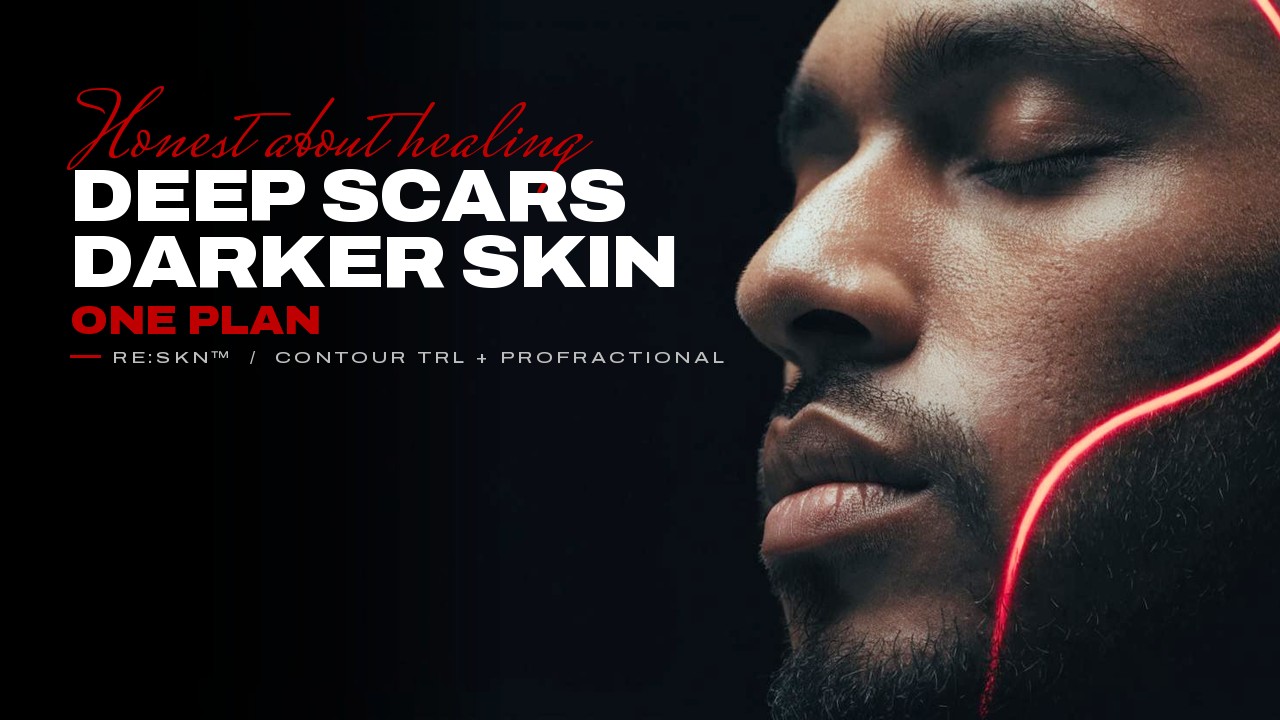
Brand imagery. Not a patient of the practice.
THE DETAIL IS THE DIFFERENCE.See the results ↓

Dr. Jason Emer MD · FAAD · FACS

Deep acne scars on melanated skin require micro droplet silicone to fill the deepest depressions, Profractional laser to remodel tissue underneath in millimeters, and Contour TRL to resurface the top layer, each calibrated for Fitzpatrick type four and darker skin with strict pre and post care protocols.

Your plan starts with Dr. Emer.

Schedule Consultation

Reserve online. West Hollywood and New York.

From the filmed session

Inside the treatment. With Dr. Emer.

Acne Scars On Darker Skin: Silicone, Profractional + Contour TRL In One Session | Dr. Jason Emer

Open on YouTube

What Dr. Emer did · RE:SKN

Every procedure. In order.

  1. 01

    Micro droplet silicone RE:SKN

    Placed into the deepest scars to raise the floor of each depression and smooth the surface before laser remodeling.

    “When we did our micro drop of silicone, we're able to really get a nice smoothing of this. So now we need the surface to remodel itself and that's what we're doing.”

    Dr. Emer, in the film
  2. 02

    Profractional laser RE:SKN

    Deep fractional erbium laser going straight through the superficial layer in millimeters, remodeling tissue underneath. This step is bloody because the laser penetrates multiple layers.

  3. 03

    Contour TRL RE:SKN

    Superficial blade of erbium laser resurfacing the top layer, delivered after the skin is wiped completely dry. Settings are calibrated for speed and depth on ethnic skin.

    “On ethnic skin, you have to be very careful with how deep and how quick you deliver energy within the tissue. Every millisecond counts.”

    Dr. Emer, in the film
  4. 04

    Chemical peel pre-treatment RE:SKN

    Skin prepped with chemical peel and products including retinol, hydroquinone, tranexamic acid or kojic acid, layered specifically for melanated skin.

Why patients fly in

What Dr. Emer does differently.

Multi-layered depth protocol in one session

Silicone fills the deepest scars, Profractional remodels tissue underneath in millimeters, Contour TRL resurfaces the top layer. Each modality works at a different depth, all calibrated for melanated skin in one session.

“We're doing multiple modalities at different depths, not just with lasers, with injectables.”

Millisecond-level energy calibration for darker skin

Laser depth and speed settings are adjusted for Fitzpatrick type four and darker skin. Deeper energy delivery requires slower passes; every millisecond of energy delivery matters.

“On ethnic skin, you have to be very careful with how deep and how quick you deliver energy within the tissue. Every millisecond counts.”

Dry skin protocol between laser passes

Blood from the Profractional step must be wiped completely dry before Contour TRL, because any fluid left on the skin absorbs and disperses laser energy unpredictably.

“You have to make sure that it's dry because then it alters how deep you can go within the tissue because then there's a supportive layer of what is blood either absorbing energy.”

Daily photo monitoring for two weeks

Patients send photos and videos every day for up to two weeks so Dr. Emer can monitor healing and catch any sign of fungal or bacterial infection before it becomes a problem.

Mandatory pre and post care protocols

Chemical peel and layered skin care with retinol, hydroquinone, tranexamic acid or kojic acid before treatment. Antibiotics and antivirals, personalized skin care regimen and daily monitoring after.

“You won't heal properly after this type of treatment if you don't have the proper postcare protocols.”

THE THINKING BEHIND THE TREATMENT

The story.
The decisions.
The details.

Follow Dr. Emer’s approach through the stages described in this case.

Back to the video ↗
  1. 01Before

    The starting point

    The combination that requires a different protocol at every layer.

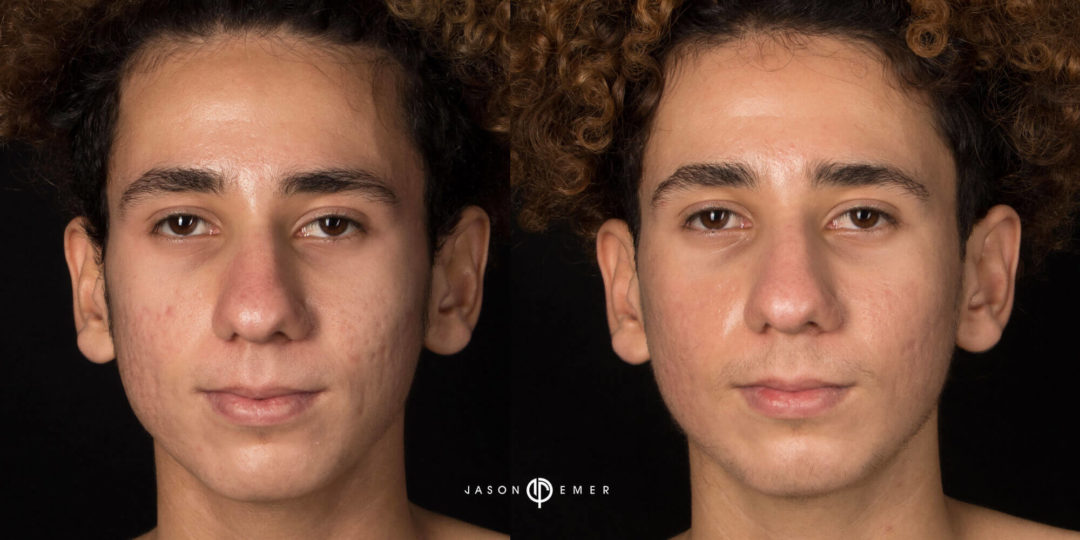
    The patient in this video has Fitzpatrick type four skin and deep acne scars. That is exactly why Dr. Emer built this multi-layered approach: micro droplet silicone to fill the deepest depressions, Profractional laser to remodel tissue underneath, and Contour TRL to resurface the top layer.

  2. 02The plan

    What Dr. Emer decided to do

    Each modality works at a different depth, and each one is calibrated for melanated skin.

    “So our goal is to really smooth with the outcome. When we did our micro drop of silicone, we're able to really get a nice smoothing of this. So now we need the surface to remodel itself and that's what we're doing.”DR. JASON EMER · FROM THE VIDEO
  3. 03The session

    In the room, in order

    Each modality works at a different depth, and each one has to be calibrated for melanated skin. The Profractional goes deeper into the tissue in millimeters, remodeling the layers beneath the surface. That step is bloody, because the laser is penetrating through multiple layers. The final layer is Contour TRL, a superficial erbium laser that resurfaces the top of the skin.

    • Micro droplet silicone
    • Profractional laser
    • Contour TRL
    • Daily monitoring for two weeks
  4. 04The result

    What changed

    By the time the Contour TRL step happens, the blood from the Profractional has to be wiped completely dry, because any fluid left on the skin absorbs and disperses the laser energy unpredictably. Every millisecond of energy delivery matters on darker skin.

    “On ethnic skin, you have to be very careful with how deep and how quick you deliver energy within the tissue. Every millisecond counts.”DR. JASON EMER · FROM THE VIDEO
Explore the full treatment details +

Three treatments, one session, one plan / Patient story

Deep scars. Darker skin.

The combination that requires a different protocol at every layer.

The patient in this video has Fitzpatrick type four skin and deep acne scars. That is exactly why Dr. Emer built this multi-layered approach: micro droplet silicone to fill the deepest depressions, Profractional laser to remodel tissue underneath, and Contour TRL to resurface the top layer.

Each modality works at a different depth, and each one has to be calibrated for melanated skin. The Profractional goes deeper into the tissue in millimeters, remodeling the layers beneath the surface. That step is bloody, because the laser is penetrating through multiple layers. The final layer is Contour TRL, a superficial erbium laser that resurfaces the top of the skin.

By the time the Contour TRL step happens, the blood from the Profractional has to be wiped completely dry, because any fluid left on the skin absorbs and disperses the laser energy unpredictably. Every millisecond of energy delivery matters on darker skin.
Why ethnic skin requires a different protocol

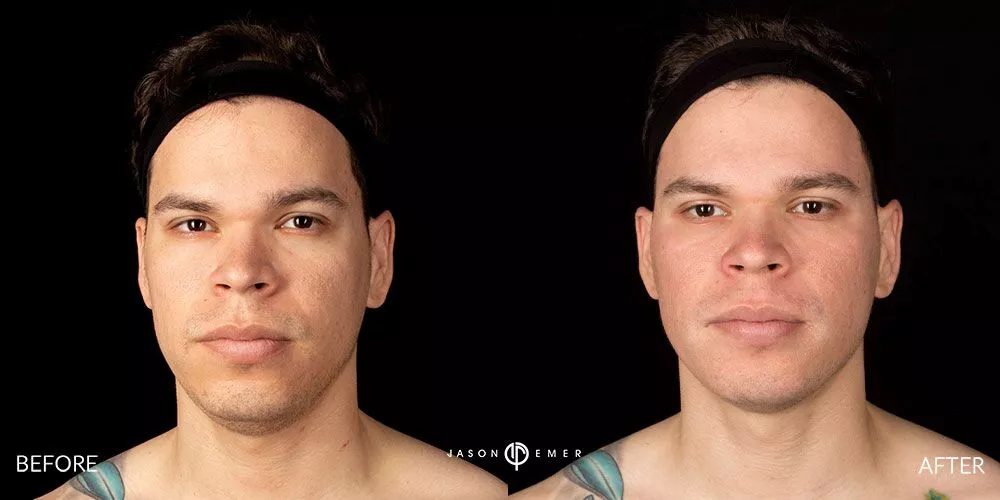
The patient in this video has Fitzpatrick type four skin, and the scars are deep. That combination is exactly why Dr. Emer built this multi-layered approach: micro droplet silicone to fill the deepest depressions, Profractional laser to remodel tissue underneath, and Contour TRL to resurface the top layer.

Each modality works at a different depth, and each one has to be calibrated for melanated skin. Settings that work on lighter skin types can cause serious harm on darker skin if the physician is not experienced in treating ethnic skin tones.

Three treatments, one session, one plan

Dr. Emer starts with micro droplet silicone placed into the deepest scars to raise the floor of each depression. Then he uses Profractional laser, which goes deeper into the tissue in millimeters, remodeling the layers beneath the surface. That step is bloody, because the laser is penetrating through multiple layers.

The final layer is Contour TRL, a superficial erbium laser that resurfaces the top of the skin. By the time this step happens, the blood from the Profractional has to be wiped completely dry, because any fluid left on the skin absorbs and disperses the laser energy unpredictably.

Every millisecond of energy delivery matters on darker skin. The laser has to move at the right speed for the depth and the skin type, or the risk of hyperpigmentation or scarring goes up.
How a session is built

Three treatments. One session.

Each modality works at a different depth, and each one is calibrated for melanated skin.

  1. 01

    Micro droplet silicone

    Placed into the deepest scars to raise the floor of each depression and smooth the surface.

  2. 02

    Profractional laser

    Goes deeper into the tissue in millimeters, remodeling the layers beneath the surface. This step is bloody.

  3. 03

    Contour TRL

    A superficial erbium laser that resurfaces the top layer. The skin must be completely dry before this step, or the energy disperses unpredictably.

  4. 04

    Daily monitoring for two weeks

    Patients send photos and videos every day so Dr. Emer can monitor healing and catch any sign of infection before it becomes a problem.

The treatment, explained

What is acne scar treatment?

Also called acne scar laser, acne scars darker skin, acne scars ethnic skin, Profractional laser, Contour TRL, fractional erbium laser, erbium resurfacing, micro droplet silicone, silicone for acne scars, laser for melanated skin, Fitzpatrick type 4 laser.

What it is
Acne scar treatment for melanated skin combining micro droplet silicone injections, Profractional fractional erbium laser and Contour TRL erbium resurfacing laser in one session. Each modality works at a different depth: silicone fills the deepest depressions, Profractional remodels tissue underneath in millimeters, and Contour TRL resurfaces the top layer. The protocol includes chemical peel pre-treatment, layered skin care with retinol, hydroquinone, tranexamic acid or kojic acid, and strict post care with antibiotics, antivirals and daily photo monitoring for up to two weeks.
How it works
Micro droplet silicone is placed into the deepest scars to raise the floor of each depression. Profractional laser goes straight through the superficial layer in millimeters, remodeling the layers beneath the surface. This step is bloody because the laser penetrates multiple layers. Blood is wiped completely dry before Contour TRL, a superficial erbium laser that resurfaces the top layer. On darker skin, laser depth and speed settings are calibrated so that deeper energy delivery is paired with slower passes. Any fluid left on the skin absorbs and disperses laser energy unpredictably, so the skin must be dry before the final resurfacing step.
Who it is for
Patients with deep acne scars and Fitzpatrick type four or darker skin who have been told their skin type is too risky for aggressive laser treatment. This protocol is for patients who understand that pre care, post care and daily monitoring are not optional, and who are willing to follow the recovery plan exactly as prescribed. Settings that work on lighter skin types can cause serious harm on darker skin if the physician is not experienced in treating ethnic skin tones.
Recovery
Antibiotics and antivirals are part of the protocol. Patients send photos and videos every day for up to two weeks so Dr. Emer can monitor healing and catch any sign of fungal or bacterial infection before it becomes a problem. The skin care regimen is personalized based on how the patient is healing. Recovery time and restrictions are set at consultation based on the depth of treatment and the individual plan.
When results show
Results develop as the skin remodels over weeks to months. The silicone fills the deepest scars immediately, the Profractional remodels tissue underneath over time, and the Contour TRL resurfaces the top layer. The timeline for final results is set at consultation based on scar depth, skin type and the individual treatment plan. Daily monitoring for two weeks ensures the skin is healing properly.

Signature procedures

Only at Emer.

Peptides / biologic optimization

RECODEX™

Peptide and biologic protocols for recovery, body composition and longevity, with epigenetic testing. RECODEX™ peptides are available to purchase through the practice after consultation.

From Dr. Emer's Instagram

The work, as he shows it.

@jasonemermd @recodexsystem

Why Dr. Emer

Not every physician should treat ethnic skin.

Settings that work on lighter skin types can cause serious harm on darker skin if the physician is not experienced.

Dr. Emer built his reputation on outcomes that require precision: acne scars on melanated skin, revision work after failed treatments elsewhere, and protocols that other dermatologists travel to learn.

He personally performs every procedure in his practice, and he has spent two decades calibrating laser settings, injection depths, and recovery protocols specifically for Fitzpatrick type four and darker skin tones. That experience is what makes the difference between a result and a complication.

  • MD, FAAD, FACS: board-certified dermatologist and cosmetic surgeon
  • Former Chief Resident in dermatology, Mount Sinai, New York
  • More than 10,000 patient encounters
  • Male facial sculpting longer than anyone in the United States
  • The highest filler volume on the West Coast
  • West Hollywood and New York
About Dr. Emer Schedule Consultation
EMER METHOD™×RECODEX™

Pre care

The skin is prepped with a chemical peel and products that include retinol, hydroquinone, tranexamic acid or kojic acid, layered specifically for melanated skin.

Post care

Antibiotics and antivirals are part of the protocol, and the skin care regimen is personalized based on how the patient is healing.

Daily photos for two weeks

Patients send photos and videos every day so Dr. Emer can monitor healing and catch any sign of fungal or bacterial infection before it becomes a problem.

No AI, no filters

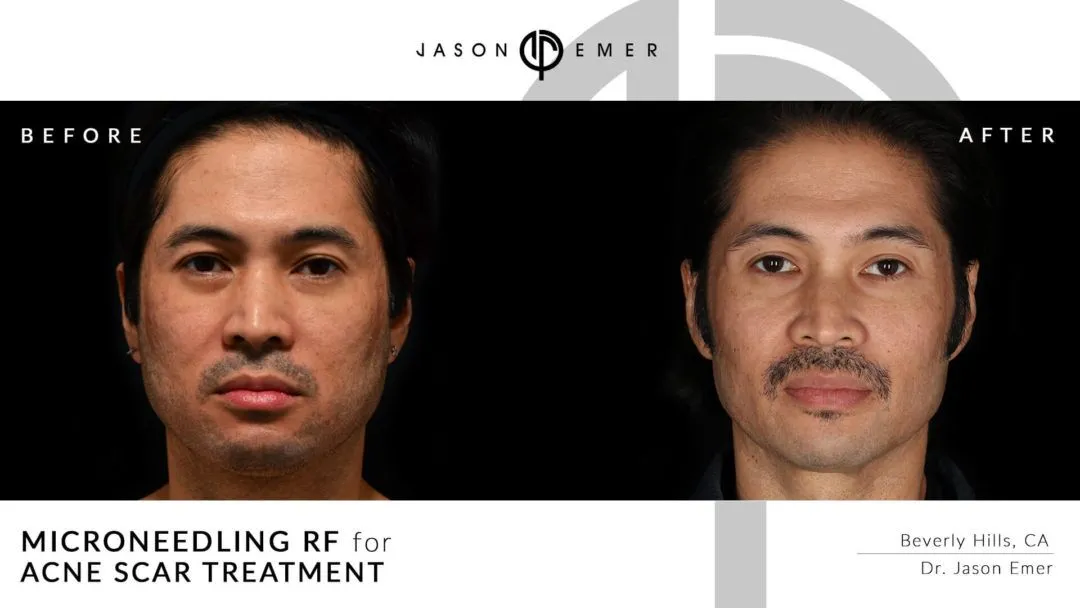
Every before and after is unfiltered, because Dr. Emer wants patients to see the reality of the protocol and the results.

Asked plainly, answered plainly

What patients ask before they book.

Why three treatments in one session instead of spacing them out?+

Each modality works at a different depth. Silicone fills the deepest scars, Profractional remodels tissue underneath in millimeters, and Contour TRL resurfaces the top layer. Treating all three layers in one session is more effective than treating one layer at a time, because the skin remodels as one system. The protocol is built for melanated skin, with settings calibrated for Fitzpatrick type four and darker skin tones.

Why is pre care required, and what does it include?+

The skin is prepped with a chemical peel and products that include retinol, hydroquinone, tranexamic acid or kojic acid, layered specifically for melanated skin. Without pre care, the risk of hyperpigmentation or poor healing goes up. Pre care is part of the protocol, not an upsell.

Why do I have to send daily photos for two weeks?+

Dr. Emer monitors healing for up to two weeks to catch any sign of fungal or bacterial infection before it becomes a problem. Daily photos and videos are part of the protocol. This is not optional, because the treatment will not heal properly without the right post care and monitoring.

Can any dermatologist do this treatment on darker skin?+

No. Settings that work on lighter skin types can cause serious harm on darker skin if the physician is not experienced in treating ethnic skin tones. On melanated skin, you have to be very careful with how deep and how quick you deliver energy within the tissue. Every millisecond counts. This is not the type of treatment to experiment with.

Why does the skin have to be completely dry between laser passes?+

Blood from the Profractional step must be wiped completely dry before Contour TRL, because any fluid left on the skin absorbs and disperses laser energy unpredictably. If the skin is not dry, the energy delivery changes and the depth becomes inconsistent. On darker skin, that unpredictability can cause hyperpigmentation or scarring.

What is the difference between Profractional and Contour TRL?+

Profractional is a deep fractional erbium laser that goes straight through the superficial layer in millimeters, remodeling tissue underneath. This step is bloody because the laser penetrates multiple layers. Contour TRL is a superficial erbium laser that resurfaces the top layer. The Profractional remodels the tissue, the Contour TRL resurfaces the skin.

Are the before and after photos filtered or edited?+

No. Dr. Emer does not use AI or filters on before and after photos. The results are unfiltered because he wants patients to see the reality of the protocol and the results. Daily photos sent by patients during recovery are also unfiltered, so healing can be monitored accurately.

What is included in the post care protocol?+

Antibiotics and antivirals are part of the protocol. The skin care regimen is personalized based on how the patient is healing, and patients send photos and videos every day for up to two weeks. Post care is not optional, because the treatment will not heal properly without the right products and monitoring. The specific products and timeline are set at consultation.

What have you been told about your skin?

A consultation with Dr. Emer covers your skin type, your scar depth, and whether this multi-layered approach fits your plan.

Schedule Consultation

West Hollywood and New York City

Dr. Jason Emer West Hollywood · New YorkSchedule Consultation