

The scars that stay after everything else
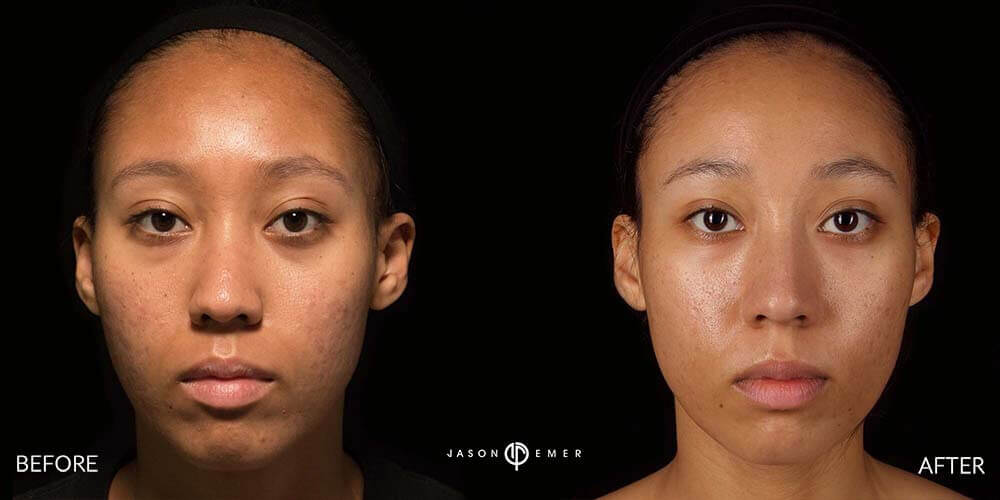
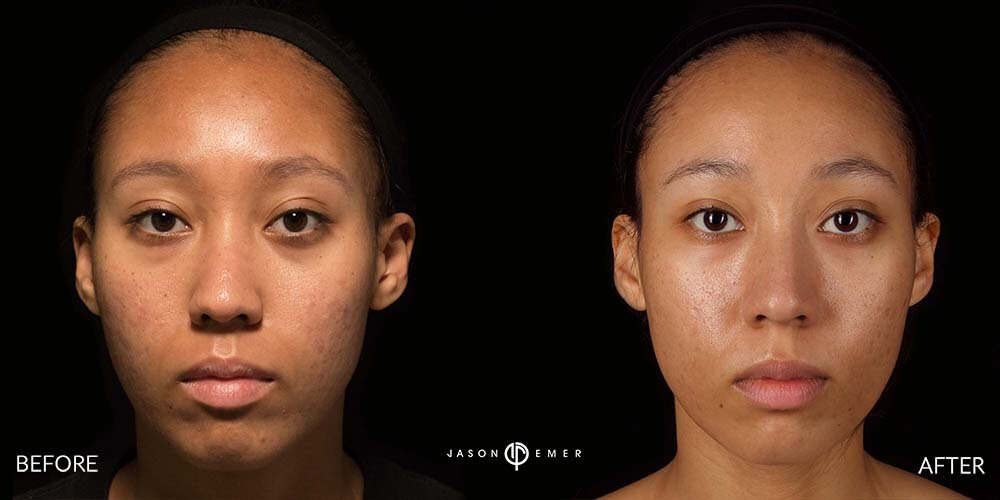
The patient in this video already had one treatment with Dr. Emer. Her scars were visibly improved, almost gone from certain angles. What remained were small, superficial indentations that needed a different approach: microdroplet silicone to fill each scar individually, combined with Halo ProFractional laser to stimulate collagen.
This is the treatment Dr. Emer built for ethnic and darker skin tones when acne scars are the primary concern. It requires pre-treatment with retinol, hydroquinone, vitamin C and a peel to prevent pigmentation, side lighting to see every indentation, and precise placement so the silicone volumizes the surface without overfilling.
What microdroplet silicone actually does
Silicone placed in micro droplets fills the scar from underneath, raising the indentation to match the surrounding skin. The amount is small enough that it cannot form lumps or bumps, and it stimulates collagen over time as the body integrates the material.
Dr. Emer uses side lighting during the session to see every scar that needs filling. The elevations that appear immediately after placement are a sign the scar is filling out. He waits a few seconds after each area to assess, then moves to the next spot, under-stimulating rather than overdoing it.
Why darker skin requires a different plan
Many physicians will not treat darker or ethnic skin tones with aggressive laser resurfacing because of the risk of pigmentation. Dr. Emer has been treating ethnic skin for two decades, and the key is pre-treatment: an Enlighten Peel that prevents the body from producing as much pigment when the skin is heated.
This patient has a natural type three skin tone with a slight tan and some background redness. That redness is a good sign: it means her risk of pigmentation is lower. If the background hue were darker, the laser settings would be lighter and the skincare protocol more aggressive. The goal is to limit how much pigmentation can occur, and if it does, to make it resolve faster.
Who this fits
This treatment is for patients with superficial acne scars who want permanent improvement without the risk of pigmentation that comes with aggressive laser alone. It works best when the scars are not deeply tethered and when the patient has been pre-treated with the right skincare.
Candidacy depends on scar type, skin tone, and realistic expectations. Acne scars are hard to treat, and the outcome varies. A consultation covers your skin, your scars, and whether microdroplet silicone combined with laser resurfacing fits your plan.