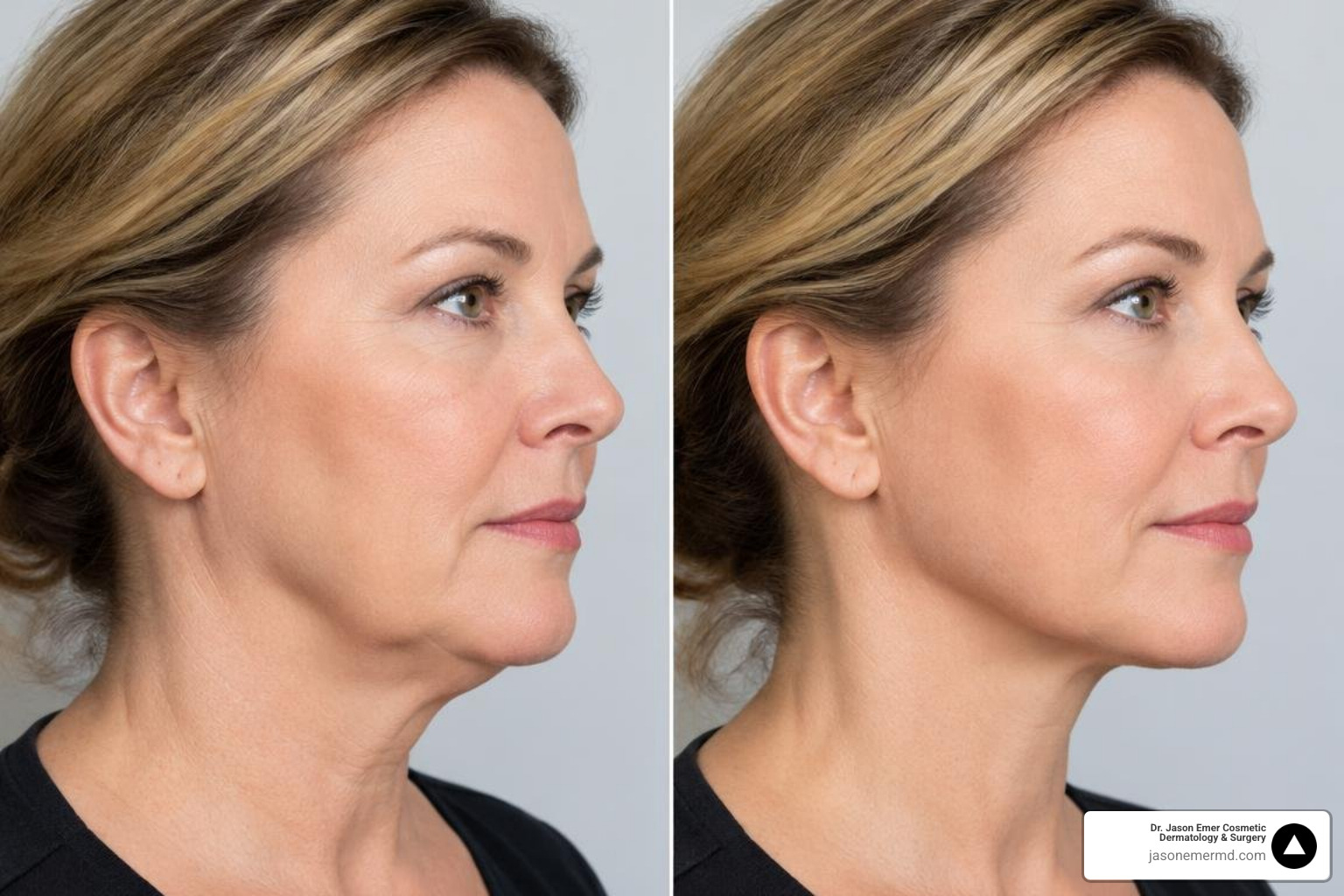
Why a Face Lift for Jowls Treats More Than Loose Skin
Most offices start with a device or injectable. The better clinical model starts with the anatomical structures beneath the skin.
A face lift for jowls restores lower-face definition by repositioning descended tissues. Jowls develop as fat descends, retaining ligaments weaken, and bone structure recedes. Creams and superficial treatments cannot reposition descended fat pads, though filler may camouflage minor hollows.
Surgical planning focuses on proportion and structural support rather than tension. As the American Society of Plastic Surgeons notes, surgical techniques address deeper tissue layers to achieve natural movement.
Dr. Jason Emer evaluates structural support, skin elasticity, and jawline balance to determine an individualized surgical or non-surgical approach.
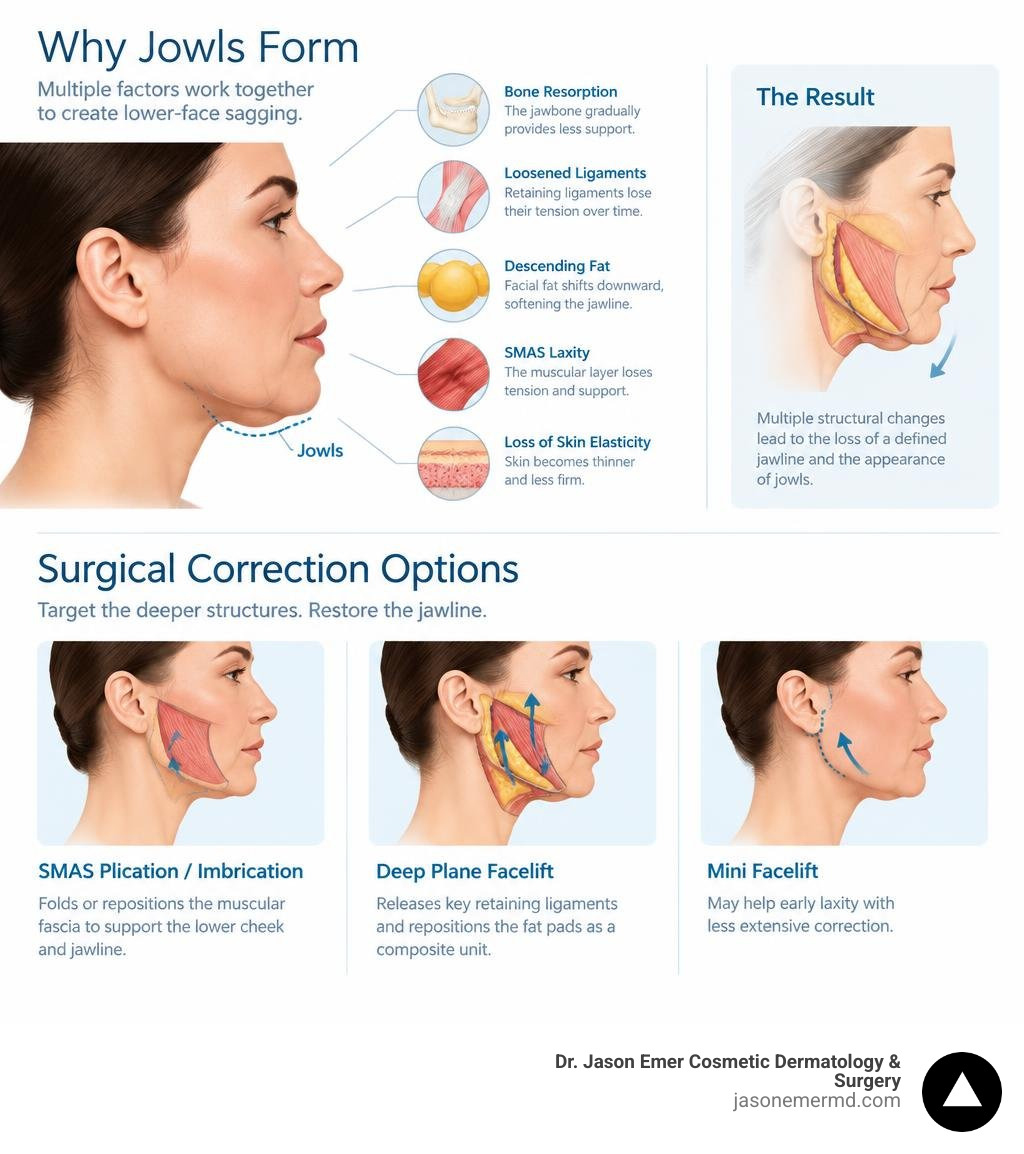
A face lift for jowls addresses several anatomical contributors to lower-face aging through structural tissue repositioning.
Lower-face aging involves bone resorption, loosening retaining ligaments, and descent of fat compartments over the mandibular border. Because the superficial muscular aponeurotic system (SMAS) loses tension over time, skin laxity is rarely the sole cause of jowling. The mandibular ligament, which normally anchors soft tissue along the jawline, gradually stretches, allowing cheek fat to migrate downward and create the visual break between the cheek and jaw that defines a jowl.
Surgical intervention mobilizes deeper structural planes rather than pulling the skin tight. A standard SMAS plication folds or repositions the muscular fascia, while vertical tissue elevation restores the fat pads to their earlier position along the cheekbone rather than stretching skin horizontally. A deep plane facelift releases retaining ligaments beneath the SMAS, elevating fat pads as a composite unit to preserve blood flow and allow natural expression.
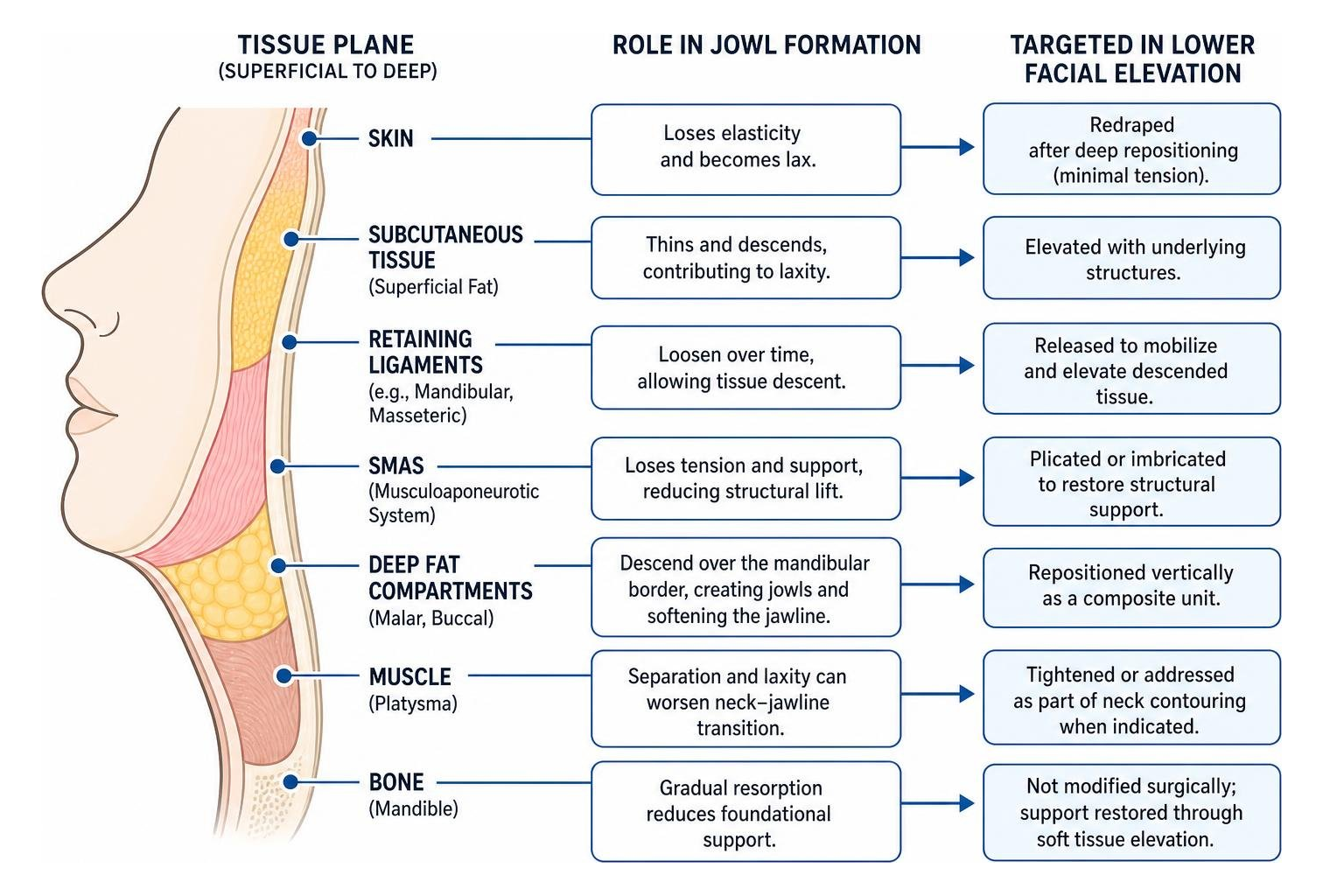
Comparing surgical techniques for face lift jowls correction
Technique selection depends on how much tissue has descended and how much ligamentous support remains. A deep plane approach addresses composite descent across multiple layers, while a standard SMAS lift may be sufficient for moderate laxity. For isolated early laxity, a mini facelift offers targeted elevation with limited incisions and a shorter recovery window. Composite lifting techniques, which move skin, fat, and muscle as one unit, tend to produce results that read as more natural because the tissue relationships to one another are preserved rather than disrupted.
Assessing individuals seeking face lift jowls surgery
Candidacy depends on tissue mobility, volume distribution, and overall health. Skin elasticity plays a meaningful role: tissue that has lost significant recoil may not settle as predictably after repositioning. In tailored procedures, such as planning a facelift for women, tissue harmony between the cheeks, jawline, and neck remains essential. Active smoking impairs microvascular perfusion and increases the risk of delayed healing, making medical optimization crucial before any surgical date is set. In some cases, micro-fat grafting is layered into the plan to restore volume in areas where descent has left visible hollowing, rather than relying on repositioning alone. These decisions, including whether surgery is warranted at all versus a more conservative path, are made individually during a consultation rather than assumed in advance.
Combining surgical modalities can support comprehensive rejuvenation of the lower face and neck.
Descent of the lower face frequently accompanies submental fullness and platysmal muscle banding. Repositioning jowls without addressing cervical laxity can compromise structural harmony between the jawline and neck, leaving the profile visually unbalanced even after a successful lift.
Integrating cervical contouring with jawline restoration
To maintain continuous contouring, a lower-face lift is often paired with a neck lift. Suture platysmaplasty and subplatysmal fat management restore the cervicomental angle, the natural curve beneath the chin that tends to soften with age. Incision placement is planned to follow natural creases where possible, and submental fullness is evaluated separately from jawline laxity since the two do not always require the same correction.
| Technique | Primary Anatomical Target | Typical Invasiveness | Relative Recovery Profile |
|---|---|---|---|
| Deep Plane Facelift | Sub-SMAS space and retaining ligaments | Extensive deep mobilization | 2 to 3 weeks initial downtime |
| SMAS Facelift | Superficial muscular aponeurotic system | Moderate sub-dermal dissection | 10 to 14 days initial downtime |
| Mini Facelift | Lower SMAS / subcutaneous tissue | Limited incision footprint | 7 to 10 days initial downtime |
Non-surgical alternatives and complementary procedures
Non-surgical alternatives provide options for individuals with mild laxity, and doing less is sometimes the more appropriate choice depending on the degree of descent. Bipolar radiofrequency with FaceTite and AccuTite induces soft-tissue contraction without an incision-based lift. Conservative non-surgical jawline contouring uses dermal fillers to camouflage a pre-jowl sulcus, though excessive filler can widen the lower face rather than sharpen it. When energy-based treatments or ablative modalities are part of a non-surgical facelift, darker Fitzpatrick skin types require conservative settings and pre-treatment conditioning to minimize the risk of post-inflammatory hyperpigmentation (PIH), and treatment sequencing may need to differ from lighter skin types to manage that risk.
Understanding healing, safety, and treatment planning supports realistic expectations for face lift jowls procedures.
Postoperative recovery is a gradual biological process. Edema, bruising, and mild tightness along the jawline are standard. Most patients resume desk work within 10 to 14 days, with final tissue settling progressing over several months. Reviewing a facelift before and after gallery helps visualize healing milestones.
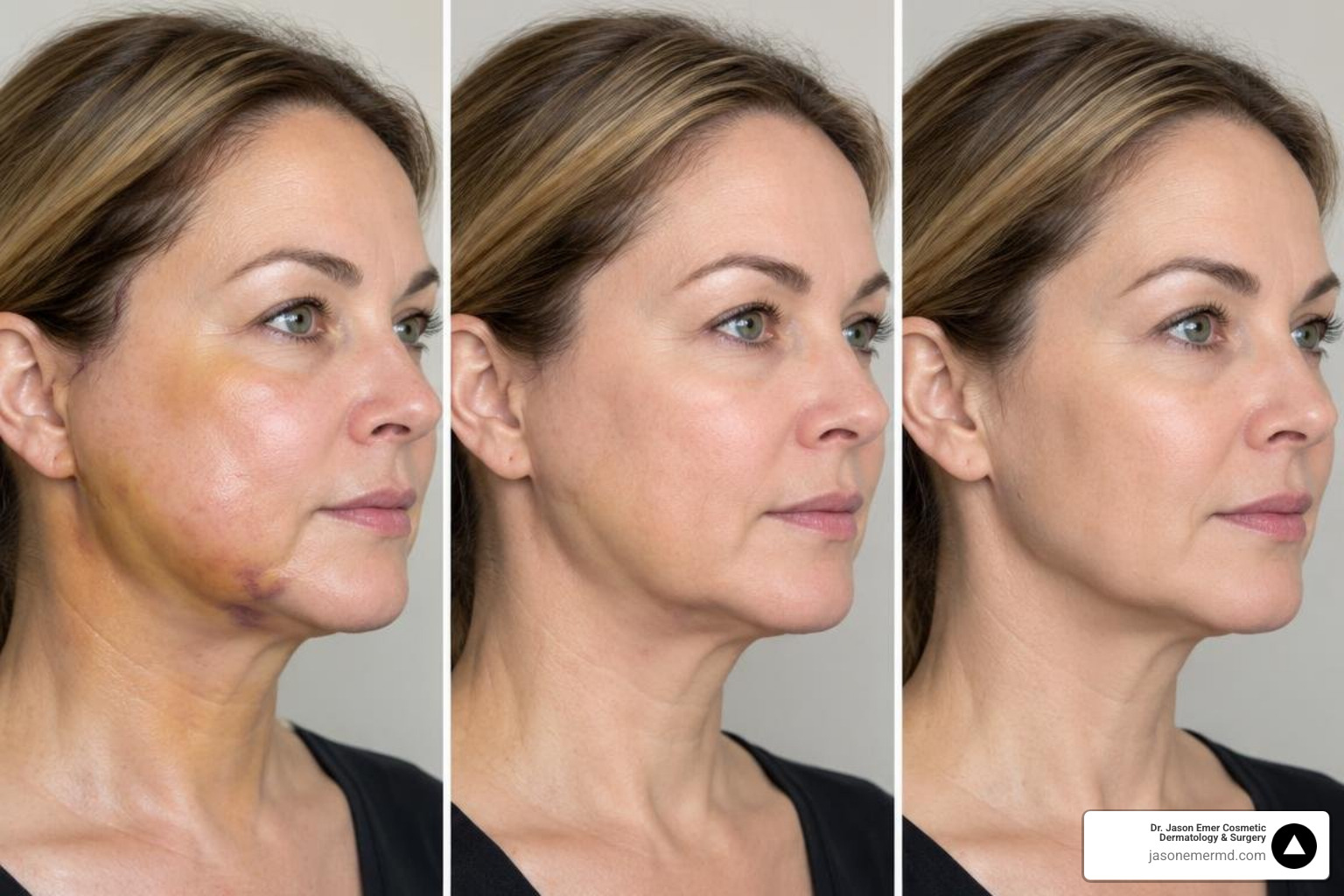
Precise anatomical dissection protects motor nerve branches and minimizes complication risks such as hematoma. While surgical lifting repositions displaced tissues, chronological aging and bone remodeling continue naturally.
Frequently Asked Questions
How long do the results of surgical jowl rejuvenation typically last?
Deep plane and SMAS interventions typically provide sustained lower facial improvement for many years, depending on individual genetics, lifestyle, and ongoing aging.
What is the primary difference between a jowl lift and a neck lift?
A jowl lift repositions descended cheek fat and restores the jawline, while a neck lift addresses platysma banding and excess submental tissue beneath the chin.
Can liposuction alone resolve sagging jowls?
Liposuction removes fat deposits but cannot address skin laxity or release fallen ligaments, making structural lifting necessary for comprehensive correction.
What to remember
- Jowls result from multi-layer aging involving bone, retaining ligaments, fat descent, and skin laxity.
- Surgical correction repositions underlying structural layers to achieve natural lower-face contouring.
- Candidacy, technique selection, and recovery timelines are established during an individualized surgical chin and jawline contouring consultation.
This content is for general education and does not provide a diagnosis, determine candidacy, or replace a consultation with a licensed clinician.
This resource provides general educational information. Treatment recommendations depend on your health, goals, and consultation with a qualified clinician.