
GHK-Cu Injection Side Effects Long Term: What Is Known
Most people assume a naturally occurring peptide carries no biological risk simply because the body already produces it. In Dr. Emer's practice, clinical safety begins with recognizing that changing the delivery route fundamentally alters physiological impact. A peptide applied to skin and a peptide placed under skin are not the same intervention. Injecting GHK-Cu can cause localized redness, swelling, and discomfort, while unmonitored systemic administration carries unknown long-term implications. No controlled human trials have established definitive long-term dosing or proven that cycling prevents cumulative copper retention.
When evaluating GHK-Cu injection side effects long term, potential risks such as copper overload and altered vascular signaling remain theoretical cautions rather than confirmed outcomes. This distinction matters because marketing claims and anecdotal reports often blur the line between cosmetic topical data and systemic injectable exposure. Patients considering injectable regimens can review what to expect before and after GHK-Cu injections to understand realistic expectations, and candidacy for any such protocol is a decision made in consultation rather than assumed from online research alone.
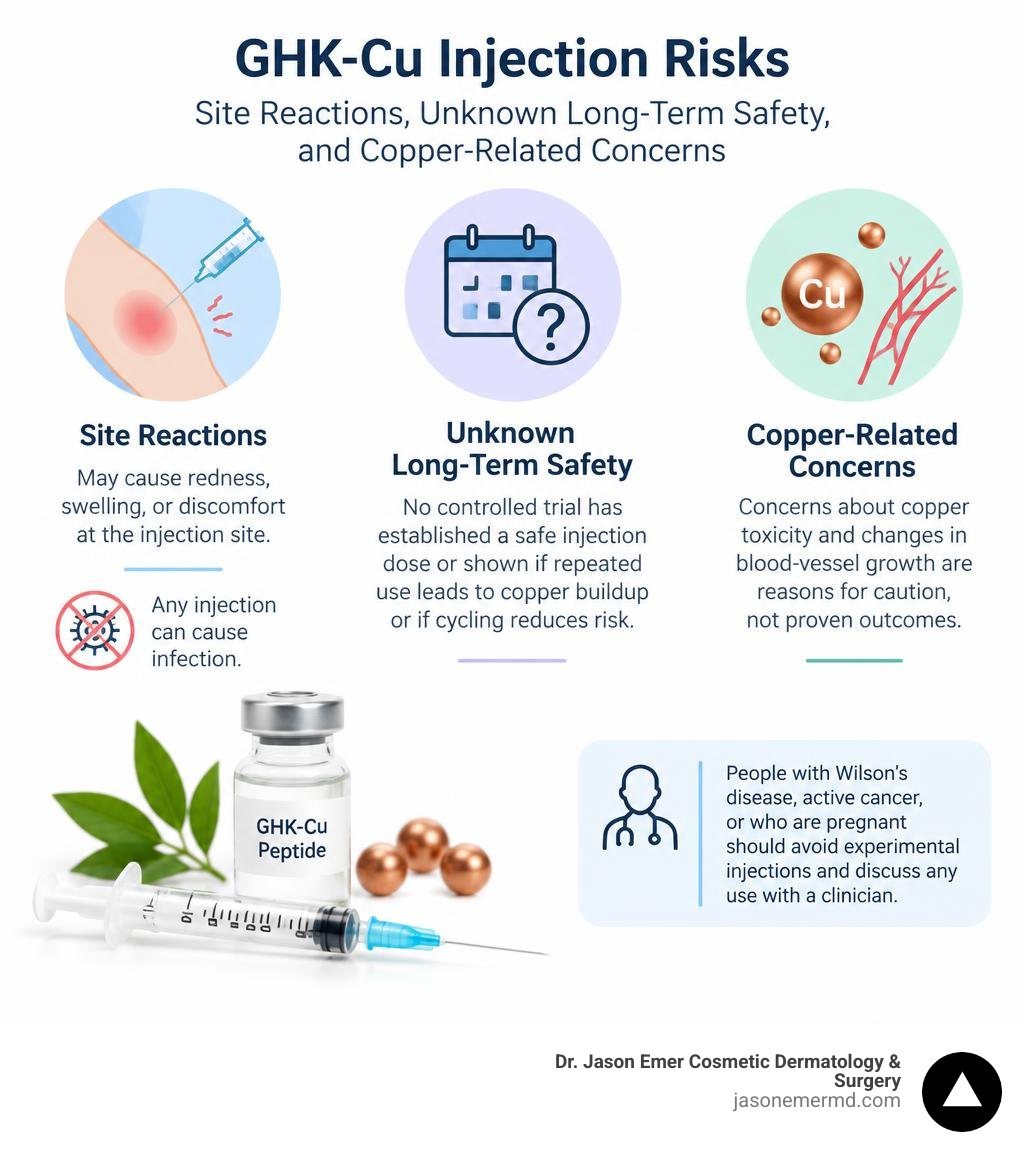
Systemic exposure can influence the potential long-term risks of GHK-Cu injections.
Injectable administration bypasses the stratum corneum, delivering GHK-Cu directly into circulation. Copper comprises roughly 15.8% of the peptide by weight, delivering approximately 7.9 mg of elemental copper per 50 mg vial (Pickart & Margolina, 2018). In healthy individuals, the liver binds free copper to ceruloplasmin for biliary excretion, a process that keeps circulating copper within a narrow physiologic range.
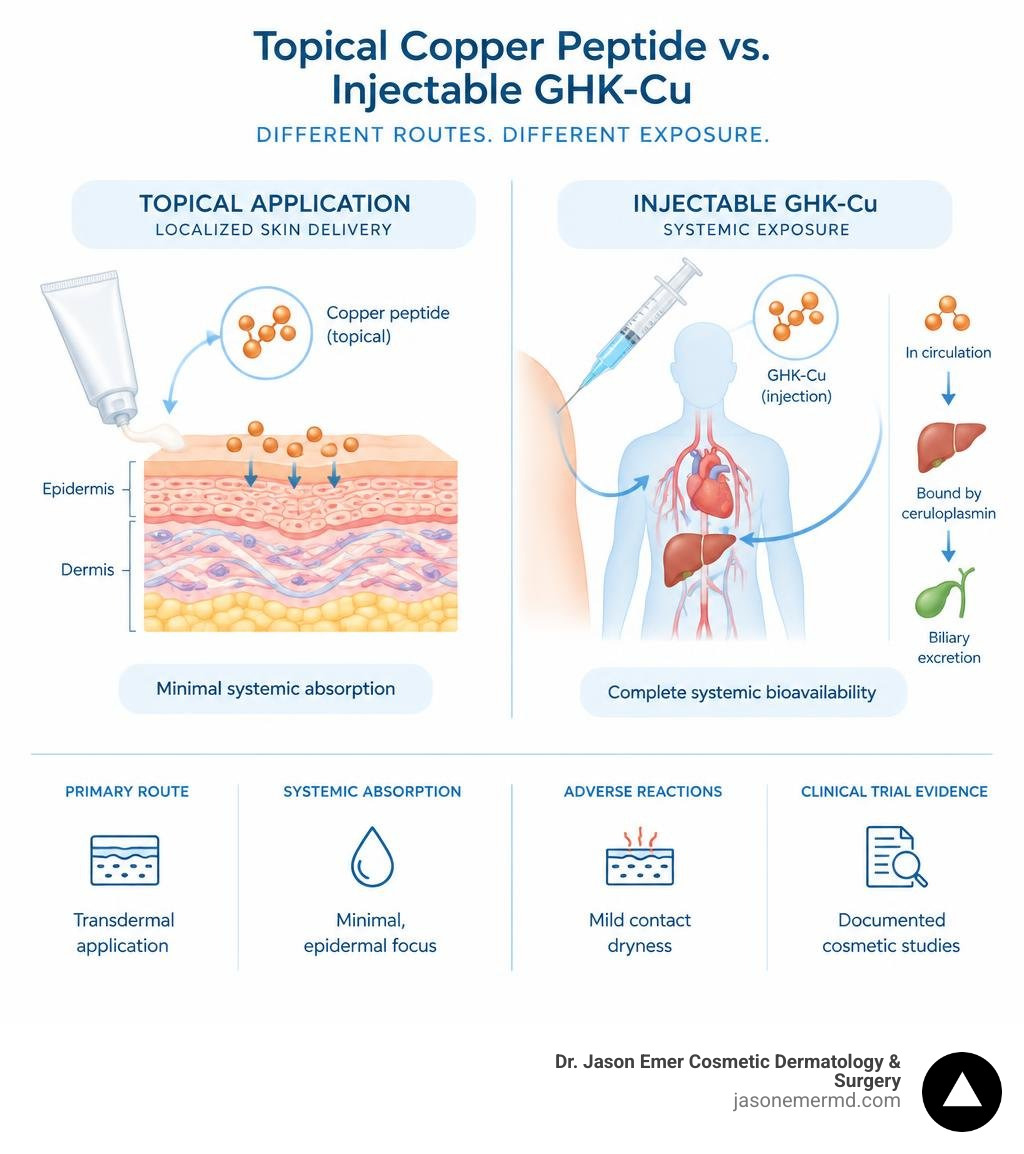
| Parameter | Topical Copper Formulations | Systemic Injectable Administration |
|---|---|---|
| Primary Route | Transdermal application | Subcutaneous injection |
| Systemic Absorption | Minimal, epidermal focus | Complete systemic bioavailability |
| Adverse Reactions | Mild contact dryness | Site pain, erythema, nodules |
| Clinical Trial Evidence | Documented cosmetic studies | Absence of human Phase II/III trials |
Evaluating systemic copper accumulation and GHK-Cu injection side effects long term
Unmonitored systemic delivery introduces theoretical risks of mineral overload. If copper intake exceeds biliary clearance, unbound copper can trigger oxidative stress and cellular strain, potentially altering hepatic markers over extended periods. This is why clinicians track serum ceruloplasmin rather than relying on symptoms alone, since early copper imbalance is often silent.
Managing localized injection site irritation and tissue reactions
Localized injection reactions occur in approximately 10% to 20% of subcutaneous administrations (Pickart & Margolina, 2018). Strict adherence to sterile reconstitution protocols using bacteriostatic water and systematic site rotation minimizes inflammatory tissue irritation. Transient erythema at the injection point is common and typically resolves without intervention, though patients should expect some downtime for swelling to settle.
Copper-related signaling and product quality may affect long-term physiological risks.
Glycyl-L-histidyl-L-lysine influences gene expression across multiple cellular repair pathways (Pickart & Margolina, 2018). While topical copper peptides in tissue repair deliver localized benefits through fibroblast activity and matrix metalloproteinase modulation, systemic administration prompts broader biological signaling that is harder to isolate or reverse.
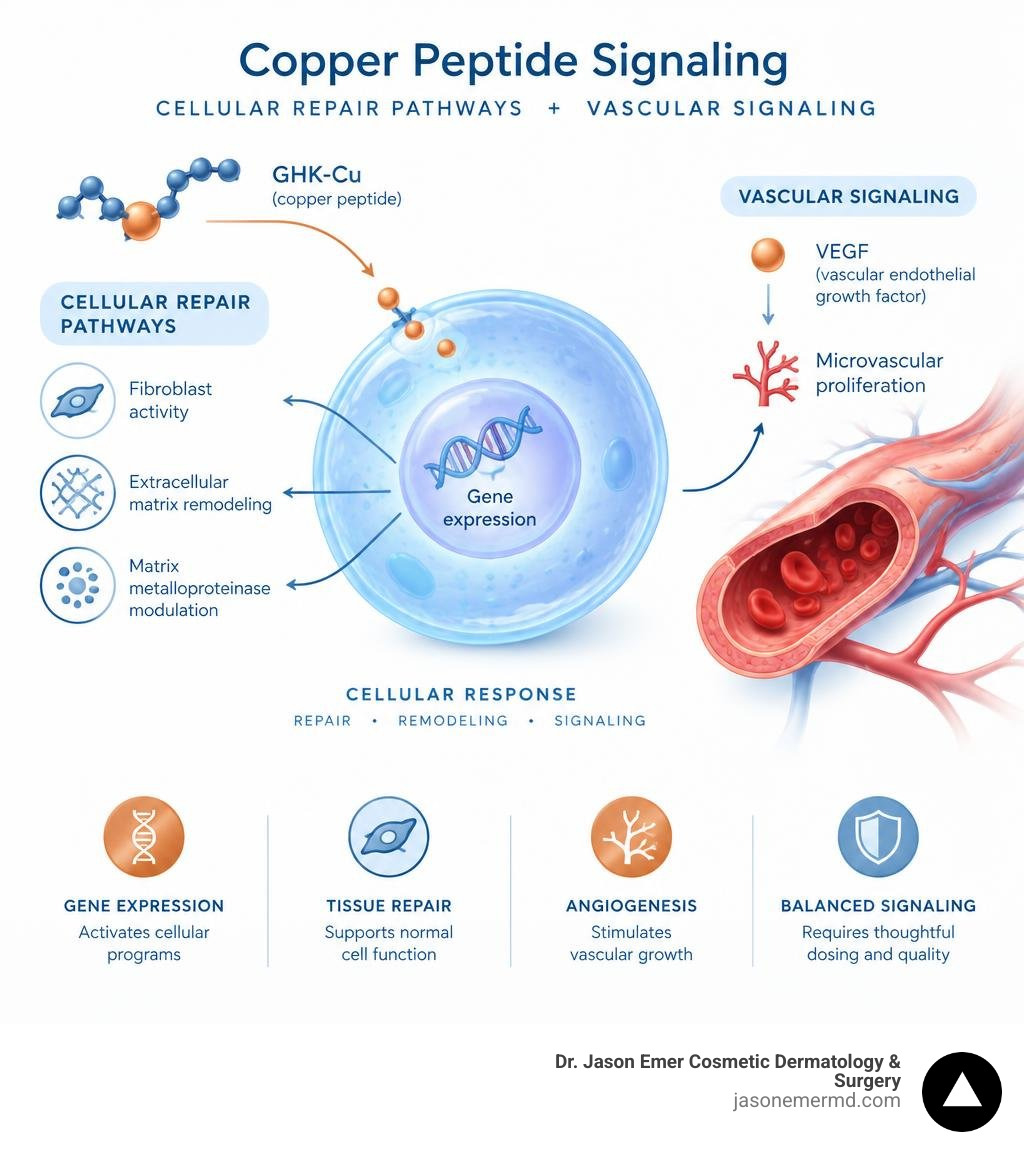
Analyzing angiogenesis and cellular proliferation pathways
GHK-Cu stimulates vascular endothelial growth factor (VEGF) to promote microvascular proliferation (Pickart & Margolina, 2018). While beneficial for healing, reviews on injectable peptide evidence and safety emphasize that sustained pro-angiogenic stimulation presents theoretical concerns in individuals with undiagnosed proliferative disorders. This is one reason Dr. Emer favors conservative dosing and periodic reassessment over indefinite continuous use.
Differentiating research compounds to minimize GHK-Cu injection side effects long term
Unregulated research peptides pose contamination and incorrect chelation risks. Sourcing through regulated 503B compounding pharmacies ensures analytical verification through high-performance liquid chromatography and endotoxin testing, reducing the likelihood of hypersensitivity reactions or chemical impurities. A compound without documented purity testing is a tradeoff many patients do not realize they are accepting.
Clinical screening and monitoring can help assess injectable copper peptide risks.
Incorporating peptides into regenerative medicine requires individualized assessment. Non-invasive alternatives, such as topical peptides or energy-based skin tightening, offer localized benefits without systemic load. When using laser resurfacing or energy devices, Dr. Emer evaluates patient skin types carefully, as darker Fitzpatrick tones carry higher risks of post-inflammatory hyperpigmentation (PIH) and require customized device sequencing.

Recommended lab monitoring parameters and contraindications
Clinicians establish baseline lab values before peptide initiation:
- Serum copper and ceruloplasmin levels
- Comprehensive metabolic panel (CMP) for liver enzymes
- Renal markers, including BUN and serum creatinine
Individuals with Wilson's disease, hepatic dysfunction, or active malignancies must avoid systemic copper peptides (Pickart & Margolina, 2018).
Structured cycling protocols and administration guidelines
To prevent potential receptor desensitization and tissue accumulation, clinicians follow proper peptide cycling and dosing guidelines. Subcutaneous doses typically range from 0.5 mg to 2.5 mg across 4- to 8-week cycles, followed by mandatory rest windows.
Frequently asked questions about injectable copper peptides
Does systemic copper peptide administration cause chronic organ toxicity?
Therapeutic doses in animal studies show stable liver and kidney markers (Pickart & Margolina, 2018). However, the absence of human Phase II/III trials means unmonitored use carries theoretical metabolic risks.
How does injectable administration compare to topical copper peptides?
Topical formulations target cosmetic skin quality with minimal systemic absorption, whereas injections distribute copper systemically (Pickart & Margolina, 2018).
Which health conditions require avoiding copper peptide injections?
Wilson's disease, liver impairment, pregnancy, and active malignancies represent absolute contraindications.
Conclusion
Evaluating injectable copper peptides requires distinguishing cosmetic topical data from unstudied systemic delivery. A clinical consultation with Dr. Jason Emer provides the venue to review aesthetic goals, assess individual metabolic markers, and select appropriate regenerative treatments.
What to remember
- Long-term human safety data for injectable GHK-Cu remains unestablished, making clinical screening and laboratory monitoring essential.
- Injectable administration delivers systemic elemental copper, whereas topical applications provide localized dermal benefits with minimal absorption.
- Individuals with Wilson's disease, active malignancies, or liver dysfunction should strictly avoid systemic copper peptide administration.
This content is for general education and does not provide a diagnosis, determine candidacy, or replace a consultation with a licensed clinician.
References
Pickart L, Margolina A. "Regenerative and Protective Actions of the GHK-Cu Peptide in the Light of the New Gene Data.." International journal of molecular sciences, 2018. PMCID PMC6073405.
This resource provides general educational information. Treatment recommendations depend on your health, goals, and consultation with a qualified clinician.