
Is Jawline Surgery Worth the Recovery Time?
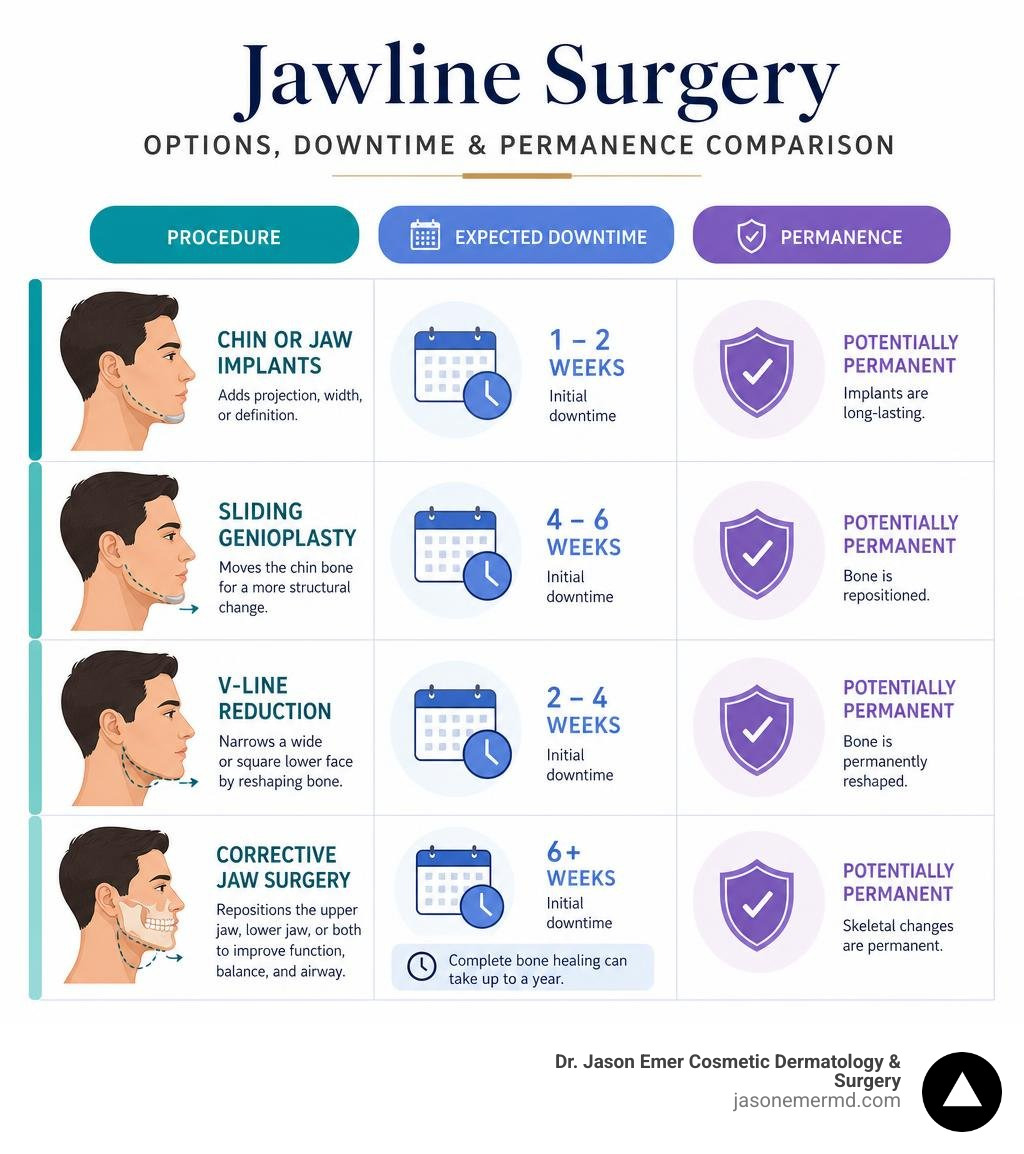
Jawline surgery can be worth the recovery when you need a lasting change to your facial structure or a correction for a functional jaw problem. The right procedure depends on what causes the concern:
- Chin or jaw implants add projection, width, or definition, often with about 1 to 2 weeks of initial downtime.
- Sliding genioplasty moves the chin bone for a more structural change and requires a longer healing period.
- V-line reduction narrows a wide or square lower face by reshaping bone.
- Corrective jaw surgery repositions the upper jaw, lower jaw, or both to improve bite function, facial balance, and sometimes sleep apnea. Initial recovery takes about six weeks, while complete bone healing can take up to a year.
The tradeoff is simple: surgical results can be permanent, but swelling, dietary changes, and time away from work are real parts of the process. For people with mild concerns or limited downtime, non-surgical contouring may be a better first step. For a recessed chin, weak jaw angles, significant asymmetry, or a bite problem that braces cannot fix, surgery may offer the more meaningful change.
I am Jason Emer, MD FAAD, a board-certified dermatologist with more than 19 years of experience in cosmetic dermatology, liposculpture, body contouring, and non-surgical facial rejuvenation. My approach to jawline surgery starts with an honest assessment of whether a surgical solution, injectable treatment, skin tightening, or a combination best fits your anatomy, goals, and recovery window.
Understanding Jawline Surgery: Procedures, Benefits, and Candidacy
Jawline surgery encompasses a spectrum of surgical interventions designed to reshape, augment, or reduce the mandibular framework. The lower third of the face anchors your entire aesthetic profile. When mandibular anatomy is underdeveloped, disproportionate, or asymmetrical, it alters the visual balance between the nose, lips, and neck.
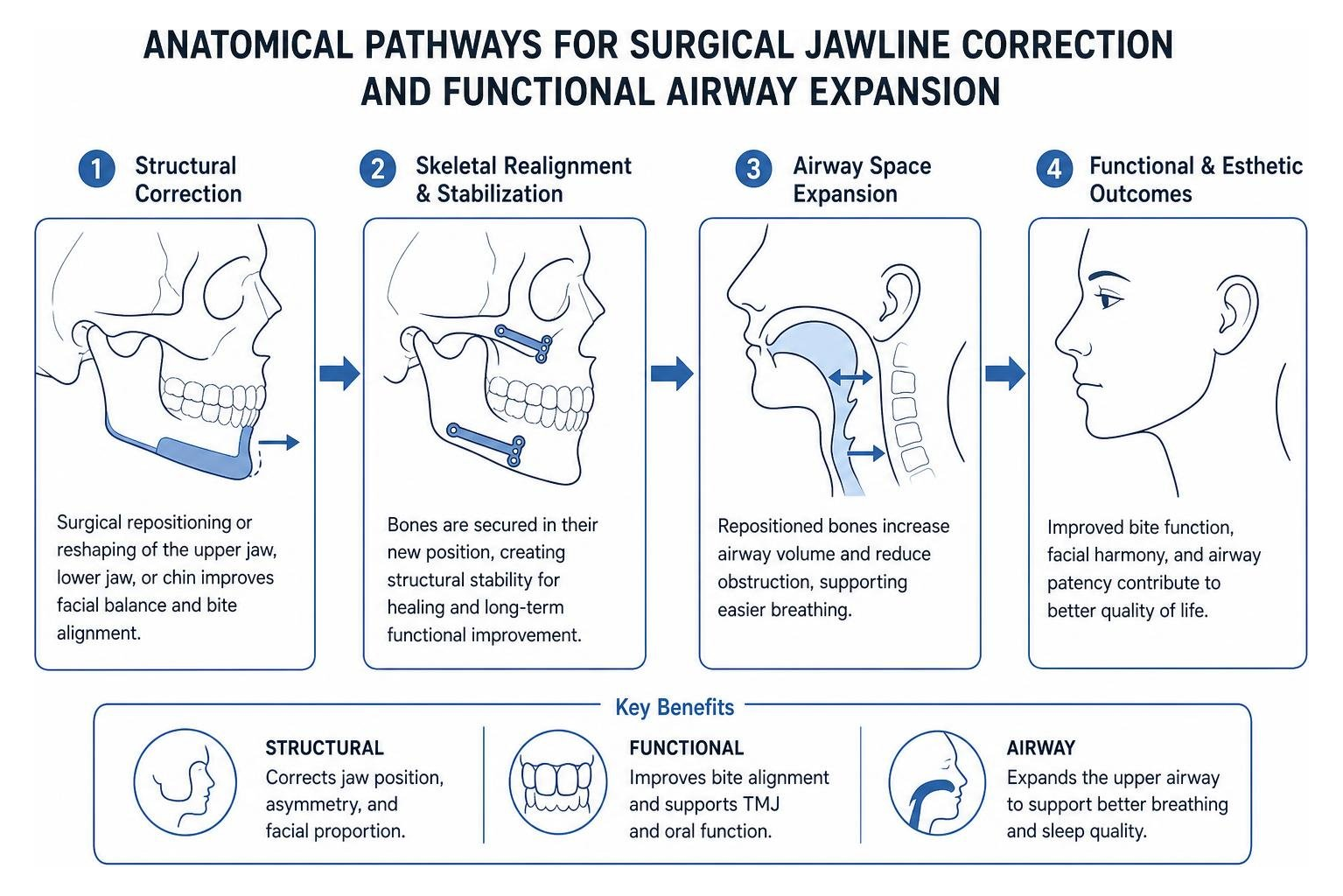
These procedures address far more than cosmetic concerns. Structural jaw discrepancies often lead to functional impairments, including severe malocclusion (such as overbites, underbites, open bites, and crossbites) that cannot be resolved with orthodontic appliances alone. Skeletal misalignment can also compromise the upper airway, contributing directly to obstructive sleep apnea or chronic temporomandibular joint (TMJ) dysfunction.
When evaluating patients for comprehensive chin and jawline surgery, candidate selection focuses on both structural anatomy and overall health:
- Skeletal and Dental Maturity: Bone growth must be fully complete, which typically occurs by late adolescence or early adulthood.
- Physical Health: Ideal candidates are nonsmokers without unmanaged systemic conditions (like uncontrolled diabetes or autoimmune disorders) that impede wound healing.
- Clear Aesthetic and Functional Goals: Candidates should seek distinct structural changes—such as correcting severe chin hypoplasia, mandibular asymmetry, or airway obstruction—while maintaining realistic expectations regarding post-operative healing.
Mandibular Augmentation and Facial Implants in Jawline Surgery
For individuals with a narrow, weak, or ill-defined lower face, mandibular augmentation using facial implants provides structural width and angular definition. While standard chin implants address anterior projection at the chin point, mandibular angle implants extend along the lateral jawline to create crisp gonial angles.
Surgeons utilize biocompatible materials such as solid silicone and porous polyethylene (Medpor). Solid silicone provides smooth contours and can be easily removed or revised if necessary. Porous polyethylene features an interconnected pore structure that encourages native tissue and vascular ingrowth, providing exceptional structural integration. As detailed in the Cleveland Clinic reference guide on jaw implants, these outpatient surgeries typically take about two hours under general anesthesia.
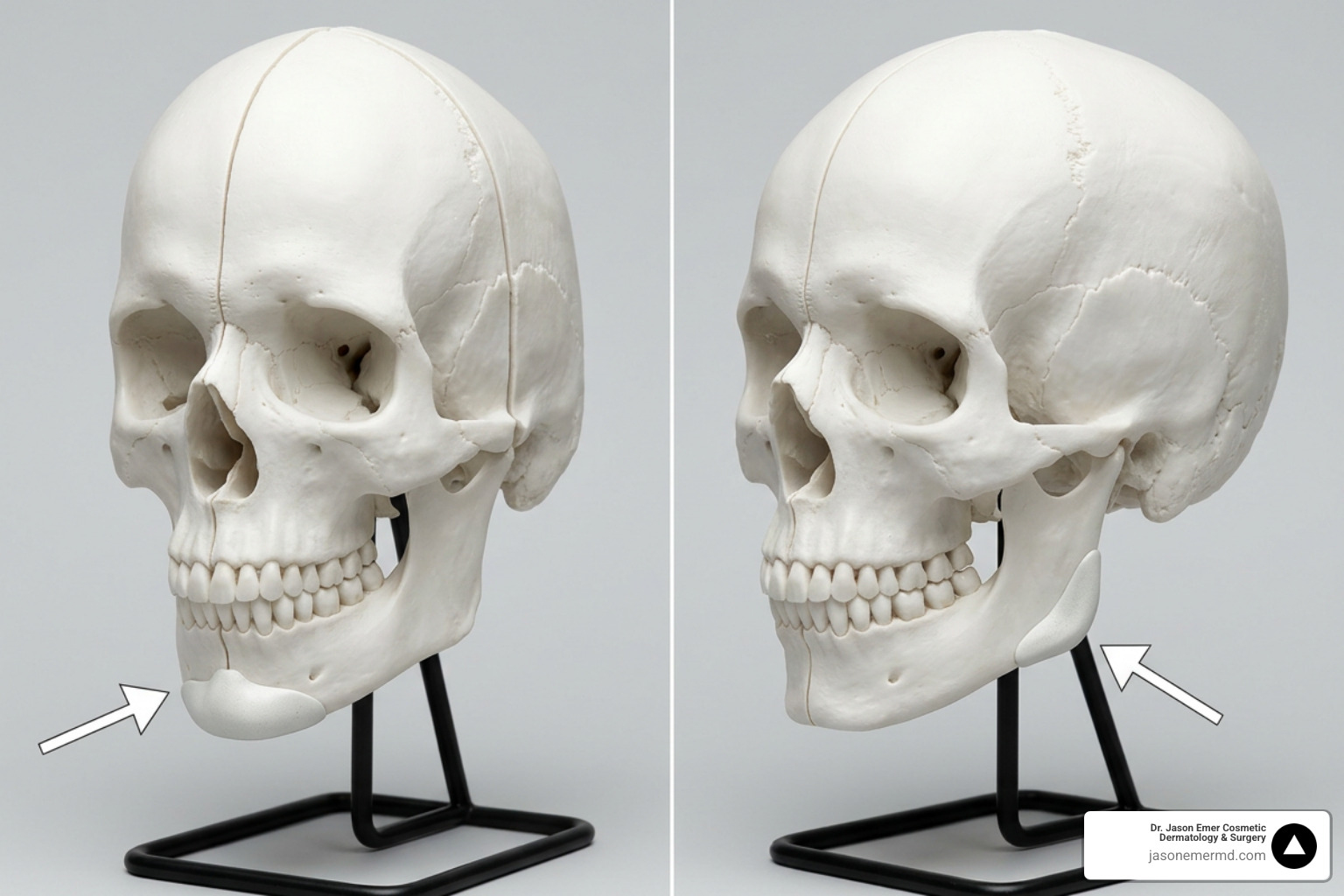
Modern implant planning often leverages high-resolution 3D CT imaging to create patient-specific, custom-milled or 3D-printed devices. Incisions are placed intraorally behind the molars, eliminating external scars. The implants are placed directly over the mandibular bone and fixated with titanium micro-screws to ensure lifelong stability.
Sliding Genioplasty and Bone Repositioning
When a recessed chin is caused by skeletal deficiency rather than soft tissue lack, a sliding genioplasty (osseous genioplasty) offers an alternative to synthetic implants. Instead of inserting an artificial device, the surgeon makes a precise horizontal osteotomy through the chin bone below the tooth roots and mental nerves.
The mobilized bone segment can be advanced forward, shifted vertically (to lengthen or shorten the face), or adjusted horizontally to correct asymmetrical deviations. Once repositioned, the segment is fixated using rigid titanium plates and screws. Because the patient’s attached mentalis muscle and soft tissues move forward along with the bone, sliding genioplasty achieves an exceptionally natural neck-chin transition. Full bone union across the osteotomy gap occurs over subsequent months through native bone remodeling.
V-Line Reduction and Mandibular Contouring
Popularized by advanced East Asian facial bone contouring techniques, V-line surgery refines an overly wide, square, or masculine lower face into a tapered, oval, or heart-shaped profile. Rather than adding volume, this procedure reshapes the mandibular bone structure.
V-line contouring typically integrates several specialized osteotomy techniques:
- Long-Curve Mandibular Ostectomy: A continuous curved cut from the mandibular angle beneath the ear down toward the chin, avoiding the sharp "secondary angle" steps left by older resection methods.
- Cortical Osteotomy (Cortical Peeling): Shaving or removing the dense outer cortical bone layer (often around 2 mm) to significantly slim the jaw width when viewed from the front.
- T-Shaped or Vertical Osteotomy of the Chin: Central bone resection that narrows and centralizes the chin point.
- Masseter Muscle Volume Reduction: High-frequency radiofrequency ablation or surgical thinning of hypertrophic masseter muscle tissue to soften bulky lower facial corners.
By performing these cuts via hidden intraoral incisions, surgeons achieve dramatic lower-face tapering without visible cutaneous scarring.
Corrective Orthognathic Surgery
Orthognathic surgery is indicated when functional discrepancies stem from mismatched jaw bases. When upper and lower teeth cannot meet properly despite orthodontic treatment, bone repositioning is required to establish proper occlusion and expand airway dimensions.
Surgeries are categorized based on anatomical location:
- Maxillary Osteotomy (Le Fort I): Repositions the upper jaw to correct open bites, gummy smiles, or midface hypoplasia.
- Mandibular Osteotomy (Bilateral Sagittal Split Osteotomy / BSSO): Shifts the lower jaw forward (for retrognathia) or backward (for prognathism).
- Bimaxillary Osteotomy (Double Jaw Surgery): Simultaneously alters both the upper and lower jaws for complex multi-planar deformities.
Orthognathic surgery boasts a clinical success rate of nearly 94%. It typically involves a coordinated multi-year plan where pre-surgical orthodontics align the dental arches, surgery realigns the skeletal base, and post-surgical orthodontics refine the final bite over 6 to 9 months.
Detailed Recovery Timeline: What to Expect Week by Week
Recovering from structural jaw procedures requires patience. Because the surgical site is rich in vascularity and close to cranial nerve branches, post-operative swelling and temporary sensory changes are normal parts of healing.
Managing Pain, Swelling, and Downtime After Jawline Surgery
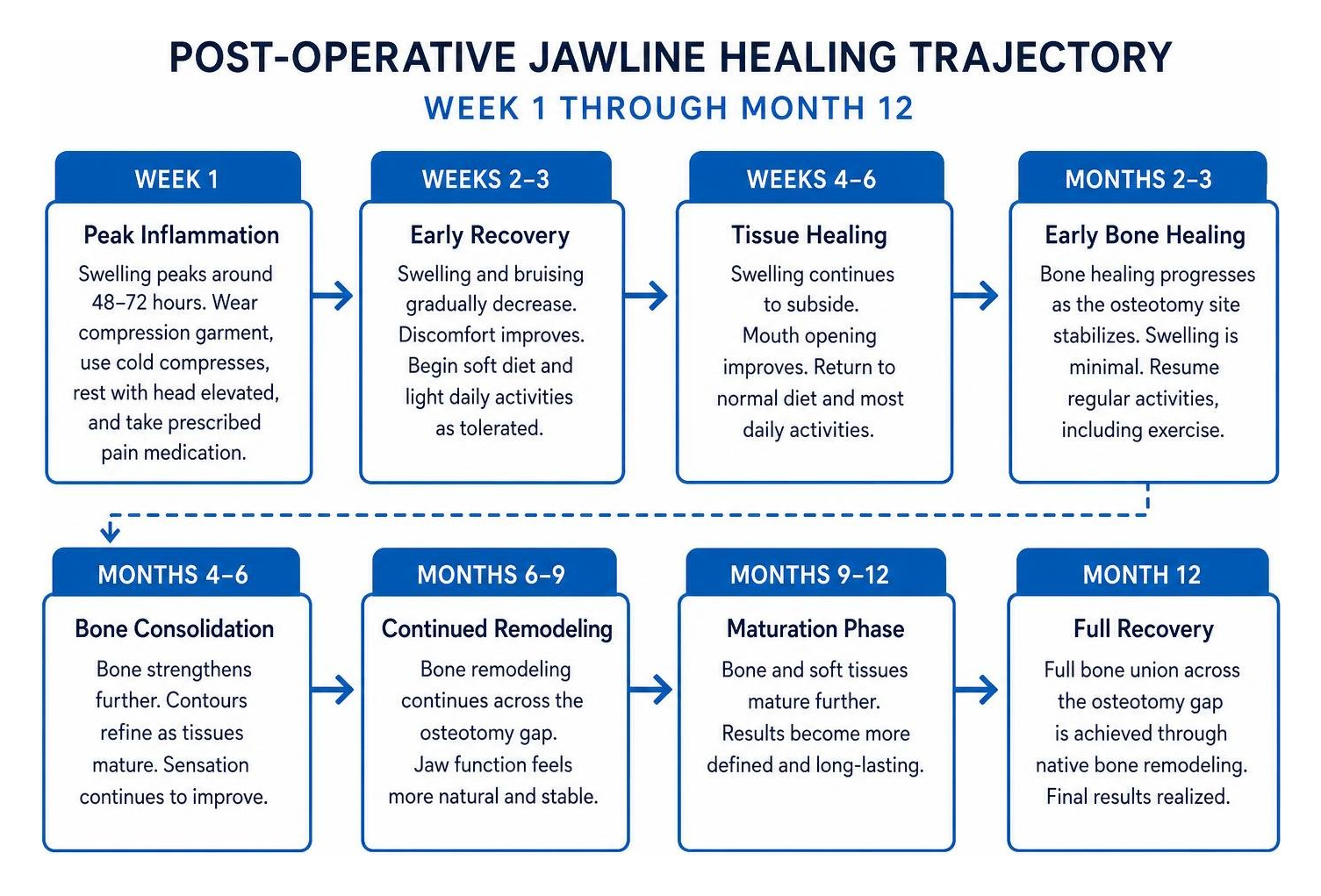
The recovery process unfolds in distinct phases as tissues heal and bone consolidates:
- Days 1 to 3 (Peak Inflammation): Facial edema peaks around 48 to 72 hours post-surgery. You will wear a supportive facial compression garment to stabilize soft tissues and minimize dead space. Applying cold compresses (20 minutes on, 10 minutes off) and resting with the head elevated above heart level on several pillows significantly mitigates tissue pressure. Discomfort is managed with prescribed oral pain medications.
- Weeks 1 to 2 (Initial Downtime): Most patients take 1 to 2 weeks away from work or light daily obligations. Intraoral incisions begin re-epithelializing. You will use prescribed antibacterial mouth rinses after all meals, as standard toothbrushes cannot be used near suture lines. Mild nerve tingling or temporary numbness across the lower lip and chin is common as the mental nerve recovers from surgical retraction.
- Weeks 3 to 4 (Social Re-entry): Bruising and primary facial swelling resolve by roughly 70% to 80%. Most individuals comfortably return to desk jobs, school, and low-impact walking.
- Week 6 (Initial Bone Stability): Osteotomy sites achieve initial structural bone union. Splints or intermaxillary elastics are typically removed or reduced by your surgeon.
- Months 3 to 12 (Final Maturation): Subtle residual swelling, particularly at the jaw angles and chin apex, slowly dissipates. As deep tissues soften and lymphatic drainage normalizes, final crisp contours emerge.
Long-Term Healing, Dietary Guidelines, and Final Outcomes
Because chewing forces exert mechanical stress on healing bone and intraoral sutures, dietary compliance is essential to prevent hardware loosening or wound disruption.
- Phase 1: Clear and Full Liquids (Weeks 1 to 2): Protein shakes, smooth bone broths, blended soups, and electrolyte purees ingested without straws (suction creates negative pressure that can disrupt intraoral suture lines).
- Phase 2: Non-Chew Soft Foods (Weeks 3 to 4): Greek yogurt, scrambled eggs, mashed potatoes, well-blended oatmeal, and avocado that require no active biting.
- Phase 3: Soft-Chew Diet (Weeks 5 to 6): Flaky fish, soft pasta, tender cooked vegetables, and soft rice.
- Phase 4: Return to Normal Diet (Months 2 to 3+): Gradually reintroducing firm foods, tough meats, and raw crunchy vegetables once your surgeon confirms bone consolidation on follow-up imaging.
Procedure Costs, Insurance Coverage, and Long-Term Value
The financial investment for jawline procedures reflects surgeon expertise, facility fees, anesthesia care, and the complexity of customized hardware or 3D fabrication.
| Procedure Type | Average Procedural Cost Range (USD) | Primary Surgical Goal | Initial Social Downtime | General Permanence |
|---|---|---|---|---|
| Standard Chin Implant | $3,500 – $6,500 (Avg: $5,000) | Anterior chin projection | 1 Week | Permanent (Removable) |
| Mandibular Angle Implants | $6,000 – $9,000 (Avg: $7,500) | Lateral jaw width & angle definition | 1–2 Weeks | Permanent (Removable) |
| Bespoke 3D Implants (PEEK/Silicone) | $15,000 – $25,000+ (AED 90k–100k) | Millimeter-accurate jawline continuity | 1–2 Weeks | Permanent (Removable) |
| Sliding Genioplasty | $8,000 – $13,000 (Avg: $10,500) | Reposition native chin bone structure | 2–3 Weeks | Permanent (Autologous) |
| V-Line Jaw Shaving / Reduction | $8,000 – $14,000 (Avg: $10,000) | Narrow wide or square jaw angles | 1–2 Weeks | Permanent (Irreversible) |
| Orthognathic Double Jaw Surgery | $20,000 – $50,000+ | Functional bite & airway realignment | 3–6 Weeks | Permanent (Structural) |
Insurance coverage depends entirely on medical necessity:
- Purely Cosmetic: Procedures performed solely to enhance aesthetic jawline definition (implants, V-line contouring) are elective out-of-pocket expenses.
- Medically Necessary / Reconstructive: When structural jaw defects cause severe malocclusion, masticatory dysfunction, speech impediments, TMJ pathology, or obstructive sleep apnea documented by polysomnography, health insurance plans often provide partial or comprehensive coverage. This requires thorough diagnostic documentation, including cephalometric analyses, CT imaging, and pre-authorization submissions.
Surgical Interventions vs. Non-Surgical Alternatives
Not every patient requires or wants invasive bone-modifying surgery. In our practice, we specialize in distinguishing patients who need surgical intervention from those who will achieve better aesthetic harmony through minimally invasive modalities.
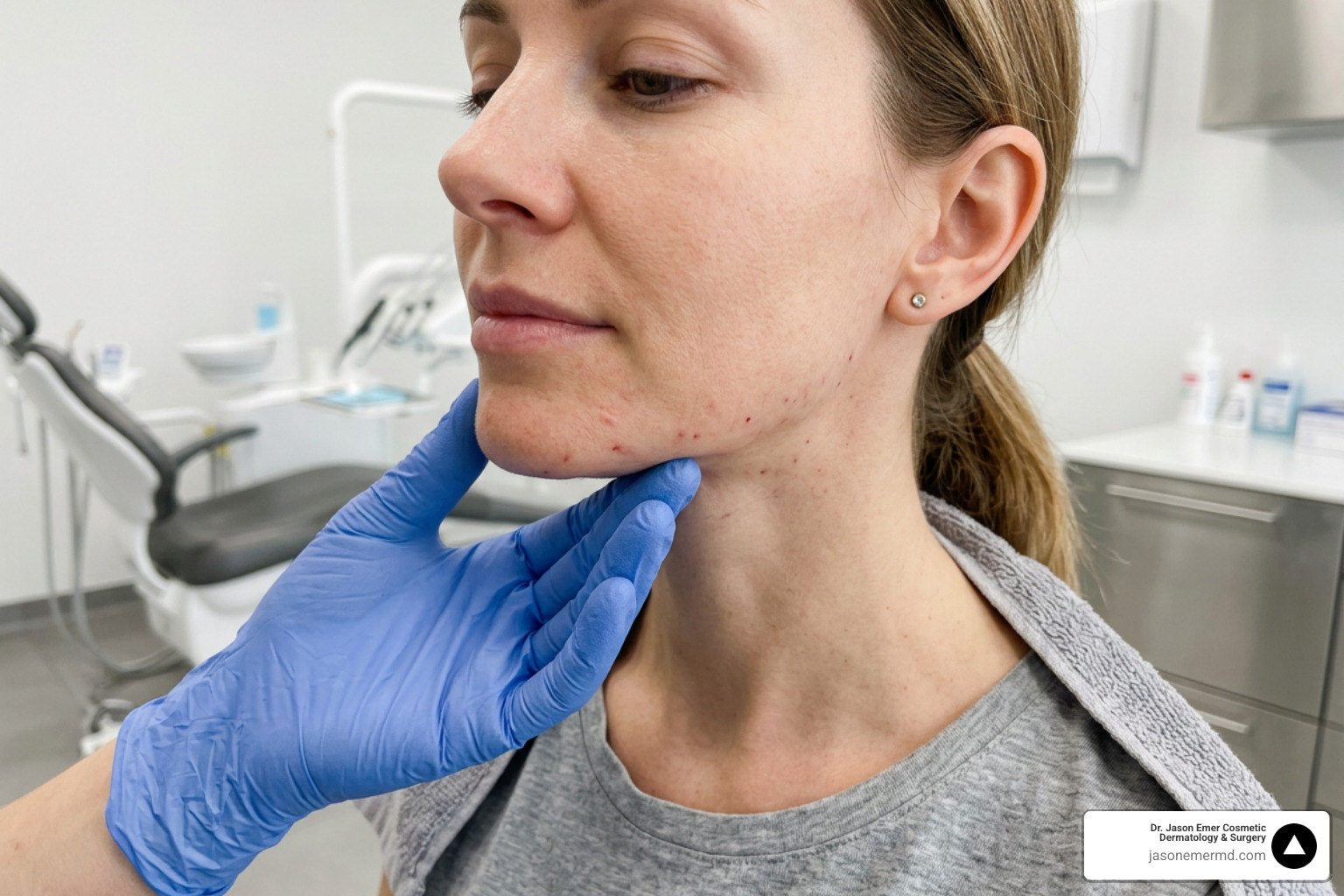
- Non-Surgical Jawline Contouring: High-density hyaluronic acid dermal fillers (like Volux or Restylane Lyft) or biostimulators (such as Radiesse) can be placed supraperiosteally along the mandibular border and chin. This sharpens the jawline, camouflages mild jowling, and adds subtle projection with zero surgical downtime, lasting 12 to 24 months.
- Masseter Neuromodulators: For patients whose lower facial width is caused by muscular hypertrophy from teeth grinding (bruxism) rather than bone flares, targeted neurotoxin injections slim the lower third of the face over 4 to 6 weeks without surgery.
- Submental Liposculpture & Energy Tightening: When jaw definition is obscured by localized submental fat rather than skeletal deficiency, our high-definition tumescent liposuction removes excess adipose tissue. Combining this with internal radiofrequency tightening (such as Renuvion or InMode FaceTite) contracts the overlying skin envelope against the jawline.
- Neck Lift and Deep Neck Lift: When lower facial heaviness is caused by subplatysmal fat, prominent digastric muscles, or ptotic submandibular glands, standard surface treatments fall short. A deep neck lift sculpts the underlying deep muscular and glandular structures, creating a sharp, clean cervical-mental angle that defines the jawline better than bone augmentation alone.
Frequently Asked Questions About Lower Face Procedures
What is the difference between a chin implant and a jaw implant?
A standard chin implant is placed centrally over the anterior mentum to project the chin forward, add vertical height, or widen the chin point. In contrast, mandibular jaw implants cover the lateral jaw angles (gonial angles) and the mandibular body, extending from beneath the ears down to the mid-jaw to add lower-face width and angularity.
Are the results of bone contouring and jaw implants permanent?
Yes. Bone-cutting procedures—such as sliding genioplasty and V-line ostectomies—permanently alter your skeletal anatomy. Biocompatible silicone, PEEK, and Medpor implants are designed to last a lifetime without degrading. However, implants can be surgically adjusted, exchanged, or removed if your aesthetic goals evolve or rare complications occur.
What are the main risks and potential complications?
While major complications are uncommon when surgery is performed by experienced facial surgeons, potential risks include:
- Temporary numbness or paresthesia of the lower lip and chin due to mental nerve traction (permanent nerve injury occurs in less than 1% to 2% of cases).
- Infection around intraoral hardware or implants, which may require oral antibiotics or temporary hardware removal.
- Implant displacement or asymmetry if the device is not fixated securely to the underlying cortex.
- Post-operative hematoma or seroma collection beneath the deep tissues.
Conclusion
Deciding whether jawline surgery is worth the recovery time comes down to your anatomical starting point and personal goals. If your primary concerns are mild jowling, soft tissue laxity, or slight contour irregularities, non-surgical facial sculpting or neck tightening can provide noticeable definition without surgical recovery. However, when you are addressing significant skeletal retrusion, pronounced mandibular asymmetry, or functional malocclusion, surgical intervention delivers a permanent structural transformation that non-surgical treatments cannot match.
Achieving a harmonious, sculpted profile requires an individualized assessment. We invite you to explore our advanced approaches to surgical chin and jawline contouring to discover the optimal treatment strategy for your facial anatomy. Schedule a comprehensive consultation with Dr. Jason Emer Cosmetic Dermatology & Surgery to develop your tailored aesthetic plan.
This resource provides general educational information. Treatment recommendations depend on your health, goals, and consultation with a qualified clinician.