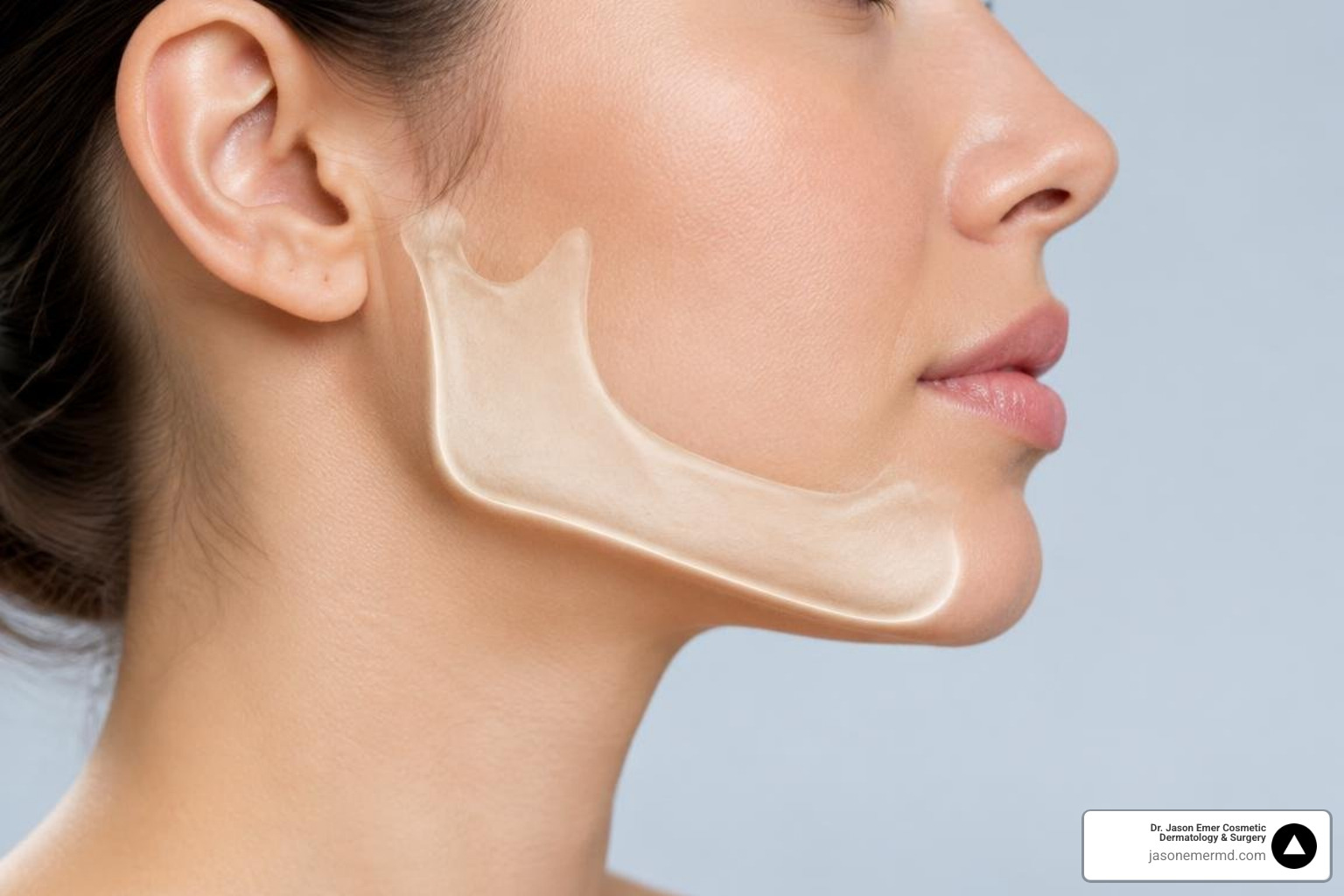
Surgical Jaw Line Reduction Reshapes the Mandibular Bone for a Balanced Lower-Face Contour
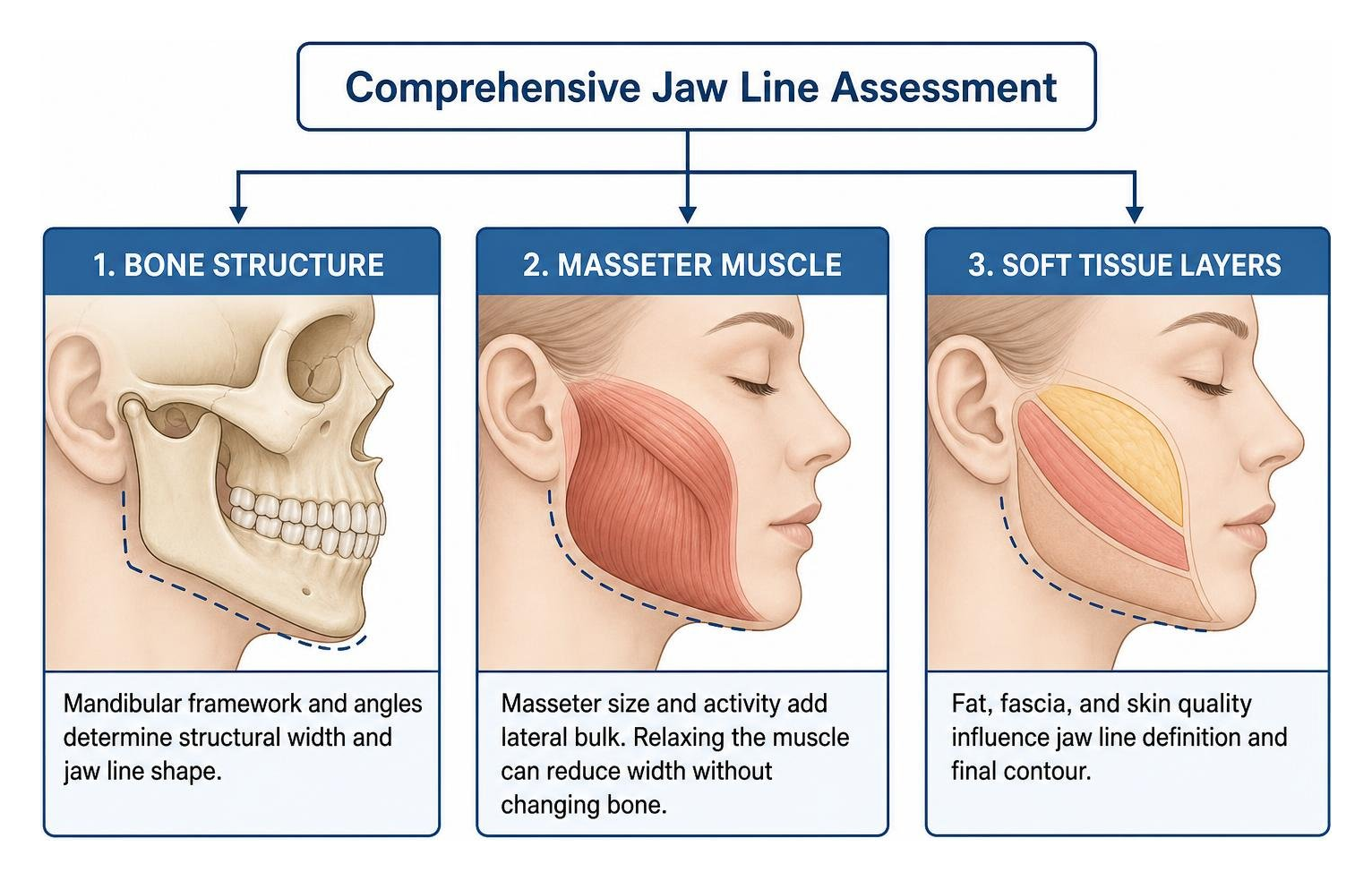
Most offices start with a device or injection. A sound plan starts with a map of why the jaw looks wide: prominent bone, enlarged muscles, soft-tissue fullness, or a combination.
Jaw line reduction modifies the lower facial framework. Surgical techniques such as mandibular angle reduction or cortical shaving reshape bone through intraoral incisions under general anesthesia. Neuromodulator injections, including Botox, relax an enlarged masseter muscle without altering bone.
Matching treatment to anatomy is essential. Bite dynamics, symmetry, and tissue laxity determine whether surgical chin and jawline contouring or non-surgical management makes clinical sense. Recovery differs substantially: bone surgery involves prolonged swelling and tissue settling, while injections require ongoing maintenance.
Dr. Jason Emer is a board-certified cosmetic dermatologist and surgeon. His approach prioritizes anatomical precision, balance, and realistic long-term expectations before treatment begins.
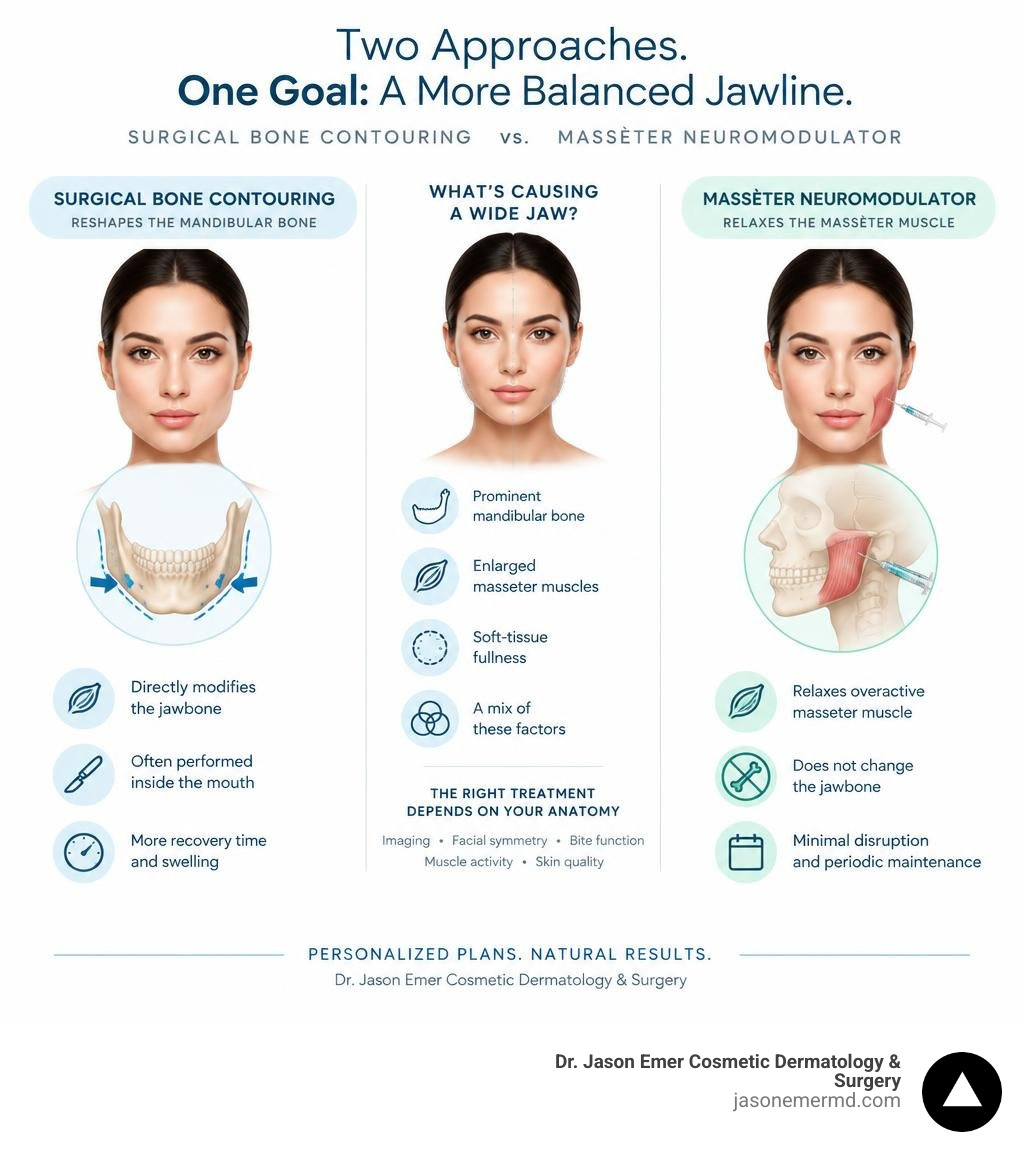
Surgical jaw line reduction reshapes the mandibular bone to create a balanced lower facial contour
Structural lower-face width often originates in the mandible. When bone angles flare outward, soft-tissue therapies cannot reduce that framework. Surgical modification addresses the skeletal foundation directly, and it is typically considered only after imaging confirms that bone, rather than muscle or fat, is the primary driver of width.
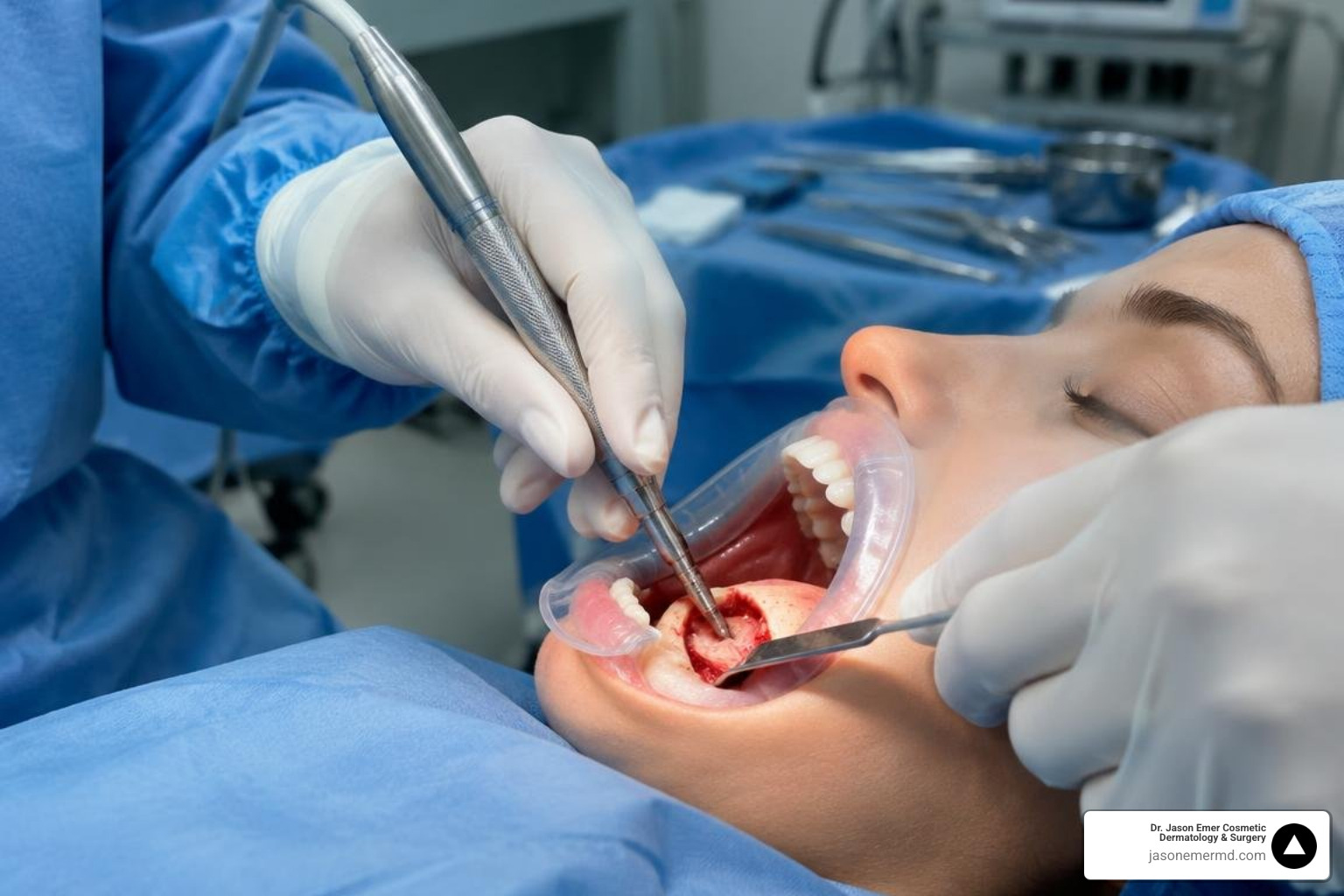
Procedural approaches to surgical jaw line reduction
Surgeons access bone via concealed intraoral incisions, preventing external scars. The specific technique chosen depends on where the excess width sits along the jaw, and how much curvature needs to be preserved for a natural profile.
- Mandibular angle ostectomy: Removes the flared posterior angle to soften a square profile.
- Cortical shaving: Thins the lateral bone layer while maintaining natural jaw curvature.
- Soft-tissue refinement: In cases with concurrent fullness, buccal fat pad removal or targeted chin jawline surgery can be incorporated.
Over-resection must be avoided. Removing excess bone risks structural weakness and premature tissue sagging, and any bone removed cannot be replaced, which is one reason conservative, staged planning is favored over aggressive single-session reduction. This is a real tradeoff patients should understand before consenting to surgery.
Anatomical assessment guides planning for lower facial contouring
Preoperative 3D imaging maps the inferior alveolar nerve within the jawbone to protect sensory function. Aesthetic goals also guide bone contouring. Male facial sculpting often preserves defined lateral angles, whereas female facial sculpting typically prioritizes a tapered lower face.
Assessment also weighs alternatives. Some patients with mild bony flare and reasonable skin elasticity may achieve an acceptable outcome with masseter neuromodulator treatment alone, avoiding surgery entirely. Others may choose to defer treatment altogether and simply monitor the jawline over time. These options are discussed candidly, since not every case of a wide lower face requires the most invasive intervention available.
Jaw line reduction recovery varies according to the treatment and the tissues involved
Healing timelines depend on which anatomical layer is treated. Modifying bone requires soft-tissue redraping and progressive recovery, and patients are counseled that visible results unfold over months rather than days.
| Recovery Stage | Surgical Bone Contouring | Masseter Neuromodulator Injections |
|---|---|---|
| Initial Downtime | 1 to 2 weeks off work | None; immediate return to routine |
| Dietary Limits | Liquid to soft food for 2 to 4 weeks | Normal diet immediately |
| Swelling Peak | Days 3 to 5; resolves over months | Minimal to none |
| Tissue Adaptation | Soft tissues redrape over 6 to 12 months | Muscle reduces over 4 to 8 weeks |
| Maintenance | Single surgical intervention | Repeat injections every 3 to 4 months |
Short-term healing and immediate aftercare protocols
The initial weeks emphasize swelling control and incision care. Patients wear elastic compression garments to assist tissue adherence. Antiseptic oral rinses protect intraoral wounds. A liquid-to-soft diet prevents mechanical strain on healing bone while bruising gradually resolves. Pain is generally managed with standard oral medication, and most patients can return to sedentary work within the first two weeks, though strenuous activity is restricted longer.
Long-term tissue remodeling and visual outcomes
Primary swelling improves within weeks, but subtle edema persists for months. Soft tissues slowly conform to the reduced frame. Patients with lower skin elasticity may develop tissue laxity, requiring adjunct firming treatments. Temporary chin and lip numbness can occur and typically resolves over time, though in rare cases sensory recovery is incomplete, which is discussed as a genuine risk rather than minimized.
Because the final contour depends on how soft tissue redrapes over reshaped bone, judging results too early can be misleading. A jaw that appears slightly asymmetric at three weeks often settles considerably by six months. This waiting period is part of the plan, not a deviation from it, and it is one reason surgical candidates are asked to be patient before requesting revisions.
Non-surgical jaw line reduction provides a maintenance option for muscular enlargement
When width stems from muscular hypertrophy rather than bone, non-surgical approaches offer a targeted alternative, and for many patients this is a reasonable first step before considering surgery at all.

Non-surgical jaw line reduction using neuromodulators
Targeted neuromodulators temporarily interrupt signaling to the masseters. Over several weeks, the underutilized muscle reduces in volume, creating a slimmer lower face. Effects last three to four months, requiring ongoing sessions. Clinicians may combine this with facial fillers or facial fat grafting for balance. This approach carries far less downtime than surgery, but the tradeoff is that results are never permanent and require a recurring commitment to maintenance visits.
Functional symptom management for bruxism and clenching
Masseter enlargement frequently pairs with teeth grinding and joint strain. Relaxing the muscle reduces clenching force, easing tension headaches and discomfort before visible slimming appears. For some patients, this functional benefit is the primary reason for treatment, with cosmetic slimming considered a secondary effect.
When energy-based skin tightening devices are layered onto a lower-face plan, skin type becomes a factor in sequencing. Darker skin tones carry a higher risk of post-inflammatory hyperpigmentation (PIH) from certain laser and energy settings, so treatment order and device parameters are adjusted accordingly rather than applied uniformly.
Frequently asked questions about lower facial contouring
How does recovery differ between surgical intervention and injectable treatments?
Surgery involves one to two weeks of downtime and months of remodeling. Conversely, non-surgical jawline contouring allows immediate resumption of daily routines.
Can masseter muscle enlargement recur after non-surgical treatments?
Yes. Injections provide temporary deconditioning. Muscle bulk gradually returns without routine maintenance.
What risks are associated with surgical bone contouring procedures?
Risks include swelling, asymmetry, infection, temporary nerve numbness, and potential tissue sagging if elasticity is compromised.
Treatment planning supports long-term facial balance
Selecting between surgical reduction, injectable deconditioning, or conservative observation requires careful clinical evaluation. When energy-based skin tightening devices are incorporated into lower-face contouring plans, skin phototype must be evaluated. Darker skin tones require adjusted energy settings and protective protocols to reduce the risk of post-inflammatory hyperpigmentation (PIH). A comprehensive consultation at Dr. Jason Emer Cosmetic Dermatology & Surgery determines whether surgical chin and jawline contouring or non-invasive management aligns with your structural anatomy, and any decision on candidacy is made only in that setting.
What to remember
- Jawline width results from the interplay of bone structure, masseter thickness, and soft-tissue volume.
- Surgical reduction reshapes bone with extended recovery, while neuromodulator injections reduce muscle bulk temporarily with repeat treatments.
- Treatment selection depends on comprehensive anatomical assessment during an in-person clinical consultation.
This content is for general education and does not provide a diagnosis, determine candidacy, or replace a consultation with a licensed clinician.
This resource provides general educational information. Treatment recommendations depend on your health, goals, and consultation with a qualified clinician.