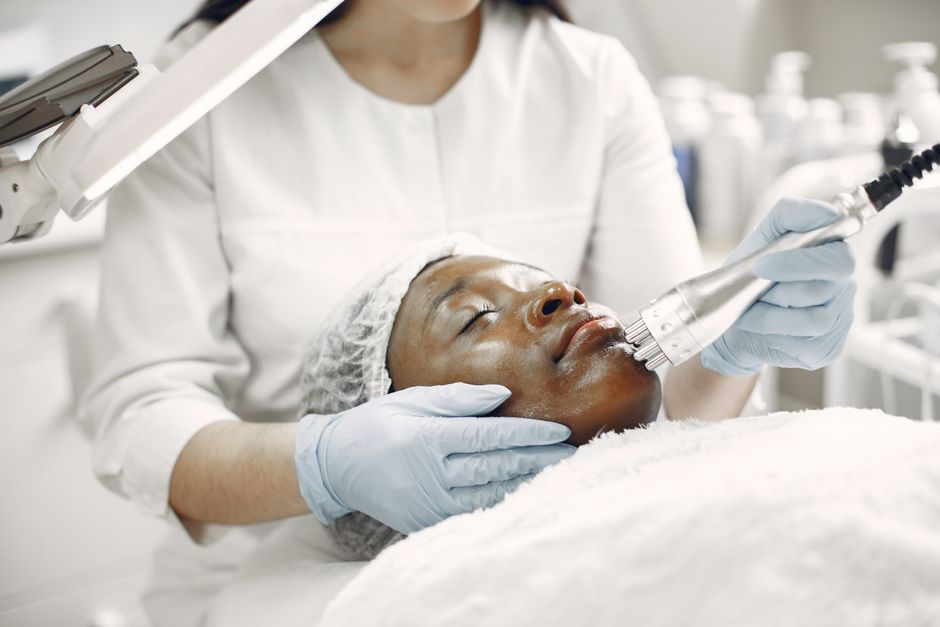
Understanding Moxi laser before and after 1 treatment requires realistic expectations.
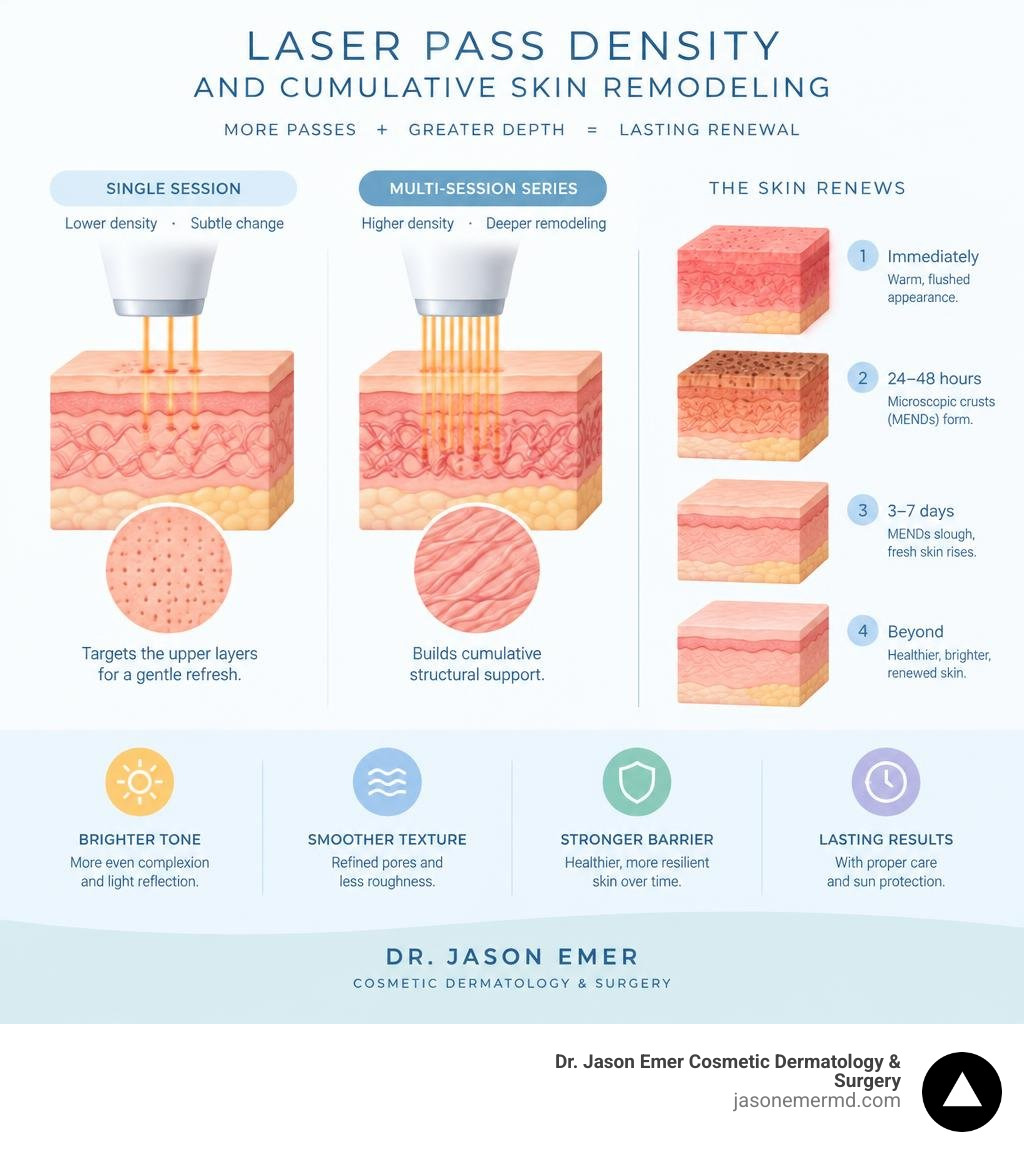
Most patients assume one laser session produces an instant transformation. In Dr. Emer's practice, a single Moxi visit is understood as a light epidermal refresh rather than a finished result. Non-ablative fractional energy delivers controlled micro-thermal zones into the superficial dermis and epidermis, stimulating cellular turnover without vaporizing surface tissue. Because the structural framework of the skin requires progressive remodeling, the visual changes after an initial appointment represent the foundation of cellular renewal rather than complete correction.
Skin tone looks brighter and texture feels smoother once initial redness and micro-crusting resolve. These changes emerge within a week and evolve over three to four weeks as natural collagen production accelerates. While superficial sun damage and minor dullness respond well to a single pass, more entrenched pigment, melasma, or textural scarring require a staged, multi-session plan tailored to individual goals and skin quality.
Healing directly influences visible progress at every phase. Skin initially appears flushed and swollen before developing a dry, sandpaper texture that sheds over several days. Evaluating moxi laser before and after 1 treatment is therefore a gradual process rather than an overnight change. Rushing the evaluation before epidermal turnover finishes leads to premature assumptions about overall efficacy.
Jason Emer, MD, FAAD, evaluates baseline skin health, recovery timelines, and single-session limits before recommending care. Reviewing clinical resources such as Moxi Laser Treatment, the Moxi Laser Recovery Day by Day guide, and procedural overviews for Moxi laser treatment helps patients set clear, grounded milestones.
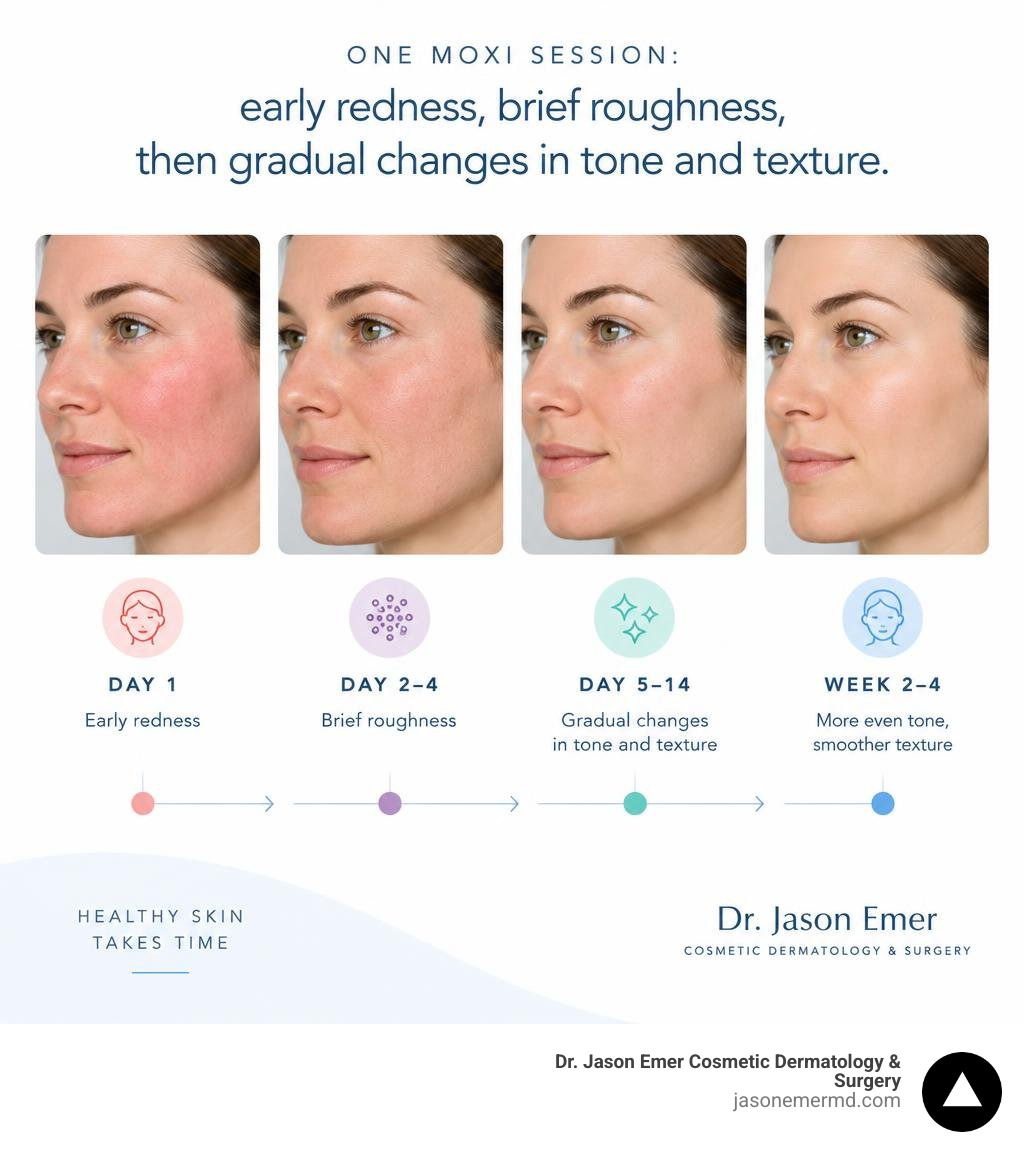
A single Moxi session gradually refreshes tone and surface texture.
Moxi is a non-ablative fractional laser utilizing a specialized 1927 nm wavelength. This specific optical energy targets water in superficial tissue layers rather than melanin directly, creating microscopic columns of thermal coagulation while leaving the surrounding tissue intact. These microscopic thermal injury zones stimulate rapid epidermal renewal and localized collagen remodeling without disrupting the broader skin barrier. Individual treatment sessions generally last 12 to 20 minutes depending on surface area, skin thickness, and customized density settings.
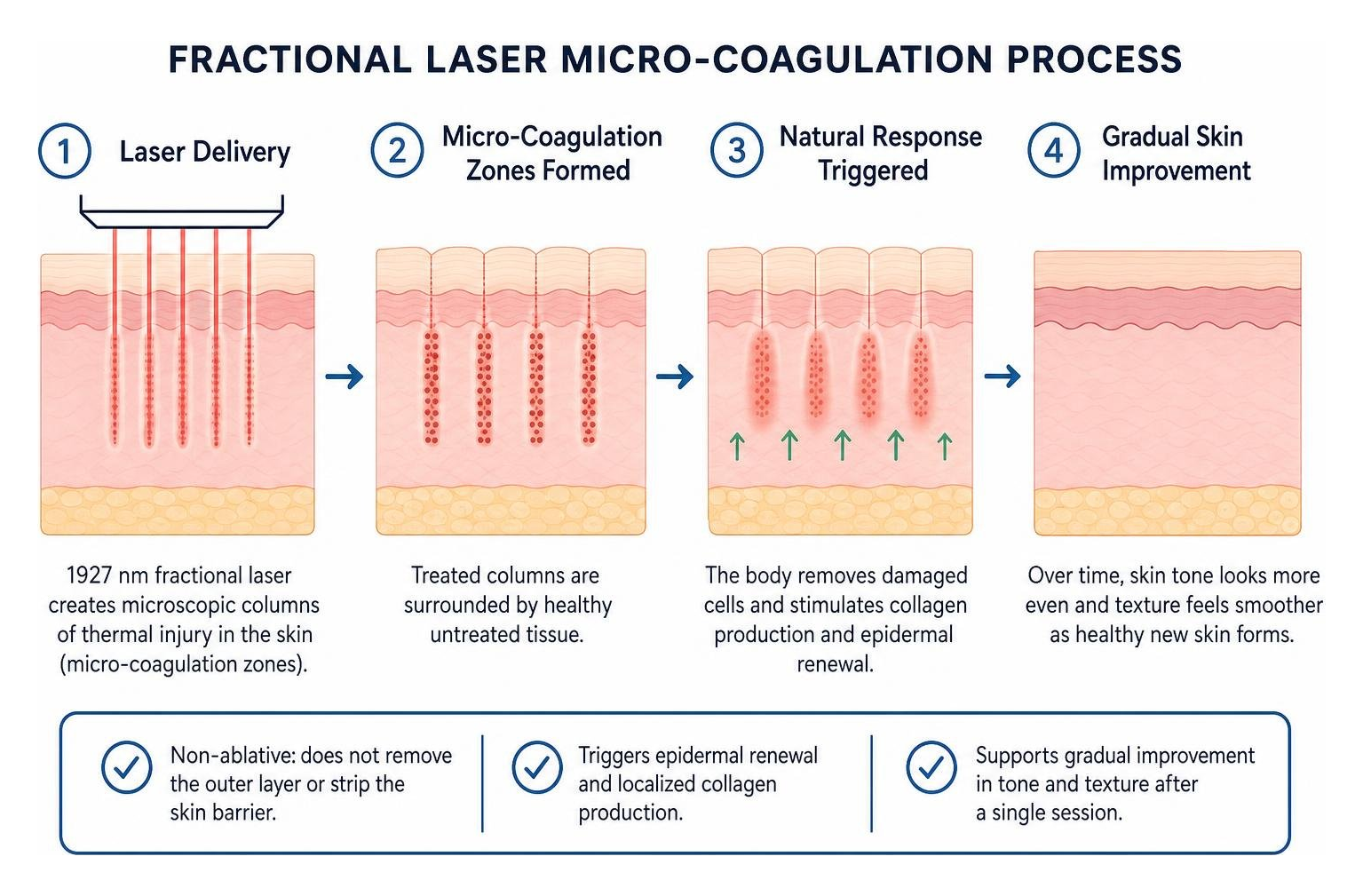
A single pass acts primarily as superficial maintenance or early prejuvenation for patients exhibiting mild photodamage or textural unevenness. Because it targets water rather than pigment, the device offers broad versatility across diverse Fitzpatrick skin types when energy levels and pulse densities are calibrated appropriately. However, darker complexions still require cautious management regarding post-inflammatory hyperpigmentation (PIH). The American Academy of Dermatology provides educational guidance on post-procedure pigment shifts and laser safety across varied skin tones, reinforcing the necessity of customized clinical protocols.
| Parameter | Single Moxi Session | Multi-Session Series |
|---|---|---|
| Primary Goal | Subtle brightening, mild smoothing | Marked reduction in dyschromia |
| Collagen Induction | Light surface stimulation | Cumulative dermal remodeling |
| Downtime Profile | 24-48 hours redness; 3-5 days rough texture | Similar healing repeated across intervals |
| Target Concerns | Early sun damage, prejuvenation | Moderate pigment irregularities, roughness |
Following laser skin resurfacing treatment, Dr. Emer evaluates pigmentation depth and light reflection across the treated regions. While superficial sun freckles and minor roughness improve once shedding completes, deeper dyschromia and stubborn melasma demand staged sessions with calibrated energy levels to ensure uniform pigment clearance.
Recovery changes unfold as the skin renews and its barrier heals.
Healing after fractional resurfacing follows distinct biological stages that dictate the final cosmetic outcome. Treated skin immediately feels warm and flushed, resembling a moderate sunburn that subsides over several hours. Over the subsequent 24 to 48 hours, microscopic epidermal necrotic debris (MENDs) forms across the treated surface as coagulated tissue rises to the stratum corneum. This process creates a noticeable sandpaper texture and a temporary bronzed cast.
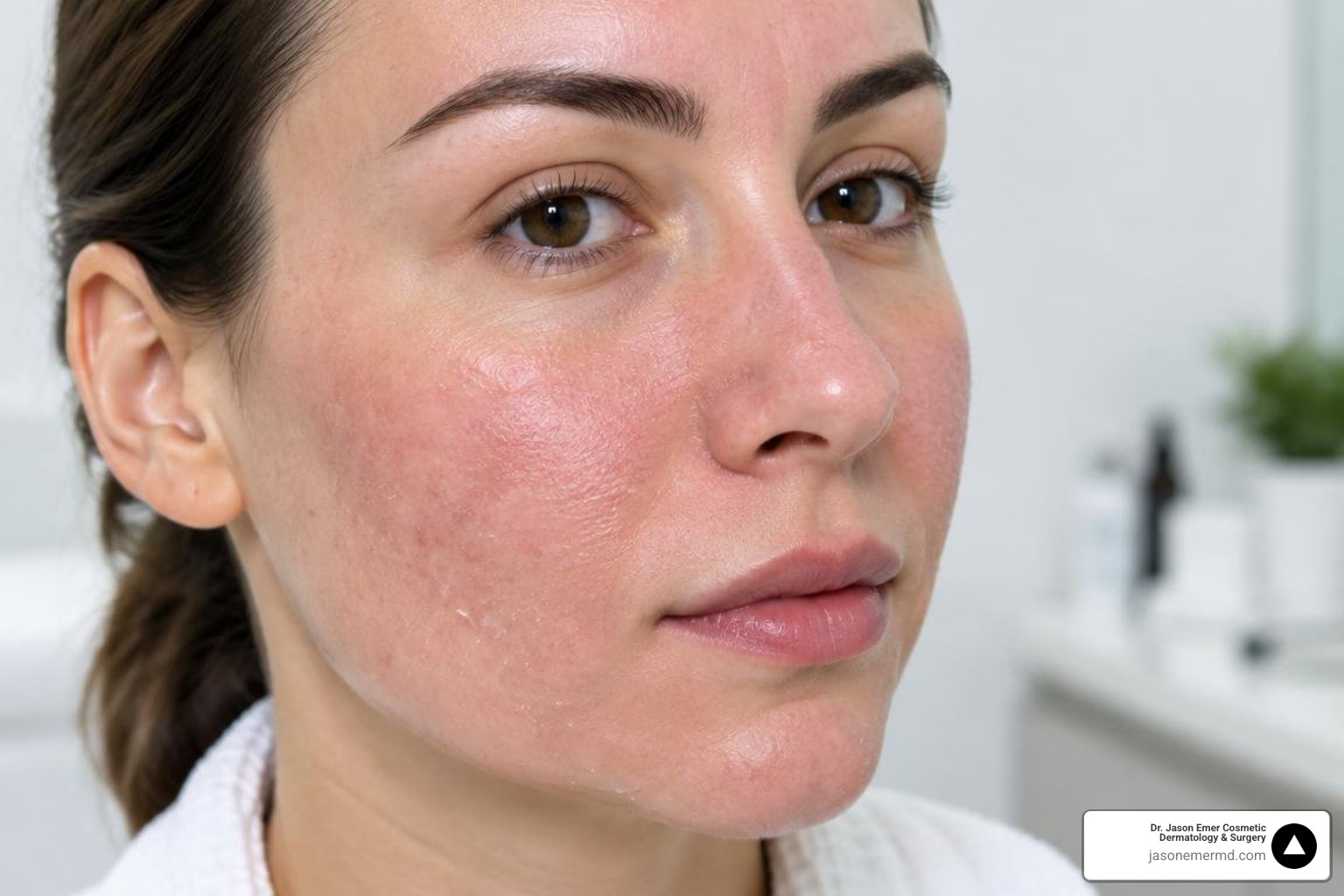
Understanding the principles of managing laser recovery and risks is essential for preserving the delicate lipid barrier. MENDs slough naturally between days three and seven as fresh epidermal cells migrate to the surface. Prematurely picking, rubbing, or scrubbing these particles disrupts re-epithelialization and can trigger PIH or subtle scarring. Patients with deeper skin tones face elevated PIH vulnerability, making conservative energy settings, gentle handling, and extended recovery intervals critical for skin of color.
A structured day-by-day recovery protocol supports optimal tissue repair:
- Cleanse with gentle, non-foaming washes and apply soothing barrier creams consistently.
- Pause active retinoids, direct acids, and chemical exfoliants until peeling completely resolves.
- Apply broad-spectrum mineral sunscreen daily to shield regenerating tissue from ultraviolet damage.
- Avoid heavy cosmetics for at least 24 hours to prevent occluding open micro-channels.
Clinical assessment determines treatment staging and realistic long-term outcomes.
A thorough clinical evaluation dictates whether a patient benefits from a standalone session or a comprehensive treatment series. Because darker complexions carry an elevated risk of PIH under higher energy densities, conservative settings, pre-treatment tyrosinase inhibitors, and extended intervals between passes are customized during the initial consultation. Skin thickness, vascular reactivity, and active photodamage all guide procedural planning.
Tradeoffs and alternatives
Moxi provides rapid recovery with minimal downtime, but it possesses clear anatomical limitations. It cannot correct significant skin laxity, deep structural wrinkles, or severe acne scarring. Patients seeking pronounced architectural improvement may require fully ablative laser resurfacing or deep fractional modalities, accepting prolonged downtime and intensive aftercare. Conversely, individuals desiring zero procedural downtime can choose gentle, physician-directed topical regimens or mild superficial peels, accepting more gradual and modest visible improvements. Staging, modality selection, and the strategic decision to adopt a conservative approach remain individualized clinical choices.
Frequently asked questions
When do results appear after one session?
Initial brightness and improved light reflection become noticeable within five to seven days after micro-crusts shed, while deeper collagen remodeling continues over several weeks.
Is one session enough for pigmentation?
A single treatment can lighten mild, superficial sun spots, but deeper melasma or extensive dermal dyschromia requires a staged series of treatments.
What downtime follows a single procedure?
Patients experience localized redness and heat for 24 to 48 hours, followed by three to five days of a rough, sandpaper-like texture during natural desquamation.
Patients can schedule a consultation regarding Moxi laser treatment to review skin health, goals, and recovery parameters.
What to remember
- A single Moxi session delivers a modest, superficial skin refresh rather than dramatic structural correction.
- Recovery involves several days of a sandpaper-like texture as microscopic debris naturally sheds from the epidermal barrier.
- Safe settings and comprehensive outcomes require an individualized clinical assessment, particularly when managing darker skin tones or complex pigment.
This content is for general education and does not provide a diagnosis, determine candidacy, or replace a consultation with a licensed clinician.
This resource provides general educational information. Treatment recommendations depend on your health, goals, and consultation with a qualified clinician.