
Understanding the chin lipo swelling timeline helps set realistic recovery expectations
Most patients assume the jawline seen immediately on the operating table is the final result. In Dr. Emer's practice, the opposite is true: true definition emerges only as tissues heal over time. The chin lipo swelling timeline reflects an inflammatory response rather than instant contouring. Swelling peaks during the first several days before gradually receding across subsequent weeks and months. Knowing what to expect at each stage allows patients to approach their post-procedure journey with confidence and patience.
Cannula movement disrupts subcutaneous fat deposits and delicate microvessels, creating acute fluid shifts. This localized fluid retention drives early postoperative fullness. The mechanical tunneling created during fat removal leaves microscopic spaces where interstitial fluid, lymphatic fluid, and inflammatory cells temporarily pool. Dr. Emer views this response not as a setback, but as an essential stage of tissue repair, structural remodeling, and collagen deposition.
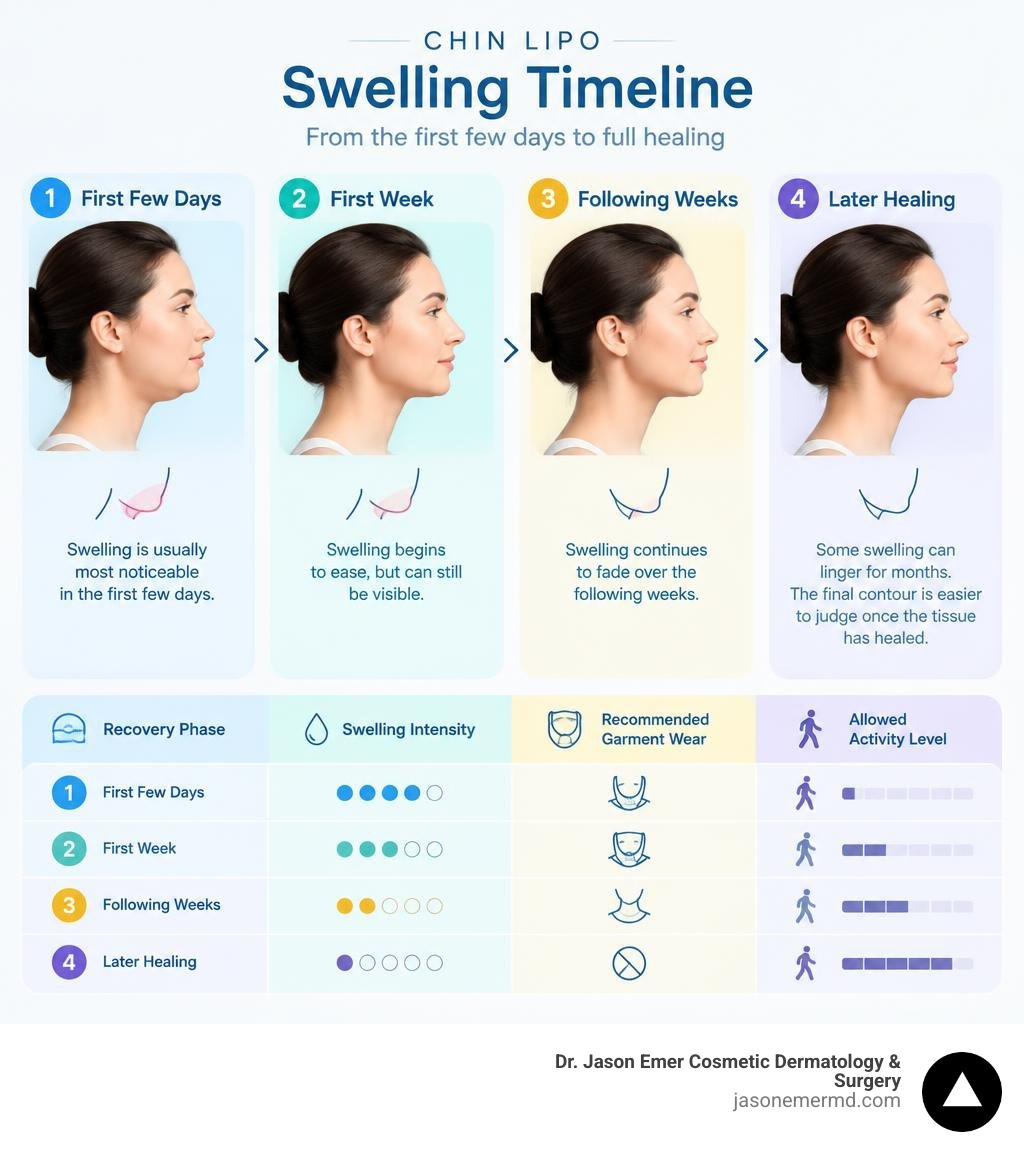
| Recovery Phase | Swelling Intensity | Recommended Garment Wear | Allowed Activity Level |
|---|---|---|---|
| Days 1–3 | Severe (Peak) | Continuous (24 hours/day) | Rest, gentle walking |
| Days 4–7 | Moderate to Severe | Continuous wear | Desk work, light daily tasks |
| Weeks 2–3 | Moderate (Declining) | Nighttime or as directed | Light exercise, brisk walking |
| Weeks 4–6+ | Mild / Residual | Discontinued or optional | Full unrestricted exertion |
Individual anatomical factors naturally affect resolution rates. Skin elasticity, baseline tissue volume, metabolic rate, and vascular density all play distinct roles in determining how quickly fluid dissipates. Combining chin liposuction and jaw contouring mobilizes fat while promoting skin adherence, which can briefly lengthen early swelling compared to isolated suction. The broader surface area treated means a larger inflammatory cascade, requiring realistic expectations about early puffiness.
The initial week brings an acute tissue response
Swelling peaks within 48 to 72 hours, with bruising often descending toward the neck and upper chest due to gravity. Head elevation limits fluid pooling during sleep and rest. When submental contouring pairs with neck lipo, swelling covers a broader surface due to wider lymphatic disruption. Patients may notice significant tightness, localized tenderness, and mild asymmetries during these initial days. These asymmetrical presentations are standard because one side of the submental space may process fluid drainage slightly faster than the other.
Weeks two through six bring gradual swelling resolution and tissue changes
By week two, acute inflammation decreases substantially, allowing patients to appreciate early improvements in their profile. Subcutaneous firmness commonly develops between weeks three and six as internal collagen matures. This healing ridge or induration is a standard physiological step where internal scar tissue forms before remodeling into softer tissue. Adding FaceTite contracts tissue via radiofrequency, though thermal stimulation may prolong minor fluid retention during dermal healing. Gentle lymphatic massage, when recommended by Dr. Emer, helps smooth internal firmness and expedite the clearance of stagnant interstitial fluid.

Post-procedure care can support recovery after submental contouring
Managing edema requires following structured postoperative guidelines. Dr. Emer emphasizes that recovery relies on external mechanical support, healthy circulation, and attentive self-care. The body requires predictable conditions to heal, clear trapped fluid, and retract overlying skin over newly contoured mandibular borders.
Consistent compression garment wear may support lymphatic drainage
Wearing a fitted chin garment serves several clinical functions during the vulnerable healing window:
- Closes dead space between skin and underlying muscle layers, encouraging uniform tissue reattachment.
- Limits seroma formation and excessive fluid pooling in the treated submental pocket.
- Supports compromised lymphatic structures during drainage re-establishment across the cervical region.
- Keeps tissue flush against the jawline to promote even skin contraction and reduce contour irregularities.
- Provides continuous physical protection against accidental pressure or trauma during sleep.
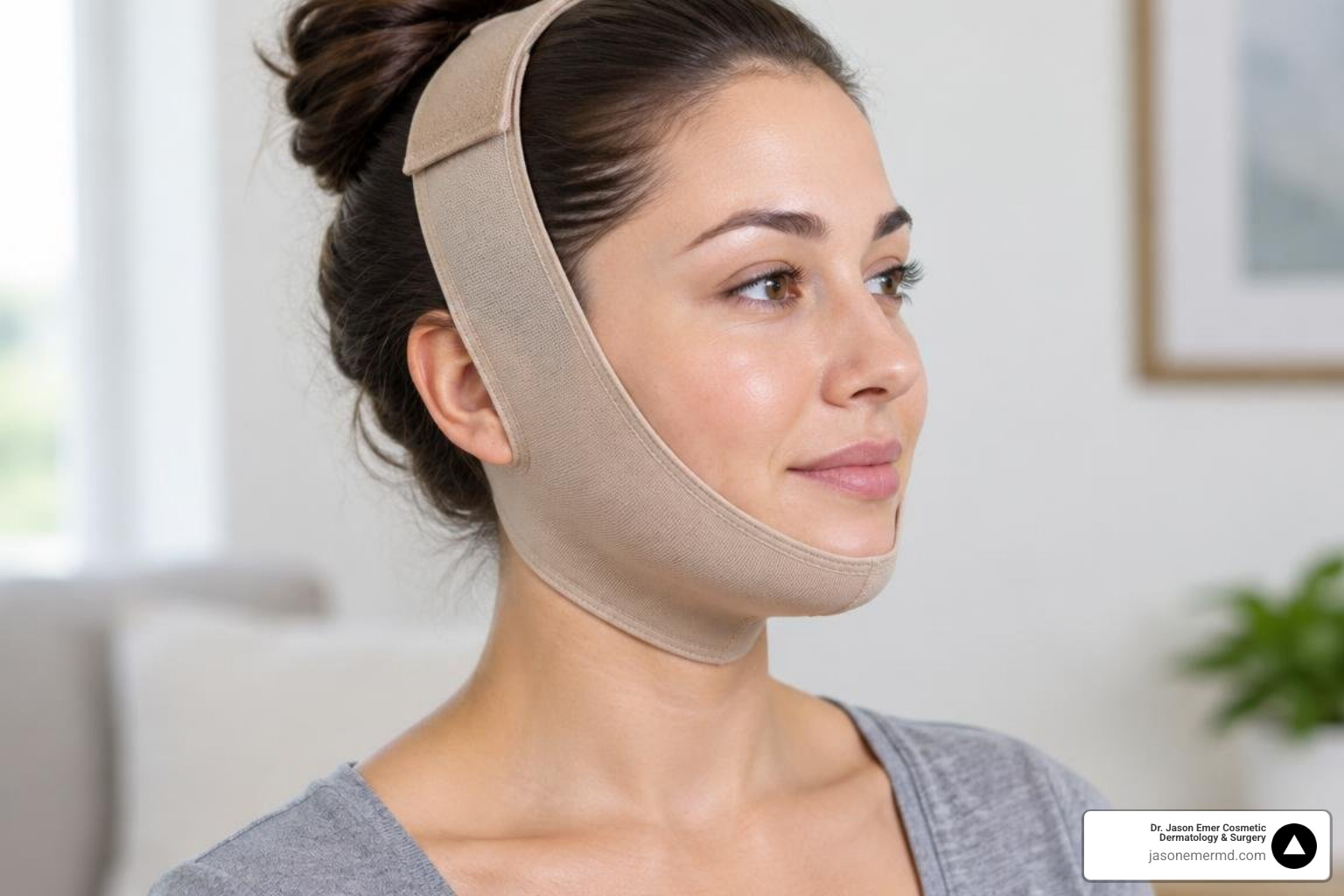
Garments are worn continuously during the first week, removed only briefly for hygiene purposes, then transitioned to nighttime use. Skipping wear can cause uneven fluid accumulation, delayed tissue adhesion, and prolonged swelling along the jaw angle.
Dietary adjustments and head elevation may help manage fluid retention
Elevating the head utilizes gravity to drain interstitial fluid away from the face and toward functional lower lymph nodes. Sleeping with two pillows or on a wedge during the first two to three weeks prevents morning facial puffiness. Dietary choices also play a central role in modulating inflammatory responses. High-sodium meals and alcohol disrupt osmotic balance, drawing excess fluid into healing tissues and causing noticeable swelling flare-ups. A balanced, nutrient-dense diet rich in lean proteins, antioxidants, and adequate hydration supports cellular repair.
Physical activity levels must be staged thoughtfully. Light walking promotes blood flow without elevating blood pressure, assisting natural lymphatic clearance. By contrast, strenuous activity can temporarily increase swelling even while supporting cardiovascular fitness, which is why intense workouts are resumed gradually. For broader context on how liposuction affects healing, fluid dynamics apply across all contouring procedures. Rushing back into high-impact training, heavy lifting, or inverted exercises before tissue stabilization can trigger acute swelling spikes and prolong the recovery timeline.
Swelling and tissue remodeling change over time, and concerning symptoms warrant evaluation
Soft tissue stabilization takes several months as the extracellular matrix reorganizes and new collagen fibers align along tension vectors. When modalities like Neck Renuvion are used, plasma energy contracts tissue fibroseptal networks to enhance skin adherence. In patients with darker skin tones, thermal energy carries a documented risk of post-inflammatory hyperpigmentation (PIH), requiring cautious energy sequencing, lower initial settings, and targeted topical pre-conditioning. Dr. Emer customizes device parameters to protect melanin-rich skin while still achieving structural remodeling.
Non-invasive alternatives, including non-thermal modalities, cryolipolysis, injectable deoxycholic acid, or choosing to monitor rather than intervene surgically, offer viable paths for individuals seeking to avoid surgical downtime. Every approach presents distinct tradeoffs regarding downtime, degree of tissue modification, and the number of treatment sessions required.
Normal healing and possible complications can look different during recovery
Expected recovery involves bilateral fullness, temporary stiffness, and localized numbness that resolves over several weeks as cutaneous nerves regenerate. Deviations requiring clinical review include:
- Hematoma: Rapidly expanding, tense, or asymmetric swelling, often accompanied by sudden pain or skin discoloration.
- Infection: Increasing redness, spreading warmth, purulent drainage, or persistent fever.
- Persistent seroma: Fluctuant, fluid-filled collections beneath the submental skin that do not resolve with compression.
- Severe nerve weakness: Noticeable asymmetry in lower lip movement or smiling, which warrants prompt professional assessment.
Final contour assessment and return to full exertion depend on recovery
Strenuous exertion can provoke rebound swelling during early recovery. Most physical restrictions lift around week four, while refined submental definition continues improving for several months. By month three, approximately eighty percent of tissue swelling has resolved, with the remaining subtle fluid clearing between months six and twelve as collagen remodeling fully matures.
Frequently asked questions about submental recovery
When does swelling peak after chin liposuction?
Peak swelling occurs within the first 48 to 72 hours post-procedure before gradually declining over subsequent weeks.
How long must a compression garment be worn?
Continuous wear is advised for the first week, followed by nighttime wear for several additional weeks as directed.
When can patients return to social and work activities?
Most return to desk work and social routines after one week once acute bruising and severe puffiness subside.
What to remember
- Submental swelling peaks within 72 hours and resolves gradually over several weeks.
- Compression garments, head elevation, and sodium moderation support proper fluid management.
- Final definition emerges over several months as internal collagen remodeling matures.
This content is for general education and does not provide a diagnosis, determine candidacy, or replace a consultation with a licensed clinician.
To evaluate submental anatomy and discuss an individualized approach for surgical chin and jawline contouring, schedule an in-depth consultation with Dr. Emer.
This resource provides general educational information. Treatment recommendations depend on your health, goals, and consultation with a qualified clinician.