The treatment, explained
What is revision body sculpting?
Also called revision liposuction, scar tissue removal, ultrasonic liposculpture, Vaser lipo, fat grafting with exosomes, Renuvion skin tightening, J Plasma, chest lift, gynecomastia revision, male body contouring revision, super wet technique.
- What it is
- Revision body sculpting corrects irregularities, scar tissue, loose skin and unfinished definition left by a previous body contouring surgery. The procedure combines ultrasonic liposculpture to work through scar tissue, purified fat grafting blended with exosomes to build chest and shoulder volume, Renuvion J Plasma internal heating to tighten loose skin, and surgical chest lift to reposition the nipple and reshape sagging tissue. The goal is to remove what the first surgery left behind and create the sharp, defined contour that should have been the result the first time.
- How it works
- Dr. Emer uses the super wet technique, flooding the area with numbing fluid to lift and separate scar tissue from the skin. Ultrasonic energy (Vaser) gently pushes scar tissue and fat cells aside so the tissue can be sculpted superficially without further trauma. Fat is harvested, purified, blended with antiage exosomes, stem cells and growth factors, then grafted to the chest and shoulders to build rounded, dense muscle definition. Renuvion J Plasma delivers controlled heat internally to contract loose skin across the torso, arms, back and mons pubis. A surgical chest lift repositions the nipple higher and reshapes the lower chest by aggressively carving and removing sagging tissue. Peptides are started after the procedure to support skin tightening and muscle building during recovery. The entire revision is performed in one session under anesthesia.
- Who it is for
- Revision body sculpting is for patients who have had body contouring surgery elsewhere and are left with scar tissue, loose skin, irregularities, asymmetry or unfinished definition. Candidates include men and women whose first surgery did not deliver the sharp, defined result they expected, those with sagging skin the first surgeon did not tighten, and those with visible irregularities or lumps from poor technique or healing. Candidacy depends on the extent of scar tissue, skin quality, overall health, and realistic expectations for what a revision can correct. A consultation with Dr. Emer determines whether revision body sculpting fits your case and what can be achieved based on what was done before.
- Recovery
- Most patients are back to light activity within a week, with full recovery taking several weeks depending on the extent of the revision. Swelling, bruising and tightness are expected across all treated areas. Compression garments are worn continuously for the first few weeks to support healing and skin contraction. Peptides are started after the procedure to accelerate skin tightening and muscle building. Strenuous exercise and heavy lifting are avoided for four to six weeks. Final results develop over three to six months as swelling resolves, grafted fat integrates, and the skin contracts from the internal heating. The recovery plan and timeline are set during consultation based on the procedures performed.
- When results show
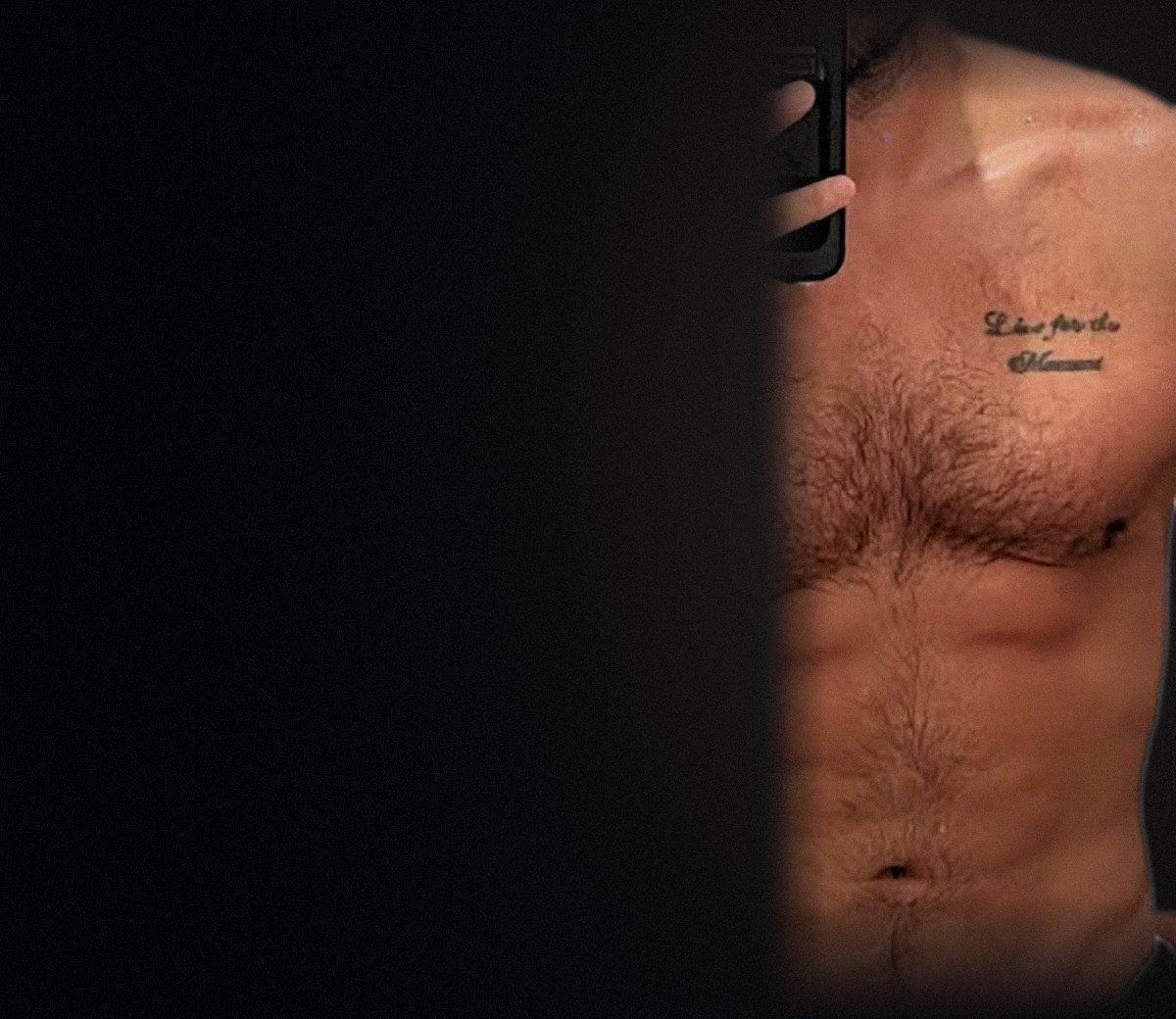
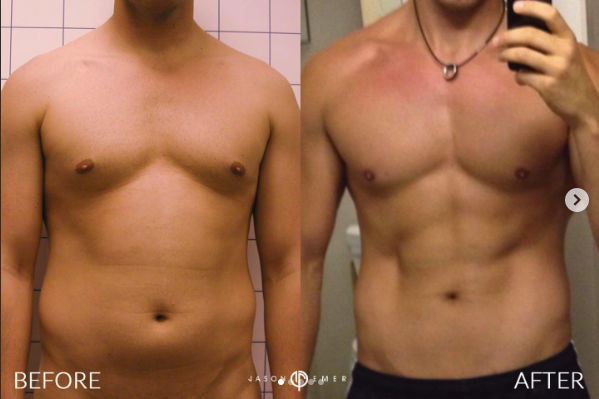
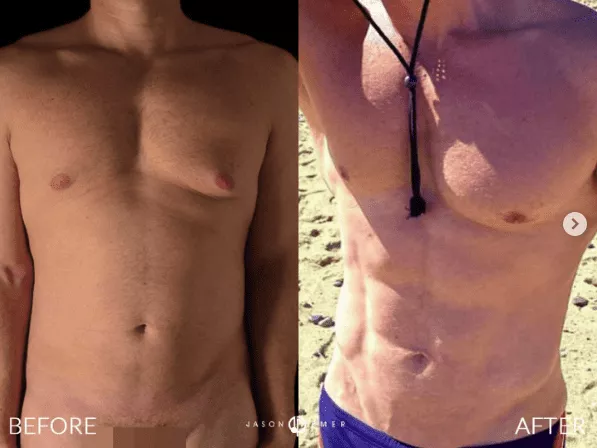
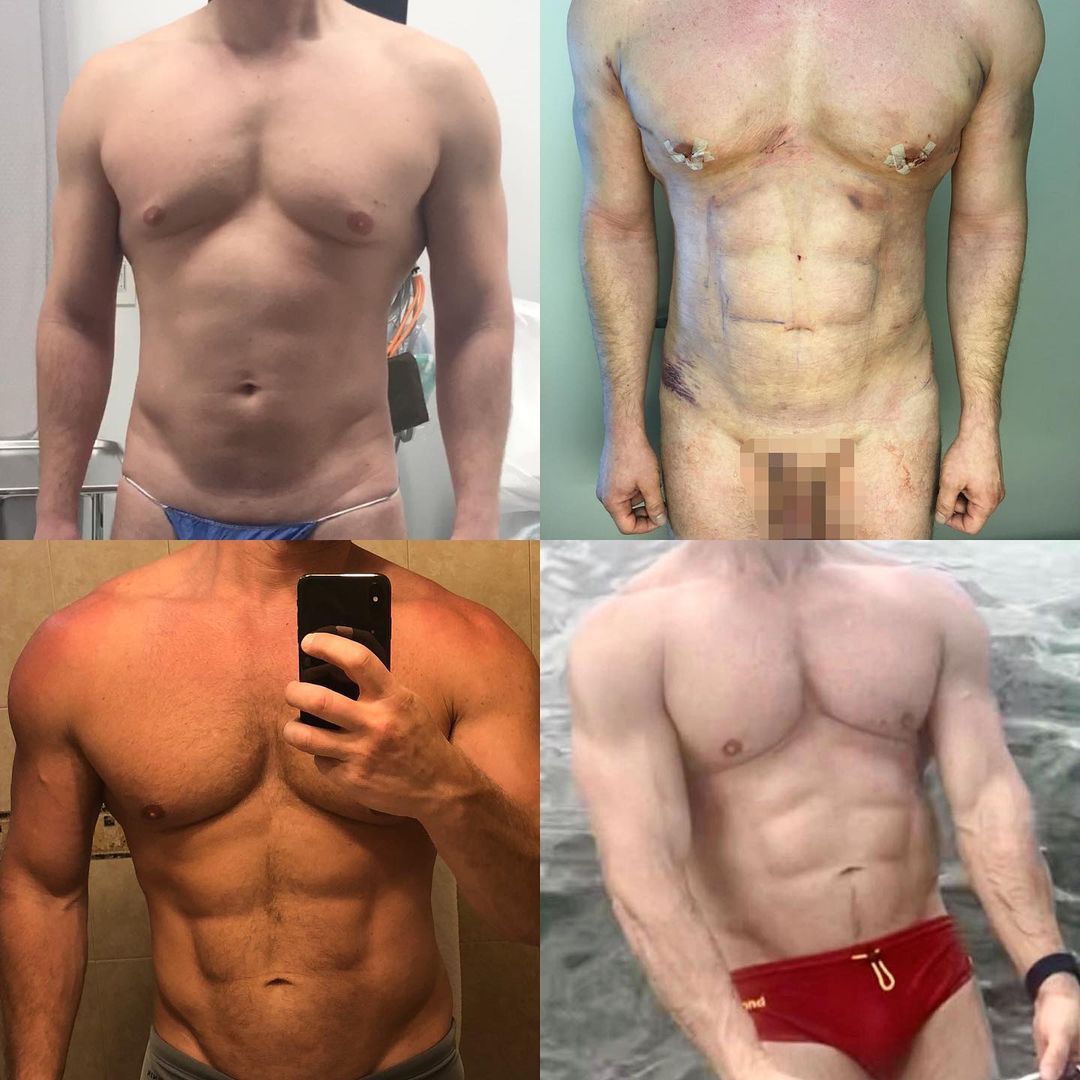
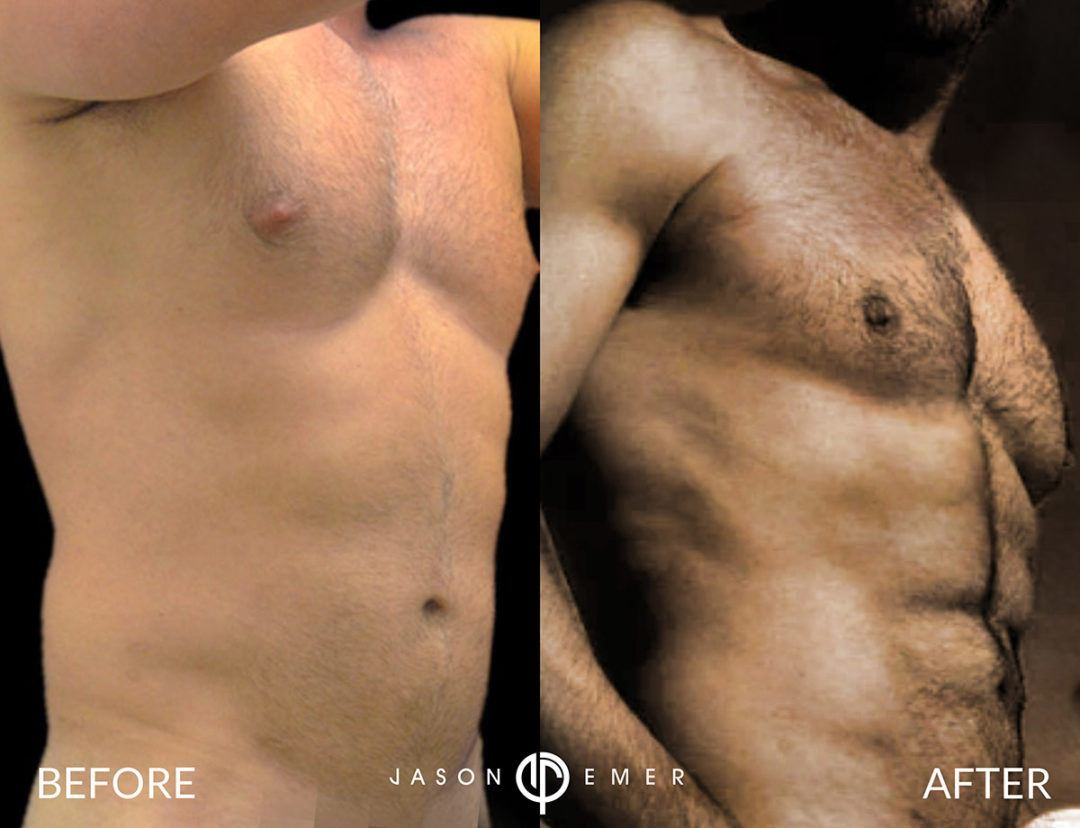
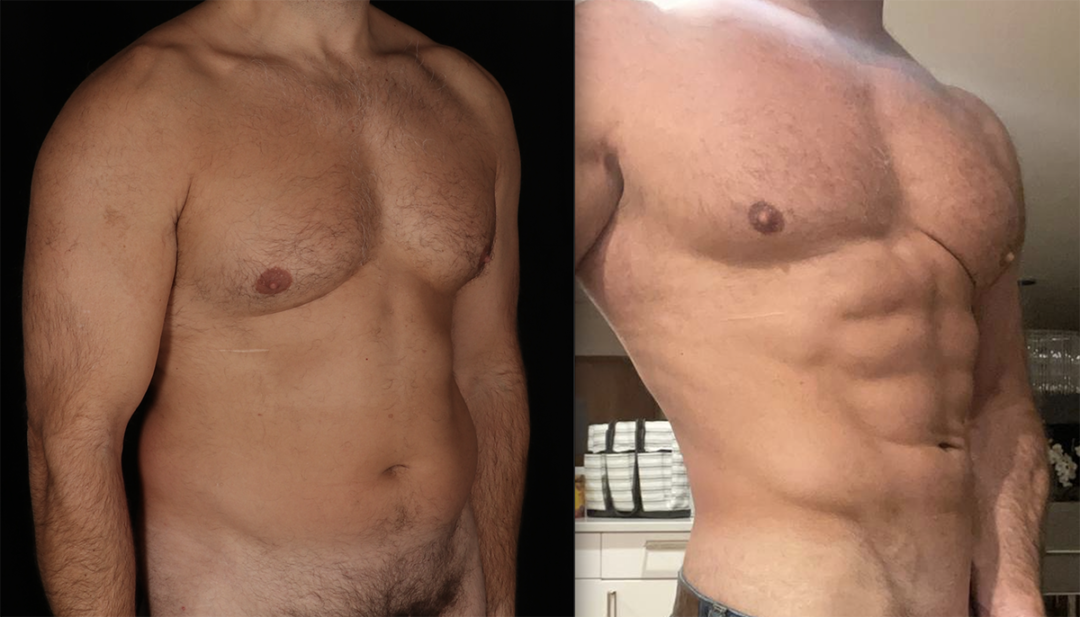
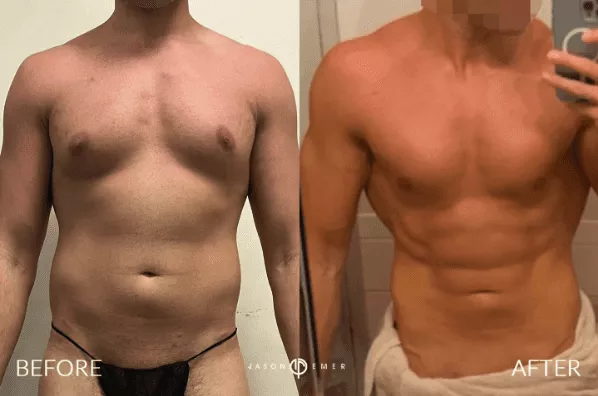
- Results develop over three to six months as swelling resolves, grafted fat cells integrate into the chest and shoulders, and the skin contracts from Renuvion internal heating. The chest and shoulders appear more rounded and defined, the abs show sharper six-pack borders, the flanks taper into a V shape, the arms show bicep and shoulder separation, the back shows Venus dimples, and the mons pubis is flat and tight. Scar tissue irregularities are smoothed, loose skin is tightened, and the sagging the first surgery left is corrected. Grafted fat that survives the first few weeks typically remains long term. The skin continues to tighten for up to a year. Maintaining results requires stable weight, continued peptide use, and a training program that builds the muscle definition the surgery created. Individual results vary based on tissue quality, healing, adherence to recovery protocols, and the extent of correction needed.