Two ProFractional settings in one session
A standard pass across the face, then a slower, more intense setting over the deeper scars for more heat, more remodeling, and more tightening.
Jason Emer, MD, FAAD, FACS
ProFractional Plus TRL For Acne Scars On Ethnic Skin: How Dr. Emer Preps, Treats And Heals
Dr. Jason Emer combines ProFractional laser with TRL ablation to treat acne scars on darker skin tones, using pre-treatment peels and post-treatment cooling to prevent hyperpigmentation.
Dr. Jason Emer MD · FAAD · FACS
The practice's own photographs
Patients of the practice, from Dr. Emer's published before and after gallery. Each case is one patient. Individual results vary.
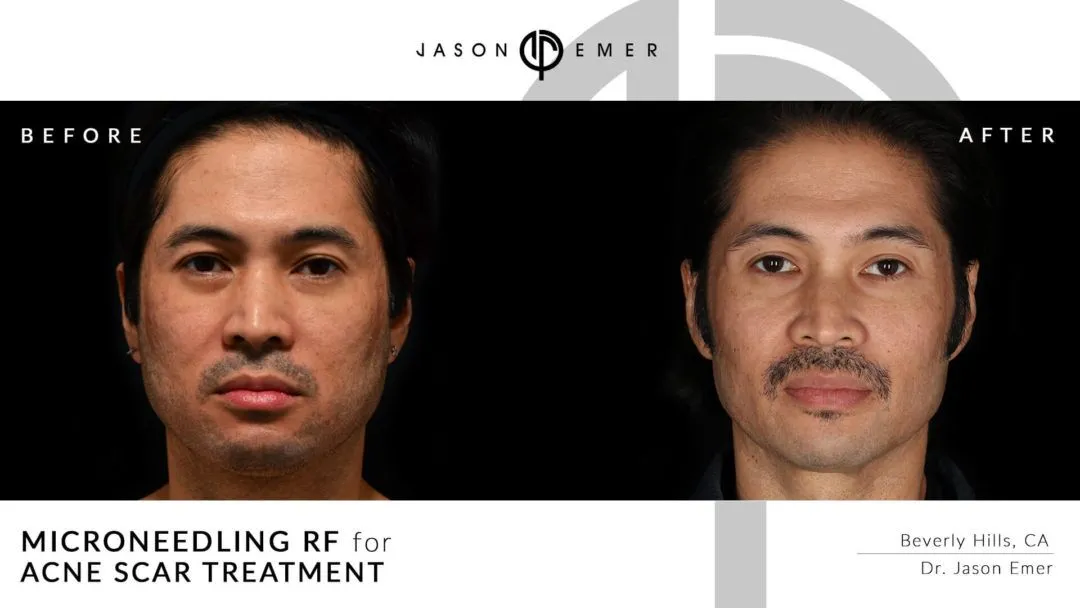
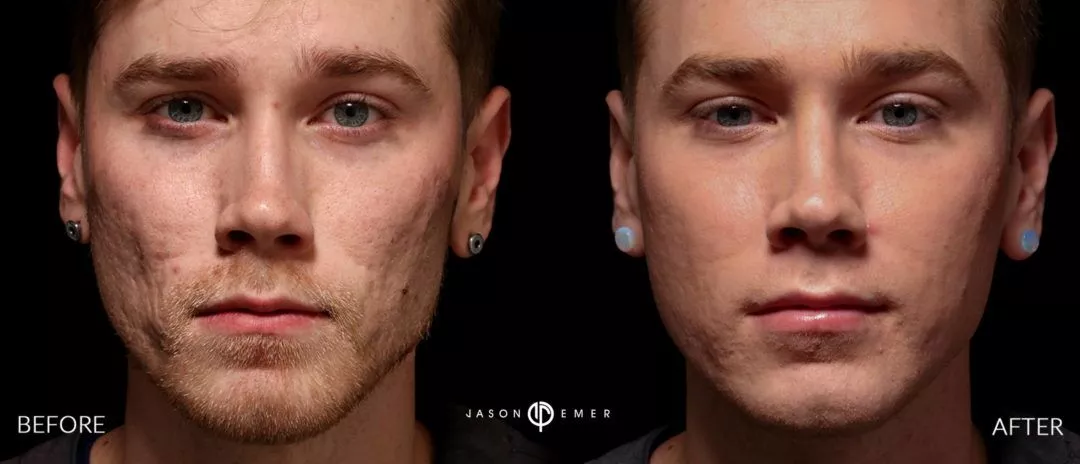
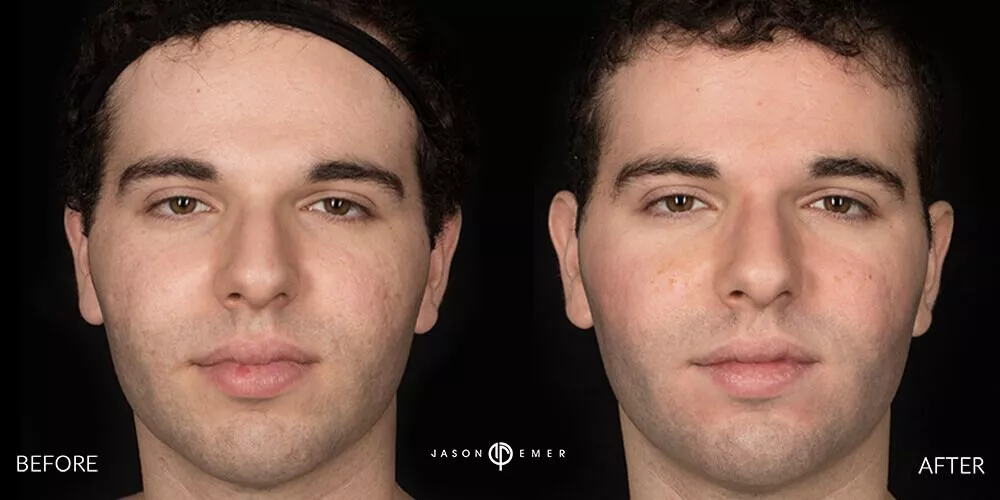


Dr. Emer treats acne scars on ethnic skin with ProFractional laser at two settings, TRL ablation, Bellafill filler placed earlier in the day, and a strict pre-peel and post-lightening protocol to prevent hyperpigmentation.
Your plan starts with Dr. Emer.
Schedule ConsultationReserve online. West Hollywood and New York.
From the filmed session
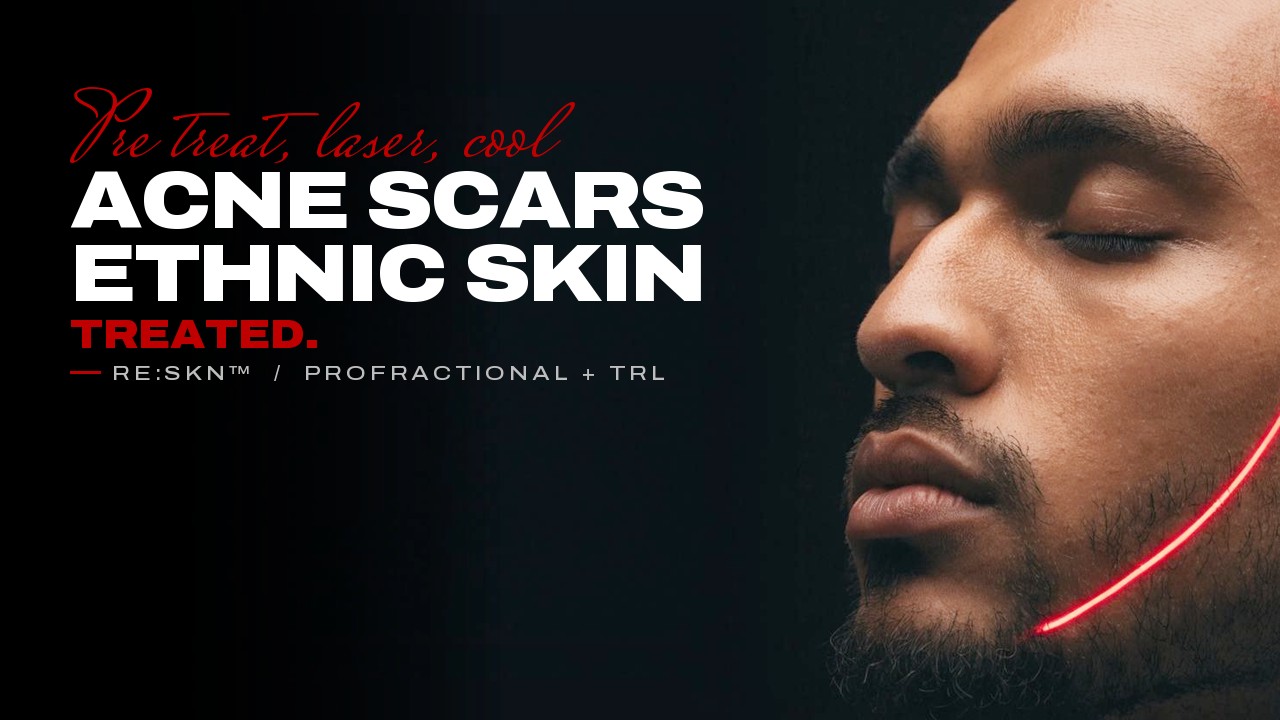
Three years after his first treatment, this patient is back for a larger session on acne scars.
Open on YouTubeWhat Dr. Emer did · RE:SKN
A peel applied before the laser to prep the skin and reduce the risk of hyperpigmentation on darker skin tones.
Bellafill injected into the deepest scars earlier in the day to raise them before laser treatment. Bellafill comes in 0.8 cc syringes but only about 20 percent is PMMA, the rest is lidocaine and collagen, so more volume is needed than with other fillers.
Botox injected into the forehead before the laser to prevent movement during healing, which makes scars in that area look less visible.
ProFractional laser at a standard setting across the face for resurfacing and texture improvement.
A slower, more intense ProFractional setting applied over the deeper scars. The slower speed releases heat more slowly, causing more prolonged damage, more remodeling, and more tightening.
TRL Contour superficial ablative laser, fully ablated, for additional resurfacing.
Cryo cooling treatment applied after the laser to reduce redness and speed healing.
Why patients fly in
A standard pass across the face, then a slower, more intense setting over the deeper scars for more heat, more remodeling, and more tightening.
A peel before the laser, high spot cream twice a day after, enlighten peels, and aggressive hydroquinone to prevent hyperpigmentation on darker skin tones.
Botox injected into the forehead before the laser keeps the area from moving during healing, which makes scars in that area look less visible.
Bellafill comes in 0.8 cc syringes but only about 20 percent is PMMA, the rest is lidocaine and collagen, so more Bellafill is needed than other fillers to fill the same depth of scar.
Glacial cryo cooling, red light therapy, oxygen, and peptide IVs all used to reduce redness and speed recovery after the laser.
“You could do glacial, we could do oxygen, we do red light therapy, we can do a peptide IV.”
THE THINKING BEHIND THE TREATMENT
Follow Dr. Emer’s approach through the stages described in this case.
Back to the video ↗He got significant improvement the first time. Now some of the scars are showing again.
This patient came to Dr. Emer close to three years ago for acne scars and got significant improvement. Over time, some of the scars started to show again. This visit is a larger treatment: Bellafill filler placed earlier in the day to raise the deepest scars, followed by ProFractional laser and TRL ablation to resurface the skin and tighten the texture.
“He came close to three years ago and got a significant improvement and now they starting to see a little bit more of the scars again.”DR. JASON EMER · FROM THE VIDEO
Planned to prevent hyperpigmentation: peel before, laser during, cooling and lightening after.
He has ethnic skin, which means the risk of hyperpigmentation is real. Dr. Emer addresses that risk with a peel before the laser and a strict post-treatment plan that includes high spot cream, peels, and cooling treatments like Glacial.
“Now, right now, we have this. You can you do this if you have no scars? Yes. You could do this a couple times a year if you wanted.”DR. JASON EMER · FROM THE VIDEO
Even lighter Hispanic or Mediterranean skin tones are at risk for hyperpigmentation after aggressive laser work. The plan to prevent that starts before the laser with a peel, and continues after with high spot cream twice a day, the Enlighten peel, aggressive hydroquinone, vitamin C, and cooling treatments.
High spot cream is a non-hydroquinone, non-chemical lightener made with botanicals, retinol, and vitamin C. Healing time is about five days, with pinkness lasting another week. Glacial cooling, oxygen, red light therapy, and peptide IVs all help reduce redness and speed recovery.
“You could do glacial, we could do oxygen, we do red light therapy, we can do a peptide IV.”DR. JASON EMER · FROM THE VIDEO
ProFractional plus TRL, planned for darker skin / Patient story
He got significant improvement the first time. Now some of the scars are showing again.
This patient came to Dr. Emer close to three years ago for acne scars and got significant improvement. Over time, some of the scars started to show again. This visit is a larger treatment: Bellafill filler placed earlier in the day to raise the deepest scars, followed by ProFractional laser and TRL ablation to resurface the skin and tighten the texture.
He has ethnic skin, which means the risk of hyperpigmentation is real. Dr. Emer addresses that risk with a peel before the laser and a strict post-treatment plan that includes high spot cream, peels, and cooling treatments like Glacial.
The patient in this video came to Dr. Emer close to three years ago for acne scars and got significant improvement. Over time, some of the scars started to show again. This visit is a larger treatment: Bellafill filler placed earlier in the day to raise the deepest scars, followed by ProFractional laser and TRL ablation to resurface the skin and tighten the texture.
He has ethnic skin, which means the risk of hyperpigmentation is real. Dr. Emer addresses that risk with a peel before the laser and a strict post-treatment plan that includes high spot cream, peels, and cooling treatments like Glacial.
Bellafill comes in 0.8 cc syringes, but only about 20 percent of that is PMMA microspheres. The rest is lidocaine and collagen. So you need a lot more Bellafill than you would other fillers to fill the same depth of scar.
Bellafill is also made for deeper injection, not surface placement. That is why Dr. Emer often combines it with micro droplet silicone or uses it in hyperdilution. In this case, he used Bellafill alone and then layered the laser treatment on top.
How a session is built
Planned to prevent hyperpigmentation: peel before, laser during, cooling and lightening after.
A peel is applied before the laser to prep the skin and reduce the risk of hyperpigmentation.
Bellafill is placed into the deepest scars earlier in the day to raise them before the laser treatment.
ProFractional laser at a standard setting across the face, then a slower, more intense setting over the deeper scars for more remodeling and tightening.
Glacial cooling, high spot cream twice a day, peels, and aggressive hydroquinone to prevent hyperpigmentation during healing.
The treatment, explained
Also called TRL ablation, acne scar treatment, laser resurfacing for ethnic skin, acne scar laser for dark skin, Bellafill for acne scars, hyperpigmentation prevention, Glacial cooling.
Signature procedures
Peptides / biologic optimization
Peptide and biologic protocols for recovery, body composition and longevity, with epigenetic testing. RECODEX™ peptides are available to purchase through the practice after consultation.
Why Dr. Emer
Two decades of results on every skin tone, and a reputation for treating patients other practices turn away.
Dr. Emer built his reputation on outcomes that require precision: acne scars on darker skin, revision work after failed treatments, and patients who have been told lasers are too risky for their skin type.
He personally performs every procedure in his practice, and his protocols for ethnic skin are taught to physicians internationally. Patients come to him when the result has to be both aggressive and safe.
A peel before the laser preps the skin and reduces the risk of hyperpigmentation, even on darker skin tones.
A standard ProFractional pass across the face, then a slower, more intense setting over the deeper scars for more heat, more remodeling, and more tightening.
Bellafill comes in 0.8 cc syringes, but only about 20 percent is PMMA. The rest is lidocaine and collagen, so you need more Bellafill than other fillers to fill the same depth.
Botox injected into the forehead before the laser keeps the area from moving during healing, which makes scars in that area look less visible.
Glacial is a cryo cooling treatment that reduces redness and speeds healing. High spot cream is a non-hydroquinone lightener with botanicals, retinol, and vitamin C, used twice a day after treatment.
Healing time is about five days, with pinkness lasting another week. Red light therapy, oxygen, and peptide IVs all help reduce redness.
Asked plainly, answered plainly
Yes. The protocol is designed for darker skin tones: a peel before the laser, strict post-treatment care with high spot cream and peels, and Glacial cooling to prevent hyperpigmentation. Dr. Emer has treated ethnic skin for two decades and his protocols are taught to physicians internationally.
Healing time is about five days, with pinkness lasting another week. Glacial cooling, red light therapy, oxygen, and peptide IVs help reduce redness and speed recovery. High spot cream is used twice a day to prevent hyperpigmentation.
Bellafill is long-term and stimulates collagen, but it comes in 0.8 cc syringes and only about 20 percent is PMMA. The rest is lidocaine and collagen. You need more Bellafill than other fillers to fill the same depth of scar.
A standard setting is applied across the face for overall resurfacing. Then a slower, more intense setting is applied over the deeper scars. The slower speed releases heat more slowly, causing more prolonged damage, more remodeling, and more tightening in those areas.
High spot cream is a non-hydroquinone lightener with botanicals, retinol, and vitamin C. It is used twice a day after the laser to prevent hyperpigmentation on ethnic and darker skin tones.
Botox injected into the forehead before the laser keeps the area from moving during healing, which makes scars in that area look less visible. It also prevents movement if filler or micro droplet silicone is placed in the forehead.
Many patients build in stages. The patient in this case had one treatment three years ago and returned for a larger session when some scars started to show again. The number of sessions and the plan are determined during consultation based on your scar depth and goals.
Yes. ProFractional and TRL are also anti-aging treatments. You could do this a couple times a year for texture improvement, tightening, and resurfacing even if you have no scars.
A consultation with Dr. Emer covers your skin type, your scar depth, and whether this protocol fits your plan.
Schedule ConsultationWest Hollywood and New York City