Intradermal placement, not superficial
The silicone is injected within the layers of the skin to raise the scar from underneath, not on top where it can create lumps or long-term complications.
Jason Emer, MD, FAAD, FACS
Silicone Microdroplet For Acne Scars: How Dr. Emer Fills And Smooths Deep Scarring In Weeks
How Dr. Jason Emer uses intradermal silicone microdroplet injections to fill and smooth deep acne scars, with visible improvement in four to six weeks and minimal maintenance.

Dr. Jason Emer MD · FAAD · FACS
The practice's own photographs
Patients of the practice, from Dr. Emer's published before and after gallery. Each case is one patient. Individual results vary.
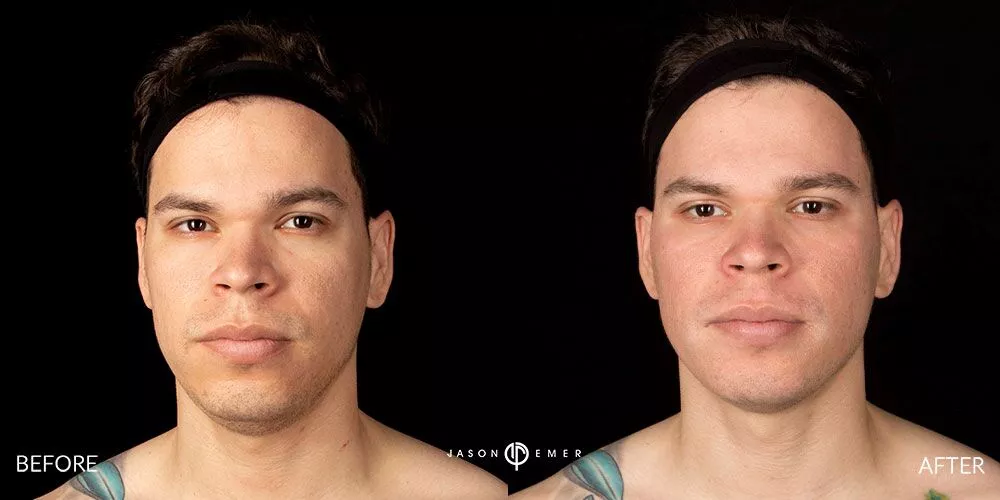
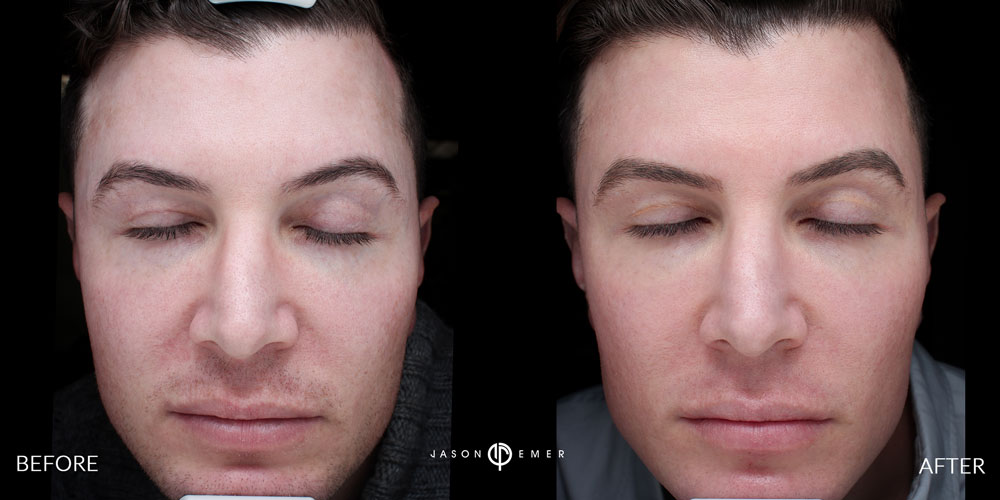
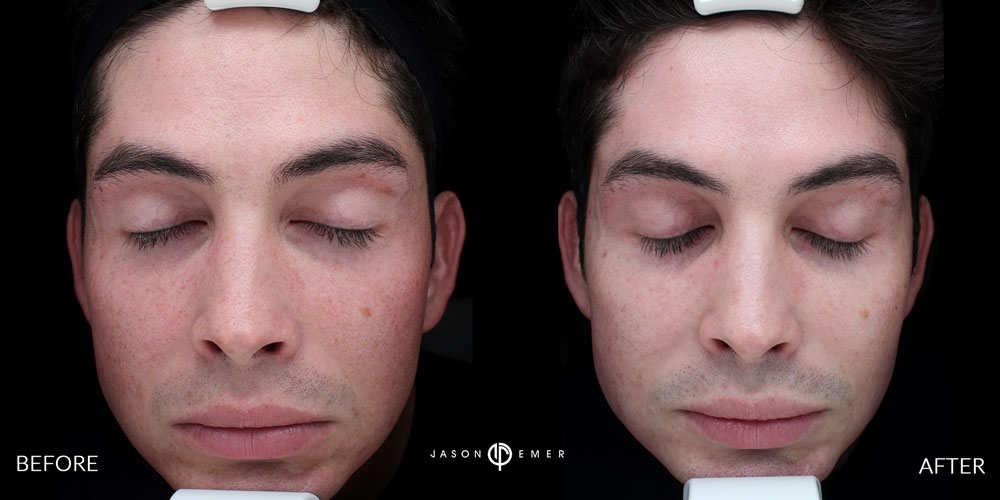
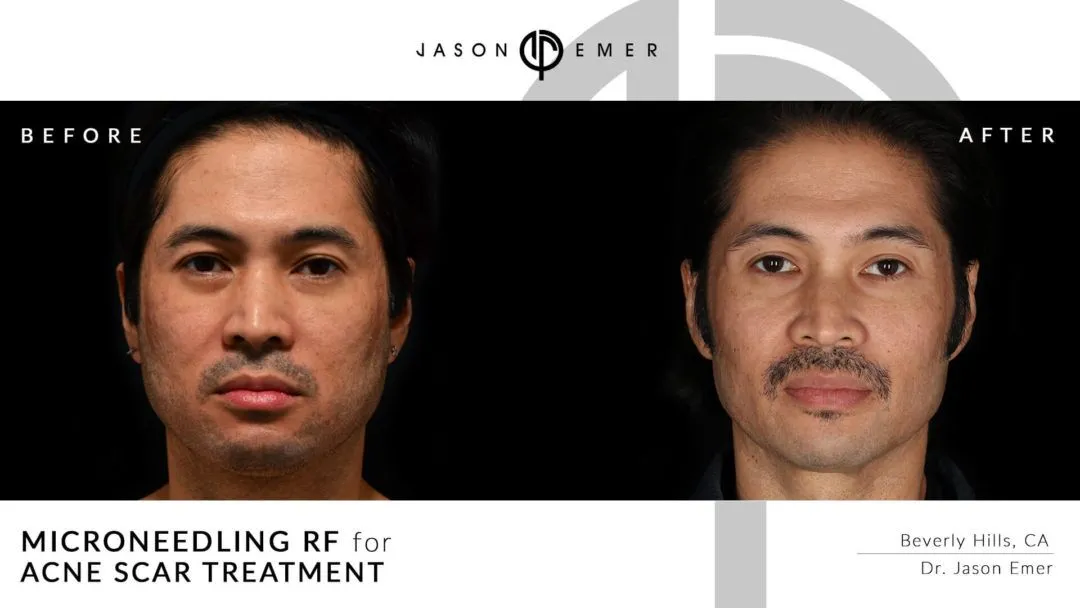
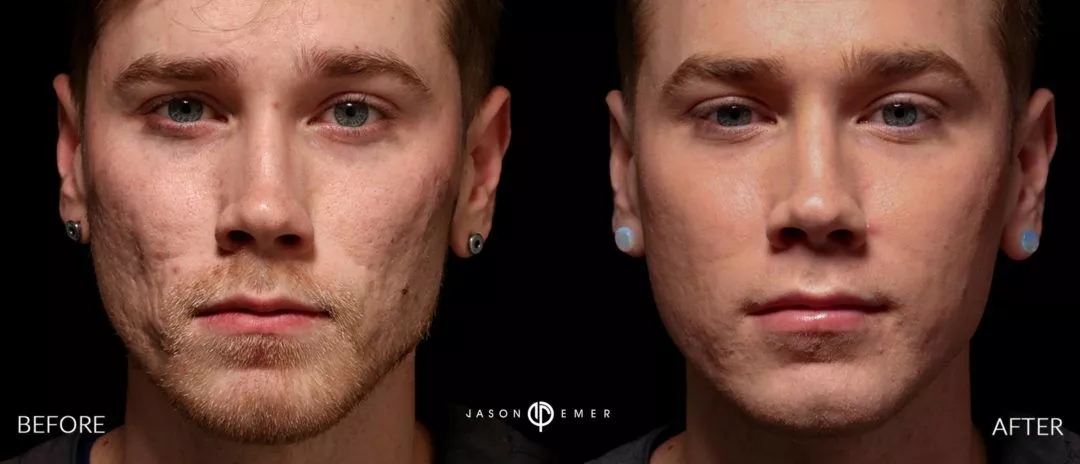
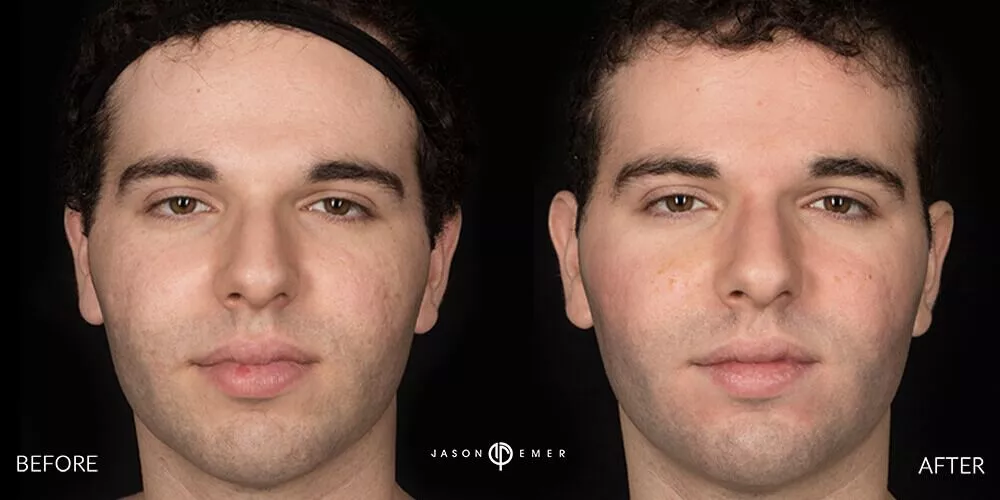
Intradermal silicone microdroplet fills deep acne scars that resurfacing alone cannot fix, placed with precision to raise depressed craters from underneath and smooth the surface in four to six weeks.
Your plan starts with Dr. Emer.
Schedule ConsultationReserve online. West Hollywood and New York.
From the filmed session

What Dr. Emer did · RE:SKN
Permanent silicone filler placed intradermally into deep ice pick and rolling scars in the temples and cheeks, filling depressed craters from underneath rather than resurfacing the top layer.
“Micro droplet silicone is a more permanent treatment. It's done by very few because it's permanent. You have to be really careful with its use.”
Dr. Emer, in the film
Targeted placement in remaining deep spots after earlier treatments had already smoothed overall texture, with reassessment at four to six weeks to determine whether a second full session or lighter maintenance is needed.
Why patients fly in
The silicone is injected within the layers of the skin to raise the scar from underneath, not on top where it can create lumps or long-term complications.
This is not a treatment for mild texture or shallow scars. Dr. Emer uses it only when the severity of deep ice pick and rolling scars justifies a permanent filler.
“You have to be really careful with its use. You don't want to develop a lump or bump or a long-term issue.”
Most patients need two larger treatments spaced about two months apart, but Dr. Emer adjusts the plan based on how the skin responds, sometimes moving to lighter maintenance instead of a second full session.
Silicone microdroplet fills what resurfacing cannot fix, and the plan may include light fractional resurfacing with TCA cross for remaining shallow spots after the deeper scars are raised.
“Doing this correctly with the right combination can give us a really, really good result.”
THE THINKING BEHIND THE TREATMENT
Follow Dr. Emer’s approach through the stages described in this case.
Back to the video ↗Earlier treatments smoothed the overall texture. This session fills what remains.
The patient in this video had already completed earlier treatments that reduced visible scarring and improved the surface. What remained were deeper craters, particularly in the temples and cheeks, that needed to be filled rather than resurfaced.
Planned around scar type and severity: intradermal placement, four to six weeks to integrate, then reassess.
“Micro droplet silicone is a more permanent treatment. It's done by very few because it's permanent. You have to be really careful with its use.”DR. JASON EMER · FROM THE VIDEO
Dr. Emer performed a touch-up session, adding small amounts of silicone microdroplet intradermally to raise the depressed areas. The before and after comparison during the session shows how much the surface has already smoothed, and this visit is about refining the remaining deeper spots.
Most patients require two larger treatments spaced about two months apart. This patient has responded so well that Dr. Emer is considering lighter maintenance treatments instead of a second full session, possibly combining light fractional resurfacing with TCA cross for any remaining shallow spots.
Deep scars filled from underneath, not just resurfaced / Patient story
Earlier treatments smoothed the overall texture. This session fills what remains.
The patient in this video had already completed earlier treatments that reduced visible scarring and improved the surface. What remained were deeper craters, particularly in the temples and cheeks, that needed to be filled rather than resurfaced.
Dr. Emer performed a touch-up session, adding small amounts of silicone microdroplet intradermally to raise the depressed areas. The before and after comparison during the session shows how much the surface has already smoothed, and this visit is about refining the remaining deeper spots.
Most patients require two larger treatments spaced about two months apart. This patient has responded so well that Dr. Emer is considering lighter maintenance treatments instead of a second full session, possibly combining light fractional resurfacing with TCA cross for any remaining shallow spots.
Silicone microdroplet is a permanent filler placed intradermally, meaning within the layers of the skin itself, to raise depressed scars from underneath. The material integrates with the surrounding tissue and fills the scar crater so the surface reads smoother.
Dr. Emer uses this technique for deep ice pick and rolling scars that respond poorly to resurfacing alone. It is not a first-line treatment: it is reserved for cases where the scarring is severe enough to justify a permanent material, and where the physician has the skill to place it without creating lumps or long-term complications.
The patient in this video had already completed earlier treatments that improved the overall texture and reduced visible scarring. What remained were deeper craters, particularly in the temples and cheeks, that needed to be filled rather than resurfaced.
Dr. Emer is performing a touch-up session in the video, adding small amounts of silicone microdroplet to areas that still show depression. The before and after comparison during the session shows how much the surface has already smoothed, and this visit is about refining what is left.
How a session is built
Planned around scar type and severity: intradermal placement, four to six weeks to integrate, then reassess.
The skin is assessed under specialized lighting to identify which scars are deep enough to justify permanent filler.
Silicone microdroplet is injected within the layers of the skin, not on top, to raise the scar from underneath.
The material settles and integrates with the surrounding tissue, and the surface smooths as the scar fills.
After four to six weeks, the physician evaluates what else is needed: a second session, lighter resurfacing, or maintenance only.
The treatment, explained
Also called intradermal silicone injection, permanent filler for acne scars, silicone scar filler, deep acne scar treatment, ice pick scar correction, rolling scar filler.
Signature procedures
Peptides / biologic optimization
Peptide and biologic protocols for recovery, body composition and longevity, with epigenetic testing. RECODEX™ peptides are available to purchase through the practice after consultation.
Why Dr. Emer
Two decades of results, a global patient base, and techniques other physicians travel to learn.
Dr. Emer built his reputation on outcomes that read as natural and last. He pioneered advanced scar revision techniques that are now taught internationally, and he personally performs every procedure in his practice.
Patients come to him when the scarring is severe: deep ice pick and rolling scars that have not responded to resurfacing, peels or other modalities, and where the risk of a permanent filler is justified by the severity of the case.
The silicone integrates with the skin and does not dissolve. That permanence is the benefit and the risk, which is why candidacy is strict.
The material is placed within the layers of the skin, not on top. Done incorrectly, it can create lumps or long-term complications.
This is not a treatment for mild texture or shallow scarring. It is for deep, depressed scars that have not responded to other modalities.
Most patients need two treatments spaced about two months apart, with lighter maintenance afterwards if needed.
Asked plainly, answered plainly
When placed correctly by an experienced physician, yes. The risk is that the material is permanent, so any error is permanent. That is why Dr. Emer reserves this technique for cases where the severity of the scarring justifies it and why intradermal placement is critical to avoid lumps or long-term complications.
The material integrates over four to six weeks. Some improvement is visible immediately after the session, but the final result appears as the silicone settles and the depressed scars fill from underneath.
Most patients need two larger treatments spaced about two months apart. Some patients, like the one in this video, respond so well that only lighter maintenance treatments are needed after the first session. The plan is reassessed at four to six weeks based on how the skin responds.
No. Silicone microdroplet is a permanent filler. That is why candidacy is strict, why the technique is reserved for severe scarring, and why intradermal placement by an experienced physician is essential.
Silicone microdroplet is used for deep, depressed acne scars such as ice pick scars and rolling scars that have not responded to resurfacing, peels or laser treatments. It is not for mild texture or shallow scarring.
No. Silicone microdroplet fills what resurfacing alone cannot fix. Dr. Emer often combines it with light fractional resurfacing or TCA cross for remaining shallow spots, creating a complete scar revision plan tailored to the patient's skin.
Because the material is permanent and requires precision. Incorrect placement can create lumps, bumps or long-term complications. Dr. Emer has performed this technique for years and teaches it to other physicians, but it is not widely offered because of the skill and experience required.
Dr. Emer assesses your scar type and severity under specialized lighting, determines whether silicone microdroplet is appropriate for your case, and builds a staged plan that may include resurfacing, TCA cross or other modalities. Candidacy, placement, dosing and follow-up are all planned at that visit.
A consultation with Dr. Emer covers your scar type, your goals, and whether silicone microdroplet fits your case.
Schedule ConsultationWest Hollywood and New York City