

Private consultation

DR JASON EMER

PERMANENT
FILLER CONCERNS

ADVANCED EXPERTISE FOR COMPLEX REPAIR

Dr Jason Emer evaluates previous filler, tissue changes and the possibilities and limits of correction

Silicone and PMMA are not hyaluronic acid fillers. When a previous injection leaves nodules, excess volume, discomfort or an unwanted contour, the first step is to identify the material and understand the tissue. Removal may be incomplete or impossible; a responsible plan starts with that reality.

PERMANENT FILLER / REVISION ASSESSMENT

KNOW THE MATERIAL
UNDERSTAND
THE OPTIONS

A lump, a change in contour or discomfort after an injection begins with a simple question: what was placed, where, and when?

Silicone and PMMA are permanent materials. Dr Emer’s revision assessment considers the original injection, the surrounding tissue and the concern now. Management can be limited or staged; a promise to remove every trace would skip the decisions that matter.

See the story in practice

THE REASON BEHIND THE PLAN

THE MATERIAL
CHANGES THE PLAN

Compare the questions that belong to each material. Identification requires records and clinical assessment.

A permanent material in living tissue

The assessment considers the location of the silicone, inflammation, migration and how it relates to surrounding tissue. Management or removal may be incomplete and may require more than one stage.

Bring records and product information if you have them. The appearance alone cannot identify the material.

Read the practice’s lip-removal approach
Microspheres require a different conversation

PMMA-containing filler is permanent. It cannot be dissolved like hyaluronic-acid filler. The clinician assesses whether a nodule, tissue reaction or contour concern is present before discussing intervention.

Removal may be difficult or impossible in some locations.

Read FDA information on filler removal

Reconstruct the treatment history

If you do not know the material, gather the injector’s records, dates, photographs and any packaging or product names. The team can decide what additional assessment is needed.

The next step is assessment, not another injection to hide the problem.

Prepare for a revision consultation

SILICONE AND PMMA REMOVAL ASSESSMENT, EXPLAINED

THE MATERIAL
CHANGES THE PLAN

Silicone and PMMA differ from temporary fillers. Knowing what was injected, where and when can change the choices available for evaluation and revision.

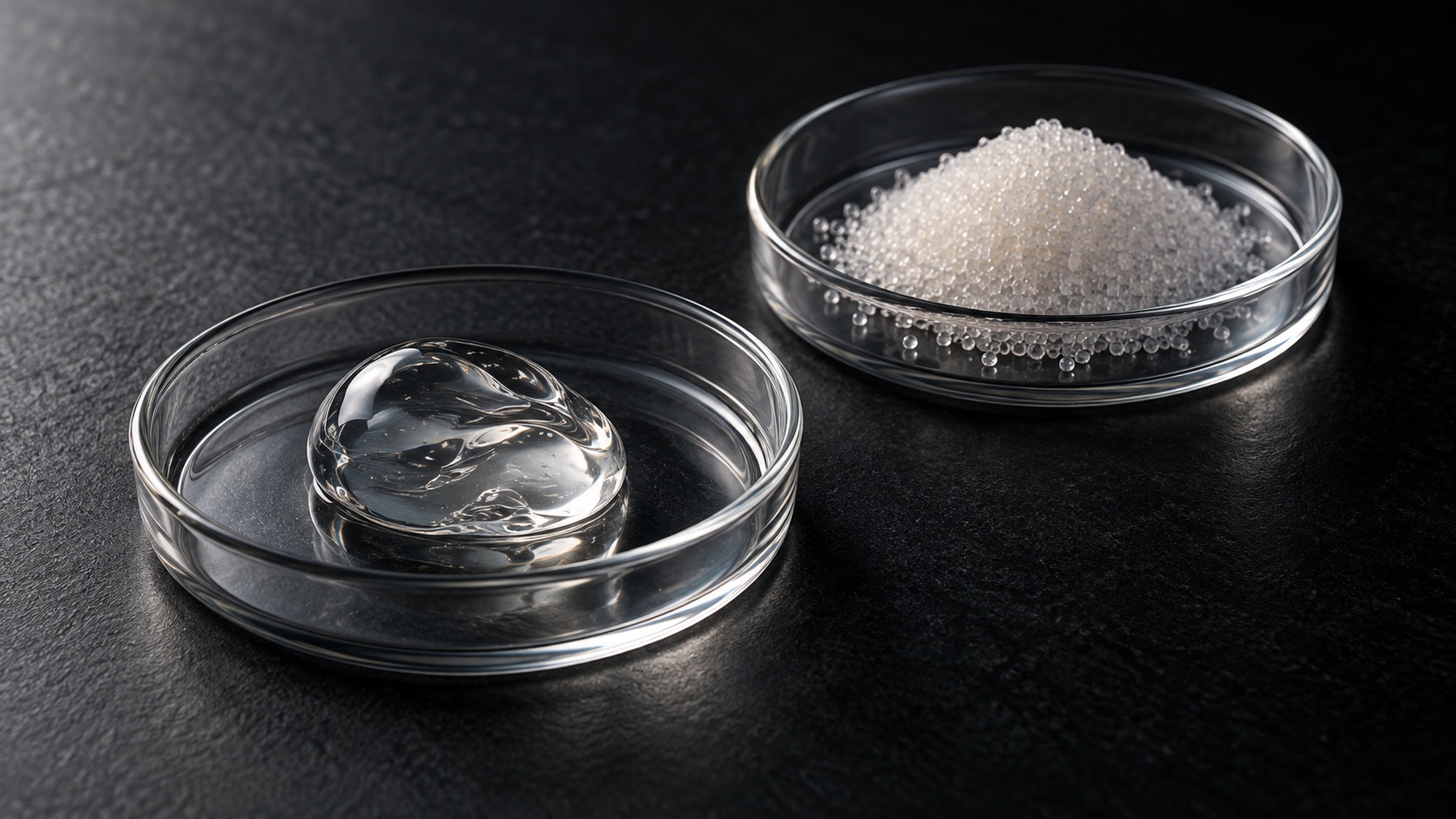
Conceptual gel and microsphere material samples in glass dishes

Recover the history
before deciding

Bring product names, treatment dates and previous procedure records when available. A remembered name or appearance alone may not establish exactly what is present.

Permanent is
a different conversation

Silicone and PMMA cannot be treated as though they were hyaluronic acid. Material may be dispersed among tissues, and removal can be difficult or incomplete. These samples illustrate material categories, not your tissue.

Define a realistic
revision objective

The plan may address symptoms, contour or specific affected areas. Discuss the possibility of staged care, remaining material, scars and other risks before agreeing to a procedure.

FROM THE PRACTICE

SPECIFIC TO
THE AREA INVOLVED

The practice’s published permanent lip-filler removal page explains one anatomical pathway. A body-injection concern needs its own assessment and cannot be represented by an unrelated lip result.

PERMANENT LIP FILLER

Understand the revision conversation

Read the practice’s existing explanation, then bring the location, material and treatment history to your consultation.

Read the practice explanation

YOUR CARE, IN SEQUENCE

HISTORY FIRST
RECOVERY INCLUDED

The extent of any intervention determines wound care, activity restrictions, follow-up and whether later correction is possible.

Discuss your individual plan

Reconstruct the history

Bring injection dates, locations, product names, approximate amounts and previous treatment for complications. Mark anything that is uncertain.

Explain the symptoms

Describe when changes began and whether they come and go. New pain, skin breakdown or suspected infection needs clinical assessment, not just cosmetic planning.

Understand the proposal

Ask what the clinician intends to treat, what may remain and whether the plan involves medication, a procedure, surgery or referral.

Plan continuing care

Discuss wound care, review visits and possible later stages. Correction should include a plan for unresolved symptoms or new concerns.

THE QUESTIONS WORTH ASKING

LET’S GET
SPECIFIC

Open a question for the details. Bring your own questions to the consultation, too.

Can silicone or PMMA be dissolved like HA?

No. Hyaluronidase is not a dissolving treatment for silicone or PMMA. Material identification is central to the discussion.

Is complete removal always possible?

No. Permanent material may be difficult or impossible to remove fully. A clinician should explain the realistic aim of any proposed intervention.

Does this include breast implants?

This page concerns injected filler material. An implant and its surrounding capsule require a different surgical assessment.

Will removal restore my original appearance?

That cannot be promised. Tissue changes, scars and volume loss may remain or follow treatment.

Can I add more filler instead?

Do not assume that adding volume will solve a problem involving previous material. First discuss the existing injection and any symptoms.

What if I do not know what was injected?

Say so clearly and bring any records or photographs available. The treatment plan should account for that uncertainty.

The Evolution of You™

START WITH
WHAT IS ALREADY THERE

Share the location, symptoms, timing and known material with the practice. An individual assessment establishes which options are appropriate.

Request your consultation

Continue your research

Dr Emer: permanent lip filler removalFDA: filler removal and risksFDA: injectable silicone warning

Opening imagery is campaign artwork. The explanatory imagery illustrates the discussion; it is not a patient result or a procedural guide.