
Chin Liposuction Starts With the Cause of a Double Chin
Most patients assume submental fullness is purely an excess fat problem. In Dr. Emer's practice, evaluation begins with the anatomy beneath the profile. Chin liposuction removes fat beneath the chin through small incisions, but it does not tighten loose skin or alter bone structure. An anatomical exam helps determine whether fat extraction alone achieves definition or if alternative methods are required.
The procedure typically uses local anesthesia and a fine cannula. Swelling and bruising occur initially, and the final contour settles over several months.
Dr. Jason Emer, MD, FAAD, is a board-certified dermatologist with experience in liposculpture.
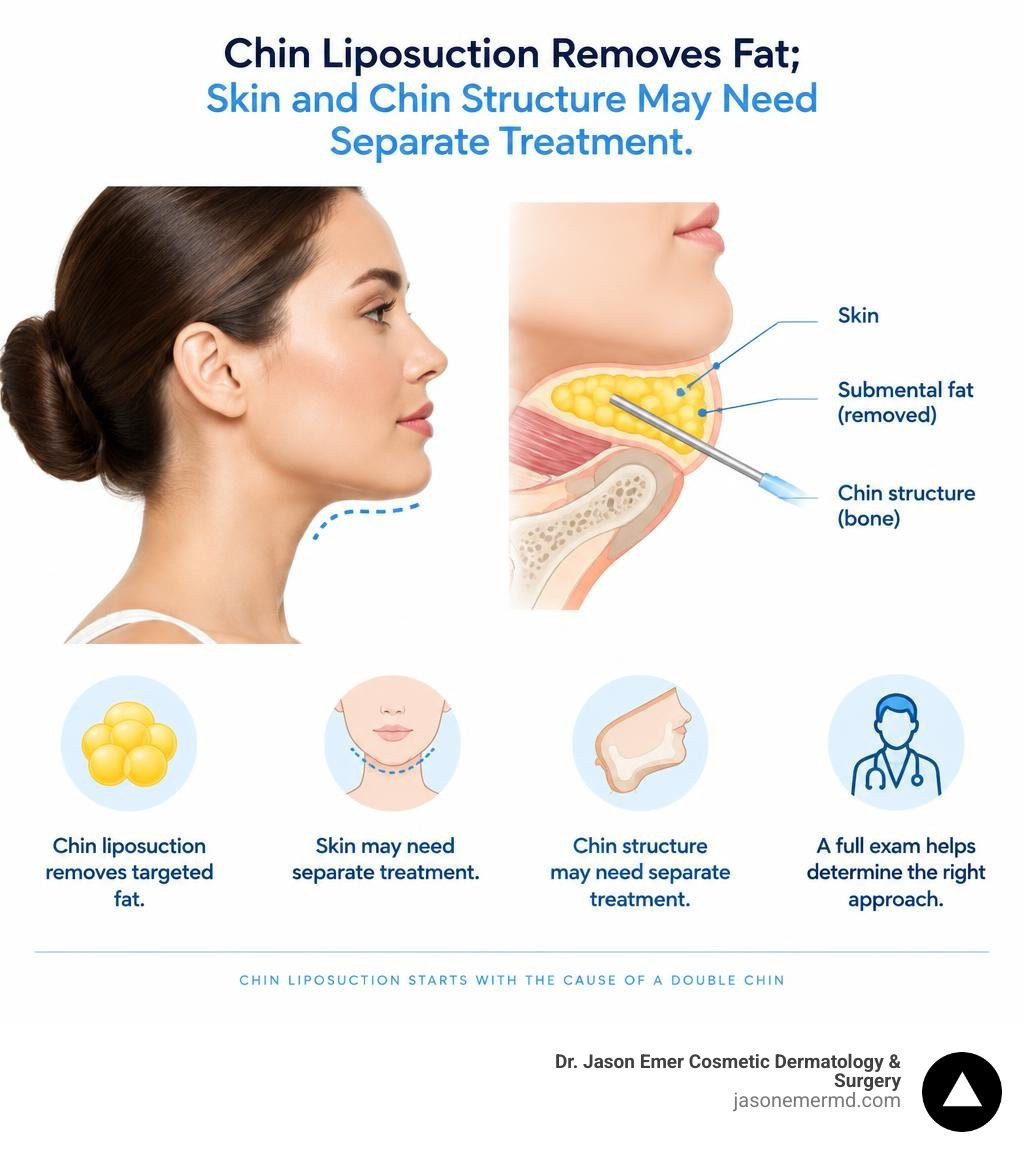
Basic chin liposuction glossary:
Chin liposuction removes targeted submental fat through a planned surgical approach.
Submental fat rests between the skin and the platysma muscle, often resisting diet and exercise. Small access ports allow a cannula to enter the subcutaneous plane. Tumescent fluid numbs tissue, constricts vessels, and loosens adipocytes. The American Society for Dermatologic Surgery publishes patient information on tumescent liposuction outlining how fluid infusion minimizes bleeding during fat removal. The procedure is frequently performed as awake liposuction, avoiding general anesthesia.
Evaluating structural anatomy before chin liposuction
Surgeons assess skin elasticity, platysma banding, and skeletal architecture before recommending surgery. Understanding submental contouring and bone structure is essential because a recessed mandible can mimic excess volume. Skin quality also influences outcomes; elastic skin redrapes smoothly, while lax tissue may require distinct tightening modalities.
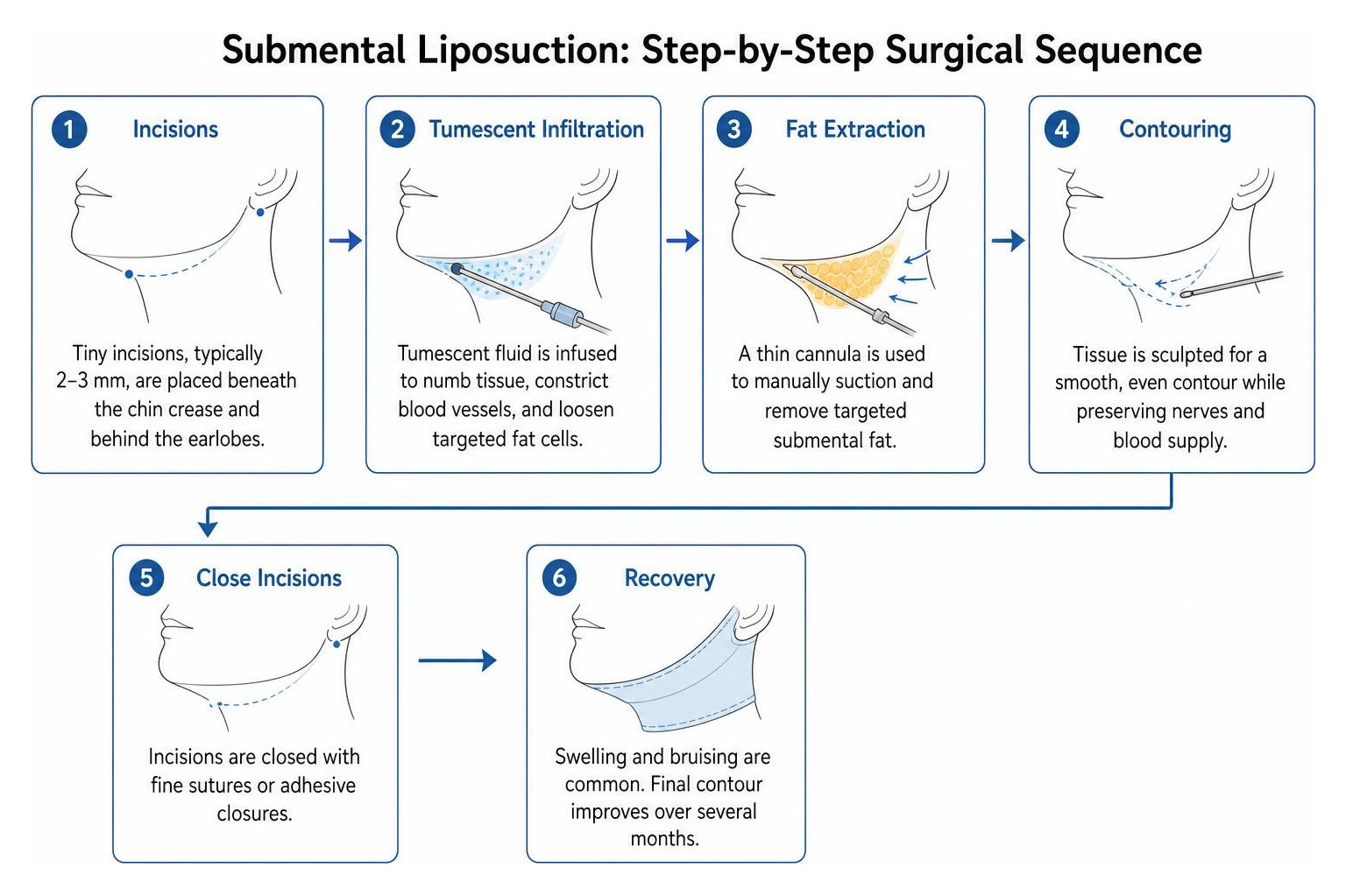
The step-by-step surgical technique used during chin liposuction
Micro-incisions are placed beneath the chin and behind earlobes. Dr. Emer uses fine cannulas to sculpt tissue while protecting neurovascular structures. In select cases, ultrasound energy via Vaser liposuction emulsifies fibrous fat for smooth extraction. The cannula passes in a fan-like pattern, removing fat gradually to avoid asymmetry or surface irregularities.
Surgical and nonsurgical approaches address submental fullness in different ways.
Surgical extraction debulks fat in a single session, whereas noninvasive options require multiple visits. Injectable Kybella uses synthetic deoxycholic acid to disrupt adipocyte membranes over several weeks.
| Treatment Modality | Primary Mechanism | Typical Treatment Course | Primary Tradeoff |
|---|---|---|---|
| Submental Liposuction | Mechanical cannula aspiration | Single procedure | Surgical downtime and compression required |
| Deoxycholic Acid | Chemical adipocytolysis | 2 to 4 injection sessions | Marked post-injection swelling; gradual clearance |
| Non-Intervention / Observation | Baseline maintenance | Ongoing | Submental fullness remains unchanged |
Non-intervention is also a legitimate choice for patients who prefer to monitor the area.
When energy-based devices or skin-tightening lasers are used alongside contouring, skin type is an important consideration. Deeper skin tones carry an increased risk of post-inflammatory hyperpigmentation (PIH), meaning treatment sequencing and energy settings must be tailored to protect melanin-rich skin.
Complementary procedures for lower facial definition
Fat removal alone cannot correct skeletal retrusion or significant skin laxity. Individuals with weak projection may consider chin implants for structural balance. Those with broader heaviness may benefit from face and neck liposuction, while minor asymmetry can be refined using non-surgical jawline contouring.
Recovery after surgical contouring depends on healing, compression, and follow-up.
Proper postoperative care guides sculpted skin against underlying muscle tissue. A dedicated compression garment reduces fluid collection and controls swelling. Understanding the submental contouring swelling timeline helps establish realistic expectations.

Managing recovery milestones and potential procedural risks
Surgical contouring carries potential risks, including infection, hematoma, seroma, temporary numbness, asymmetry, and contour irregularities. Following post-procedure protocols minimizes these concerns.
- Days 1–3: Continuous compression garment wear; peak bruising and swelling.
- Week 1: Initial swelling subsides; light desk work resumes.
- Weeks 2–4: Residual tightness softens; compression transitions to nighttime wear.
- Months 1–3: Internal healing resolves; refined submental contours emerge.
Frequently asked questions about submental contouring
How long does recovery typically take after surgery?
Most individuals take three to seven days away from work, delaying strenuous exercise for two weeks.
Can fat return to the submental area over time?
Targeted adipocytes are aspirated, though remaining fat cells can enlarge with significant weight gain.
How does surgical contouring differ for male and female patients?
Face and neck lipo for men defines a square mandibular border, whereas female facial sculpting creates a smooth, tapered transition.
What to remember
- Chin liposuction removes subcutaneous fat through micro-incisions but does not correct loose skin or skeletal bone position.
- Compression garments, swelling management, and activity modifications are necessary steps for proper healing and contour definition.
- A thorough structural evaluation helps determine whether surgical fat removal, noninvasive modalities, or structural augmentation matches your anatomy.
Scheduling a consultation with Dr. Emer provides the opportunity to evaluate your lower facial structure and discuss surgical or non-surgical options.
This content is for general education and does not provide a diagnosis, determine candidacy, or replace a consultation with a licensed clinician.
This resource provides general educational information. Treatment recommendations depend on your health, goals, and consultation with a qualified clinician.