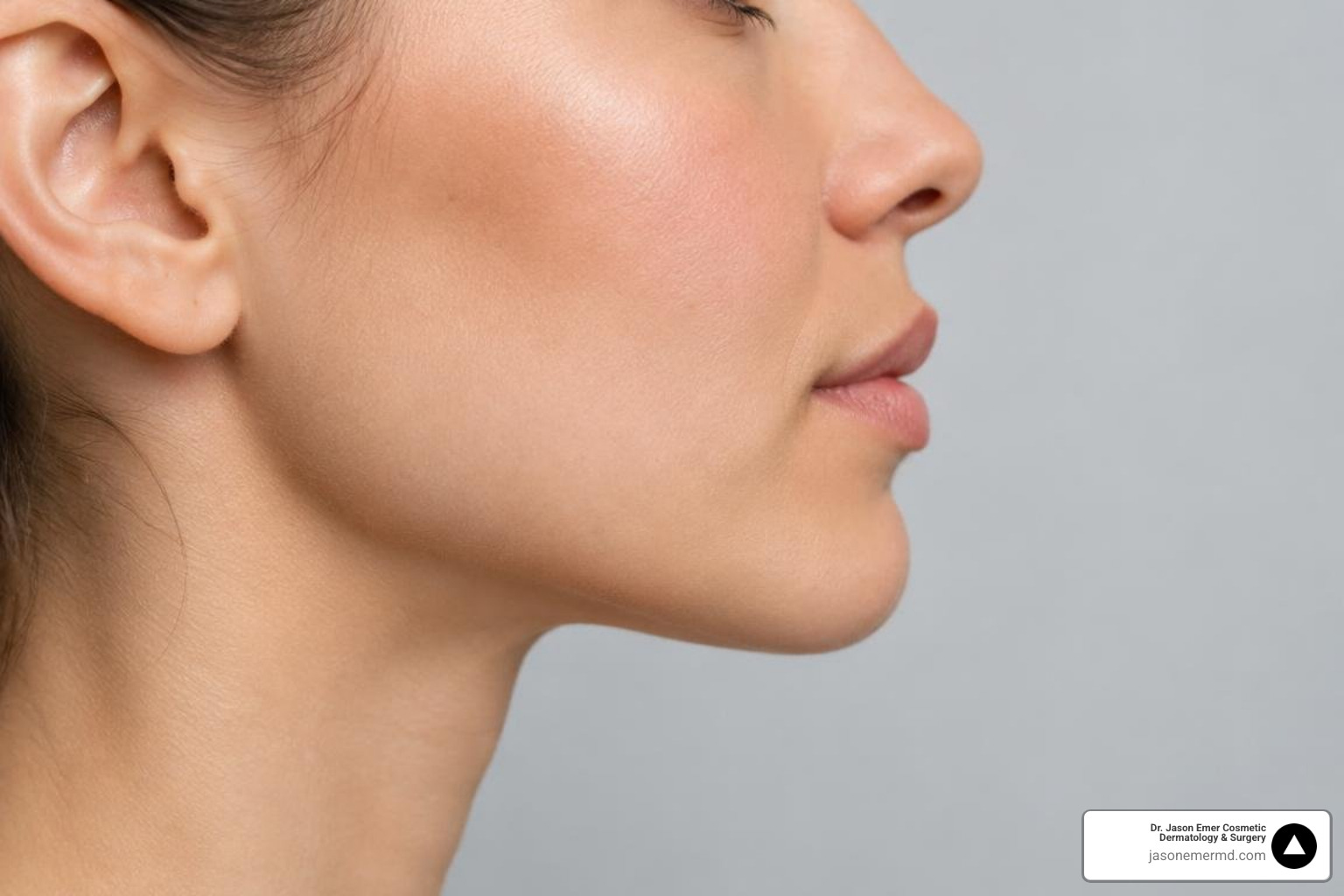
Chin lipo before and after: why bone structure matters
Most people assume evaluating chin lipo before-and-after photos is simply a matter of measuring fat removal. In clinical practice, evaluating outcomes begins with the underlying skeletal architecture. Chin liposuction reduces subcutaneous adipose tissue, but bone structure dictates the final jawline contour. When reviewing results, assessing head position, lighting, and healing milestones reveals true structural change.
Jason Emer, MD, FAAD, is a board-certified dermatologist with more than 19 years of experience in liposculpture and body contouring. Dr. Emer evaluates chin lipo before and after outcomes within the context of each patient's facial anatomy, identifying where fat reduction ends and structural boundaries begin.
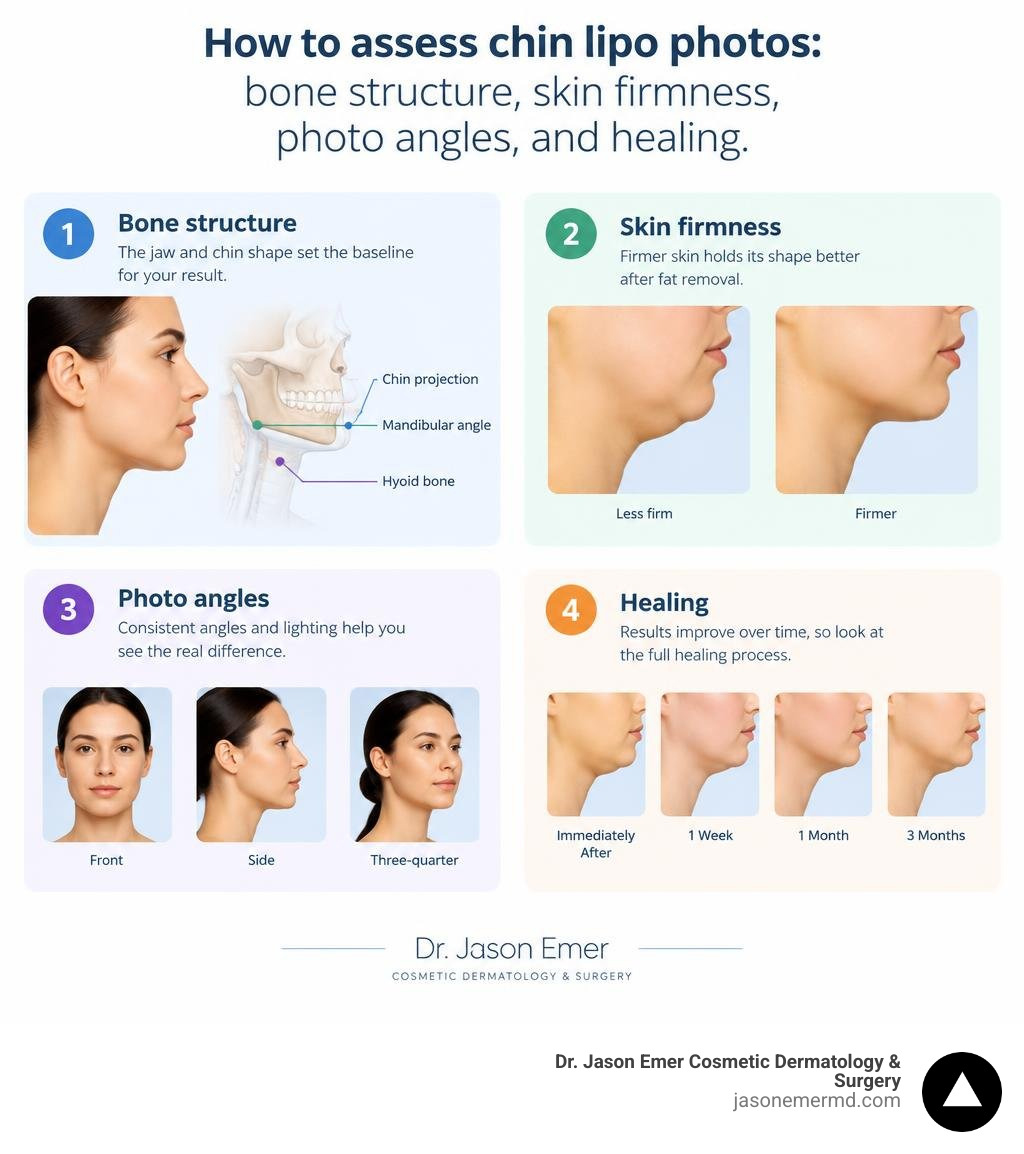
Skeletal structure establishes the baseline for chin and jawline projection.
The mandibular framework dictates how soft tissue drapes across the lower face. When planning submental contouring, underlying bone plays a major role alongside soft tissue volume. Dr. Emer identifies key structural landmarks, including the mandibular angle, chin projection, and the position of the hyoid bone. These landmarks are consistent with the anatomical descriptions outlined by the American Academy of Facial Plastic and Reconstructive Surgery.
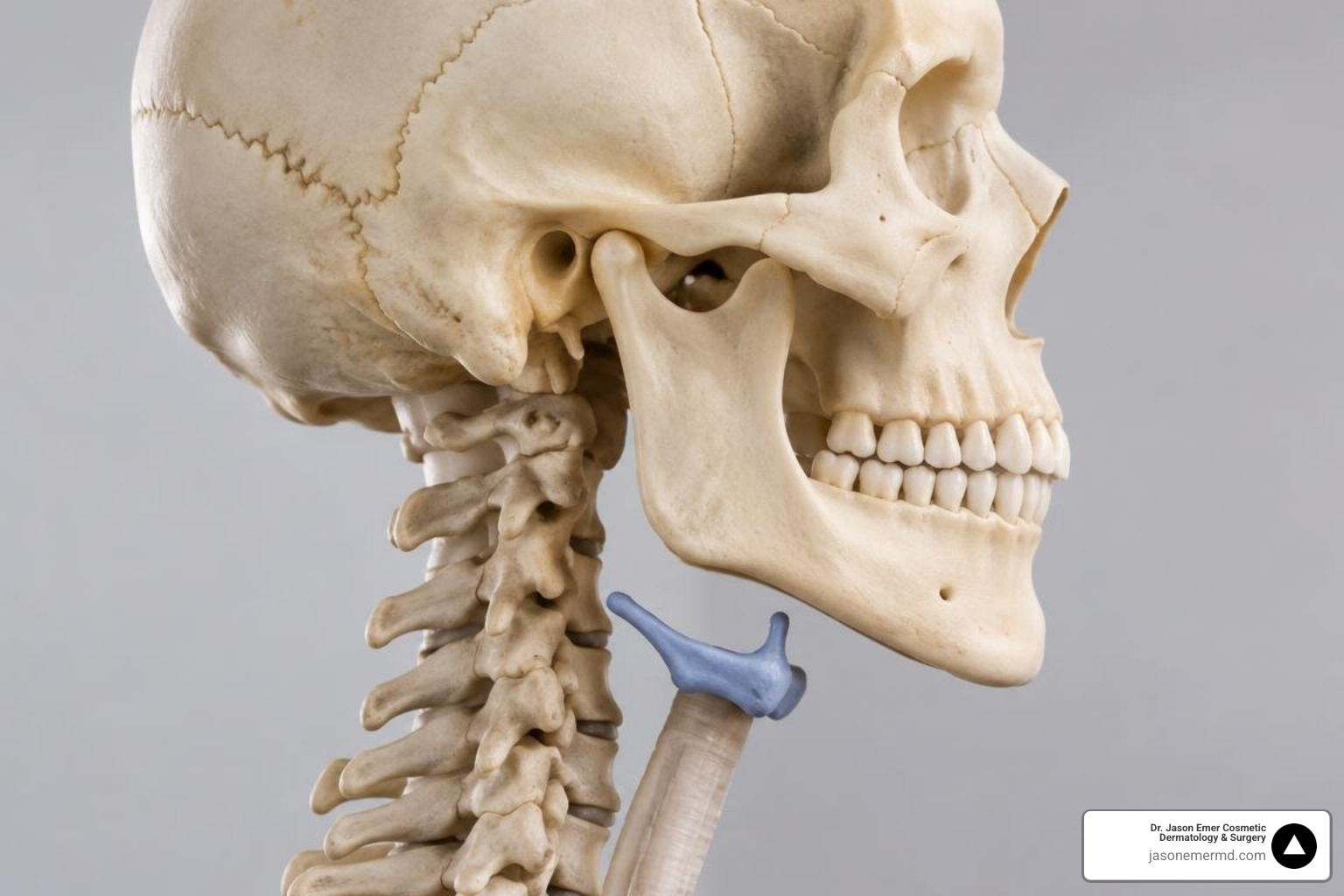
A low hyoid bone naturally blunts the cervicomental angle, meaning fat removal alone cannot create an acute neck contour. Retrognathia also limits structural projection. When understanding liposculpture, recognizing these boundaries helps establish realistic goals rather than relying on fat removal to compensate for skeletal limitations.
Reviewing neck lipo before and after galleries requires noting mandibular width and symmetry, since chin lipo before and after comparisons can look dramatically different depending on the underlying bone. A wide jawline provides an inherent shelf for soft tissue. Platysma muscle tone and skin elasticity also govern tissue retraction. Modalities like VASER liposuction facilitate precise tissue separation and mild skin contracture, though severe laxity over a weak skeletal base will not fully contract through aspiration alone. In these cases, the skin itself, rather than the fat layer, becomes the limiting factor in the final result.
Chin and neck contours reflect the interaction of multiple tissue layers.
Submental fullness involves several anatomical compartments: skin, subcutaneous fat, platysma muscle, subplatysmal fat, and submandibular glands.
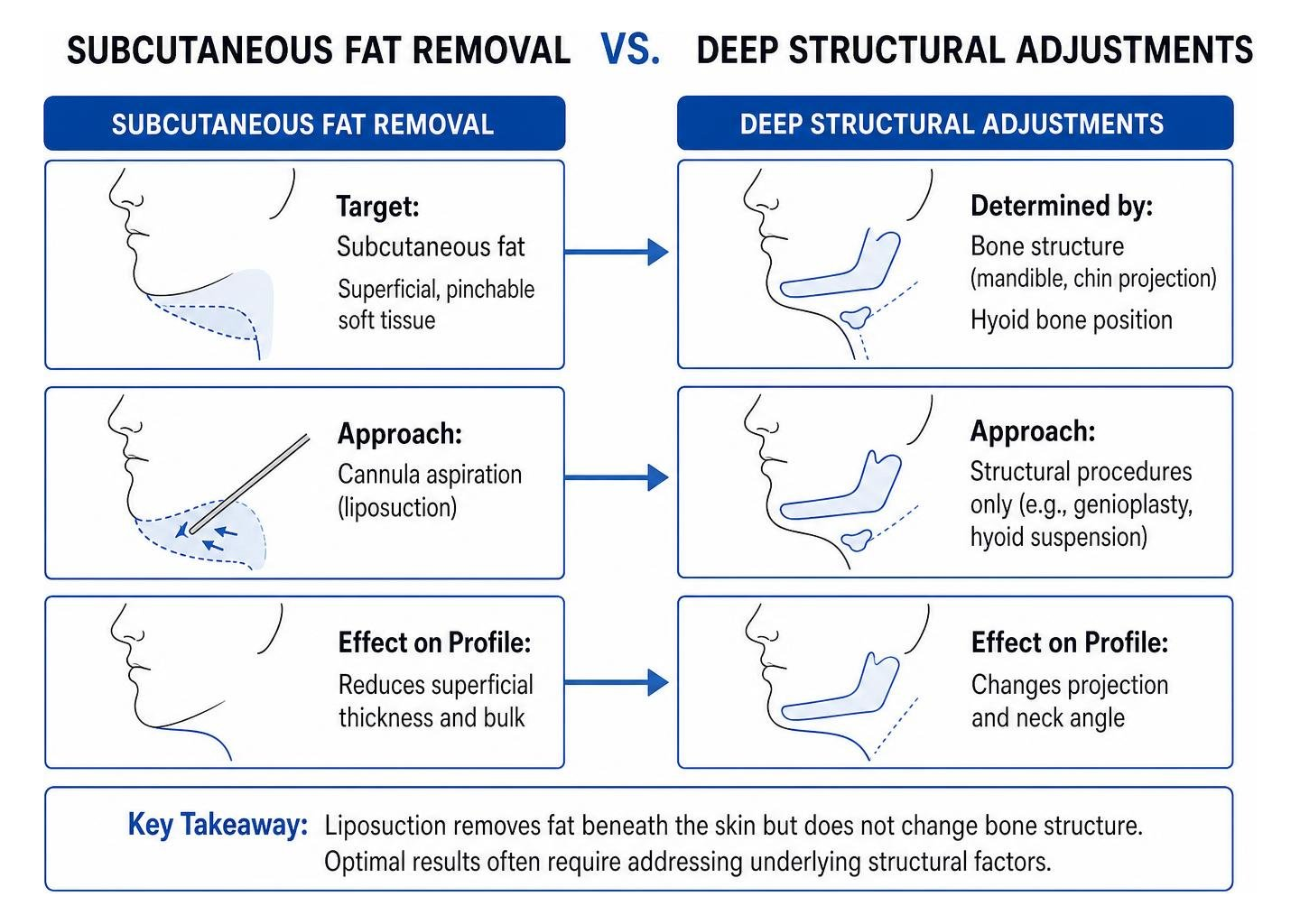
Dr. Emer assesses these layers during evaluation. In specialized plans, such as face and neck lipo for men, respecting anatomical boundaries preserves definition without over-resecting superficial fat. Overcorrection of the superficial layer can leave a hollowed or uneven appearance, which is why layer-by-layer assessment matters more than aggressive volume reduction.
| Anatomical Layer | Treatment Approach | Impact on Profile |
|---|---|---|
| Subcutaneous Fat | Cannula aspiration / Liposuction | Reduces pinchable, superficial fullness |
| Platysma Muscle | Surgical suspension / Plication | Tightens muscular banding; sharpens neck angle |
| Subplatysmal Fat | Direct surgical excision | Addresses fullness resistant to liposuction alone |
| Mandibular Bone | Augmentation / Structural support | Enhances soft tissue redraping and projection |
Healing is an active part of the aesthetic outcome, not a passive afterthought. Following a structured swelling timeline guide helps patients track postoperative fluid retention. Compression garments support early adherence of skin flaps, and patients should expect gradual resolution of swelling over several weeks rather than an immediate final result.
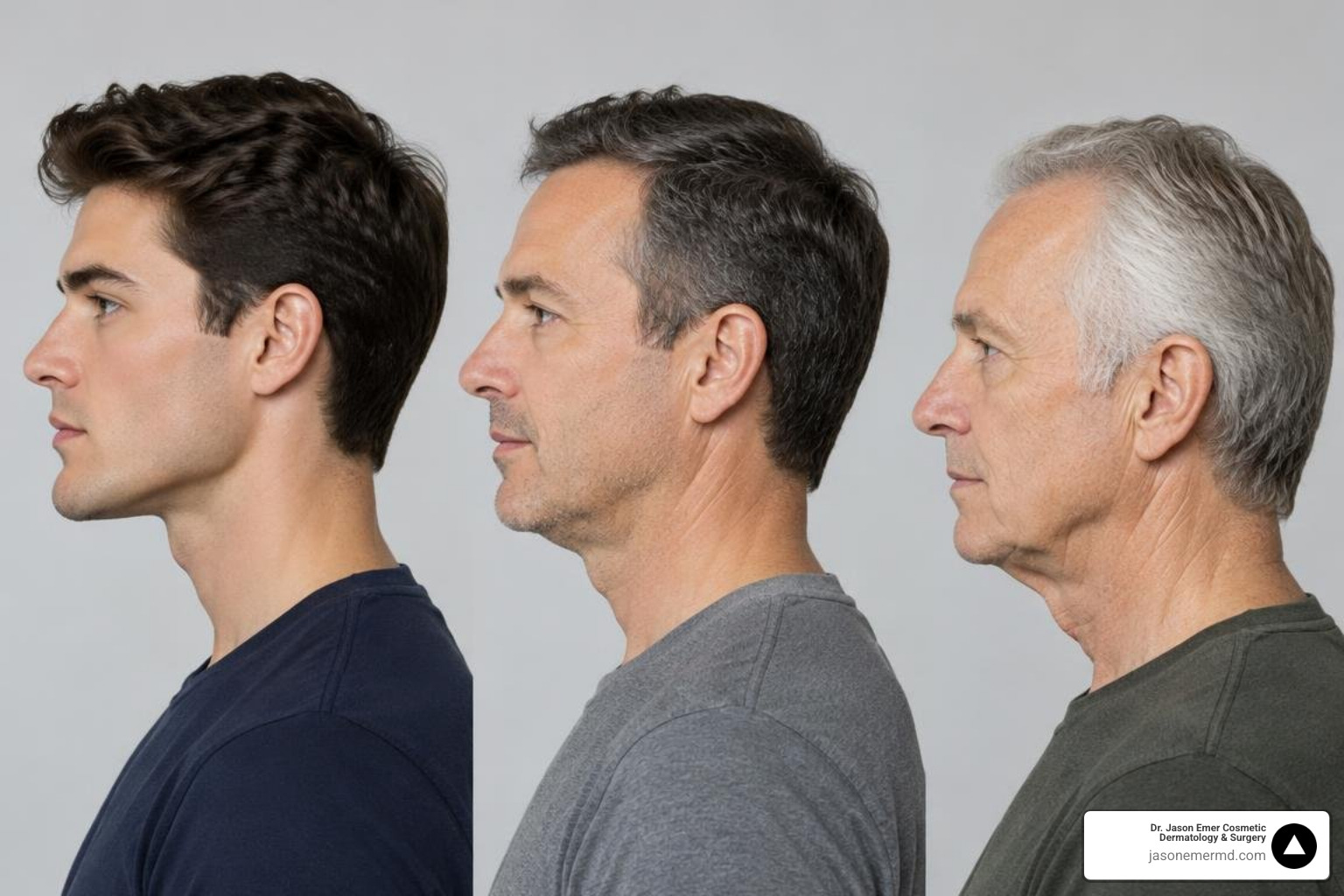
Natural aging brings bony resorption along the gonial angle alongside decreased collagen synthesis. Younger patients experience quicker skin snap-back, whereas structural changes in older patients may require staged approaches that combine fat reduction with later structural support.
Contouring strategies can address structural support alongside localized fullness.
A thorough treatment plan addresses volume and structure together. When submental adiposity coexists with a weak skeletal foundation, standalone aspiration often yields incomplete definition, and expectations should be set accordingly before any procedure begins.
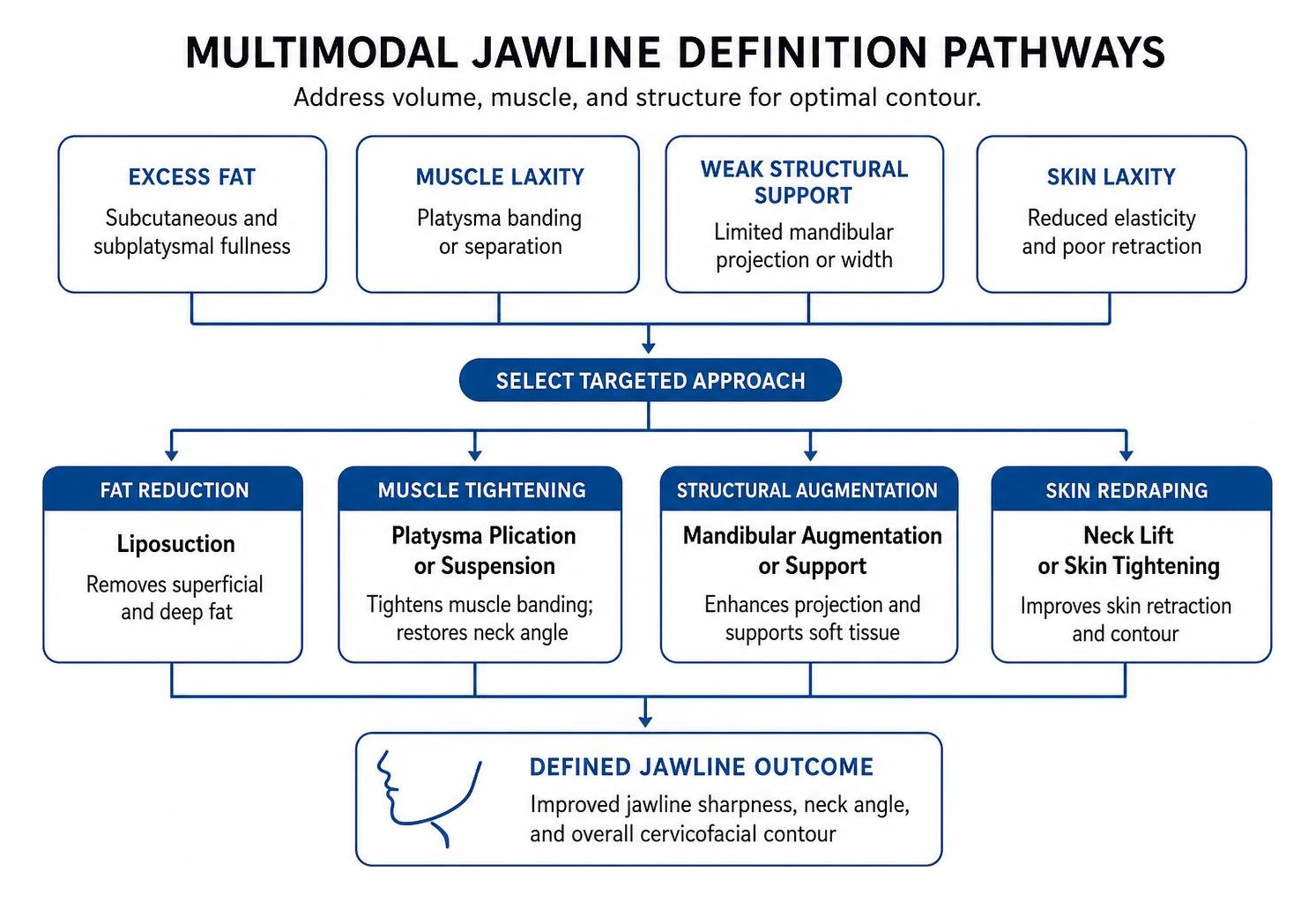
For mild skeletal deficiency, non-surgical jawline contouring with dermal fillers can build projection without surgery. When skin excess or muscular laxity predominates, a surgical neck lift may be indicated instead. Staging considerations are detailed in the chin lipo and jaw contouring overview, and in many cases a combined approach is more realistic than any single procedure.
Submental liposuction carries procedural risks, including temporary numbness, contour irregularities, or asymmetry. When energy-based skin tightening devices are used, skin phototype requires evaluation. In darker skin tones (Fitzpatrick IV–VI), thermal energy carries an elevated risk of post-inflammatory hyperpigmentation (PIH), requiring modified settings, careful spacing, and sometimes a different treatment sequence altogether. Choosing observation remains a valid alternative for those wishing to avoid procedural downtime, and declining treatment is never an incorrect choice.
Frequently asked questions about submental contouring
How does a recessed chin affect submental lipo outcomes?
A recessed chin shortens the distance between the chin and neck. Without sufficient bony projection, soft tissue lacks tension, limiting jawline definition after fat removal.
What role does hyoid bone position play in neck contouring?
The hyoid bone anchors deep neck musculature. A low hyoid sets a physical floor for the cervicomental angle, creating an anatomical boundary for neck sculpting.
Why do visual results differ between patients with similar fat volume?
Outcomes depend on skeletal foundation, skin thickness, muscular tone, and healing dynamics. Bone structure provides the framework over which soft tissue settles, which is also why chin lipo before and after photos should always be read alongside a profile view rather than in isolation.
What to remember
- Jaw projection and hyoid position establish the structural foundation for submental contouring outcomes.
- Submental fullness involves layered tissues that may require fat reduction, muscular tightening, or structural augmentation.
- Procedural options carry unique tradeoffs and recovery timelines that must be aligned with individual anatomy.
A clinical evaluation provides the setting to assess structural anatomy and determine appropriate interventions. Explore treatment planning during a consultation for surgical chin and jawline contouring with Dr. Emer.
This content is for general education and does not provide a diagnosis, determine candidacy, or replace a consultation with a licensed clinician.
This resource provides general educational information. Treatment recommendations depend on your health, goals, and consultation with a qualified clinician.