
Evaluating chin lipo versus Kybella begins with an anatomical assessment of fat depth and skin quality.
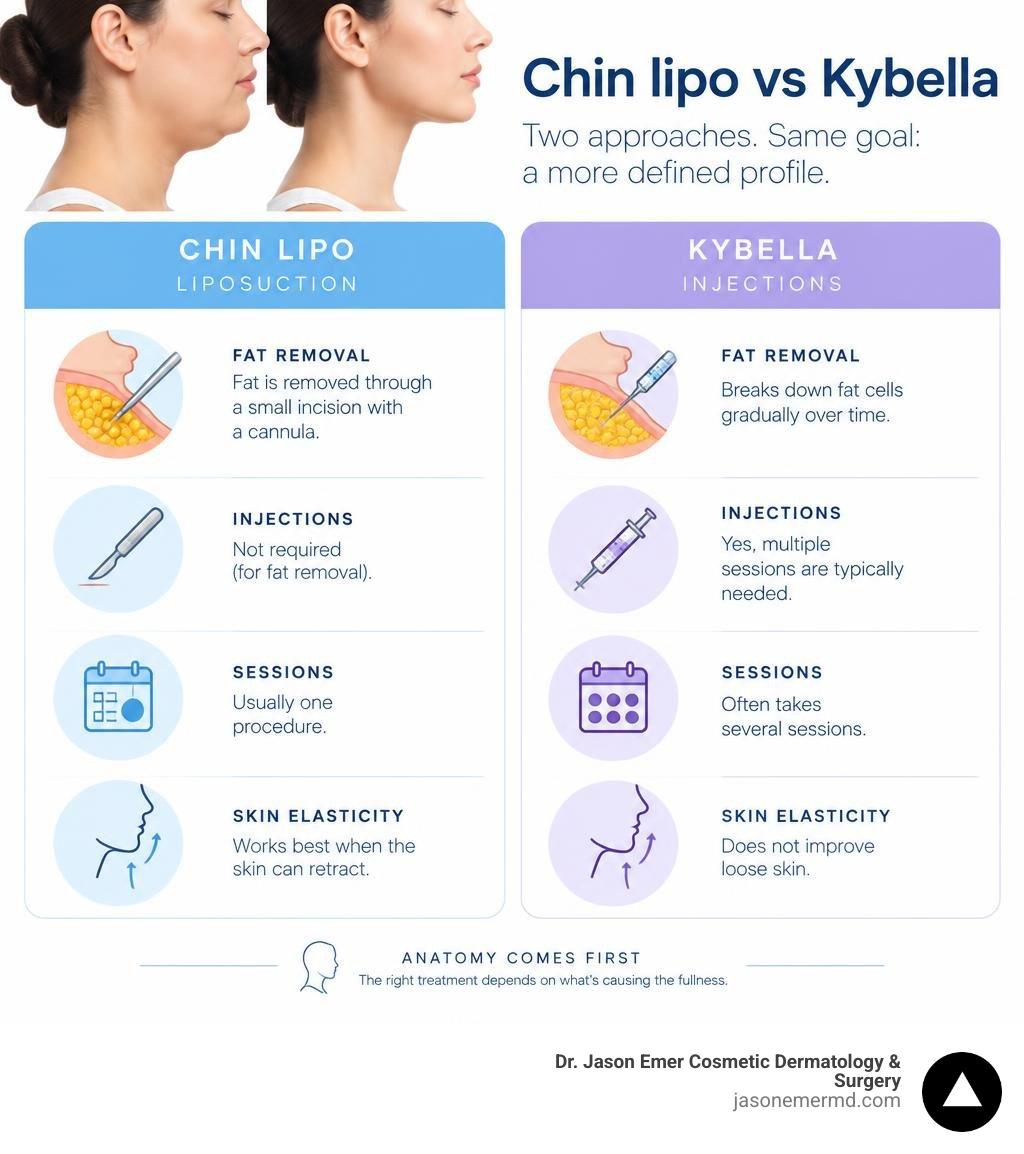
Most patients assume submental treatment is just surgery versus injections. In clinical practice, evaluating chin lipo vs Kybella starts with an anatomical map of fat depth and skin quality. Chin liposuction mechanically removes superficial fat, typically in a single procedure. Kybella uses deoxycholic acid to dissolve fat cells across multiple staged sessions. Neither modality corrects severe skin laxity.
Jason Emer, MD, FAAD, is a board-certified dermatologist specializing in facial rejuvenation. In his practice, treating submental fullness begins with identifying the underlying anatomical layers.
Helpful resources on submental contouring:
Chin lipo vs Kybella uses different methods to reduce submental fat.
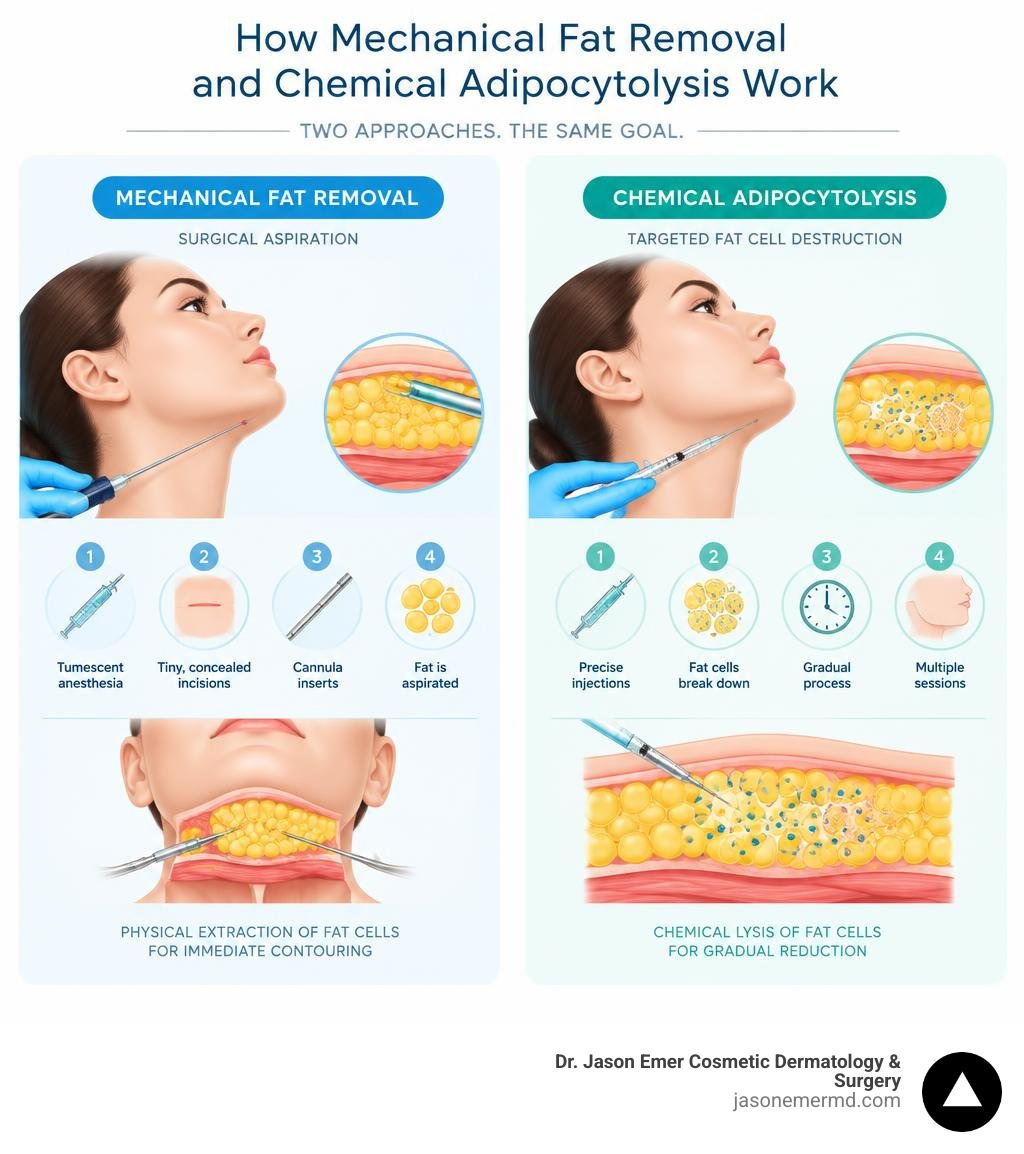
Submental fat reduction relies on two distinct mechanisms: mechanical extraction and chemical destruction. Selecting an approach requires evaluating how fat cells respond to physical removal versus targeted cellular lysis.
Surgical aspiration removes fat mechanically
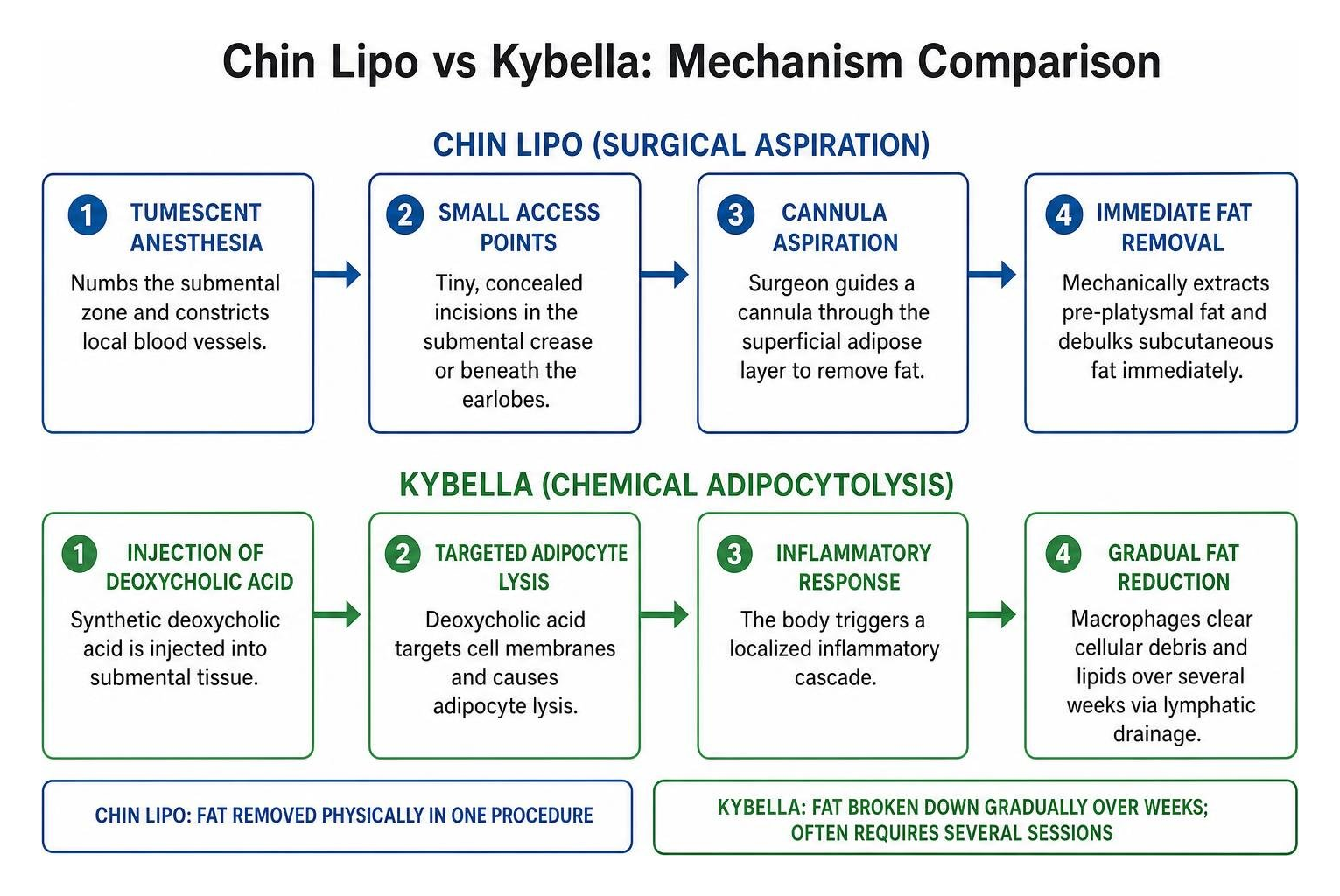
Surgical fat removal extracts pre-platysmal fat directly. A clinician introduces tumescent anesthesia to numb the submental area. Through tiny access incisions in the submental crease or behind the ears, the surgeon guides a cannula to debulk the adipose layer. Understanding these chin liposuction procedure details illustrates how physical extraction sculpts the jawline in one visit.
Deoxycholic acid works through chemical adipocytolysis
Injectable fat reduction uses synthetic deoxycholic acid. Injected into pre-platysmal tissue, it causes targeted cell lysis. Macrophages clear cellular debris over several weeks. Clinical details regarding Kybella submental fat reduction demonstrate that volume decreases gradually. Comparative findings on submental fat treatments confirm that chemical dissolution requires time for the body to metabolize targeted cells.
Recovery after chin lipo or Kybella depends on the treatment and healing response.

| Factor | Chin Liposuction | Kybella (Deoxycholic Acid) |
|---|---|---|
| Primary Mechanism | Mechanical aspiration via cannula | Chemical adipocytolysis via injection |
| Typical Session Count | Single surgical session | Multiple injection sessions (often 2 to 4) |
| Immediate Downtime | 5 to 7 days off desk work | 1 to 2 days off normal routine |
| Garment Support | Compression garment required (1 to 2 weeks) | None required |
| Swelling Profile | Moderate post-op swelling; peaks in 48–72 hours | Acute inflammatory swelling ("bullfrog" effect) |
| Known Clinical Risks | Asymmetry, contour irregularity, hematoma | Marginal mandibular nerve neuropraxia, dysphagia |
How do recovery timelines differ for chin lipo vs Kybella?
Chin liposuction requires wearing an elastic compression garment for several days to support tissue adherence. Most individuals resume desk work within 5 to 7 days. Residual swelling resolves over several months, as detailed in the submental contouring swelling timeline guide.
Injectable deoxycholic acid triggers acute inflammatory edema lasting 3 to 7 days per session. Because a complete series often requires multiple visits spaced 6 to 8 weeks apart, total swelling time accumulates over months.
Both treatments involve clinical tradeoffs. Kybella commonly causes injection-site reactions and temporary swelling, and may occasionally affect the marginal mandibular nerve or swallowing. Liposuction risks include asymmetry, contour irregularity, and hematoma.
How do treatment plans differ?
Surgical contouring requires a single operative session lasting 30 to 60 minutes. Injectable cytolysis requires staged appointments; the number of sessions varies by individual response and aesthetic goals.
Anatomy and tissue quality help shape an individualized submental contouring plan.
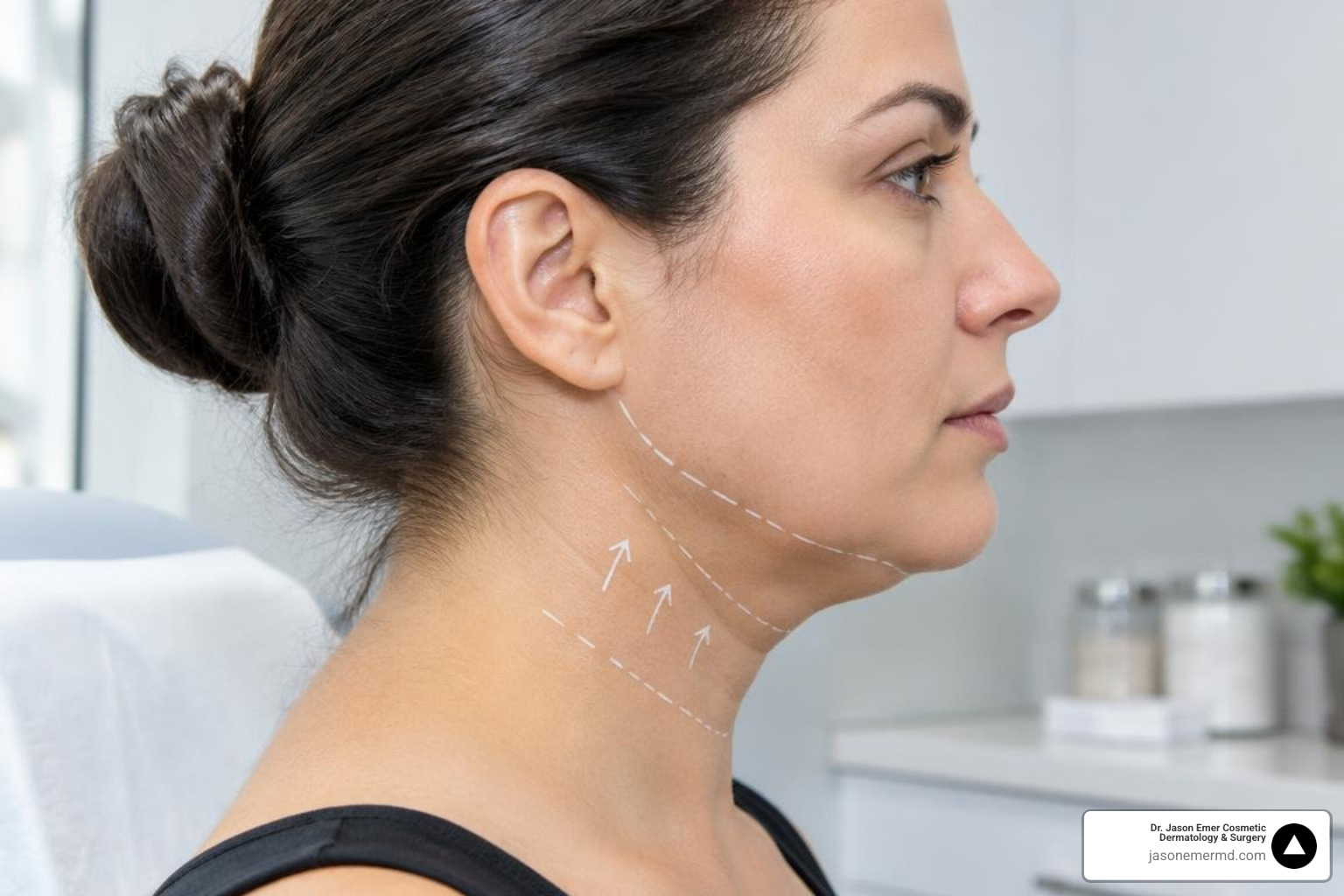
Submental fullness involves more than superficial fat. Skin retraction is essential; debulking volume beneath lax skin can accentuate tissue laxity. When skin laxity is present, standalone fat reduction may be combined with energy devices or surgical excision as an alternative path, or the patient may choose to do less and monitor over time. When applying laser or energy devices to tighten surrounding skin, practitioners evaluate the patient's Fitzpatrick skin type; darker skin tones carry an elevated risk of post-inflammatory hyperpigmentation (PIH), which requires conservative energy settings and tailored treatment sequencing.
Targeted fat reduction addresses only pre-platysmal fat. Clinical standards for chin liposuction dictate operating above the platysma. When performing comprehensive face and neck liposuction, preserving deep anatomical structures is vital.
Neither liposuction nor chemical cytolysis corrects non-adipose concerns such as subplatysmal fat beneath the platysma muscle, platysmal banding that may require surgical platysmaplasty or targeted botulinum toxin, prominent submandibular glands that do not respond to fat-reduction techniques, or a recessed chin that may call for structural augmentation or no intervention at all. A thorough evaluation for surgical chin and jawline contouring allows Dr. Emer to identify anatomical layers and determine the appropriate strategy, with specifics decided during a one-on-one consultation.
What to remember
- Chin liposuction physically extracts fat in a single procedure, whereas Kybella dissolves fat through staged chemical injections.
- Kybella involves repeated cycles of inflammatory swelling, while liposuction requires postoperative garment compression and brief initial downtime.
- Submental fullness caused by loose skin, subplatysmal fat, or prominent neck muscles requires structural or surgical alternatives rather than standalone fat reduction.
Readers who want to discuss their anatomy and goals can do so during a consultation with Dr. Jason Emer Cosmetic Dermatology & Surgery.
This content is for general education and does not provide a diagnosis, determine candidacy, or replace a consultation with a licensed clinician.
This resource provides general educational information. Treatment recommendations depend on your health, goals, and consultation with a qualified clinician.