
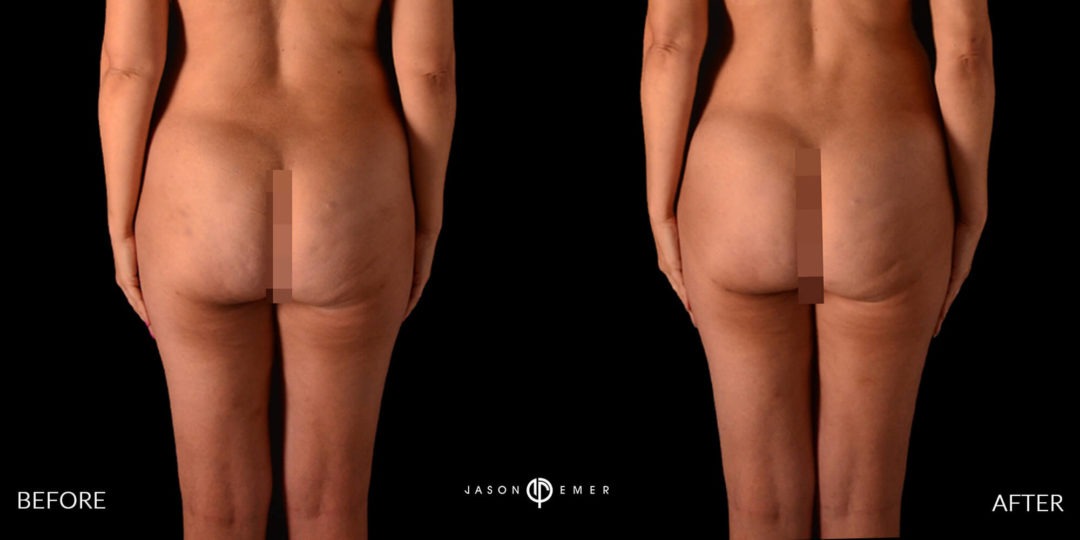
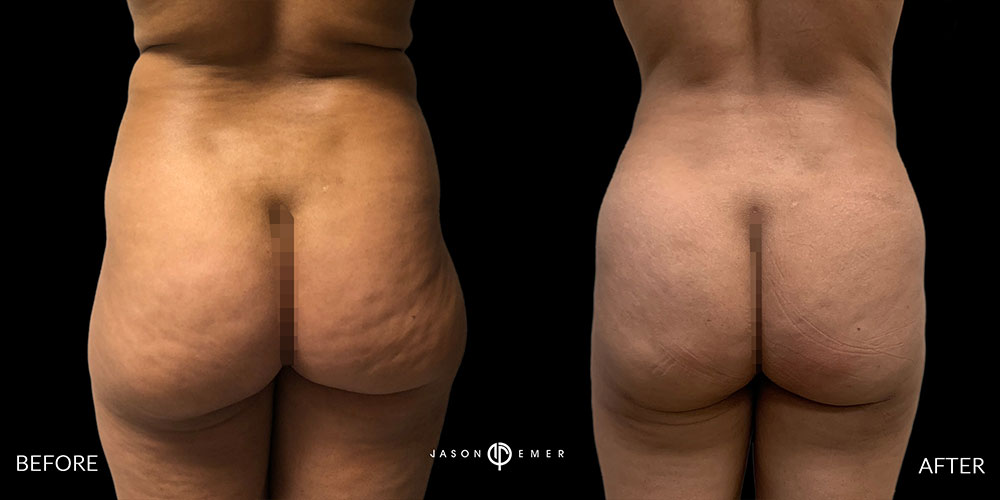
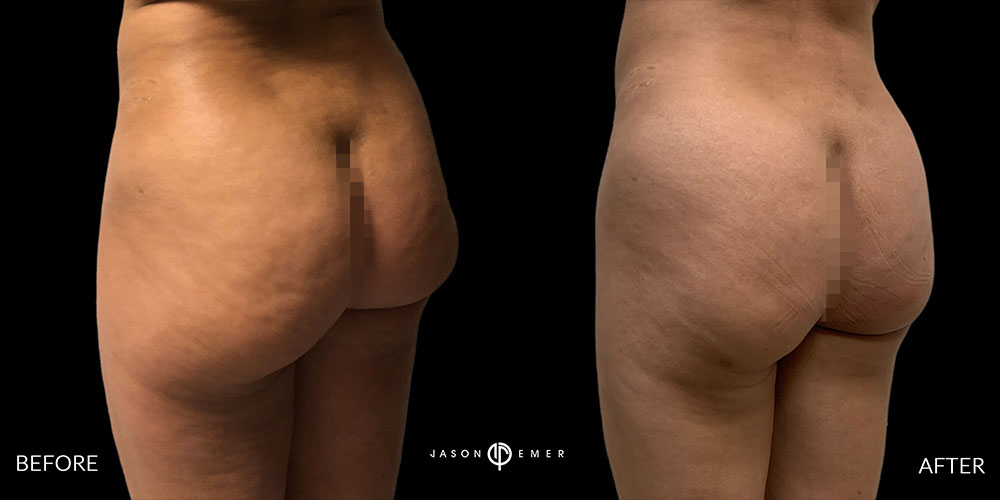
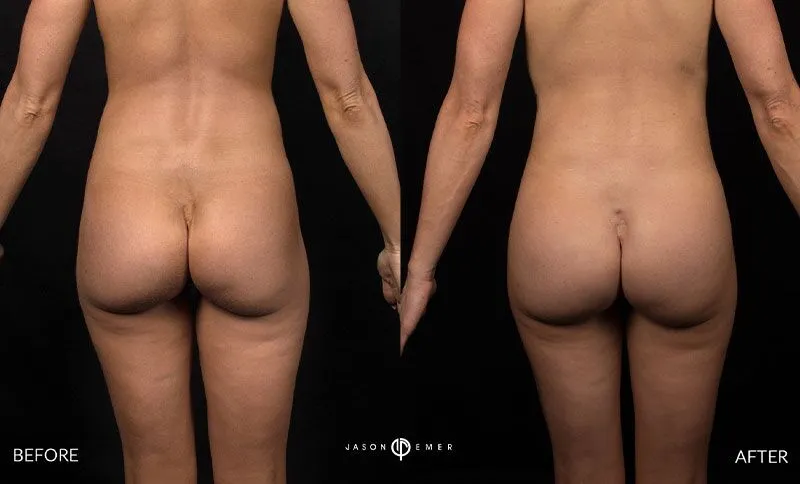

The zone nobody warns you about
Ask women what bothers them most about their back and the answer is consistent. In Dr. Emer's words from this week one follow up film: "They struggle from cellulite and back rolls." It is one of the most requested corrections in body contouring and one of the least understood, because the upper back is not like the abdomen. The rolls sit directly over the rib cage, the fat is dense and fibrous, and the skin is anchored in ways that resist simple debulking.
That anatomy narrows the honest options. As Dr. Emer puts it in the film, the choice at the rib cage is stark: either the ribs themselves are remodeled, or "you do as much lipo and heating as you can." His approach in this case was the second, aggressive liposuction of the back rolls combined with energy based skin tightening, performed as part of a 360 degree plan rather than a spot treatment.
Why 360 instead of spot treatment
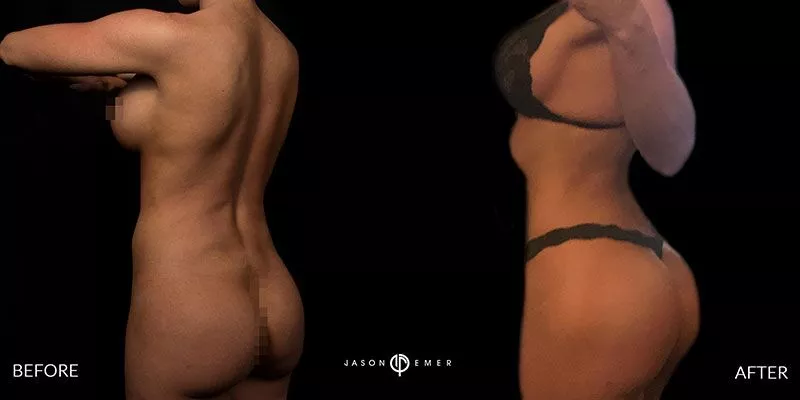
The patient in this film came in with a boxy silhouette, one hip sitting higher than the other, strong musculature under tight fat, and the back rolls and cellulite that motivated the visit. Treating only the rolls would have corrected one zone and left the shape unbalanced. The plan instead ran the full circumference: liposuction and tightening through the back and flanks, and conservative fat grafting to the outer hips so the hip line matched the leg and the hip dips improved.
The philosophy is the same one that runs through all of Dr. Emer's body work. Shape is built by removing fat and revealing the person's own anatomy, not by adding volume until a silhouette appears. In the film he describes the approach as matching the patient's anatomy, comparing the process to chiseling an ice sculpture, and he is direct about the goal: "The point is no one should know that she looks that good." Incision marks are deliberately hidden so the result reads as natural rather than surgical.
Aftercare is half the operation
The film is shot at one week after surgery, and half of it belongs to the practice's massage therapist, who has been treating the patient daily. Her lymphatic work moves inflammation and fluid toward the drains, and she sculpts along the lines the surgery created, reinforcing the contours while swelling resolves. Her summary of the role aftercare plays is worth quoting as she said it: "It's part of the recovery is just as important as a surgical procedure."
The practical payoff shows in the recovery markers discussed on camera. At one week this patient had minimal bruising, no signs of fibrosis or seroma, and was moving comfortably, and Dr. Emer notes that keeping bruising low also lowers the chance of skin staining and long term discoloration. Recovery here is not passive. The protocol includes near daily aftercare visits in the first two weeks, and the practice pairs it with a broader recovery plan before the patient returns to training.
The timeline to judge by
One week is not the result. The back contour visible in the film is still swollen, and the definition lines the therapist is working will continue to sharpen. Per the film, the back dips develop over roughly the next 6 to 12 weeks, gym training resumes around two to three weeks, and the final contour reveals itself month by month as swelling fully resolves.
That timeline matters when you evaluate any surgeon's results. A week one film that already shows flattened back rolls and improved cellulite, with the honest caveat that swelling remains, tells you more than a filtered final photo ever will.
What the film shows
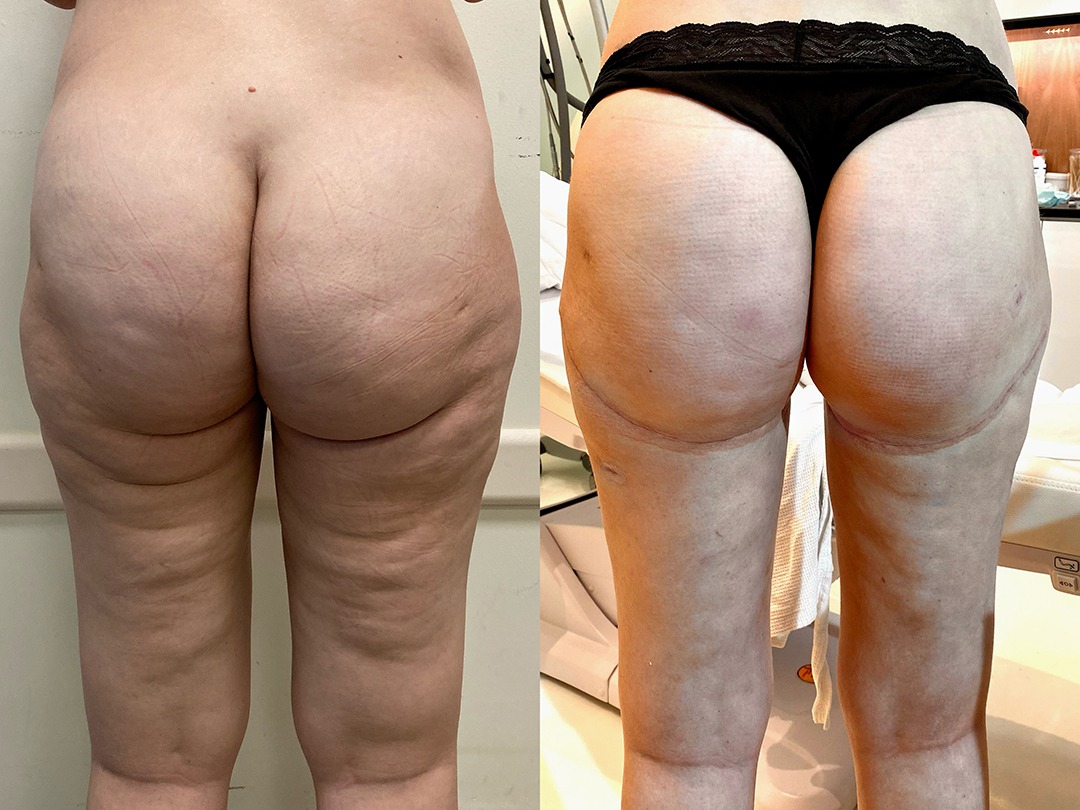
The featured film walks the patient's week one follow up: before and after comparisons of the back rolls and cellulite, the corrected hip line from the fat grafting, the hidden incision placement, and the massage therapist's aftercare session in progress. It is an unusually transparent look at the stage of recovery most practices skip, filmed and narrated by Dr. Emer himself with commentary from the aftercare team.
Is this the right operation for you
Back roll correction rewards realistic expectations. Dense fat over the rib cage responds to aggressive lipo and heating, but the rib contour underneath is the floor of what contouring can change. Patients whose concern is primarily skin laxity, or whose rolls are more skin than fat, need that distinction made honestly at consultation. And because the back is one zone of a whole silhouette, the plan should always be discussed as a shape, not a spot.
A consultation covers exactly that: what your anatomy supports, what the operation can and cannot change, what recovery requires of you, and whether the full 360 approach or a smaller plan fits your goals.
Where This Fits in the Practice
Back contouring connects to the practice's wider body program. The same session that removes back rolls can harvest viable fat for grafting, which is how many patients pair back liposuction with buttock shaping in a single plan.
For skin quality after fat removal, radiofrequency tightening devices are part of the standard toolkit. What combination fits depends on skin elasticity and goals, which is exactly what the consultation maps.