Female jawline surgery before and after: What healing can change
Most patients assume narrowing the bone always creates an attractive profile. In practice, aesthetic harmony depends on structural balance rather than aggressive reduction. Reviewing jawline surgery before and after female cases shows that photos are most informative when bone shape, soft tissue drape, and healing stage are evaluated together. V-line ostectomy narrows the lower third, while a custom implant restores height or projection if bone removal is excessive. Early postoperative edema obscures underlying contours, making standardized angles and timelines essential for comparison.
Contour definition becomes clearer around three months, with tissue adherence continuing through six months. Dr. Emer's jawline surgery recovery guide explains why healing timelines dictate visible outcomes.
Dr. Jason Emer is a Beverly Hills dermatologist and surgeon specializing in facial contouring. His clinical approach focuses on long-term facial balance and structural integrity.
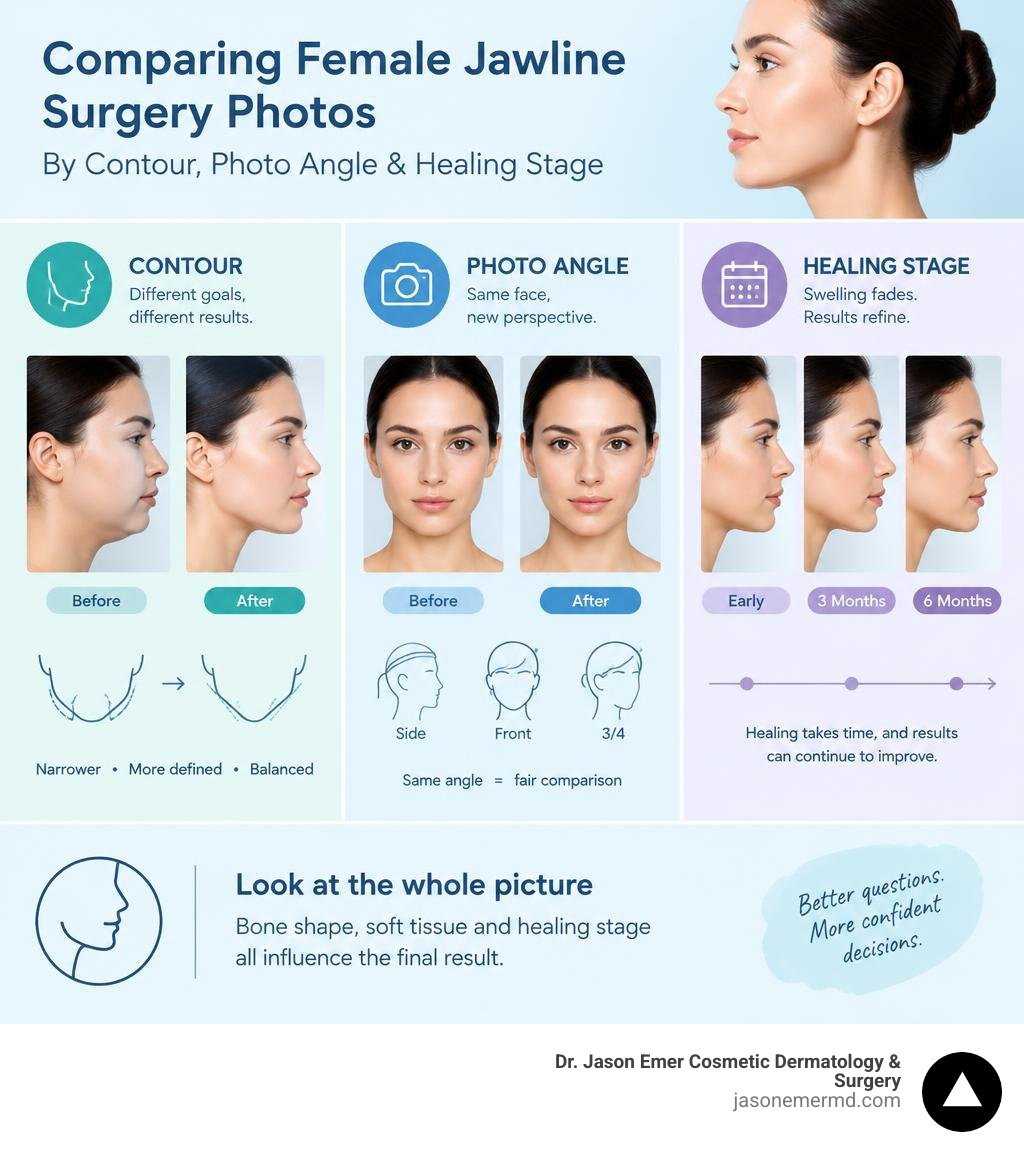
Key surgical and non-surgical procedures include:
Evaluating female jawline surgery reveals how mandibular structure shapes lower facial contour
The lower third of the face relies heavily on the underlying skeleton for definition. When assessing options for female jawline surgery, clinicians evaluate both the skeletal framework and the overlying soft tissue drape. Mandibular reduction creates a tapered contour, but excessive bone removal can compromise natural facial harmony. These decisions, including how much bone to remove and where, are made individually in consultation rather than applied as a standard formula.
Bone reduction goals and structural considerations in female jawline surgery
Surgical narrowing involves tapering the mandibular body and reducing prominent gonial angles. Patients seeking facial feminization explore these bone reduction and ostectomy techniques. The clinical objective is refinement rather than total removal of structural support. Surgeons must respect anatomical limits to avoid nerve injury and soft tissue sagging, and some patients may be better served by a more conservative reduction or a non-surgical approach instead of bone removal.
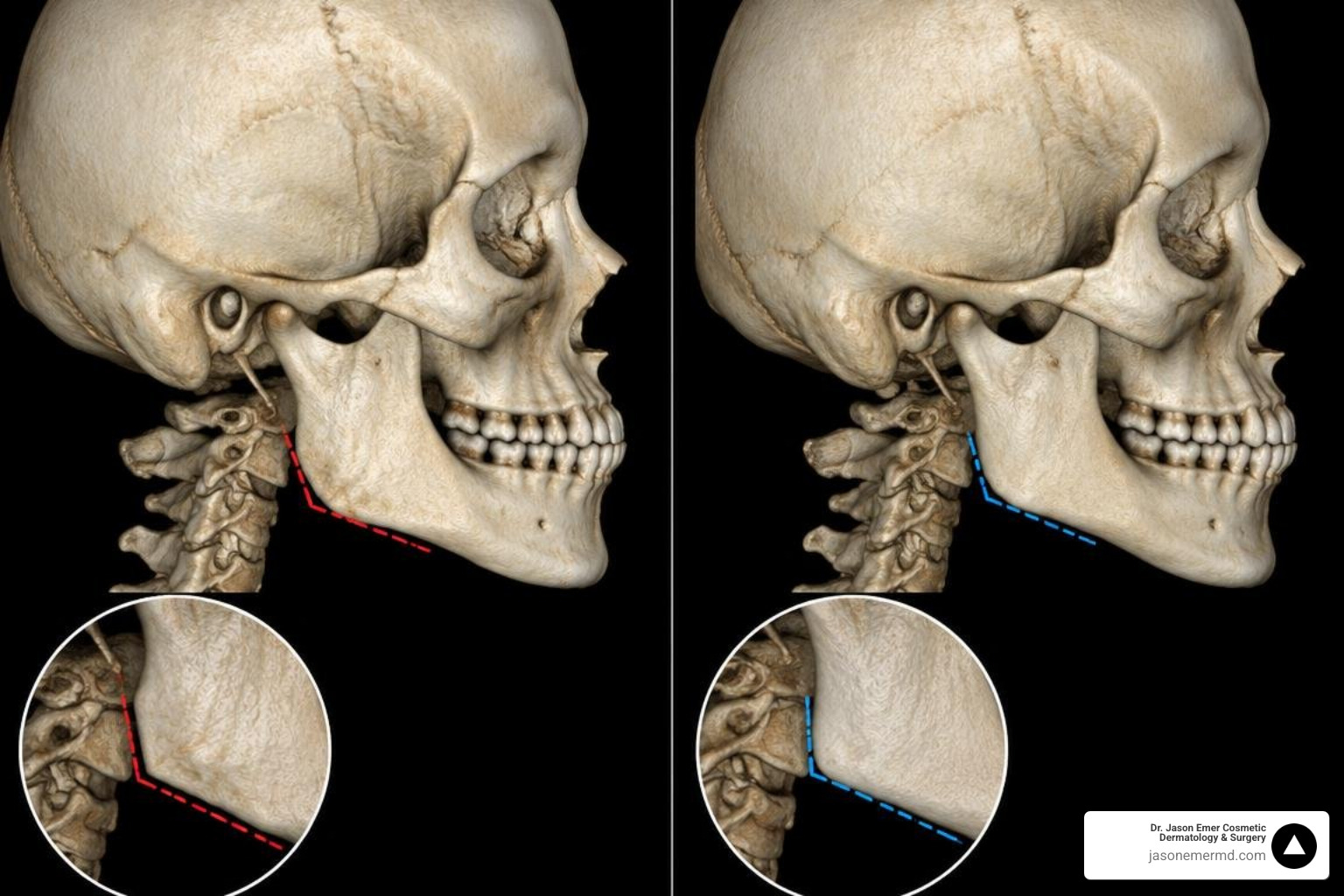
Recognizing steep mandibular angles after aggressive V-line contouring
When bone resection is excessive, the mandibular plane angle can become unnaturally steep, sometimes reaching 45 degrees. This over-resection removes the defined jaw angle, creating an unnatural slope from the earlobe directly to the chin. A subtotal V-line revision case study illustrates how significant jaw border loss can require secondary structural correction, underscoring that over-reduction is a real and lasting limitation of aggressive narrowing.
Custom mandibular implants can address vertical height deficits after bone resection
Correcting over-resected jaw angles or treating a naturally small jaw requires structural restoration. Standard preformed implants rarely address multi-dimensional bone deficits along the jawline.
Subtotal revision techniques and vertical lengthening for female jawline surgery
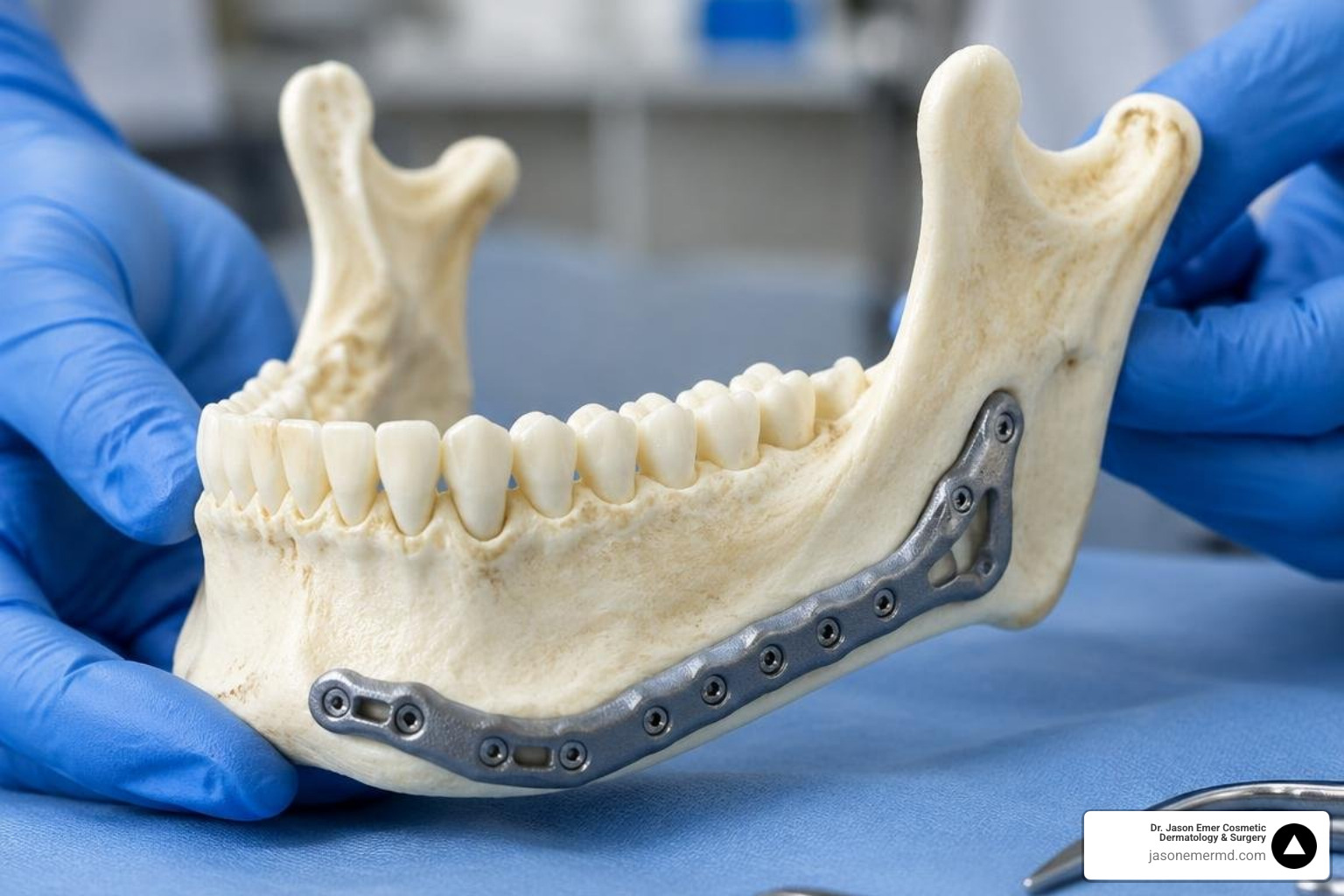
In female patients, mandibular deficiency is frequently vertical rather than horizontal. Restoring balance focuses on vertical lower facial lengthening rather than excessive width. Detailed mandibular implant planning uses high-resolution 3D CT modeling to fabricate patient-specific devices. Female implants are typically smaller—often under 10 ccs in total volume—focusing on smooth, rounded margins to maintain feminine proportions.
Surgical approaches using submental incisions and rigid screw fixation
Placing a custom implant along the inferior border requires precise surgical access. Intraoral vestibular incisions allow placement at the ramus, while an external submental incision provides direct visualization of the lower mandibular edge. This dual approach facilitates full periosteal release. Rigid fixation with titanium screws secures the device to prevent migration during recovery.
Healing and complementary treatments influence how jawline contour develops
Recovering from structural jaw procedures is a gradual process requiring months of tissue adaptation, and recovery itself should be treated as part of the surgical plan rather than an afterthought.
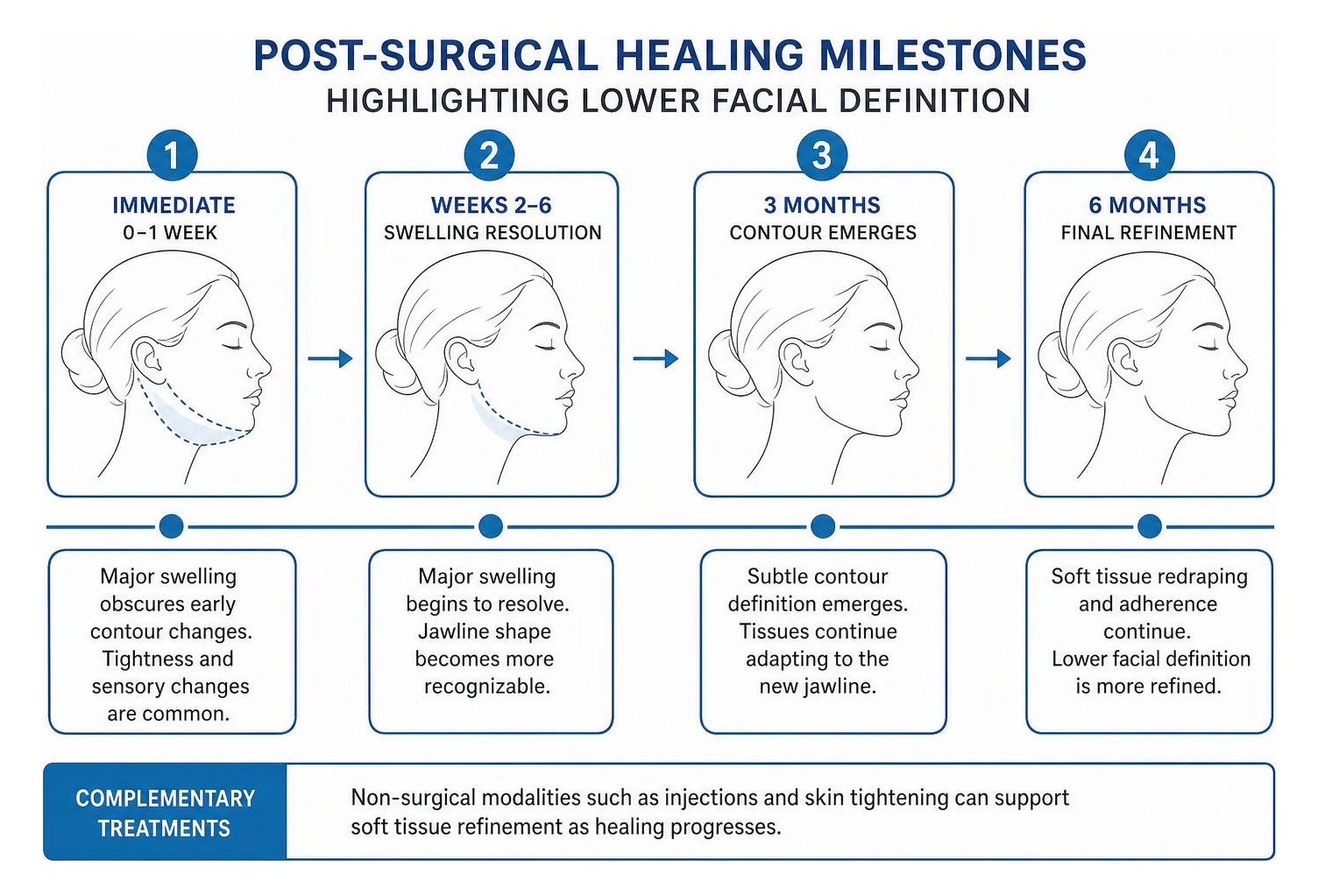
Postoperative swelling phases and three-month contour changes
Postoperative edema obscures early structural changes. Major swelling begins resolving over several weeks, but subtle contour definition emerges around three months. Complete soft tissue redraping along the mandibular border continues through six months. Patients should anticipate temporary tightness and sensory alterations during this period, and specific staging is discussed individually in consultation.
Complementary non-surgical modalities for soft tissue refinement
Surgery is not the only pathway to lower facial balance. When surgical intervention is not indicated or a patient prefers a less invasive route, Dr. Emer utilizes non-surgical jawline contouring techniques, including choosing to do less and monitor over time. Targeted dermal fillers, energy-based skin tightening, or neuromodulator injections in the masseter muscles refine contour with minimal downtime. When energy devices or lasers are integrated for skin tightening, patients with deeper skin tones require customized protocols, conservative settings, and treatment sequencing that may differ from lighter skin types to minimize the risk of post-inflammatory hyperpigmentation (PIH).
Frequently asked questions about female mandibular reconstruction and recovery
How does female jawline augmentation differ from male mandibular enhancement?
Female augmentation prioritizes vertical lengthening and subtle transitions. Male designs emphasize lateral width, square angles, and larger volumetric dimensions exceeding 10 ccs.
What factors may contribute to overcorrection during mandibular reduction procedures?
Overcorrection occurs when bone cuts are placed at an excessively steep angle or when chin narrowing removes too much structural support.
When may structural changes become more visible following custom implant placement?
Initial changes appear as acute edema clears around three months, with refined contour definition continuing to settle through six months.
A comprehensive evaluation at Dr. Jason Emer Cosmetic Dermatology & Surgery allows patients to discuss their structural goals and explore personalized treatment options through a chin and jawline surgery consultation.
What to remember
- Evaluating female jawline surgery requires balancing bone resection with long-term soft tissue support.
- Custom 3D-designed implants restore vertical facial height using subtle volumes typically under 10 ccs.
- Final contour definition develops gradually over three to six months as postoperative swelling resolves.
This content is for general education and does not provide a diagnosis, determine candidacy, or replace a consultation with a licensed clinician.
This resource provides general educational information. Treatment recommendations depend on your health, goals, and consultation with a qualified clinician.