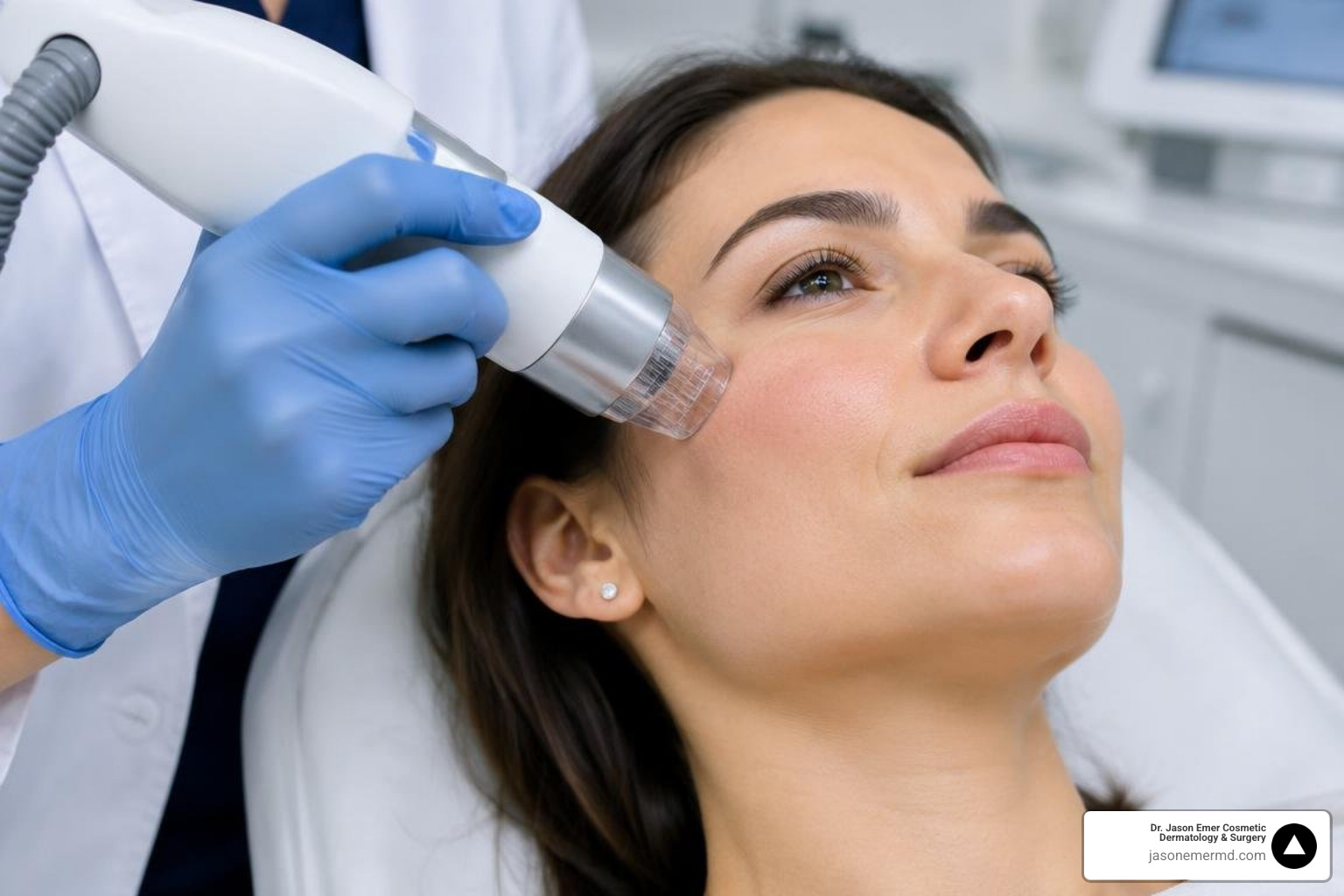
Most patients assume visible resurfacing requires peeling away the skin's outer layer, but Dr. Emer's approach starts with mapping the skin before any device is chosen.
Modern fractional technology can deliver meaningful rejuvenation without aggressive tissue ablation. Moxi laser uses non-ablative, fractional energy at a 1927 nm wavelength to treat microscopic zones of tissue while leaving surrounding skin intact. The wavelength targets water in the tissue, creating small zones of thermal coagulation beneath the surface that stimulate gradual collagen remodeling. It addresses mild sun damage, uneven tone, rough texture, enlarged pores, and early fine lines. It is less suited to deep static wrinkles or significant skin laxity, which require different approaches entirely.
Treatment itself is brief. Preparation centers on minimizing irritation and reactive pigment changes: patients discontinue topical retinoids and exfoliating acids, and avoid direct sun exposure before the session. A topical numbing cream is applied for comfort, and the laser application takes roughly 15 to 20 minutes within a total appointment of 45 to 60 minutes. Recovery, however, is an essential phase of the process, not an afterthought. Redness and a sandpaper-like texture can last several days. Initial improvements become apparent over two to four weeks, and a series of sessions may be recommended. The clinical starting point is always a thorough skin assessment rather than a fixed device setting.
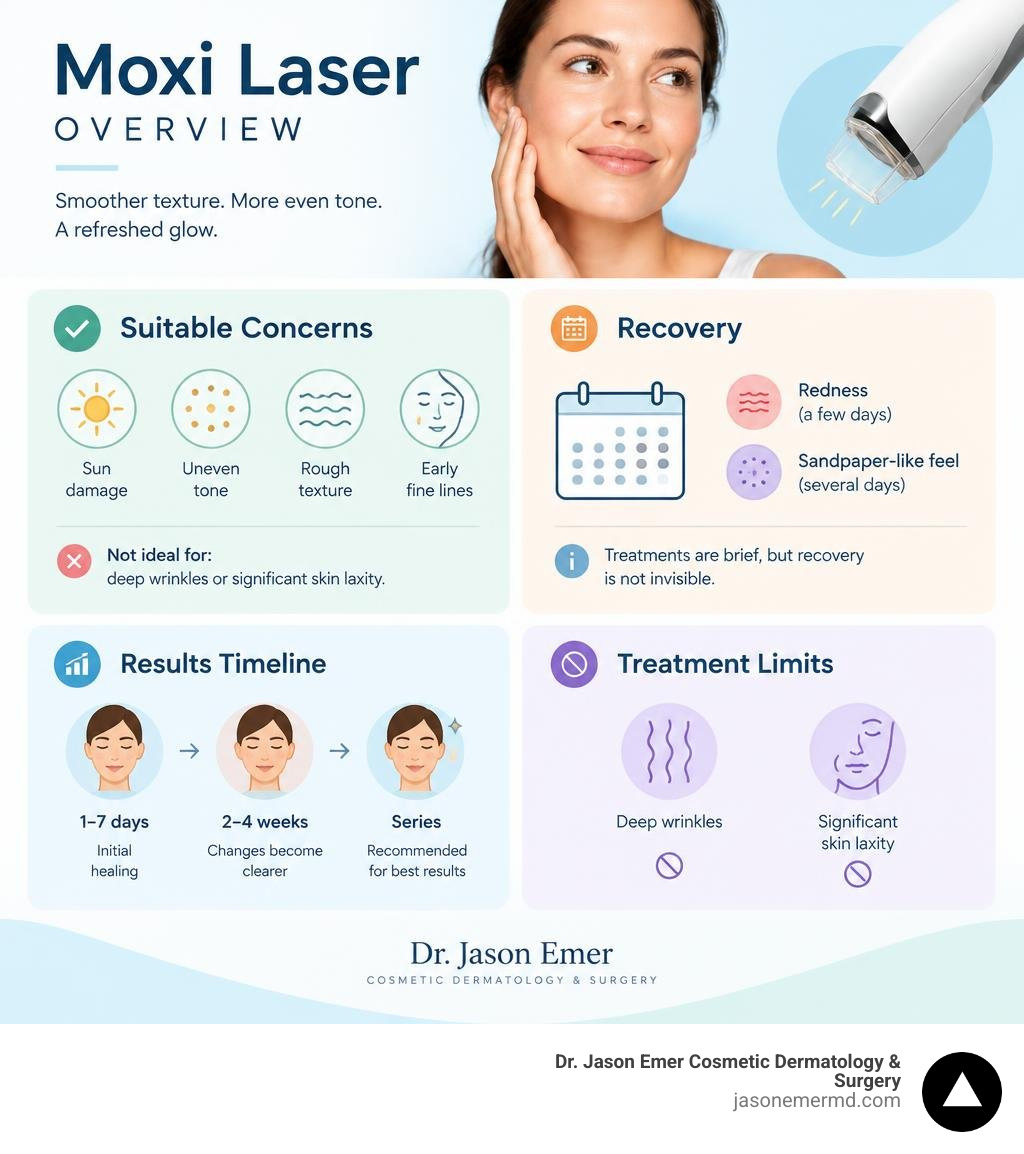
Laser architecture continues to advance with platforms such as Super Moxi, which uses a 16W diode and high-density beam delivery to treat broader body areas like the neck, chest, arms, and hands more efficiently, as detailed in recent Super Moxi technology announcements. Patients often evaluate moxi laser recovery day by day expectations, understand moxi laser treatment cost variables, and review realistic moxi laser before and after 1 treatment milestones before beginning care.
Jason Emer, MD, FAAD, is a board-certified dermatologist with experience in cosmetic dermatology and laser-based facial rejuvenation. His clinical protocols guide patient preparation, treatment delivery, and post-care recovery.
Recovery follows a predictable progression of skin changes that patients should plan around rather than rush.
Healing begins immediately after energy delivery. Microscopic epidermal necrotic debris, known as MENDs, forms as treated tissue migrates to the surface. Patients manage this process through strict sun avoidance, gentle cleansing, and non-occlusive hydration. Detailed guidance on managing post-treatment healing steps outlines daily progress.
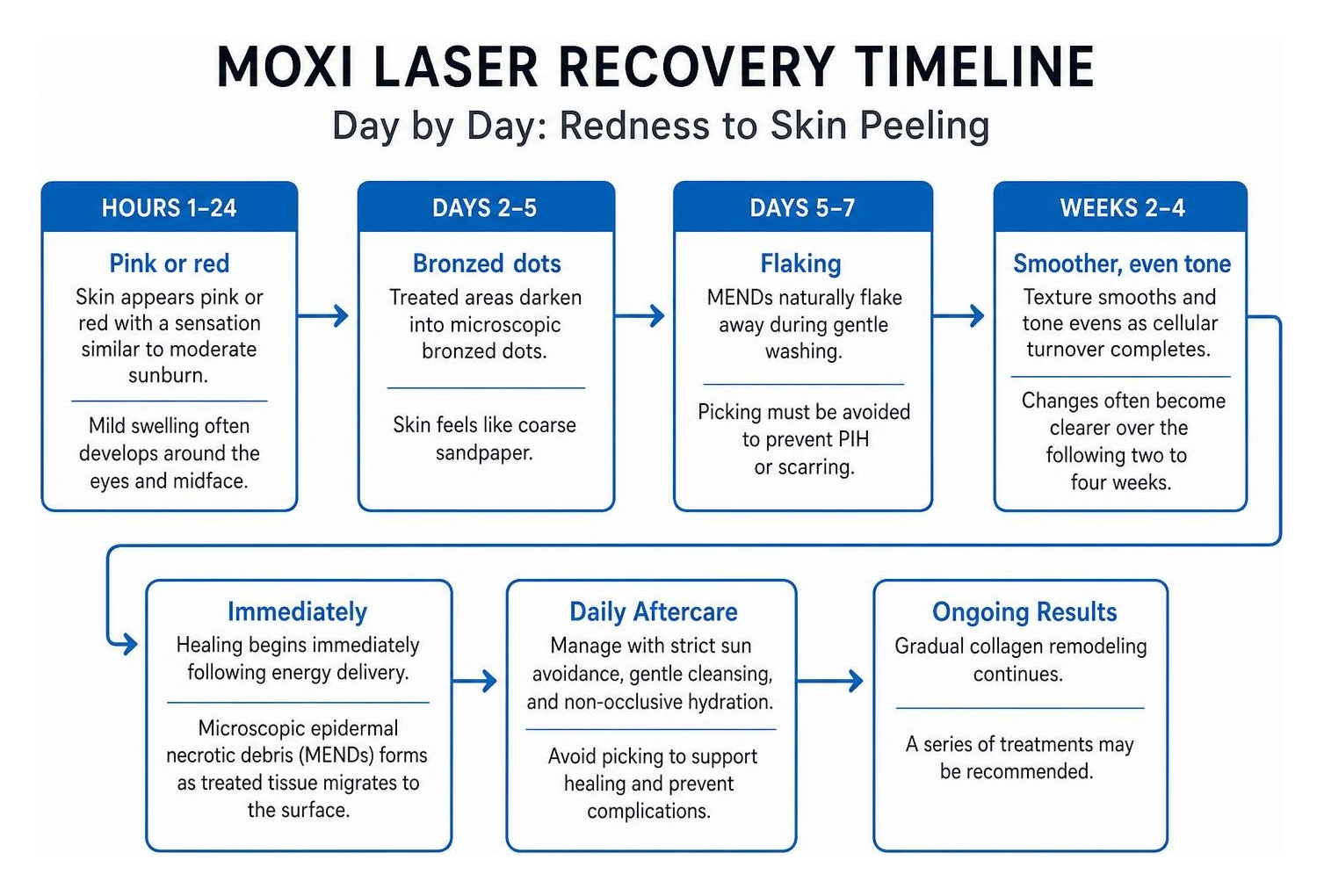
In the first 24 hours, skin appears pink or red with a sensation similar to moderate sunburn, and mild swelling can develop around the eyes and midface. Between days two and five, treated areas darken into microscopic bronzed dots and the skin feels like coarse sandpaper. By days five through seven, MENDs naturally flake away during gentle washing; picking must be avoided to prevent post-inflammatory hyperpigmentation, or PIH, and scarring. Over weeks two through four, texture smooths and tone evens as cellular turnover completes.
This timeline is a real tradeoff worth weighing honestly: Moxi avoids the extended downtime of ablative lasers, but it still requires several days of visible shedding and sun protection. Patients who cannot accommodate any downtime may reasonably choose a more conservative skincare regimen or delay treatment, and that choice is a legitimate option discussed during consultation rather than a compromise.
Treatment comparisons and personalized planning clarify what Moxi can address.
Choosing the proper energy modality requires understanding the clinical intent of each technology.
| Platform | Technology & Wavelength | Primary Clinical Focus | Expected Downtime |
|---|---|---|---|
| Moxi | 1927 nm Non-Ablative Diode | Superficial texture, tone, early sun damage | 3–5 days (mild roughness) |
| BBL HERO | BroadBand Light (Pulsed Light) | Vascular erythema, diffuse redness, brown spots | Minimal (pigment darkens) |
| Halo | Hybrid Fractional (1470 nm + 2940 nm) | Moderate photodamage, deeper wrinkles, scarring | 5–7 days (peeling, swelling) |
For patients needing broad pigmentation correction alongside resurfacing, Dr. Emer often layers Moxi with BroadBand Light in coordinated sessions. When evaluating laser procedures, selecting an experienced clinical team is vital to ensure appropriate treatment depth and safety, as outlined in clinical guidance on finding a qualified provider.
Frequently asked questions about Moxi resurfacing
How many sessions are typically recommended?
A single session provides a mild refresh. A series of three to four sessions spaced four weeks apart is standard for addressing stubborn texture and dyschromia. Annual maintenance visits help sustain baseline collagen stimulation.
How is treatment approached for darker skin types?
Moxi provides a favorable safety profile across Fitzpatrick skin types I through VI because the 1927 nm wavelength targets water rather than melanin. However, darker skin tones carry an inherent risk of PIH. In skin types IV through VI, Dr. Emer utilizes lower energy densities, conservative passes, and pre-treatment pigment-suppressing regimens. Treatment sequencing may also be adjusted.
What limitations exist regarding deeper wrinkles and laxity?
Moxi works strictly within superficial dermal layers. It cannot resolve structural skin laxity, jowling, or deep static furrows. Advanced photodamage requires deeper ablative lasers, radiofrequency microneedling, or surgical intervention. Alternatively, patients with minor texture changes may opt for conservative topical skincare regimens or choosing to delay procedural interventions.
A formal evaluation remains an appropriate setting to assess personal aesthetic goals and structure an individualized resurfacing plan. To explore tailored treatment options, schedule a comprehensive Moxi laser rejuvenation consultation with Dr. Jason Emer.
What to remember
- Moxi uses a 1927 nm non-ablative fractional laser to treat superficial tone, early pigmentation, and rough skin texture.
- Recovery involves transient redness and several days of sandpaper-like skin shedding called MENDs.
- Darker skin types require conservative laser settings and customized pre-treatment protocols to minimize post-inflammatory hyperpigmentation risks.
This content is for general education and does not provide a diagnosis, determine candidacy, or replace a consultation with a licensed clinician.
This resource provides general educational information. Treatment recommendations depend on your health, goals, and consultation with a qualified clinician.