

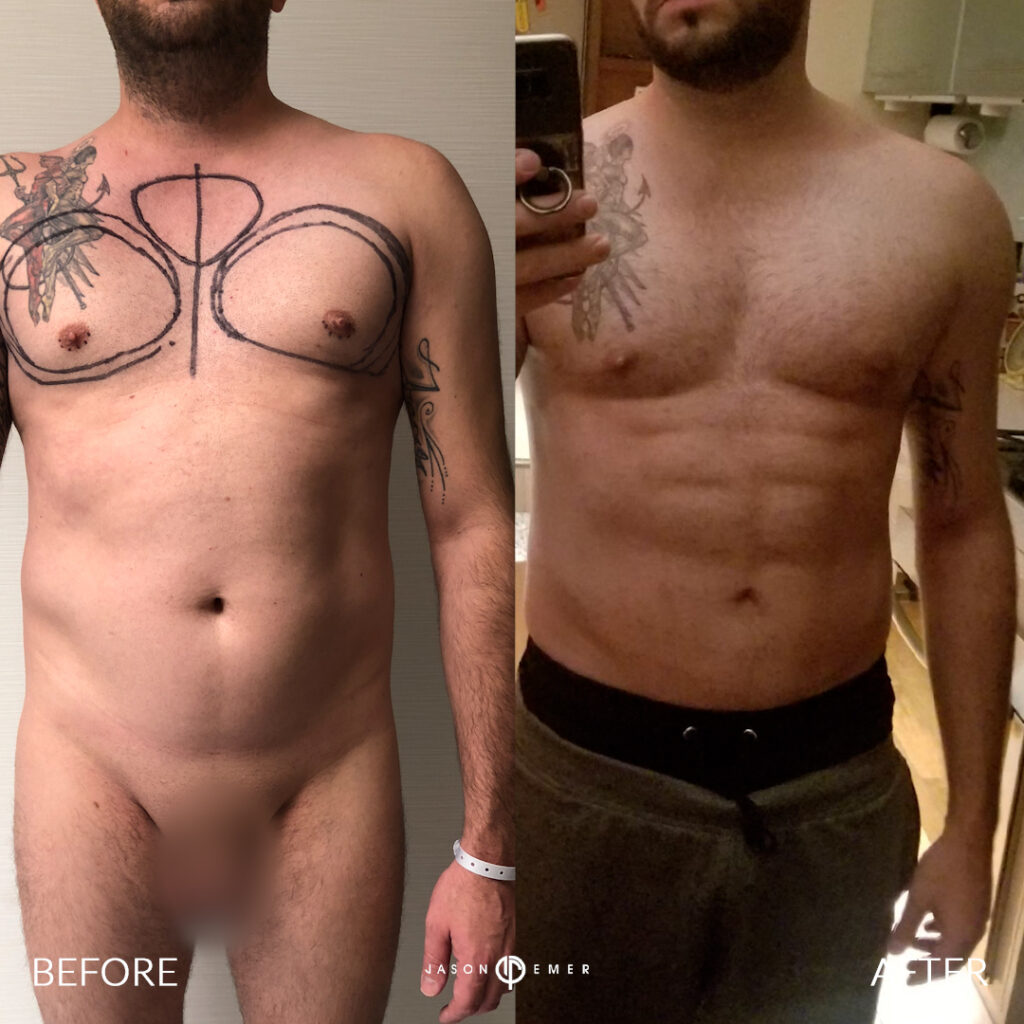
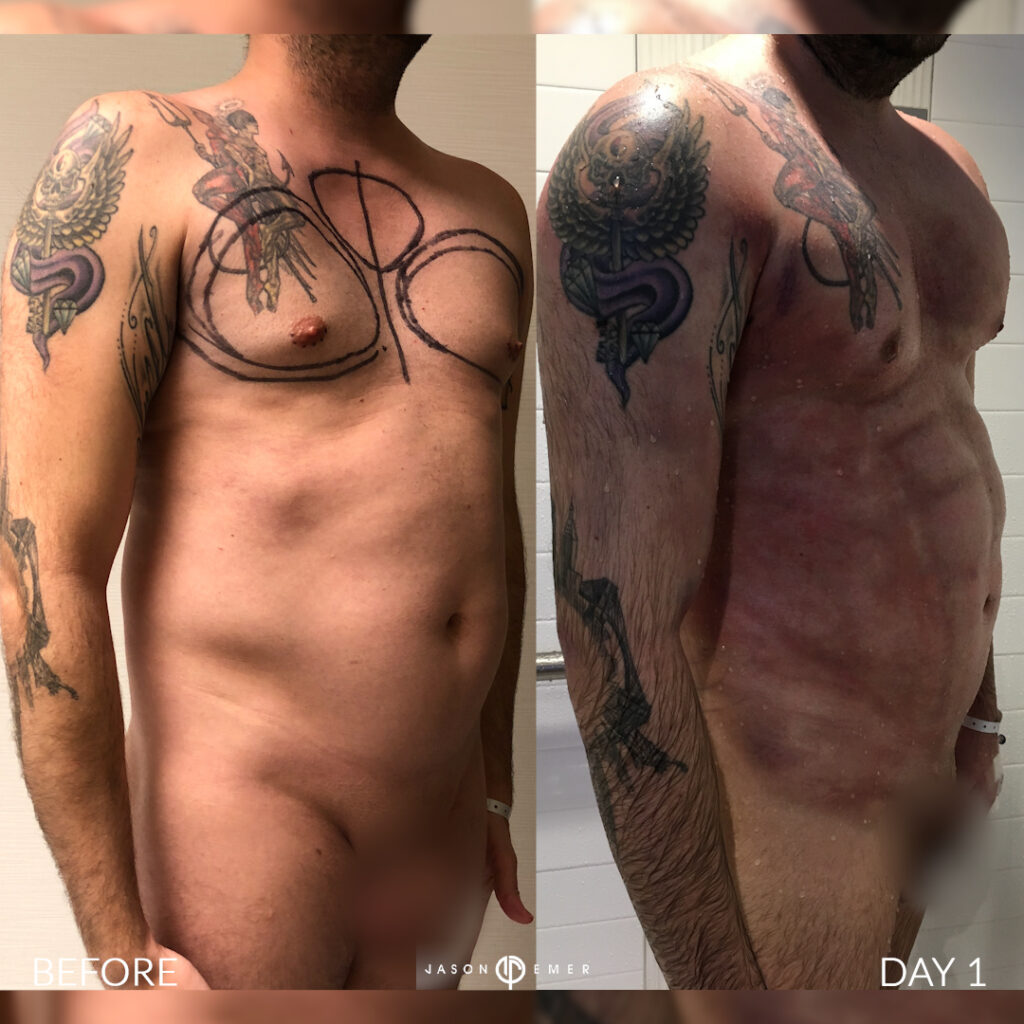
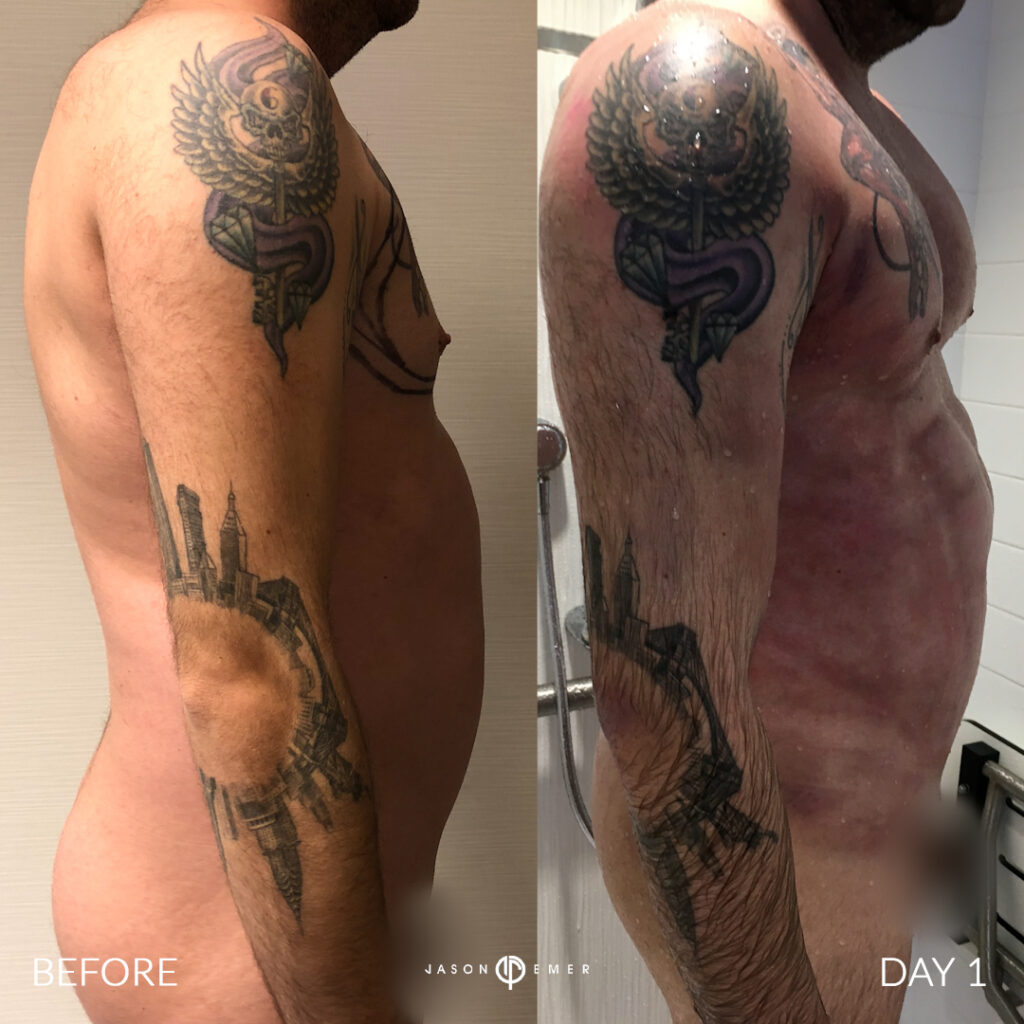
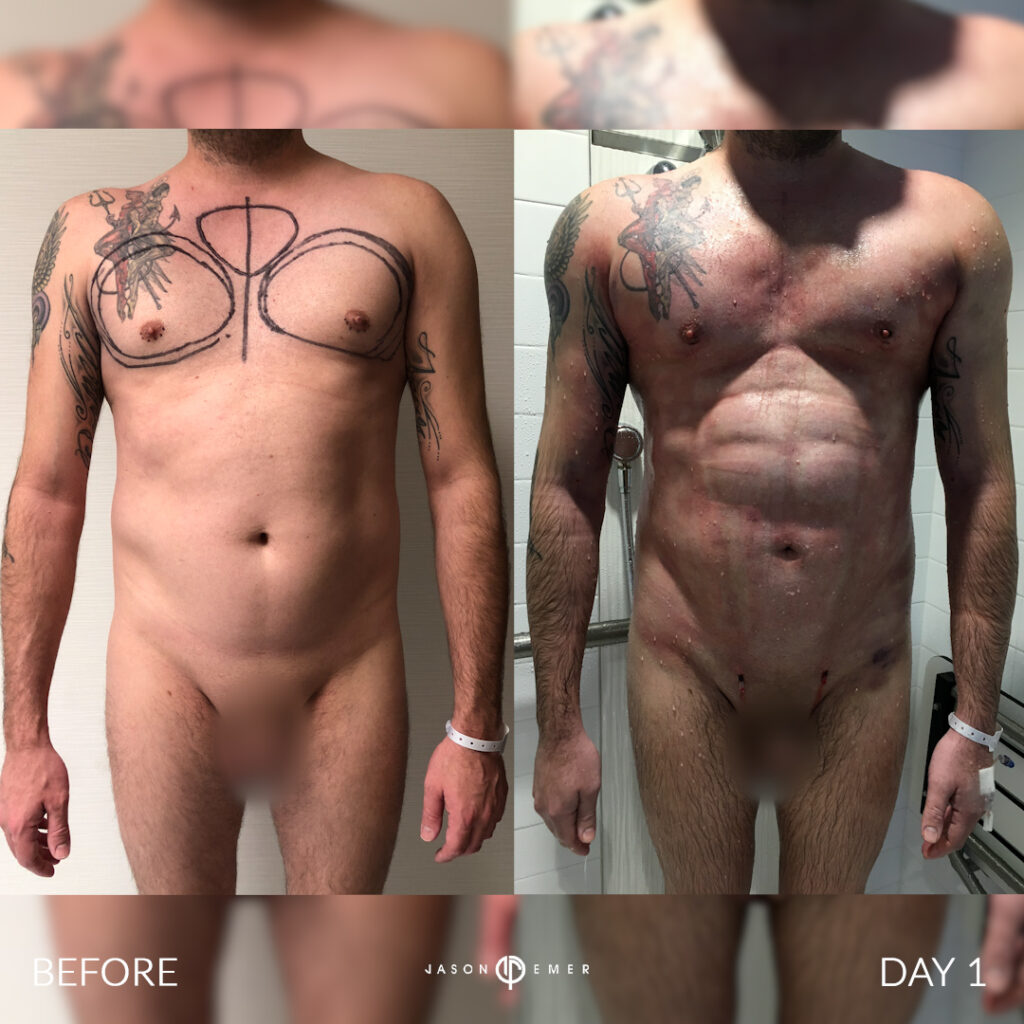


Fat and gland
Fullness over the muscle changes shape and can mimic sagging. It may call for contouring or gland removal rather than, or before, an implant.
PECTORIX / Structural chest surgery, planned in proportion
Some chests stay flat through years of disciplined training. Others carry a structural depression no workout reaches. When the limitation is the frame itself, a pectoral implant can add the projection muscle alone cannot.
Implant candidacy, the operating surgeon, combination procedures, risks, and recovery are determined in a surgical consultation.
01 / The evaluation
An underdeveloped-looking chest can be a story about fat, gland, skin, muscle, or bone. Each has a different answer, and choosing the wrong one is how disappointing results happen.
Excess fatty or glandular tissue, loose skin after weight change, and structural depressions such as pectus excavatum are separate diagnoses. An implant addresses structure. It does not treat gland, tighten skin, or replace contouring.
That is why the evaluation reads the whole chest, and the whole upper body, before any device is discussed. When an implant is the right tool, it fits into a plan rather than substituting for one.
02 / The chest, in layers
Projection, shape, and symmetry are decided by four layers working together. The examination isolates each one.
Fullness over the muscle changes shape and can mimic sagging. It may call for contouring or gland removal rather than, or before, an implant.
After major weight loss, loose skin can dominate the picture. Tightening or excision may matter more than added projection.
Muscle bulk and the underlying ribcage set the chest’s architecture. Structural depressions live here, and this is where implants do their work.
Shoulders, arms, abdomen, and waist decide what a balanced chest looks like. A chest planned in isolation rarely looks planned at all.
03 / The surgical plan
Chest plans here coordinate Dr. Emer’s contouring work with a surgical partner who performs the implant procedure, so each component is done by the clinician best suited to it.
Fat, gland, skin, muscle, frame, asymmetry, and prior surgery are assessed against the silhouette you are training toward.
The plan defines what is contoured, what is tightened or removed, whether an implant is used, and which clinician performs each part.
Recovery is planned like the surgery itself: support garments if prescribed, a staged return to training, scar care, and scheduled follow-up.
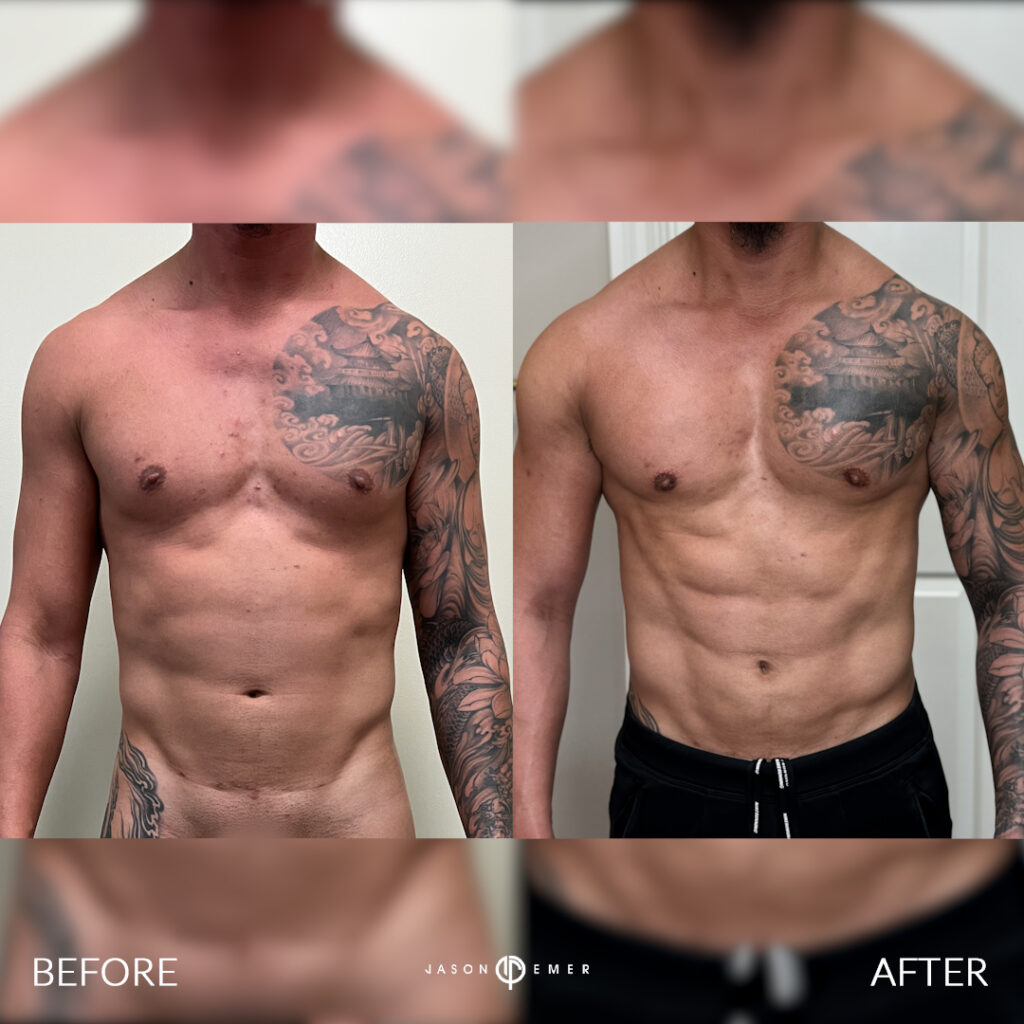
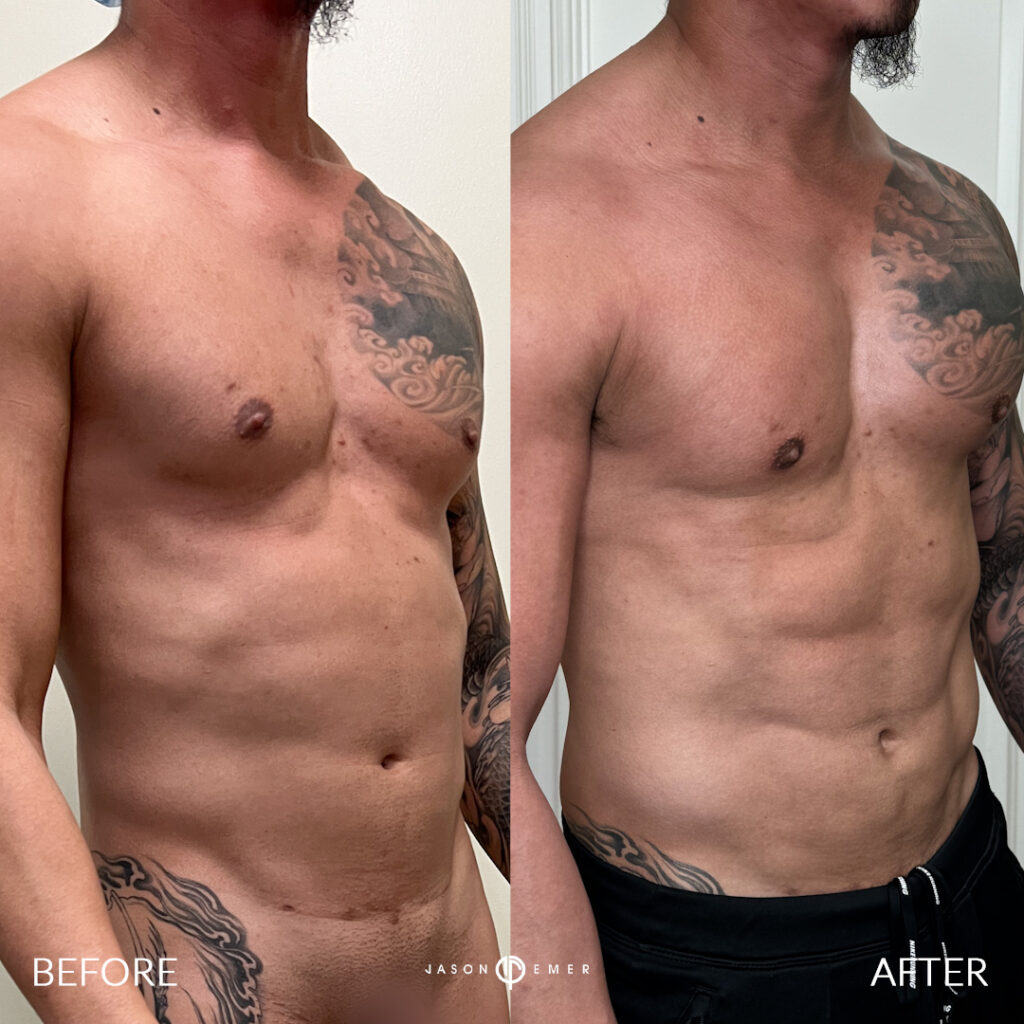
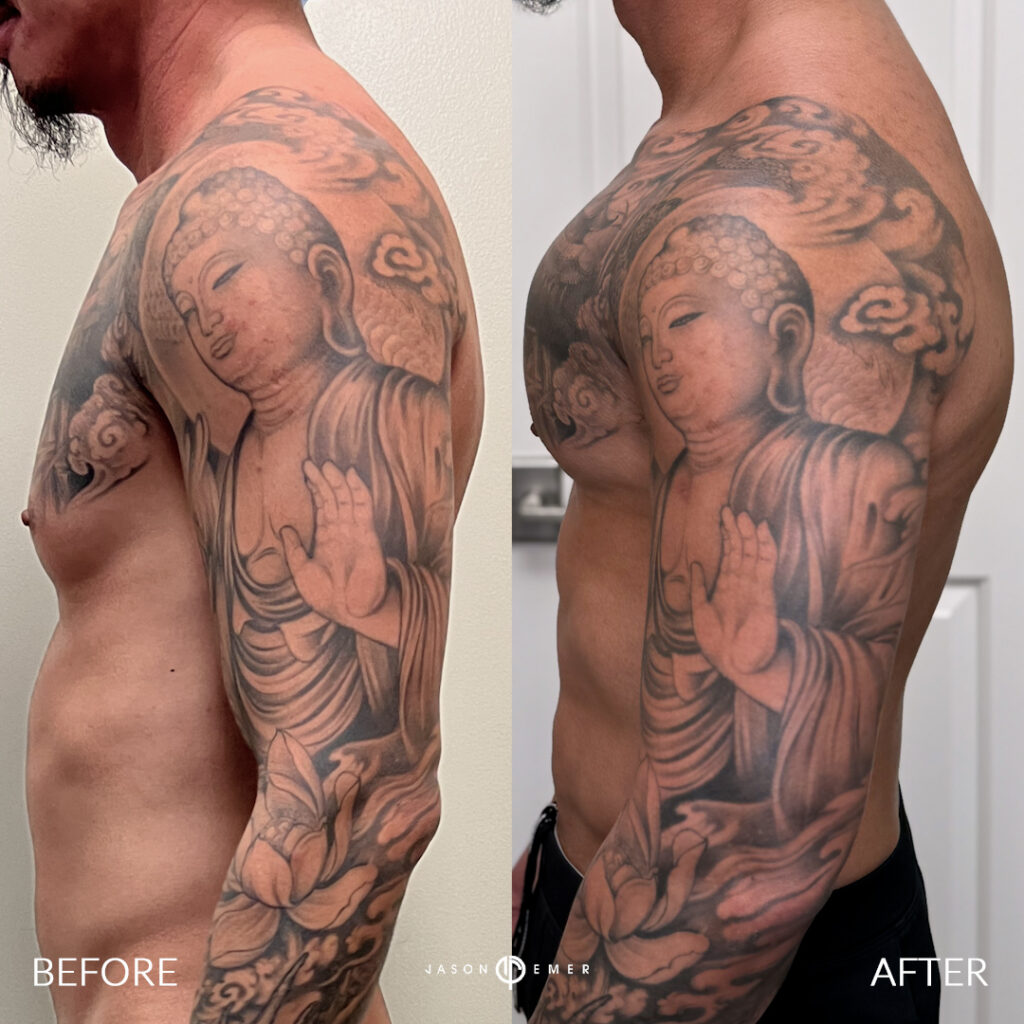
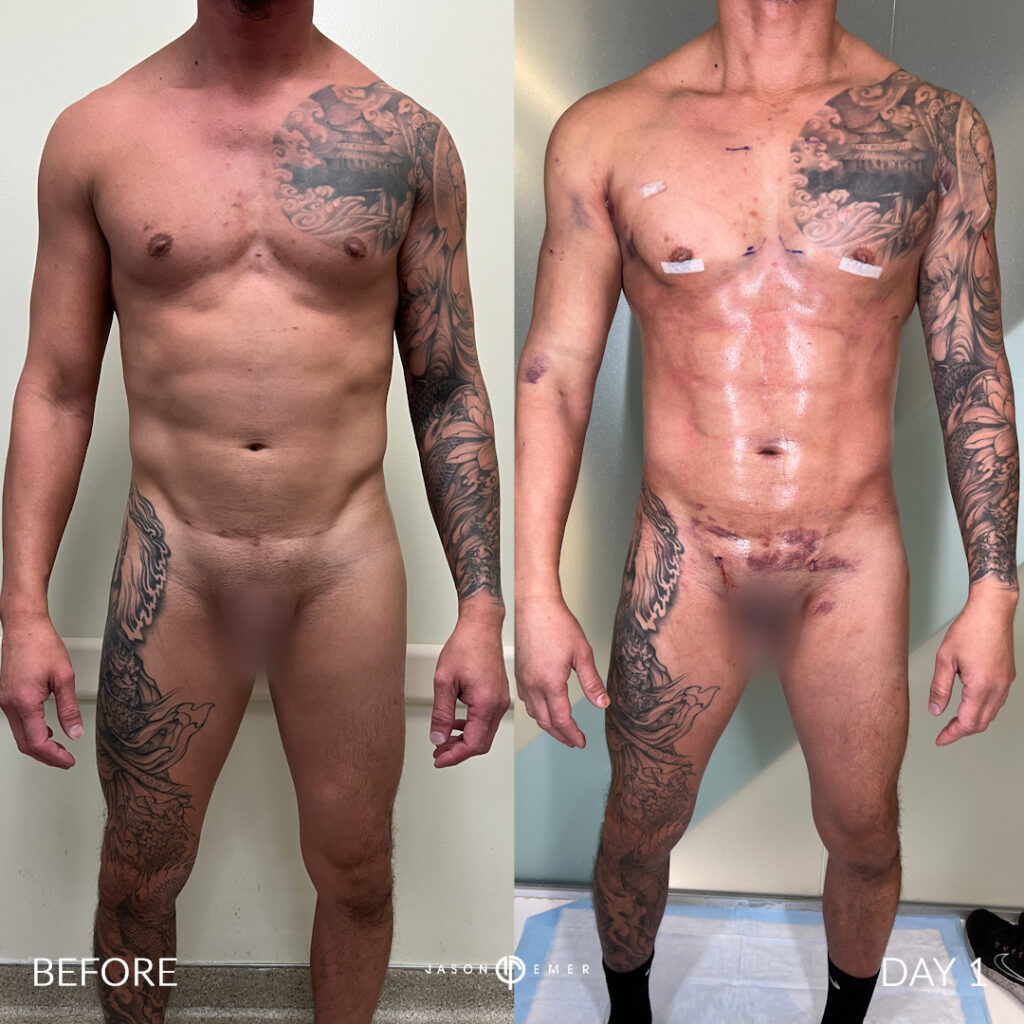
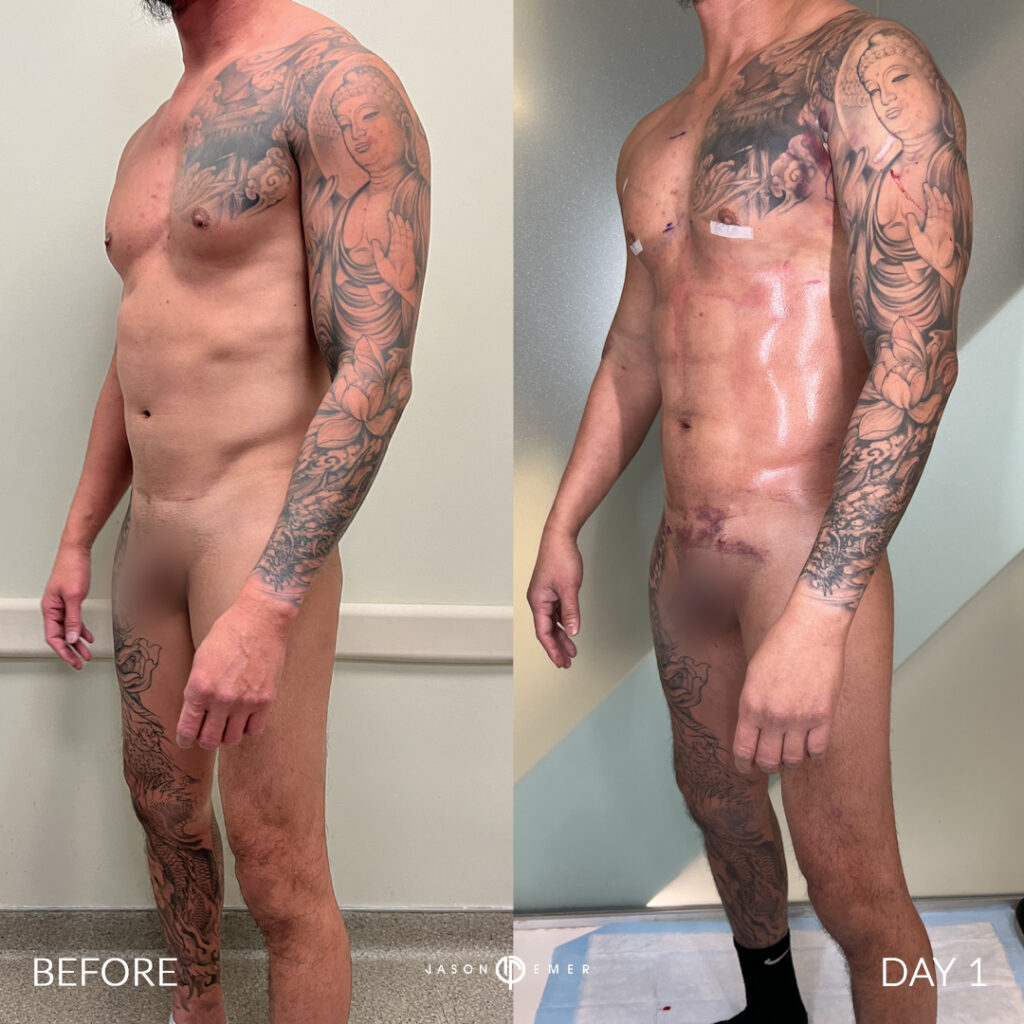
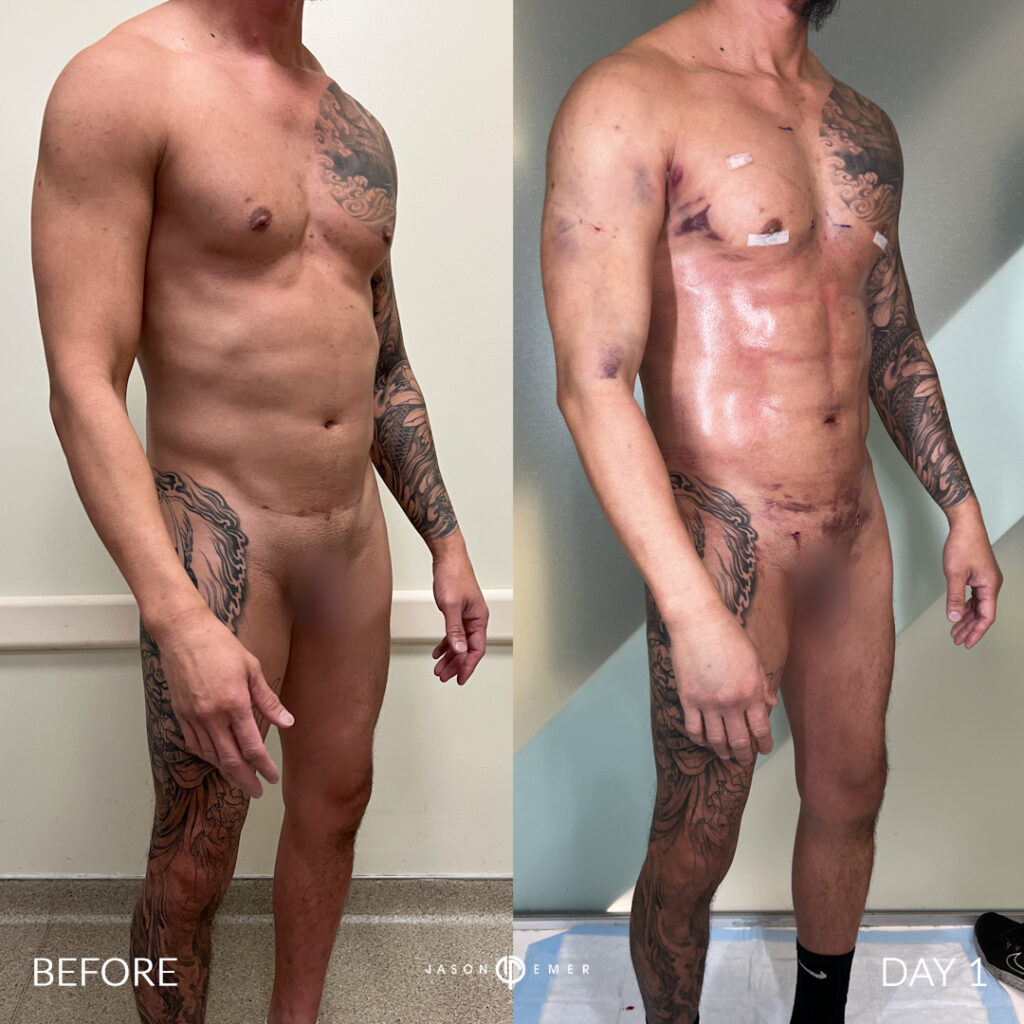
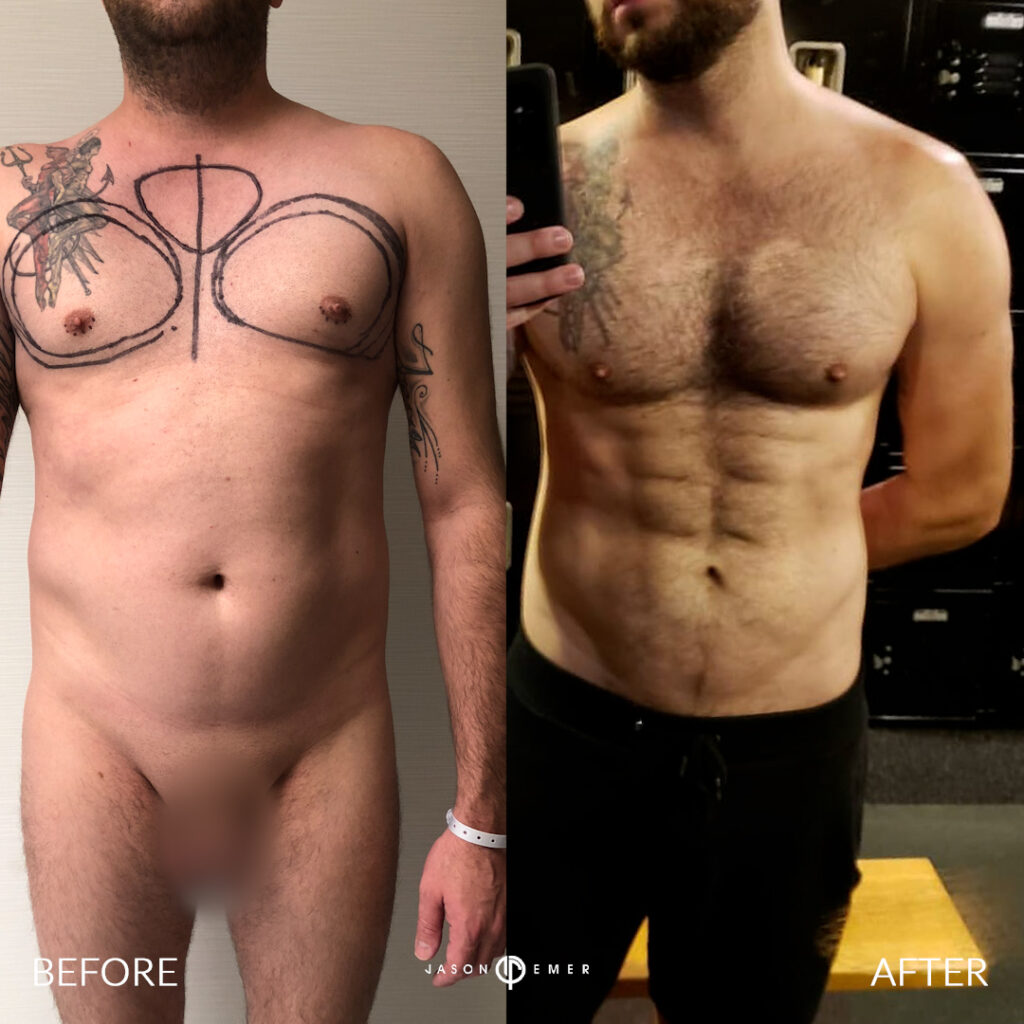
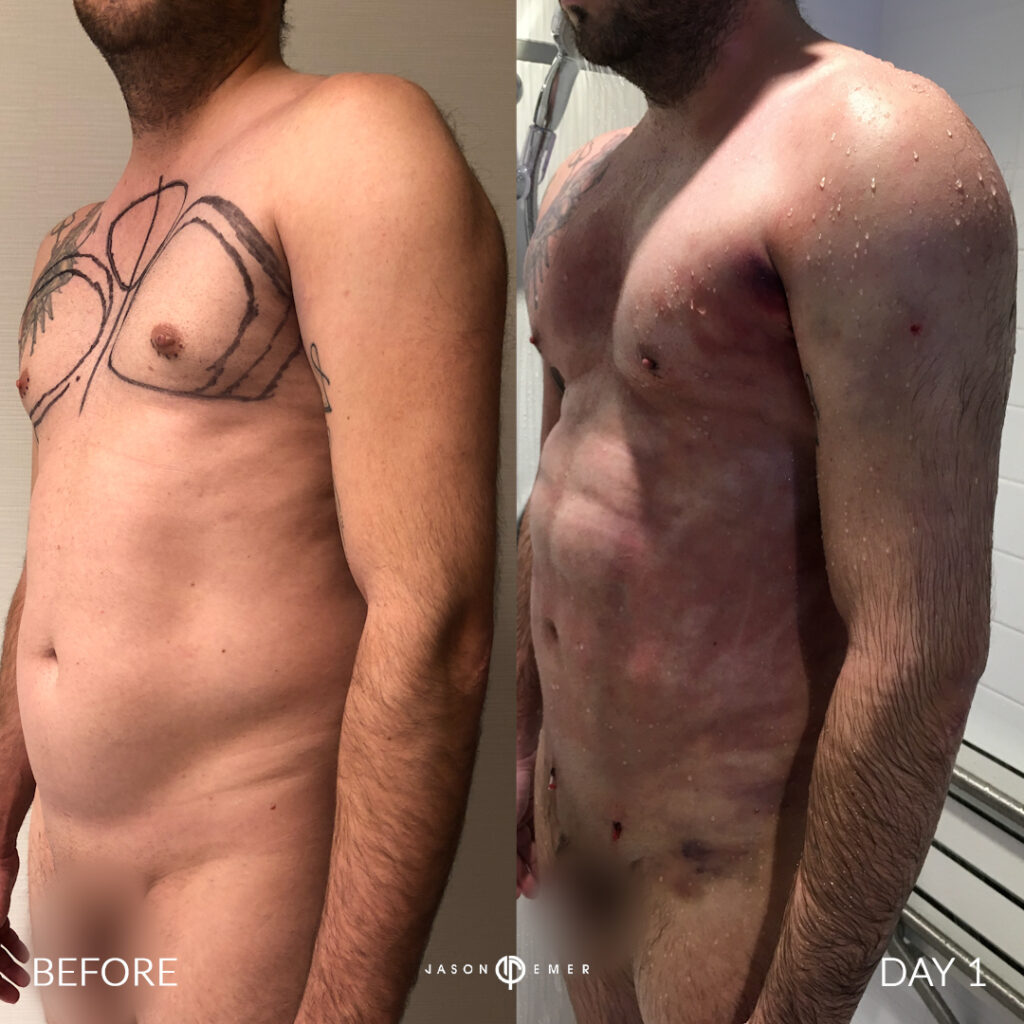
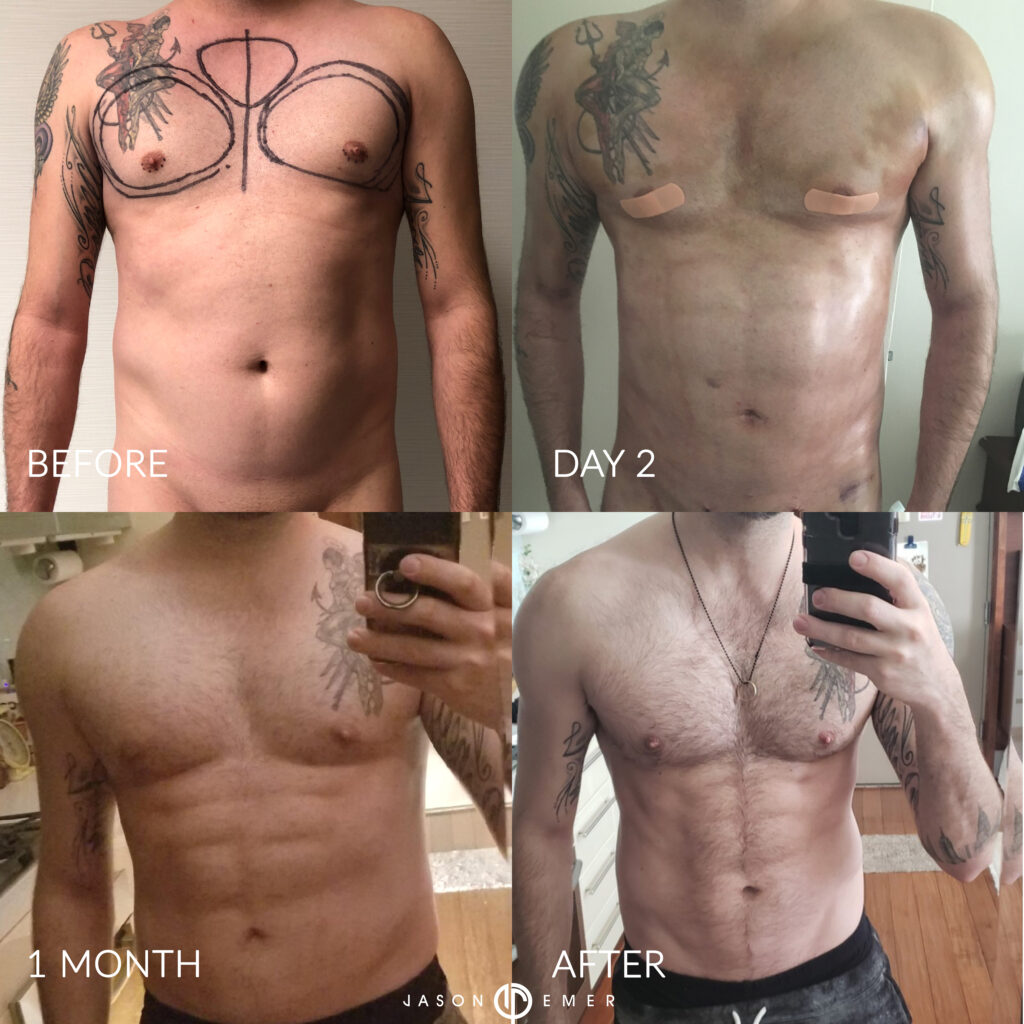
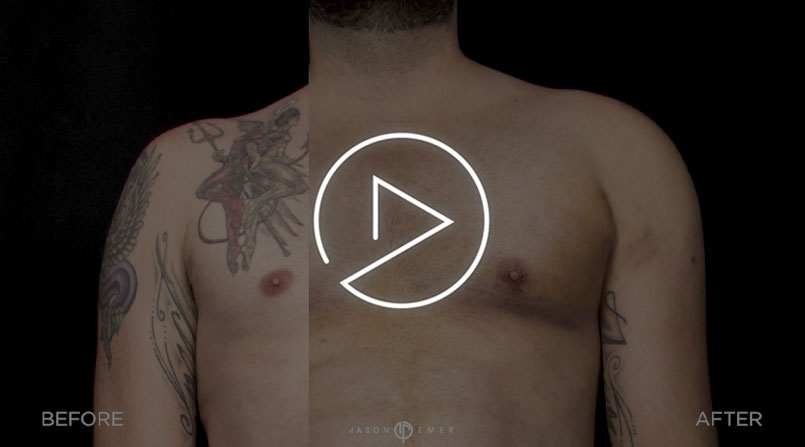
Chest surgery is visual, and its results should be shown rather than described. The practice’s galleries include male chest cases across contouring, gland removal, and structural correction.
In consultation, cases with anatomy similar to yours become the honest reference point for what is achievable.
View the male chest gallery
04 / Common questions
Not necessarily. Fat, gland, skin, and muscle issues each have their own treatments. An implant is considered when the structure itself lacks projection, including selected pectus presentations.
The practice pairs Dr. Emer’s sculpting and contouring work with a surgical partner who performs the implant procedure. Your consultation identifies exactly who does what in your plan.
Contouring, gland removal, or skin procedures may be discussed alongside structural work. Whether they are combined, staged, or skipped is decided case by case.
Return to training is progressive and depends on the procedures performed and how you heal. The surgical team’s instructions for your case take precedence over any general timeline.
The goal is a chest that fits your frame and reads as trained rather than placed. Implant selection is driven by measurements and anatomy, not by picking a size from a catalog.
If years of chest work have hit a structural ceiling, a consultation can tell you what is anatomically possible and exactly what it would involve.
Plan a chest consultation Surgical consultations in Beverly Hills and New York City